
Selecting the right team building event for your small group can feel overwhelming. You want activities that genuinely strengthen relationships and enhance collaboration, not just fill time with generic exercises. The effectiveness of team building depends heavily on alignment with your team's goals and organizational culture. This article provides evidence-backed criteria to evaluate options, presents top event recommendations for 2026, and offers comparative insights to help you make confident decisions. You will discover practical frameworks to choose activities that deliver lasting impact for your team.
Table of Contents
- Criteria For Choosing Team Building Events For Small Groups
- Top Team Building Events For Small Groups In 2026
- Comparing Team Building Events: Impact, Cost, And Fit
- Making The Most Of Team Building: Expert Tips And Common Pitfalls
- Enhance Your Team Building With WhenNOT Facilitation Tools
Key takeaways
| Point | Details |
|---|---|
| Strong ROI potential | Organizations can realize roughly $4 in return for every $1 invested in effective team building. |
| Balanced approach works | Top events blend fun, learning, and philanthropy aligned to team goals and culture. |
| Leadership matters | Leadership encouragement in events boosts problem-solving success by around 25%. |
| Integration is essential | Standalone events without follow-up may not yield long-term benefits in communication and collaboration. |
| Address team dynamics | Evaluate current challenges like role imbalances and missed commitments before selecting activities. |
Criteria for choosing team building events for small groups
Before browsing event catalogs or booking venues, establish clear selection criteria. The effectiveness of team building hinges on how well activities align with your team's specific goals and organizational culture. A creative agency needs different experiences than a finance team. Start by identifying what you want to improve: communication gaps, trust issues, or problem-solving skills.
Successful events incorporate three core elements. Team building should include fun and entertainment, learning and growth, and charity or philanthropy. Fun creates positive memories and reduces stress. Learning builds new skills applicable to daily work. Philanthropy connects teams to broader purpose and community impact. Balance these components based on your team's current needs and maturity level.
Assess your team's existing dynamics before committing to any activity. Common dysfunctions include role imbalances where some members dominate while others withdraw, missed commitments that erode trust, and ignored ideas that stifle innovation. Choose events that directly address your team's specific challenges rather than generic solutions. An escape room might strengthen problem-solving for analytical teams, while creative workshops could help rigid teams embrace flexibility.
Consider how activities promote essential collaboration skills. Effective events should encourage open communication, build trust through vulnerability, and create opportunities for members to rely on each other. Look for structured experiences with clear objectives rather than purely social gatherings. Structure provides frameworks for interaction while allowing organic relationship building.
Pro Tip: Survey your team anonymously before selecting an event to understand preferences, comfort levels, and perceived challenges. This input ensures you choose activities that resonate rather than alienate participants.
Standalone events without integration into ongoing team development rarely produce lasting benefits. Plan how you will connect event insights to daily work challenges. For more inspiration on creating meaningful experiences, explore these creative group event ideas that balance engagement with development.
Top team building events for small groups in 2026
Escape rooms remain powerful tools for small groups. These immersive experiences force teams to communicate clearly, delegate tasks, and solve complex problems under time pressure. Team building activities significantly improve team performance by enhancing communication and collaboration. Choose themed rooms that match your team's interests, from mystery solving to sci-fi adventures. The confined space and shared challenge create natural bonding opportunities.
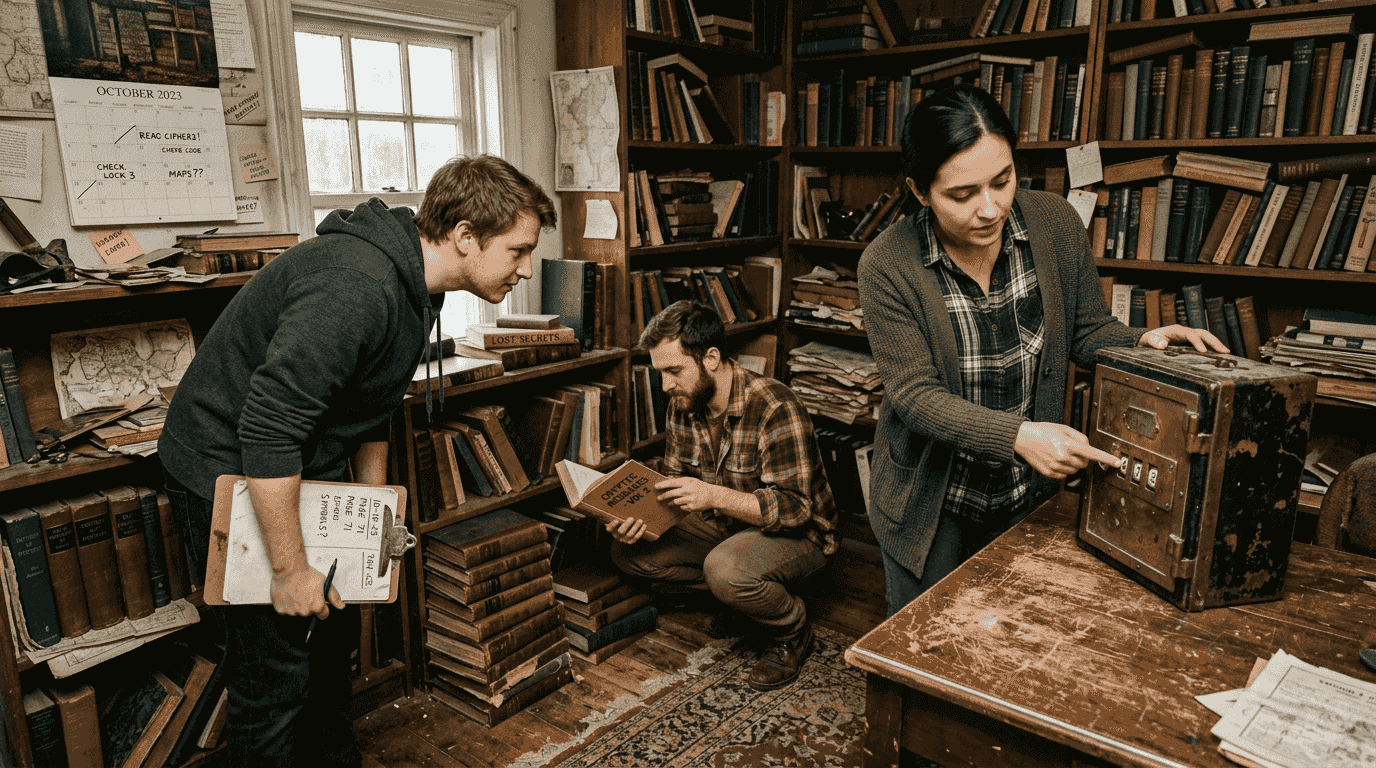
Volunteer and philanthropy projects combine purpose with team development. Organize habitat building days, food bank sorting sessions, or environmental cleanup activities. These experiences foster collaboration while contributing to community welfare. Pair hands-on work with reflection sessions where team members discuss how their efforts connect to organizational values. The shared sense of accomplishment strengthens bonds beyond typical office interactions.
Leadership challenge workshops accelerate decision-making skills. Leadership encouragement increases the fraction of teams solving complex tasks within time limits by about 25%. These structured programs present scenarios requiring quick thinking, resource allocation, and strategic planning. Rotate leadership roles so everyone experiences guiding the team. Debrief sessions help participants identify their natural leadership styles and areas for growth.
Creative workshops unlock innovation through hands-on collaboration. Cooking classes require coordination and timing as teams prepare multi-course meals. Art projects like mural painting or pottery allow self-expression while working toward shared visions. These activities appeal to different learning styles and reveal hidden talents. The relaxed atmosphere encourages authentic interaction without competitive pressure.
Virtual and hybrid activities maintain connection for distributed teams. Online murder mysteries, virtual reality experiences, and collaborative digital games bridge geographic distances. For remote or partially remote teams, these formats ensure everyone participates equally. Discover more innovative virtual team meeting ideas and remote team meeting examples to keep distributed groups engaged.
Pro Tip: Match activity intensity to your team's fitness levels and mobility considerations. Inclusive events ensure full participation without embarrassment or exclusion.
Outdoor adventure challenges like ropes courses or hiking expeditions push comfort zones safely. These experiences build trust as team members literally support each other's weight or navigate uncertain terrain together. The physical component releases endorphins and creates vivid shared memories. Choose difficulty levels appropriate for all participants to maintain psychological safety.
Comparing team building events: impact, cost, and fit
Understanding return on investment helps justify budget allocation. Organizations can realize roughly $4 in return for every $1 invested in effective team building. However, ROI varies significantly based on activity type and how well it aligns with team goals. High-impact events typically cost more upfront but deliver stronger long-term benefits through improved productivity and reduced turnover.
| Event Type | Estimated Cost | Primary Impact | Best Cultural Fit | Time Required |
|---|---|---|---|---|
| Escape Rooms | $25-40 per person | Problem-solving, communication | Analytical, competitive teams | 2-3 hours |
| Volunteer Projects | $15-30 per person | Purpose, morale, collaboration | Values-driven organizations | Half to full day |
| Leadership Workshops | $50-100 per person | Decision-making, strategic thinking | Growth-focused teams | Full day |
| Creative Workshops | $40-80 per person | Innovation, self-expression | Creative, flexible cultures | 3-4 hours |
| Outdoor Adventures | $60-150 per person | Trust, resilience, teamwork | Active, risk-tolerant groups | Full day |
| Virtual Activities | $10-30 per person | Inclusion, digital collaboration | Remote or hybrid teams | 1-2 hours |
Cultural fit matters as much as budget. Conservative organizations might feel uncomfortable with high-risk physical challenges, while creative teams could find traditional workshops boring. Survey your team's preferences and consider past event feedback. Leadership-supported events tend to perform better on completion time and solution quality, so secure visible executive participation.
Philanthropic activities may increase team morale beyond measurable performance gains. The emotional satisfaction of helping others creates positive associations with teammates. These benefits compound over time as teams reference shared experiences during challenging work periods. Factor in both tangible productivity improvements and intangible morale boosts when evaluating options.
Balance immediate engagement with lasting skill development. Pure entertainment events generate excitement but may not translate to workplace improvements. Conversely, overly serious training sessions can feel like work rather than team building. The sweet spot combines enjoyment with practical learning that participants can apply immediately. For more guidance on optimizing your planning process, review these event organization tools advantages.
Making the most of team building: expert tips and common pitfalls
Expert facilitation transforms good events into great ones. Professional facilitators guide reflection and help teams extract lessons applicable to daily work. Focusing only on fun activities without expert facilitation may not improve teamwork, trust, or motivation in a lasting way. Budget for skilled facilitators who can adapt activities in real time based on team dynamics and emerging insights.
Follow-up activities cement learning and prevent the event from becoming an isolated experience. Schedule a debrief session within one week where team members discuss key takeaways and commit to specific behavior changes. Create accountability by having pairs or small groups check in monthly on their commitments. Link event lessons to current projects so the connection feels immediate and relevant.
Address common collaboration barriers proactively. Teams are plagued by missed commitments, ignored ideas, and role imbalances that sabotage performance. Use team building events to surface these issues in safe contexts where failure has no real consequences. Discuss what happened during activities and draw parallels to workplace situations. This meta-conversation often proves more valuable than the activity itself.
Leadership encouragement during events enhances effectiveness significantly. When leaders participate fully rather than observing from the sidelines, team members feel more comfortable taking risks and being vulnerable. Leaders should model the behaviors they want to see: active listening, admitting mistakes, and celebrating others' contributions. This visible commitment signals that team development matters to the organization.
Avoid these common pitfalls that undermine event success:
- Choosing activities based solely on novelty rather than alignment with team needs
- Failing to accommodate different physical abilities, learning styles, or comfort levels
- Skipping the debrief session that connects experience to workplace application
- Treating team building as a one-time fix rather than ongoing development
- Ignoring feedback from previous events when planning new activities
Pro Tip: Document lessons learned from each event in a shared team journal. Reviewing this journal before future events helps you build on past successes and avoid repeating mistakes.
"The best team building events feel less like corporate obligations and more like experiences team members would choose for themselves. When you nail that balance, the development happens naturally."
For additional strategies to improve coordination and execution, explore these team coordination tips that complement your event planning efforts.
Enhance your team building with WhenNOT facilitation tools
Planning impactful team building events requires coordinating schedules, preferences, and logistics across your small group. WhenNOT simplifies this complexity with an inverse scheduling approach that identifies optimal dates by asking participants when they are not available. This method eliminates endless email chains and speeds up decision-making so you can focus on designing meaningful experiences.
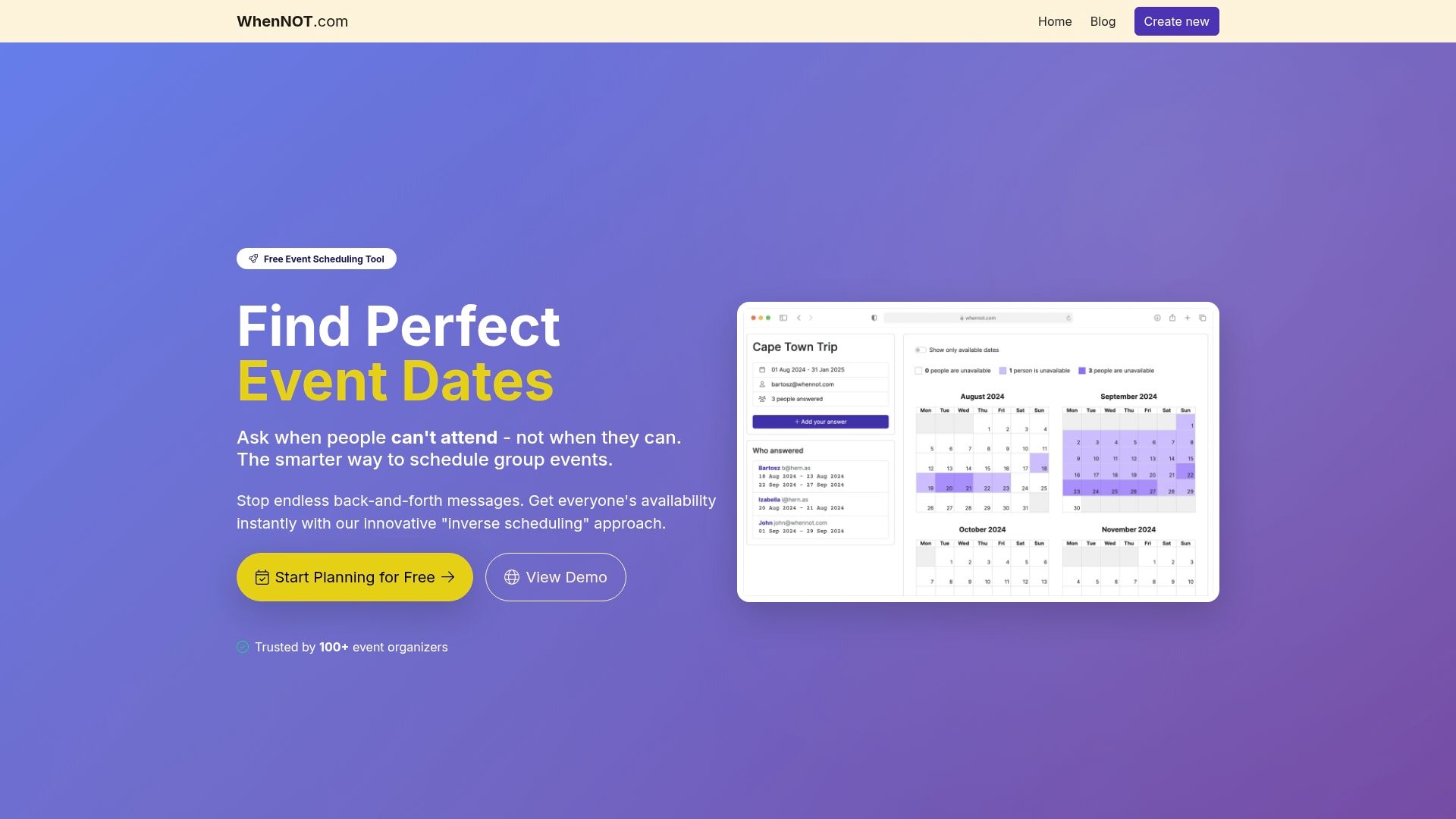
The WhenNOT event coordination platform offers privacy-focused, user-friendly tools that require no signups or accounts for participants. Simply create your event, set a date range, and share a unique link. The platform visualizes everyone's busy days concurrently, making it easy to spot the best timing for your team building activity. Whether you are planning escape room adventures, volunteer projects, or creative workshops, WhenNOT streamlines the logistical heavy lifting.
Explore the WhenNOT blog for more creative group event ideas and practical planning strategies. The platform's simplicity and efficiency help you spend less time on coordination and more time creating experiences that strengthen your team's collaboration and relationships.
FAQ
How do I choose the best team building event for my small group?
Start by identifying your team's specific challenges and goals. Consider whether you need to improve communication, build trust, or develop problem-solving skills. Choose events that align with your organizational culture and member preferences. Survey your team anonymously to understand comfort levels and interests before making final decisions.
What size qualifies as a 'small group' for team building events?
Small groups typically range from 5 to 15 participants. This size allows for personalized interaction where everyone can contribute meaningfully. Groups smaller than five may lack diverse perspectives, while groups larger than 15 often require breaking into subgroups to maintain engagement and ensure everyone participates actively.
How can I ensure lasting benefits from a single team building event?
Plan follow-up activities that link event insights to daily work challenges. Schedule a debrief session within one week where team members discuss key takeaways and commit to specific behavior changes. Standalone team building events without team development may not yield long-term benefits in communication, collaboration, and leadership. Combine fun with learning and leadership development components for sustained impact.
What role does leadership play in small group team building?
Active leadership participation dramatically improves event effectiveness. Leadership encouragement increases the fraction of teams solving complex tasks within time limits by about 25%. When leaders engage fully rather than observing, team members feel safer taking risks and being vulnerable. Leaders should model desired behaviors like active listening, admitting mistakes, and celebrating others' contributions to signal organizational commitment to team development.