
Managing a multi-day corporate retreat can quickly become overwhelming when juggling travel, agendas, and team engagement. Efficient event organization matters because every hour saved on planning means more time devoted to meaningful collaboration and achieving your company’s goals. By harnessing the power of specialized software, planners gain access to comprehensive event workflows and transparent communication, transforming complex schedules into smooth, well-structured experiences that keep participants engaged from start to finish.
Table of Contents
- Defining Event Organization Tools And Their Purpose
- Types Of Event Planning Tools For Multi-Day Events
- Core Features That Simplify Group Scheduling
- How Tools Elevate Collaboration And Engagement
- Comparing Traditional Vs. Modern Scheduling Platforms
- Common Pitfalls And Mistakes To Avoid
Key Takeaways
| Point | Details |
|---|---|
| Importance of Event Organization Tools | These tools streamline logistics and enhance communication for corporate retreats, aligning event tasks with organizational goals. |
| Types of Planning Tools | Key tools include registration platforms, scheduling tools, and resource management systems, each designed to improve efficiency in multi-day event planning. |
| Modern vs. Traditional Scheduling | Modern platforms offer real-time updates and automated error detection, significantly reducing risks associated with traditional methods. |
| Common Pitfalls | Event planners should avoid budget miscalculations and logistical oversights to ensure successful corporate retreats. |
Defining Event Organization Tools and Their Purpose
Event organization tools are specialized software platforms designed to help planners streamline complex logistics and coordinate intricate details for corporate retreats and professional gatherings. These digital solutions transform traditional manual planning processes by providing comprehensive frameworks for managing event workflows and communication channels.
At their core, event organization tools support multiple critical functions in event management, including:
- Participant coordination and scheduling
- Venue and resource management
- Communication tracking
- Budget monitoring
- Vendor and stakeholder collaboration
- Real-time logistics planning
Modern event organization platforms go beyond basic scheduling by integrating comprehensive management capabilities. They enable event coordinators to align operational tasks with strategic objectives, ensuring that every aspect of the corporate retreat supports the overall organizational goals.
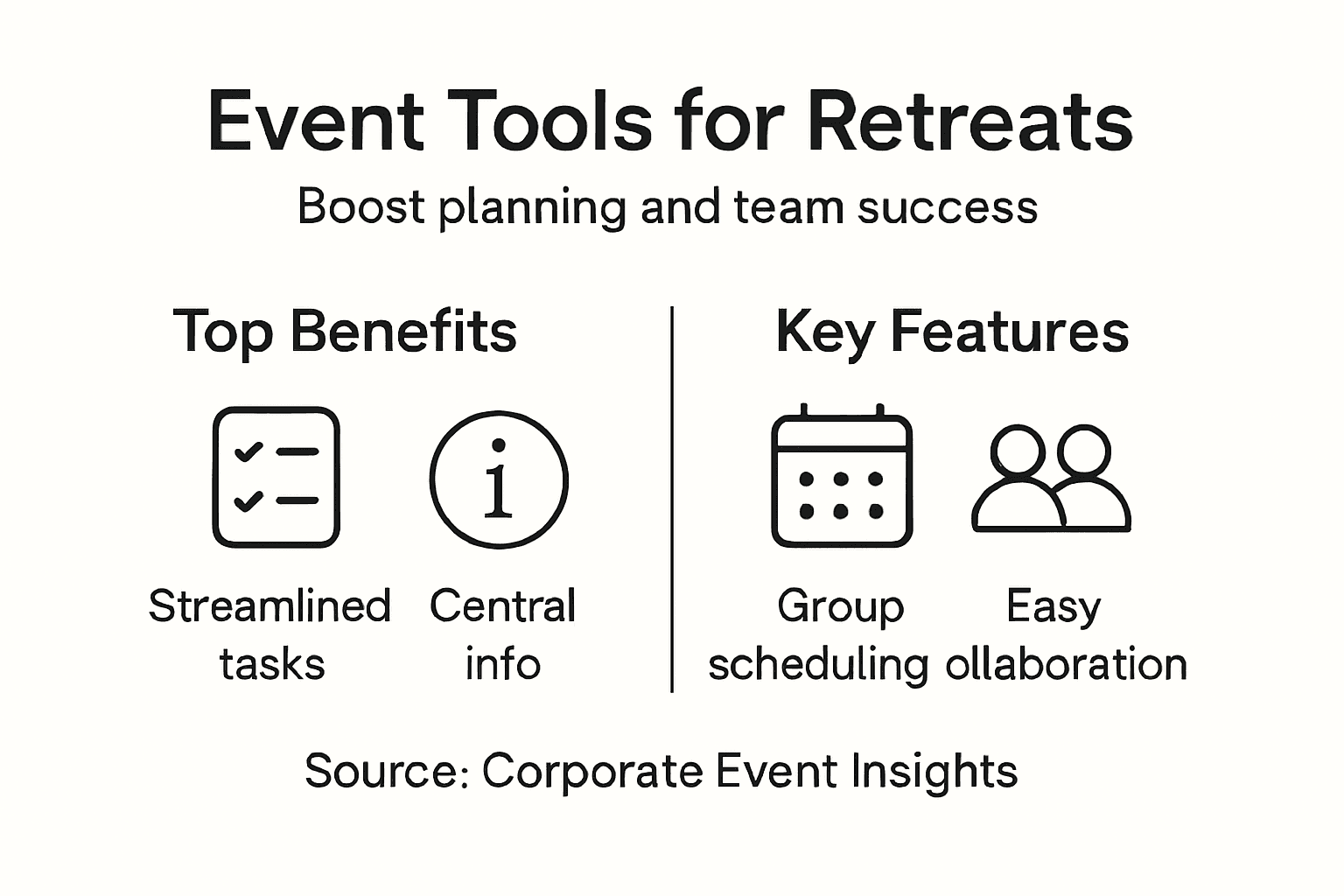
These tools provide crucial advantages by centralizing information and creating transparent communication pathways. Corporate retreat planners can track multiple complex variables simultaneously, reducing potential communication gaps and minimizing last-minute operational challenges. By digitizing traditionally manual processes, event organization tools dramatically increase efficiency and reduce administrative overhead.
Pro tip: Select an event organization tool that offers robust integration capabilities and provides real-time collaboration features to maximize your planning effectiveness.
Types of Event Planning Tools for Multi-Day Events
Multi-day event planning requires sophisticated digital tools that can manage complex logistics and coordination challenges. Conference management software provides comprehensive solutions designed to streamline intricate planning processes across multiple operational domains.
The primary types of event planning tools for multi-day corporate retreats include:
- Registration Platforms
- Online registration tracking
- Participant information management
- Payment processing capabilities
- Scheduling Tools
- Interactive agenda builders
- Time slot management
- Conflict resolution features
- Communication Systems
- Group messaging interfaces
- Real-time update notifications
- Participant engagement modules
- Resource Management Tools
- Venue coordination
- Equipment tracking
- Vendor communication interfaces
These specialized digital platforms enable event coordinators to transform traditionally complex manual processes into streamlined, efficient workflows. By centralizing information and providing transparent communication channels, multi-day event planning tools dramatically reduce administrative burdens and minimize potential logistical errors.
Modern event organization technologies go beyond basic scheduling, offering integrated solutions that support strategic planning, participant engagement, and post-event analysis. These tools help corporate retreat planners create more cohesive, well-organized experiences that align closely with organizational objectives and participant expectations.

Here's a summary of how different types of event planning tools support key objectives for multi-day corporate retreats:
| Tool Type | Main Purpose | Impact on Planning | Typical Integration Needs |
|---|---|---|---|
| Registration | Manage attendee details | Lowers check-in errors | Payment gateways |
| Scheduling | Organize event agendas | Prevents time conflicts | Calendar apps |
| Communication | Connect teams and guests | Boosts engagement rates | Messaging platforms |
| Resource Management | Handle venues & resources | Improves logistics flow | CRM and vendor systems |
Pro tip: Select multi-day event planning tools that offer robust integration capabilities and provide comprehensive reporting features to maximize your planning effectiveness.
Core Features That Simplify Group Scheduling
Effective group scheduling for corporate retreats requires advanced technological solutions that can navigate complex coordination challenges. Understanding group scheduling dynamics involves identifying key features that streamline participant availability and minimize communication barriers.
The core features that simplify group scheduling typically include:
- Availability Mapping
- Intuitive visual calendaring
- Conflict detection mechanisms
- Real-time synchronization
- Participant Coordination
- Multi-platform accessibility
- Automated invitation systems
- Seamless response tracking
- Flexibility Frameworks
- Customizable scheduling windows
- Alternative date suggestion tools
- Preference weight assignments
- Communication Optimization
- Instant notification systems
- Integrated messaging platforms
- Centralized update repositories
These sophisticated features transform traditional scheduling approaches by eliminating endless email chains and reducing the administrative overhead associated with coordinating multiple participant schedules. Advanced group scheduling tools leverage intelligent algorithms to quickly identify optimal meeting times while accommodating individual preferences and constraints.
Modern scheduling platforms go beyond simple date matching, offering comprehensive solutions that consider participant availability, time zone differences, and individual scheduling constraints. By providing granular control and transparent communication channels, these tools enable event planners to create more efficient and inclusive scheduling experiences.
Pro tip: Prioritize group scheduling tools that offer robust flexibility and comprehensive integration capabilities to maximize scheduling efficiency.
How Tools Elevate Collaboration and Engagement
Corporate retreat technologies are transforming team dynamics by creating unprecedented opportunities for meaningful interaction and collaborative experiences. Event planning tools enhance team connectivity through sophisticated digital platforms that break down traditional communication barriers.
Key collaboration and engagement features include:
- Interactive Communication Channels
- Real-time messaging systems
- Instant feedback mechanisms
- Group discussion interfaces
- Networking Enhancement
- AI-driven participant matching
- Professional interest tracking
- Structured networking session tools
- Collaborative Activity Platforms
- Virtual team-building exercises
- Shared goal-setting interfaces
- Interactive workshop environments
- Engagement Tracking
- Participation analytics
- Performance measurement tools
- Individual contribution visualizations
These advanced digital solutions go far beyond traditional event management by creating dynamic, interactive environments that encourage active participation. By providing intelligent frameworks that adapt to diverse team dynamics, modern collaboration tools transform corporate retreats from passive gatherings into powerful strategic development experiences.
Technology-enabled collaboration platforms create transparent, inclusive environments where every team member can contribute meaningfully. They eliminate geographical barriers, facilitate knowledge sharing, and generate data-driven insights that help organizations understand and optimize their team's potential.
Pro tip: Select collaboration tools that offer comprehensive integration, real-time analytics, and customizable engagement features to maximize team interaction.
Comparing Traditional vs. Modern Scheduling Platforms
Event scheduling has undergone a significant transformation, moving from manual, error-prone processes to sophisticated digital platforms. Cloud-based scheduling methods revolutionize event planning by introducing unprecedented levels of efficiency and collaboration.
Key differences between traditional and modern scheduling platforms include:
- Data Management
- Traditional: Paper-based, spreadsheet-dependent
- Modern: Cloud-synchronized, real-time updates
- Collaboration Capabilities
- Traditional: Limited communication channels
- Modern: Instant messaging, shared interfaces
- Accessibility
- Traditional: Desktop-restricted
- Modern: Mobile-friendly, cross-platform
- Error Handling
- Traditional: Manual correction, high error rates
- Modern: Automated validation, instant error detection
Traditional scheduling methods typically rely on static spreadsheets and manual communication processes that are inherently slow and prone to miscommunication. In contrast, modern platforms leverage advanced technologies to create dynamic, interconnected scheduling environments that adapt in real-time to changing participant needs and organizational requirements.
The evolution of scheduling platforms represents more than just a technological upgrade; it signifies a fundamental shift in how organizations approach coordination and communication. Modern tools provide intelligent frameworks that anticipate user needs, offer predictive insights, and create seamless collaborative experiences that were previously impossible.
This table compares the business effects of traditional and modern scheduling platforms in corporate event management:
| Platform Type | Speed of Updates | Collaboration Ability | Error Risk |
|---|---|---|---|
| Traditional | Slow, manual changes | Limited, single-user | Frequent calculation errors |
| Modern | Real-time, automated | Multi-user, simultaneous | Automated error detection |
Pro tip: Prioritize scheduling platforms with robust integration capabilities, mobile accessibility, and real-time synchronization to maximize team efficiency.
Common Pitfalls and Mistakes to Avoid
Successful corporate retreat planning requires careful navigation of potential organizational challenges that can derail even the most well-intentioned events. Understanding common retreat planning mistakes helps event coordinators proactively mitigate risks and create more effective team experiences.
Most critical pitfalls in corporate retreat planning include:
- Budget Miscalculations
- Hidden cost overlooking
- Insufficient contingency funds
- Underestimating operational expenses
- Timeline Management
- Inadequate milestone tracking
- Poor schedule flexibility
- Unrealistic event duration planning
- Participant Engagement
- Lack of clear event objectives
- Insufficient interactive programming
- Minimal personalization strategies
- Logistical Oversights
- Incomplete venue assessments
- Technology infrastructure gaps
- Transportation and accommodation coordination failures
Corporate retreat organizers frequently underestimate the complexity of coordinating multi-day events that require precise planning and adaptive strategies. Without comprehensive preparation, events can quickly become logistical nightmares that fail to deliver intended team-building and strategic development outcomes.
Effective event planning demands a holistic approach that anticipates potential challenges, builds robust contingency frameworks, and maintains flexibility throughout the organizational process. Successful retreats are the result of meticulous attention to detail, strategic foresight, and a commitment to creating meaningful participant experiences.
Pro tip: Develop a comprehensive event planning checklist with built-in contingency protocols to proactively address potential scheduling and logistical challenges.
Streamline Your Corporate Retreat Planning with Smarter Scheduling
Organizing a multi-day corporate retreat comes with many challenges like coordinating participant availability, minimizing communication delays, and avoiding scheduling conflicts. This article highlights how effective event organization tools simplify complex workflows and enhance collaboration by offering features such as real-time synchronization and flexible scheduling frameworks. If you want to overcome common pitfalls like timeline mismanagement and participant disengagement, you need a solution that adapts seamlessly to your team’s unique needs.
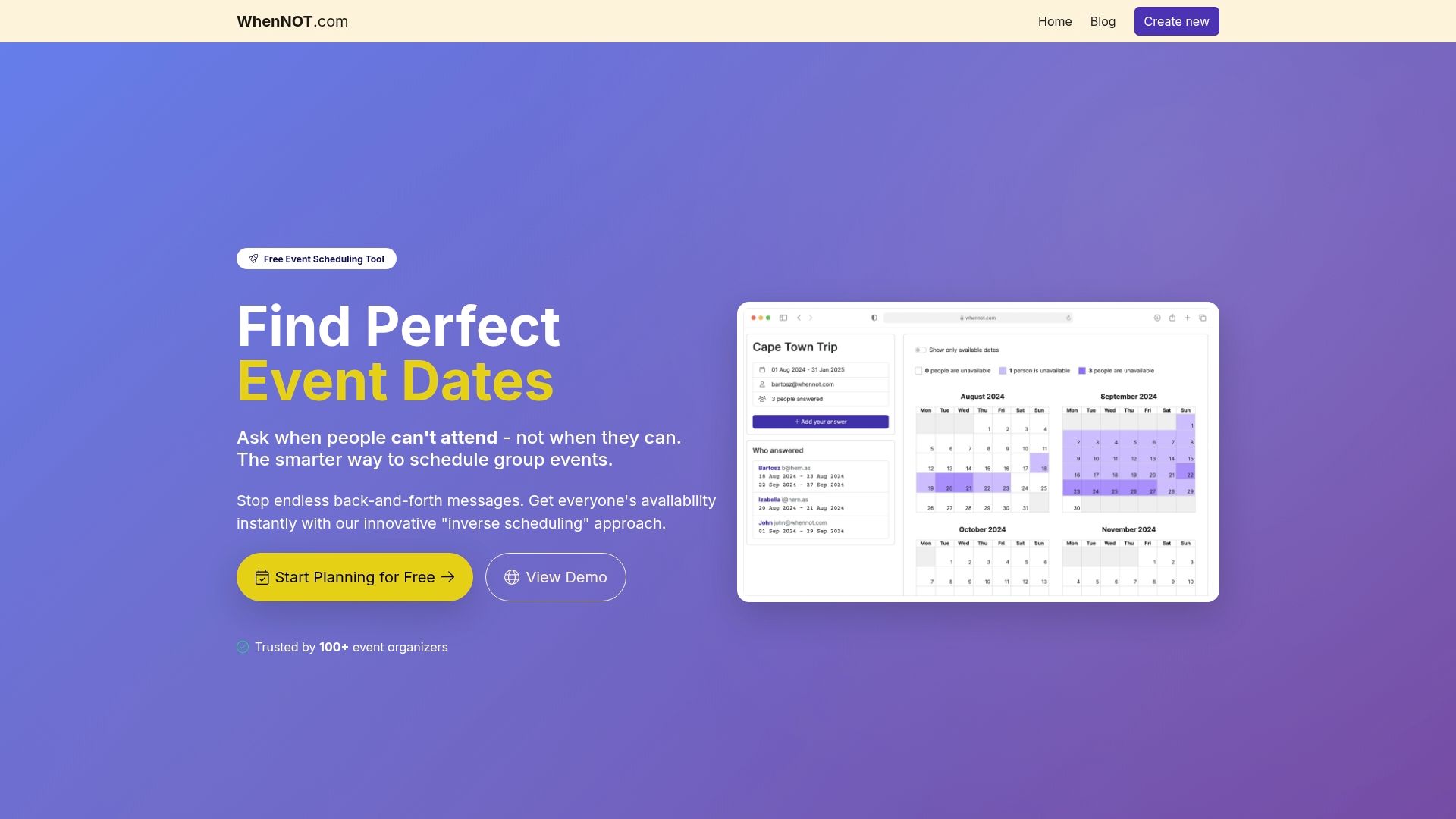
Discover how WhenNOT, an innovative online scheduling tool, transforms group event planning with its unique inverse scheduling approach. Instead of asking when participants are free, WhenNOT asks when they are unavailable, making it easier to find optimal dates quickly even for multi-day events. No sign-ups are required from participants and the process is private and user-friendly. By visualizing busy times for all involved, you reduce last-minute surprises and ensure smooth coordination. Take control of your corporate retreat planning today by visiting WhenNOT and simplify your scheduling challenges with a tool designed to save you time, reduce frustration, and boost team engagement.
Frequently Asked Questions
What are event organization tools?
Event organization tools are specialized software platforms that help planners streamline logistics and coordinate details for corporate retreats and professional gatherings, enhancing efficiency and communication.
What are the key features of event planning tools for multi-day events?
Key features include online registration tracking, interactive agenda builders, group messaging interfaces, vendor communication, and real-time logistics planning, all designed to manage complex logistics effectively.
How do event organization tools improve collaboration during corporate retreats?
These tools enhance collaboration by providing interactive communication channels, networking enhancements, and collaborative activity platforms, encouraging meaningful engagement among participants.
What mistakes should I avoid when using event organization tools for planning retreats?
Common mistakes include underestimating the budget, poor timeline management, and insufficient engagement strategies. It's crucial to anticipate challenges and build contingency plans for a successful retreat.