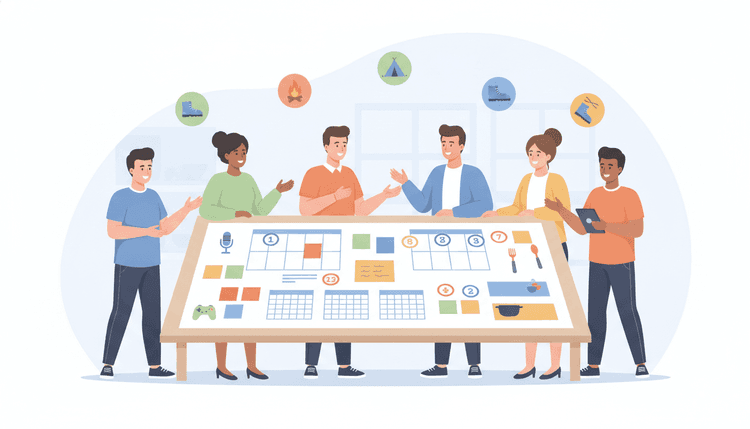
Creative event planning starts with one bold question: what experience do you want your group to remember? Whether you organize corporate retreats, neighborhood meetups, family reunions, or group travel adventures, the right idea shapes everything that follows.
A 2026 Eventbrite survey found that 78% of event attendees value unique, interactive experiences over traditional formats. People want to participate, not just show up. This article gives you 50+ creative event planning ideas organized by setting, budget, and occasion, plus a practical comparison table, a planning checklist, and scheduling tips that turn your best idea into a real event.
What Makes an Event Idea Creative?
Quick answer: A creative event idea goes beyond the standard format by matching the group's personality, removing logistical friction, and building genuine connection through shared experiences that people remember long after the event ends.
Generic events get generic turnout. A 2026 Gallup workplace survey found that teams who participated in creatively planned events reported 34% stronger team connection than those who attended standard happy hours or catered lunches.
Three traits separate great group events from forgettable ones:
- They match the group's energy. A high-energy scavenger hunt works for a sales team. A guided wine tasting works better for a book club reunion.
- They remove friction. Great ideas simplify logistics like scheduling, venue selection, and coordination so organizers spend less time managing and more time enjoying.
- They build connection. Every activity gives people a reason to interact, collaborate, or share something personal.
You do not need a massive budget or a professional planner. You need the right format for your group, a clear timeline, and tools that make coordination easy. When you send the right type of event invitation, you set the tone before anyone walks through the door.
Indoor Group Event Ideas for Any Season
Quick answer: Indoor events work year-round and fit any budget. They give you full control over the environment, making them reliable choices no matter the weather or season. From team workshops to game nights, indoor formats keep groups entertained and connected.
Team-Building Activities
Skill Swap Workshops: Pair people from different departments or backgrounds to teach each other a skill. A designer teaches basic prototyping while a data analyst walks through dashboard building. These sessions break silos and help teammates appreciate each other's expertise. Keep sessions to 90 minutes, provide all materials in advance, and let each "teacher" choose their own topic.
In 2026, skill swap workshops ranked among the top five team-building formats in a LinkedIn Workplace Learning report, with 62% of participants saying they felt closer to colleagues afterward.
Innovation Hackathons: Give teams 24 to 48 hours to solve a real business problem or build a creative prototype. Hackathons create natural collaboration, time pressure that sparks energy, and tangible outcomes. Set clear rules, provide meals, and end with a demo showcase where teams present their solutions.
Escape Room Challenges: Book a local escape room or set up a DIY version in your office. Teams of 4 to 6 solve puzzles under time pressure, building communication and problem-solving skills without feeling like a corporate exercise. For larger groups, run multiple rooms and compare completion times.
Company Trivia Tournaments: Customize trivia to include company history, industry knowledge, and fun personal facts about colleagues. Mix categories to keep all ages and interests engaged. Track scores across rounds and award prizes for first place, most improved, and best team name.
Wellness Workshops (Trending in 2026): Host a group breathwork session, sound bath, or journaling circle. Wellness-focused events saw a 41% increase in corporate bookings in 2026, according to a Global Wellness Institute report. These low-energy formats work especially well for groups dealing with burnout or transition periods.
For more team event inspiration, check out these team outing ideas and activities coworkers enjoy.
Social Gatherings
Board Game or Video Game Tournaments: Organize a multi-round tournament with a season-long leaderboard. For family groups, mix pop culture, sports, and "who knows the family best" rounds. For friends, try cooperative board games like Pandemic or competitive party games like Codenames. Monthly recurring tournaments build anticipation and keep groups connected between big events.
Themed Dinner Parties: Choose a cuisine, decade, or color theme and invite everyone to bring a matching dish. Themed potlucks spark conversation and encourage creativity in the kitchen. Take it further with an "around the world" dinner where each table represents a different country. Assign cuisines in advance, add music playlists and simple decorations to set the scene. These dinners work for groups of 10 to 50 and scale easily with potluck coordination.
Paint-and-Sip Nights: Hire a local artist or follow an online tutorial while everyone paints alongside drinks and snacks. No experience needed. Participants leave with their own artwork and great memories. Cost: $15 to $40 per person including supplies.
Karaoke or Open Mic Nights: Rent a karaoke machine or set up a stage area with a mic and speakers. Encourage duets and group performances to get shy participants involved. Add categories like "best dramatic performance" and "crowd favorite" to keep energy high.
DIY Craft Workshops: Pick a project (candle making, pottery, macrame, or screen printing), buy supplies in bulk, and follow a tutorial together. YouTube replaces expensive instructors, and everyone leaves with something they made. Cost: $5 to $15 per person.
Cooking or Baking Classes: Choose a cuisine nobody in the group has tried, gather ingredients, and cook together. Split into teams for a competitive twist with a blind tasting at the end. Works for groups of 6 to 20.
Seasonal Indoor Ideas for Summer and Fall 2026:
- Summer mocktail mixology night: Set up a DIY drink station with fresh fruits, syrups, and sparkling water. Pairs well with a "best creation" vote and works for all ages.
- Fall harvest cooking competition: Each team gets the same set of seasonal ingredients (squash, apples, cinnamon) and 60 minutes to create the best dish. A panel of tasters picks the winner.
- Indoor mini-golf pop-up: Build a 9-hole course using office supplies, cardboard, and tape. Teams design holes and then play each other's creations.
Outdoor Group Event Ideas for 2026
Quick answer: Outdoor events use natural settings to create memorable experiences. They work for any season with the right planning. Summer 2026 brings block parties and adventure days, fall opens the door to harvest festivals and bonfire nights, and winter offers cozy outdoor gatherings.
Adventure Events
Field Day Competitions: Organize relay races, tug-of-war, water balloon tosses, and sack races. Divide into teams with matching bandanas or shirts. Field days work for all ages and create the kind of silly, active fun that people remember.
Paddle Sport Group Outing: Rent kayaks, paddleboards, or canoes for a half-day group adventure on a local lake or river. Most rental outfits offer group discounts for parties of 8 or more. End with a picnic on the shore.
Group Camping Trips: Reserve a group campsite and plan activities like hiking, fishing, campfire cooking, and stargazing. Share equipment and divide meal prep among participants. Camping trips build bonds through shared experience and away-from-screen time.
Scavenger Hunts: Create a neighborhood or city-wide scavenger hunt using a free app or printed clue sheets. Teams race to complete challenges, take photos, and solve riddles. Scavenger hunts work for corporate teams, birthday parties, and family reunions alike.
Nature Wellness Walks (New for 2026): "Forest bathing" and guided nature walks became a mainstream corporate wellness offering in 2026. A certified guide leads the group through sensory awareness exercises in a park or forest. No physical fitness required. Groups of 8 to 25 work best.
Sunrise or Sunset Yoga Sessions: Book a local park pavilion, hire an instructor (or follow a YouTube class on a portable speaker), and host a group yoga session at sunrise or sunset. Follow it with a healthy brunch picnic. Cost: $0 to $15 per person.
The key to a great outdoor event is knowing when to travel to avoid rush periods if your group plans to visit a popular park or beach destination.
Community Celebrations
Block Parties and Community Picnics: Summer block parties bring entire neighborhoods together. Set up food stations, lawn games, a DJ or playlist, and a kids' activity zone. Assign blocks or families to contribute specific items so no one carries the full load.
For smaller groups, organize a picnic at a local park with a potluck spread, outdoor games like cornhole or frisbee, and a group hike afterward. A 2026 National Recreation and Park Association report found that community picnic events increased by 23% over the previous year, driven by demand for low-cost outdoor socializing.
Planning a summer gathering? Our summer party planning guide with checklists and scheduling tips covers everything from food to logistics.
Outdoor Movie Nights: Set up a projector and inflatable screen in a backyard or park. Provide blankets, lawn chairs, and a concession stand with popcorn and drinks. Choose a crowd-pleasing movie and start after sunset. Cost: under $50 if you already own a projector.
Harvest Festivals (Fall 2026): Fall harvest events combine seasonal flavors with outdoor activities. Organize an apple-picking day, pumpkin-carving contest, or outdoor chili cook-off. Add hayrides, a bonfire, or a corn maze for groups with kids. For corporate teams, a fall farm visit with team challenges creates natural competition and laughs. These events cost $10 to $30 per person at most farms and orchards.
Bonfire and S'mores Night: Reserve a fire pit area at a local park or use a backyard fire pit. Provide s'mores supplies, warm drinks, and acoustic music. Add a storytelling round or "campfire confessions" game to spark conversation. Works for groups of 8 to 40.
Neighborhood Cleanup Day: Organize a group cleanup of a local trail, beach, or park. Provide gloves and trash bags, then celebrate with a potluck lunch. Volunteering creates shared purpose and costs nothing.
Winter Outdoor Gatherings: Host an ice skating outing, snowshoeing day, or bonfire night with hot chocolate and s'mores. For adventurous groups, organize a group ski or snowboard trip. When planning winter group trips, booking flights at the right time saves your group hundreds of dollars on holiday travel.
Virtual and Hybrid Event Ideas
Quick answer: Virtual and hybrid events connect people across distances without sacrificing engagement. The best formats for 2026 prioritize interaction over passive viewing, with dedicated remote facilitation and AI-powered collaboration tools for hybrid setups.
Remote and distributed groups need event formats that translate well to screens. Passive webinars and long video calls drain energy. Interactive formats keep people engaged.
Top virtual event ideas for 2026:
- Online trivia or game shows using platforms with built-in scoring and team features
- Virtual escape rooms where small teams solve puzzles together over video
- Cooking or cocktail classes where a host walks everyone through a recipe in real time
- Show-and-tell sessions where each participant shares a hobby, collection, or workspace tour
- Virtual book or movie clubs with structured discussion prompts and rotating hosts
- Online talent shows where participants perform, share art, or demo a skill
- Digital wellness sessions including guided meditation, desk yoga, or breathing exercises
- AI-powered creative jam sessions where teams use generative AI tools together to design event themes, logos, or playlist concepts in real time
Hybrid event best practices for 2026:
Hybrid events combine in-person and remote attendees in the same experience. They require extra planning but reach wider audiences.
- Designate a remote host. This person monitors the virtual audience, relays questions, and keeps remote participants connected to the in-person energy. A 2026 Owl Labs report found that hybrid events with a dedicated remote facilitator saw 47% higher engagement from virtual attendees.
- Use shared digital tools. Collaborative whiteboards, polls, and chat channels give remote attendees equal participation.
- Schedule breaks intentionally. Screen fatigue hits faster than in-person fatigue. Build 10-minute breaks every 45 to 60 minutes.
- Send care packages. Mail snacks, branded items, or activity supplies to remote attendees before the event so they feel included.
- Record and recap. Share session recordings and highlight reels within 24 hours. This respects time zones and lets absent participants catch up.
Remote teams benefit most from in-person retreats when they can find dates that respect everyone's schedule. Find the best hours for deep work and remote productivity to plan sessions that land during peak energy windows across time zones.
Struggling to find a date that works for your whole group? WhenNOT flips the question: everyone marks when they are NOT available, and the tool instantly shows which dates work. Set up a free poll in under two minutes.
How to Plan a Group Event Without the Stress
Quick answer: Stress-free event planning comes down to choosing the right format, collecting availability early, delegating tasks clearly, and using tools that handle coordination so you can focus on the experience itself.
Most event planning stress comes from coordination, not creativity. You already know what your group would enjoy. The hard part is aligning schedules, dividing responsibilities, and keeping everyone informed without drowning in messages.
Here is how to plan any group event without the back-and-forth headaches:
1. Pick the format first, then the date. Start with what your group will enjoy (use the comparison table below). Once you know the format, you know how much lead time, budget, and space you need.
2. Collect availability upfront. Stop guessing. Use WhenNOT to create a quick availability poll. Everyone marks when they are NOT free, and you instantly see which dates work for the whole group. No group texts. No spreadsheets. No "let me check and get back to you."
3. Delegate with clear ownership. Assign specific tasks (food, venue, supplies, music) to individuals or pairs. Use a shared checklist so everyone sees what is covered and what still needs attention.
4. Use the right scheduling tools. Whether you coordinate with family across generations or a corporate team across time zones, the right scheduling tools save hours of back-and-forth. For families with kids and grandparents, check our best scheduling tools for families.
5. Send invitations early. Give your group at least two weeks' notice for casual events and four to six weeks for multi-day events. Pick the right type of invitation for your event to set expectations and boost attendance.
6. Build in buffer time. Add 30 minutes of buffer before and after activities. Things take longer than planned, and rushed transitions kill the mood.
For family events with multiple generations and busy calendars, managing family event timing without the stress becomes much easier when you collect availability upfront.
Event Planning Checklist
Quick answer: Use this checklist to stay organized from the first brainstorm to the day of your event. Print it, share it with your co-planners, and check off each item as you go.
6+ Weeks Before:
- Choose the event format and theme
- Set a budget range
- Create an availability poll with WhenNOT and share with your group
- Lock in the date based on poll results
4 Weeks Before:
- Book the venue or reserve space
- Send invitations (digital or printed)
- Assign planning roles (food, decorations, activities, setup, cleanup)
- Create a shared supply list
2 Weeks Before:
- Confirm headcount and dietary restrictions
- Order or buy supplies and materials
- Plan the activity timeline with buffer between segments
- Set up a group chat or email thread for last-minute updates
1 Week Before:
- Send a reminder with the date, time, location, and what to bring
- Confirm vendor bookings (if applicable)
- Prepare a rain plan for outdoor events
- Test equipment (projectors, speakers, microphones)
Day Of:
- Arrive early for setup
- Set up a welcome area with directions and a schedule
- Take photos throughout the event
- Collect feedback or reactions for planning future events
After the Event:
- Share photos in a group album
- Thank attendees and helpers
- Note what worked and what to change next time
- Start planning the next one (use WhenNOT to lock the date early)
Event Ideas Comparison Table
Quick answer: Use this table to compare event types by group size, budget, and prep time so you can pick the right format at a glance.
| Event Type | Best Group Size | Budget Per Person | Prep Time | Indoor/Outdoor | Difficulty |
|---|---|---|---|---|---|
| Skill Swap Workshop | 10-30 | $0-20 | 1-2 weeks | Indoor | Easy |
| Innovation Hackathon | 15-50 | $20-100 | 3-4 weeks | Indoor | Hard |
| Escape Room Challenge | 4-24 | $25-45 | 1 week | Indoor | Easy |
| Trivia Tournament | 10-60 | $0-15 | 1 week | Both | Easy |
| Themed Dinner Party | 10-50 | $5-30 | 2 weeks | Indoor | Medium |
| Paint-and-Sip Night | 8-30 | $15-40 | 1 week | Indoor | Easy |
| Wellness Workshop | 8-30 | $0-25 | 1-2 weeks | Both | Easy |
| Block Party / Picnic | 20-100+ | $0-20 | 2-3 weeks | Outdoor | Medium |
| Outdoor Movie Night | 10-50 | $0-10 | 1 week | Outdoor | Easy |
| Field Day Competition | 15-60 | $5-20 | 2 weeks | Outdoor | Medium |
| Group Camping Trip | 6-30 | $10-50 | 4-6 weeks | Outdoor | Hard |
| Harvest Festival | 15-80 | $10-30 | 2-3 weeks | Outdoor | Medium |
| Nature Wellness Walk | 8-25 | $0-15 | 1 week | Outdoor | Easy |
| Paddle Sport Outing | 6-20 | $15-40 | 1-2 weeks | Outdoor | Medium |
| Virtual Escape Room | 4-20 | $10-30 | 1 week | Virtual | Easy |
| Online Trivia Night | 5-50 | $0-10 | 3-5 days | Virtual | Easy |
| Hybrid Watch Party | 10-40 | $0-15 | 1 week | Both | Medium |
| Volunteer Day | 10-100+ | $0 | 2 weeks | Outdoor | Easy |
| Scavenger Hunt | 10-50 | $0-15 | 1-2 weeks | Outdoor | Medium |
| Cooking Class | 6-20 | $15-40 | 1-2 weeks | Both | Easy |
| Karaoke Night | 8-40 | $0-20 | 3-5 days | Indoor | Easy |
| Bonfire Night | 8-40 | $5-15 | 1 week | Outdoor | Easy |
| Sunrise/Sunset Yoga | 5-30 | $0-15 | 1 week | Outdoor | Easy |
FAQ
What are creative event planning ideas for small groups?
Small groups (under 15 people) work best with interactive formats like cooking challenges, skill swap workshops, hobby classes, or themed game nights. These activities encourage direct participation and conversation that larger events sometimes lack. Paint-and-sip nights, escape rooms, and cookbook challenges are top picks for groups of 4 to 12.
How do I plan a group event on a tight budget?
Focus on low-cost, high-impact ideas like skill swap workshops, themed potlucks, volunteer days, or park picnics. These events use existing resources and participant talent instead of expensive venues or catering. Potluck-style meals and free community spaces keep costs near zero.
What is the best way to coordinate schedules for a group event?
Use a scheduling tool that collects everyone's unavailable dates in one place. WhenNOT lets participants mark when they are busy, then automatically finds the dates that work for the whole group. This eliminates long email threads and back-and-forth messaging. You can set up a poll in under two minutes.
How far in advance should I plan a group event?
For single-day events like potlucks or movie nights, two to three weeks is enough. For multi-day events like retreats or group trips, start planning six to eight weeks ahead. The more people involved, the earlier you should begin collecting availability.
What types of events work best for remote or hybrid teams?
Remote teams thrive with virtual escape rooms, online trivia, cooking classes, and talent shows. Hybrid events need a dedicated remote facilitator to keep virtual attendees engaged. When remote teams meet in person, outdoor adventures, hackathons, and skill swap workshops create the bonding that video calls cannot replicate.
How do I keep attendees engaged during a group event?
Build in variety. Rotate activities every 30 to 60 minutes, mix structured and free time, and include interactive elements like competitions, tastings, or collaborative projects. Avoid long stretches of passive attendance like lengthy speeches or presentations. Assign roles to participants so everyone has a stake in the event's success.
What are good event ideas for mixed-age groups?
Outdoor movie nights, volunteer days, harvest festivals, field days, and multi-day reunions all work well for mixed-age groups. The key is offering a variety of activities within the event so younger and older participants each find something they enjoy. Potlucks and themed dinners also bring all ages together around food.
What are the best group event ideas for summer 2026?
Top summer 2026 event ideas include block parties, outdoor movie nights, sunrise yoga sessions, paddle sport outings, field day competitions, and group camping trips. For hot weather, indoor alternatives like mocktail mixology nights and escape rooms keep groups comfortable. Start scheduling four to six weeks ahead to lock in a date that works for everyone.
How do I plan a group event for coworkers outside of work hours?
Keep it casual and voluntary. Game nights, cooking classes, outdoor picnics, and trivia tournaments all work well. Choose a weekend afternoon or early evening time slot to respect personal schedules. Use a scheduling poll to find the best date instead of guessing, and pick activities that do not require big time or money commitments from attendees.
What are trending wellness event ideas for groups in 2026?
Wellness events surged in popularity in 2026. Top options include group breathwork sessions, guided nature walks (forest bathing), sound baths, outdoor yoga, and journaling circles. These low-energy formats work well for groups dealing with burnout or anyone who wants a calm alternative to high-energy team activities. Most wellness events cost under $15 per person.
What event planning tools save the most time?
Scheduling tools that collect unavailable dates from your group save the most coordination time. WhenNOT finds the best dates by asking everyone when they are NOT free, eliminating the back-and-forth. For families, dedicated family scheduling tools handle complex multi-generation calendars. Pair a scheduling tool with a shared checklist app and you cover 90% of planning logistics.
How do I choose between an indoor and outdoor event?
Consider your group's size, mobility, and the season. Indoor events give you full control over weather, noise, and comfort. Outdoor events offer more space and a natural atmosphere but require a backup plan for rain or extreme heat. If your group includes young children or elderly members, indoor events with accessible facilities are often the safer choice. Hybrid setups that start outdoors and move indoors also work well.
Ready to schedule your next group event without the headache? Find the perfect dates in minutes with WhenNOT.