
Trying to plan a memorable family reunion often means facing tricky budget questions and unexpected expenses. If you have felt overwhelmed trying to stretch resources while keeping everyone happy, you are not alone. Budget planning is the foundation for any successful gathering, but without the right steps, costs can get out of hand and cause stress for everyone involved.
This guide reveals easy, practical ways to keep your family reunion affordable without sacrificing fun or comfort. You will uncover specific tips on choosing the best venues, organizing meals everyone will love, and managing expenses with simple digital tools. Get ready to discover proven strategies that make your reunion planning smoother—and your event truly unforgettable.
Table of Contents
- 1. Set A Clear Family Reunion Budget Early
- 2. Choose Cost-Effective Event Venues
- 3. Plan Potluck-Style Meals And Shared Dishes
- 4. Use Free Tools To Simplify Scheduling
- 5. Prioritize Low-Cost Group Activities
- 6. Shop Early For Deals On Supplies And Decorations
- 7. Track All Expenses To Avoid Surprises
Quick Overview
| Key Message | Explanation |
|---|---|
| 1. Establish a Precise Budget Early | Set up a detailed financial framework to manage all major costs effectively and avoid last-minute surprises. |
| 2. Select Cost-Effective Venues | Choose budget-friendly locations like public parks or community centers to minimize rental expenses and maximize accessibility. |
| 3. Organize Potluck Meals | Encourage family members to bring dishes to share, reducing catering costs while strengthening family bonds through shared culinary experiences. |
| 4. Utilize Free Digital Tools | Leverage free online platforms for scheduling and communication to streamline organization and enhance planning efficiency. |
| 5. Track Expenses Diligently | Maintain real-time visibility on spending by categorizing and documenting all expenses to prevent budget overruns. |
1. Set a Clear Family Reunion Budget Early
Planning a family reunion can quickly turn into a financial rollercoaster without proper preparation. The secret to avoiding budget-related stress is establishing a clear financial framework from the very start.
Effective family reunion budgeting begins with selecting a qualified finance committee leader who understands financial planning. This person will play a crucial role in creating a preliminary budget that accounts for all major expense categories:
- Accommodation costs
- Food and catering expenses
- Group activity fees
- Travel and transportation
- Miscellaneous event supplies
Engaging family members early through surveys and collaborative conversations helps set realistic expectations and ensures everyone understands the financial parameters.
The most successful family reunions are those where financial responsibilities are transparent and shared.
To create an accurate budget, start by defining the reunion's size, scope, and purpose. Are you planning an intimate gathering or a large multi-day event? The scale will dramatically impact your financial needs. Consider factors like:
- Number of expected attendees
- Desired location and venue
- Duration of the reunion
- Planned activities and entertainment
- Potential shared expense contributions
By establishing clear objectives early, you can develop a budget that balances family preferences with financial constraints. This approach reduces unexpected expenses and helps manage everyone's expectations.
Pro tip: Create a shared digital spreadsheet where family members can see and contribute to budget tracking, promoting transparency and collective financial responsibility.
2. Choose Cost-Effective Event Venues
Selecting the right venue can make or break your family reunion budget. The location you choose significantly impacts overall expenses and can either drain your funds or provide an affordable gathering space.
When searching for cost-effective venues, consider alternatives that minimize rental expenses while maximizing comfort and accessibility. Public spaces offer budget-friendly options that can dramatically reduce your overall event costs.
Key affordable venue options include:
- Local public parks
- Community centers
- Family-owned properties
- School or church multipurpose rooms
- Campground recreational areas
Budget-conscious venue selection can save hundreds of dollars without compromising the reunion experience.
Factors to consider when selecting a budget-friendly venue:
- Proximity to most family members
- Available amenities
- Rental costs and potential discounts
- Group size accommodation
- Flexibility for potluck or self-catered meals
Outdoor venues like parks often provide additional advantages such as free or low-cost rentals and natural entertainment spaces. These locations typically allow more flexible catering options, enabling families to share food responsibilities and reduce overall expenses.
Negotiation strategies can further reduce venue costs. Many public spaces offer discounted rates for advance bookings or nonprofit group reservations. Some locations might even waive fees for local community groups.
Pro tip: Contact venue managers during their off-peak seasons and request group rates to maximize your potential savings.
3. Plan Potluck-Style Meals and Shared Dishes
Potluck meals are the secret weapon for creating delicious family reunions without breaking the bank. By transforming meal preparation into a collaborative experience, you can significantly reduce catering expenses while strengthening family connections.
Shared culinary experiences bring families closer by allowing everyone to contribute their favorite dishes and family recipes. This approach not only cuts costs but also creates a meaningful celebration of family heritage.
Key benefits of potluck-style meals include:
- Dramatically reduced food expenses
- Diverse menu with multiple cuisine options
- Opportunity to share family recipes
- Decreased individual meal preparation burden
- Enhanced family bonding through cooking
A well-coordinated potluck transforms meal planning from a financial challenge into a cherished family tradition.
Successful potluck coordination requires strategic planning:
- Create a digital sign-up sheet for dish assignments
- Balance menu with appetizers, main courses, and desserts
- Consider dietary restrictions and preferences
- Establish portion guidelines
- Assign backup dishes to prevent gaps
Meal planning technologies can simplify the coordination process. Digital tools enable easy communication and prevent duplicate dishes while ensuring a well-rounded menu.
Pro tip: Designate a family reunion meal coordinator who can create a shared online spreadsheet tracking dish assignments and ensuring menu diversity.
4. Use Free Tools to Simplify Scheduling
Planning a family reunion can quickly become a logistical nightmare without the right digital resources. Fortunately, free online tools can transform complex scheduling into a seamless and stress-free experience.
Digital communication platforms streamline event coordination by centralizing information and reducing communication barriers. These tools help geographically dispersed families collaborate efficiently without incurring additional expenses.
Top free scheduling tools for family reunions include:
- Facebook group pages
- Google Sheets for collaborative planning
- Zoom for virtual meetups
- Free online scheduling platforms
- Group messaging apps
Effective digital tools can cut planning time and administrative costs by over 60 percent.
Key strategies for using free scheduling tools:
- Create a centralized digital communication hub
- Use scheduling poll features
- Share real-time updates
- Enable document collaboration
- Set up reminder notifications
Scheduling technologies offer incredible flexibility for modern families. These platforms eliminate traditional communication barriers and provide transparent, instant coordination methods.
Pro tip: Assign a tech-savvy family member as the digital coordinator to help less technology-comfortable relatives navigate online scheduling tools.
5. Prioritize Low-Cost Group Activities
A tight budget doesn't mean sacrificing fun at your family reunion. Strategic activity planning can transform affordable gatherings into unforgettable experiences that create lasting memories without draining your wallet.
Low-cost activities foster meaningful family connections by focusing on engagement rather than expensive entertainment. These budget-friendly options require minimal equipment and maximize interpersonal interaction.
Budget-friendly activity categories include:
- Outdoor nature experiences
- Family history games
- DIY craft sessions
- Storytelling circles
- Group competitive challenges
Meaningful connections cost nothing. Creativity is the most affordable reunion entertainment.
Top low-cost activity ideas:
- Family history scavenger hunt
- Potluck talent show
- Genealogy storytelling session
- Group photo recreation challenge
- Heritage trivia competition
These group activities build connections without requiring significant financial investment. Many can be organized using resources families already possess or can easily create.
Particularly compelling options leverage family knowledge and shared experiences. A heritage-focused scavenger hunt can transform storytelling into an interactive game that educates and entertains simultaneously.
Pro tip: Assign activity planning to different family members to distribute organizational responsibilities and ensure everyone feels invested in the reunion's success.
6. Shop Early for Deals on Supplies and Decorations
Successful family reunion planning starts with strategic shopping months before the event. Timing is everything when it comes to securing affordable supplies and creating a festive atmosphere without breaking the bank.
Early purchasing allows maximum cost savings by giving planners ample time to compare prices and leverage seasonal discounts. This approach transforms budget constraints into an opportunity for creative procurement.
Key advantages of early supply shopping include:
- Access to seasonal sales
- Ability to compare prices extensively
- Potential for bulk purchasing discounts
- Reduced last-minute stress
- Greater variety of decoration options
Smart planners view supply shopping as a strategic financial opportunity, not just a task.
Effective early shopping strategies:
- Create a comprehensive supplies spreadsheet
- Set price tracking alerts
- Monitor discount stores and online marketplaces
- Consider multipurpose decorations
- Buy incrementally to spread out expenses
Bulk purchasing techniques can significantly reduce overall event costs. Many craft stores and party supply retailers offer substantial discounts for volume purchases.
Coordinating with the planning committee ensures no duplicate purchases are made and helps identify opportunities for shared resources.
Pro tip: Create a shared digital document where family members can track potential purchases and collectively scout for the best deals, turning supply shopping into a collaborative and cost-effective team effort.
7. Track All Expenses to Avoid Surprises
Family reunions can quickly become financial minefields without meticulous expense tracking. Transparent budgeting is your ultimate defense against unexpected costs and financial stress.
Categorized budgets prevent overspending by providing real-time visibility into your reunion's financial health. Every dollar tracked is a dollar saved.
Key expense tracking strategies include:
- Use digital spreadsheet templates
- Create detailed expense categories
- Update financial records weekly
- Include contingency fund allocations
- Review expenses with planning committee
Financial transparency transforms potential budget chaos into controlled planning.
Critical expense tracking steps:
- Establish comprehensive budget categories
- Assign a dedicated financial coordinator
- Set up shared digital tracking documents
- Schedule regular financial review meetings
- Document every single expense
The most effective expense management approaches integrate technology with collaborative tracking. Digital tools allow multiple committee members to monitor and update expenses simultaneously.
Budget categories to track meticulously:
- Travel and accommodation
- Food and catering
- Activity and entertainment costs
- Decoration and supply expenses
- Communication and coordination fees
Pro tip: Create a shared online spreadsheet with color-coded tabs for each expense category, enabling real-time tracking and transparent financial communication among family members.
Below is a comprehensive table summarizing the key steps and strategies for planning a successful, cost-effective family reunion as discussed in the article.
| Topic | Strategies and Actions | Key Benefits |
|---|---|---|
| Establish Budget Early | Assign a finance leader, engage family members, and use digital tools for transparency. | Encourages shared responsibility and prevents unexpected expenses. |
| Choose Event Venues | Opt for affordable venues like parks or community centers, and negotiate discounts. | Reduces venue-related costs while ensuring comfort and accessibility. |
| Opt for Potluck-Style Meals | Create sign-up sheets to coordinate dish contributions among family members. | Minimizes catering expenses and fosters family bonding. |
| Utilize Free Planning Tools | Employ digital platforms like Google Sheets and group messaging apps. | Streamlines scheduling and reduces planning complexities. |
| Prioritize Budget-Friendly Activities | Select interactive, low-cost activities like storytelling and trivia games. | Promotes meaningful family engagement without hefty expenses. |
| Begin Shopping Early | Take advantage of seasonal sales and plan purchases collaboratively. | Lowers overall costs and avoids last-minute shopping stress. |
| Track Financial Expenditures | Maintain a detailed and shared expense log categorized by type. | Ensures fiscal accountability and helps adhere to the budget. |
Simplify Your Family Reunion Planning with Smart Scheduling
Planning a family reunion means juggling dates, busy schedules, and endless back-and-forth communications. This article highlights how setting clear budgets and coordinating meals, venues, and activities can be overwhelming without streamlined scheduling. WhenNOT addresses these challenges by enabling families to effortlessly find the best dates through an innovative inverse scheduling approach. Instead of asking when everyone is available, WhenNOT asks when participants are not busy, making multi-day and flexible date planning easier and faster.
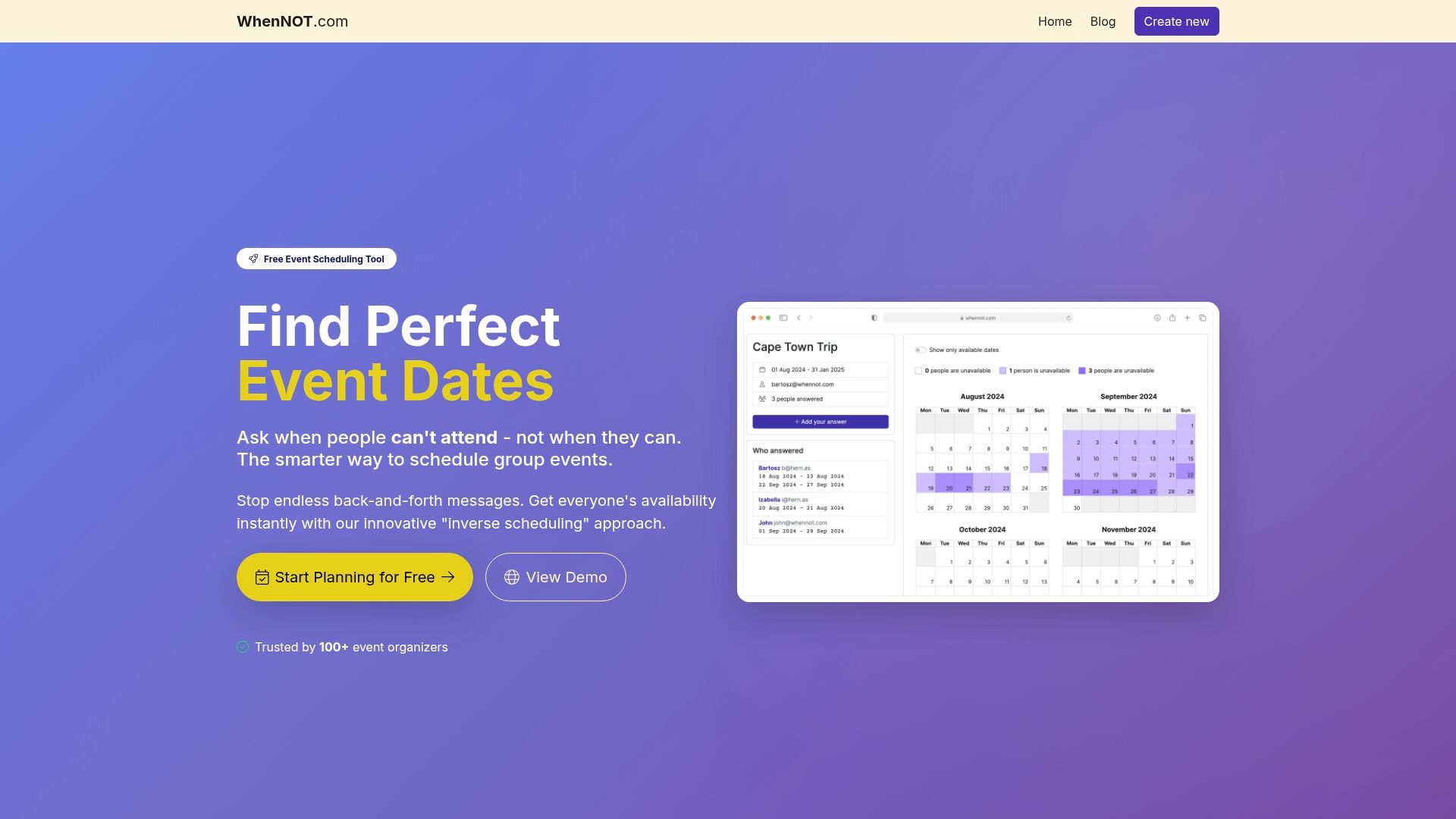
Stop wasting time with endless email chains and complicated polls. Experience the convenience of free, privacy-conscious, and user-friendly scheduling with WhenNOT. Ready to make your next family reunion a well-organized, stress-free success Spend less time planning and more time enjoying meaningful moments with your loved ones. Start your event at WhenNOT landing page today and see how easy scheduling can be. Also consider how digital tools can improve your budgeting and group coordination by exploring expert tips at Family Reunion Budget Steps and creative ideas at Family Reunion Ideas.
Frequently Asked Questions
How can I set a realistic budget for a family reunion?
Establish a realistic budget by selecting a finance committee leader and involving family members in discussions. Start by listing major expenses, such as accommodation, food, and activities, and gather input on expectations to create a balanced budget.
What are some cost-effective venue options for family reunions?
Consider using local public parks, community centers, or family-owned properties as venues. These options often have lower rental fees and allow for flexible catering arrangements, helping you save significantly on venue costs.
How can I organize meals to keep food costs down during the reunion?
Implement a potluck-style meal plan where each family member brings a dish. This approach not only reduces catering expenses but also encourages family bonding through shared recipes and cooking experiences.
What free tools can I use to simplify the scheduling of my family reunion?
Utilize digital communication platforms like group messaging apps or shared online spreadsheets to coordinate schedules. Setting up a centralized hub streamlines communication and helps engage family members in the planning process without incurring costs.
How can I track expenses effectively to avoid overspending?
Track expenses by creating a detailed budget spreadsheet and regularly updating it. Assign a financial coordinator to oversee budgeting and review expenses weekly to maintain financial transparency throughout the planning process.
What low-cost activities can we plan to ensure fun at our family reunion?
Focus on low-cost group activities like nature walks, family storytelling, or DIY craft sessions that promote engagement and connection. Planning these activities reveals that meaningful experiences can be created without significant financial investments.