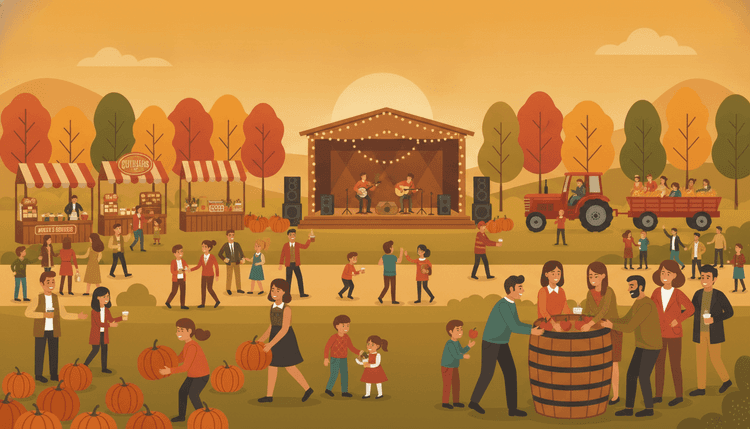
Fall festivals are one of those rare events that genuinely bring an entire community together. Kids run through pumpkin patches while parents browse craft vendors and everyone lines up for apple cider. But pulling off an event this size takes serious coordination. Here is how to organize a fall festival that people will look forward to every year.
Why Fall Festivals Bring Communities Together
Fall festivals tap into something people crave: a shared experience in their own backyard. In a world where most social interaction happens on screens, a local harvest event gives neighbors a reason to meet face to face, support local vendors, and create memories with their kids.
For neighborhood associations and community organizations, fall festivals build goodwill and strengthen connections that last long after the last pumpkin gets carved. For schools, they serve as fundraisers and family engagement events rolled into one. And for local businesses, they provide a high-visibility platform to reach customers who live nearby.
The investment in planning pays off through stronger community bonds, increased engagement with local organizations, and a tradition that grows bigger and better each year.
Setting a Date and Venue for Your Fall Festival
The date and venue shape every other decision you make. Lock these down early so vendors, volunteers, and attendees can plan around them.
Best Dates for Fall Festivals in 2026
The prime fall festival window runs from mid-September through early November. Peak foliage varies by region, but these weekends tend to work well across most of the U.S.:
- September 19-20 — Early fall, warm weather, school is back in session
- October 3-4 — Peak pumpkin season starts, comfortable temperatures
- October 10-11 — Columbus Day weekend gives families an extra day
- October 17-18 — Peak foliage in many regions
- October 24-25 — Close to Halloween, great for themed activities
- October 31 - November 1 — Halloween weekend, ideal for costume contests
If your planning committee cannot agree on a date, survey your community. A quick availability poll shared through neighborhood email lists and social media groups reveals which weekends have the fewest conflicts.
Indoor vs Outdoor Venue Considerations
| Factor | Outdoor Venue | Indoor Venue |
|---|---|---|
| Capacity | 500-5,000+ | 100-500 |
| Weather risk | High (need rain plan) | None |
| Setup flexibility | Maximum | Limited by layout |
| Cost | $200-3,000 (park permit) | $1,000-5,000+ (rental) |
| Parking | Often ample | May need shuttle or overflow |
| Atmosphere | Natural fall setting | Requires more decoration |
| Noise | Fewer restrictions | Sound limits likely |
Most fall festivals work best outdoors in a public park, fairground, or large open field. Reserve a nearby indoor space (community center, school gym, or church hall) as a rain backup. Even on a sunny day, an indoor area serves as a rest station, first aid location, and baby-changing area.
How to Coordinate Volunteers and Vendors
A fall festival runs on volunteer power. You will need 15-30 volunteers for a small event (under 500 attendees) and 50-100+ for a large one.
Start recruiting volunteers 3-4 months before the event. Post on community boards, send calls through schools and churches, and ask local civic groups to contribute teams. High school students often need community service hours and make excellent volunteers.
WhenNOT simplifies volunteer shift scheduling by letting people sign up for specific time blocks rather than committing to the entire day. Create morning, afternoon, and breakdown shifts so volunteers can participate without giving up their whole weekend.
Volunteer roles to fill:
- Setup and breakdown crews (arrive early, stay late)
- Information booth and greeting station
- Activity station monitors (one per station)
- Parking and traffic management
- First aid and safety monitors
- Vendor liaison (point of contact for all vendors)
- Social media and photography team
Vendor coordination tips:
- Send vendor applications 4-6 months in advance
- Include booth fees, space dimensions, power availability, and load-in times
- Create a vendor map showing booth locations, power access, and traffic flow
- Require proof of insurance and food handler permits where applicable
- Hold a vendor information meeting 2-3 weeks before the event
Must-Have Fall Festival Activities
Activities are what turn a vendor fair into a festival. Plan a mix of passive experiences (browse, eat, watch) and active ones (play, compete, create).
Pumpkin Patch and Hayrides
Set up a pumpkin display area where families can pick and purchase pumpkins. Add a pumpkin decorating station with paint, stickers, and markers for kids who want to create on the spot. Partner with a local farm to supply pumpkins at wholesale and split the revenue.
Hayrides need a tractor, a wagon or trailer with hay bales for seating, and a scenic route. Even a short loop around the park grounds feels special when leaves are falling. Run rides every 15-20 minutes and assign a volunteer to manage the loading line.
Apple Bobbing and Harvest Games
Classic harvest games give kids something to do between snack runs. Set up stations that require minimal supervision:
- Apple bobbing — Use a large tub, apples, and a volunteer to manage the line. Provide towels.
- Corn hole / bean bag toss — Fall-themed boards are easy to make or rent.
- Scarecrow building — Provide old clothes, straw, and stakes. Families build their own scarecrow to take home.
- Pie eating contest — Buy inexpensive pumpkin or apple pies. Run heats of 4-6 contestants. Kids and adults compete separately.
- Seed spitting contest — Watermelon or pumpkin seeds. Mark distances on the ground.
Live Music and Entertainment
Live music transforms the atmosphere of any outdoor event. Book a local band or musician who plays family-friendly acoustic, folk, or country sets. Budget $300-1,500 for a 2-3 hour performance depending on your market.
If a live band is outside the budget, a good DJ with a fall-themed playlist works just as well. Add a small dance area near the stage for kids who cannot sit still.
Other entertainment options:
- Face painting and balloon artists
- Magic show or puppet show (30-45 minute sets)
- Local dance groups or school performance troupes
- Costume contest (best fall-themed outfit, best family costume, funniest costume)
Food and Vendor Management
Food is the backbone of any festival. Plan for a mix of local food vendors, community group booths, and a beverage station.
Essential fall festival foods:
- Caramel apples and candy apples
- Hot apple cider and pumpkin spice drinks
- Kettle corn and roasted nuts
- Chili, soups, and stews in bread bowls
- Corn on the cob and roasted vegetables
- Funnel cakes and fried dough
- S'mores station (if fire pits are allowed)
Vendor management checklist:
- Assign numbered booth locations and provide a map
- Ensure power access for vendors who need it (coordinate generator rental if needed)
- Stagger food vendor types so similar offerings are not side by side
- Require trash and recycling bins at each booth
- Post clear signage for pricing and allergen information
- Set up a handwashing station near the food area
Marketing Your Fall Festival
Start promoting 6-8 weeks before the event and ramp up intensity as the date approaches.
Channels that work for community events:
- Neighborhood email lists and newsletters
- Community Facebook groups and Nextdoor
- Flyers at local businesses, libraries, and schools
- Local newspaper event listings (often free)
- Community bulletin boards at grocery stores and coffee shops
- School backpack flyers (coordinate with the school office)
- Instagram and Threads posts with eye-catching fall imagery
Create a simple event page or landing page with the date, time, location, parking info, and a list of activities and vendors. Share this single link everywhere so people can find all the details in one place.
Budget and Sponsorship Planning
A community fall festival can run on a surprisingly modest budget if you leverage volunteer labor and local partnerships.
| Category | Small Event (<500) | Large Event (1,000+) |
|---|---|---|
| Venue/permits | $200-800 | $1,000-3,000 |
| Entertainment | $300-800 | $1,500-5,000 |
| Activities/supplies | $200-500 | $500-2,000 |
| Marketing | $50-200 | $300-1,000 |
| Insurance | $100-500 | $500-1,500 |
| Portable restrooms | $300-600 | $900-2,000 |
| Contingency (10%) | $115-340 | $470-1,450 |
| Total | $1,265-3,740 | $5,170-15,950 |
Funding sources:
- Vendor booth fees ($50-200 per booth)
- Sponsorships from local businesses (tiered packages: $250, $500, $1,000)
- Ticket sales or suggested donations at the gate
- Food and drink sales (if the organization runs its own booths)
- Activity fees (pumpkin sales, hayride tickets)
Approach sponsors 4-6 months before the event. Offer tiered packages that include logo placement on signage, social media mentions, and a booth at the event. Local banks, real estate agencies, and family-oriented businesses are natural sponsors.
Day-Of Event Management Timeline
| Time | Activity |
|---|---|
| 6:00 AM | Setup crew arrives, mark booth locations |
| 7:00 AM | Vendor load-in begins |
| 8:30 AM | Volunteer check-in and briefing |
| 9:00 AM | Sound check, final walkthrough |
| 10:00 AM | Festival opens to the public |
| 10:30 AM | First hayride departs |
| 11:00 AM | Kids' activities begin |
| 12:00 PM | Pie eating contest |
| 1:00 PM | Live music / entertainment begins |
| 2:00 PM | Costume contest |
| 3:00 PM | Scarecrow building contest judging |
| 4:00 PM | Final hayride, raffle drawing |
| 4:30 PM | Closing announcements |
| 5:00 PM | Festival closes, cleanup begins |
| 7:00 PM | All vendors cleared, final cleanup |
Assign a "festival director" who floats between stations all day handling problems. Equip key volunteers with walkie-talkies or a group messaging app for real-time communication. Keep a printed timeline posted at the information booth and the volunteer check-in station.
Ready to schedule your next group event without the headache? Find the perfect dates in minutes with WhenNOT.
FAQ
How far in advance should I start planning a fall festival?
Start 6-9 months before the event for a large community festival or 3-4 months for a smaller neighborhood gathering. The biggest lead-time items are venue booking, vendor recruitment, and sponsorship outreach. All three require months of runway.
How much does a community fall festival cost to organize?
A small neighborhood event (under 500 attendees) typically costs $1,200-3,700. A large community festival (1,000+ attendees) runs $5,000-16,000. Most of the budget goes to venue, entertainment, and portable restrooms. Vendor booth fees and sponsorships can offset 50-80% of costs.
Do I need permits for a fall festival?
Most municipalities require permits for events held in public parks or streets. You may need a special event permit, food vendor permits, noise permits (for amplified music), and liability insurance. Contact your city or county events office 6+ months in advance. Requirements vary widely by location.
How do I handle bad weather on festival day?
Book a rain date when you reserve the venue. If that is not possible, identify indoor backup spaces (school gym, community center) for key activities. For light rain, tents and canopies keep things moving. Communicate your weather policy on all promotional materials so attendees know the plan.
How many volunteers do I need for a fall festival?
Plan for 3-5 volunteers per 100 attendees. A festival expecting 500 guests needs 15-25 volunteers across setup, activity stations, parking, safety, and cleanup. Create shift schedules so volunteers cover 3-4 hour blocks rather than the entire day.
What activities work best for different age groups?
For toddlers (2-4): pumpkin decorating, face painting, sandbox treasure hunts. For kids (5-12): hayrides, apple bobbing, corn mazes, costume contests. For teens: photo booths, trivia, competitive games. For adults: craft vendors, food tasting, live music, beer/wine garden. Plan at least 2-3 activities per age group.
How do I recruit local vendors for the festival?
Post vendor applications on community boards, local business Facebook groups, and farmers market networks. Reach out directly to vendors you have seen at other local events. Offer early-bird booth rates and include amenities (power, tables, trash removal) in the fee. A well-organized event with good foot traffic sells itself to vendors after the first year.