
Every American parent knows the challenge of organizing a family reunion that works for everyone. With busy calendars and relatives scattered across different states, coordinating schedules can quickly become overwhelming. Research shows that over half of American families struggle to pick reunion dates that suit even most participants. This guide offers practical strategies so you can simplify scheduling, maximize participation, and create meaningful connections with your extended family.
Table of Contents
- Family Reunions: Bringing Everyone Together
- Birthday Parties: Making Special Memories
- Holiday Gatherings: Celebrating Traditions
- Anniversaries: Honoring Milestones
- Family Vacations: Creating Shared Experiences
- Graduations: Marking New Beginnings
- Weekly Family Dinners: Strengthening Bonds
Quick Summary
| Takeaway | Explanation |
|---|---|
| 1. Plan Family Gatherings Early | Start planning family reunions, birthday parties, or holidays at least six months in advance to accommodate schedules and preferences. |
| 2. Emphasize Personalization | Make events special by tailoring themes and activities to individual interests and family traditions, focusing on meaningful engagement over expenses. |
| 3. Utilize Technology for Coordination | Use online tools for scheduling, planning, and sharing memories, helping streamline logistical coordination across family members. |
| 4. Promote Inclusivity During Events | Ensure everyone feels valued by being sensitive to diverse backgrounds and preferences, adapting celebrations accordingly. |
| 5. Create Lasting Memories with Documentation | Encourage digital or physical memory collections, such as time capsules or shared albums, to preserve experiences and family stories for future generations. |
1. Family Reunions: Bringing Everyone Together
Family reunions are pivotal moments where generations reconnect, share stories, and strengthen familial bonds across geographic and generational boundaries. These gatherings represent more than just a social event they are critical opportunities for maintaining family identity and emotional well being.
Research highlights the profound significance of family reunions, especially for families who have experienced displacement. Challenges in family reunion processes reveal how these events can be complex emotional and logistical undertakings that require careful planning and sensitivity.
Successful family reunions demand strategic coordination. This means considering factors like geographic spread, age ranges, scheduling conflicts, and individual family member preferences. Parents should start planning at least 6 months in advance, creating tentative date ranges that accommodate most family members schedules.
Key strategies for a memorable reunion include choosing a central location, establishing a clear communication plan, and designing activities that engage multiple generations. Consider creating shared digital albums, planning multi generational games, or organizing storytelling sessions where older family members can share family history.
Technology can significantly simplify reunion planning. Online scheduling tools allow families to collaboratively identify optimal dates and coordinate logistics without endless email chains or phone calls. These platforms help track RSVPs, share event details, and manage complex scheduling needs.
Pro tip: Create a shared family reunion planning document where all relatives can contribute ideas, preferences, and potential dates to democratize the planning process and ensure everyone feels included.
2. Birthday Parties: Making Special Memories
Birthday parties are magical moments that transcend simple celebrations they are opportunities to create lasting family memories and strengthen emotional connections. These events mark significant milestones in a child or adult's life while providing a platform for shared joy and meaningful interactions.
Creative birthday party planning involves understanding the guest of honor's unique interests and designing an experience that reflects their personality. Successful parties are not about expensive decorations or elaborate setups but about thoughtful personalization and genuine engagement.
Parents should consider age appropriate themes and activities that encourage interaction. For younger children this might mean interactive games and structured play. For teenagers this could involve more social activities that allow them to connect with friends while feeling celebrated.
Budget friendly strategies can make birthdays special without breaking the bank. Consider homemade decorations personalized playlists potluck style food contributions and DIY activity stations. The goal is creating memorable experiences through creativity and personal touch rather than expensive purchases.
Technology and digital tools can enhance birthday planning. Online invitation platforms shared digital photo albums and collaborative planning documents help families coordinate seamlessly. These tools reduce planning stress and ensure everyone feels included in the celebration.
Pro tip: Create a family birthday tradition that goes beyond the annual party such as a special birthday breakfast or a personalized memory book where family members can write annual messages to the birthday person.
3. Holiday Gatherings: Celebrating Traditions
Holiday gatherings represent far more than annual celebrations they are powerful cultural touchstones that connect families across generations and preserve cherished traditions. These events serve as critical moments for sharing stories, reinforcing family bonds, and maintaining cultural identity.
Cultural holiday traditions demonstrate the profound ways families maintain connections through shared experiences. Each gathering becomes an opportunity to pass down family histories, recipes, and meaningful customs that help children understand their roots and sense of belonging.
Successful holiday gatherings require thoughtful planning and inclusive approaches. Parents should consider creating flexible traditions that accommodate changing family dynamics such as inviting partners, welcoming new family members, or adapting celebrations for those with different abilities or preferences.
Technology can enhance holiday gathering experiences by helping distant family members participate. Virtual connection tools allow grandparents to join meals video calls can include relatives who cannot travel and shared digital photo albums can preserve memories for future generations.
Budget conscious families can create meaningful experiences without excessive spending. Potluck style meals collaborative gift exchanges and focusing on shared activities rather than expensive presents can make gatherings more accessible and enjoyable for everyone.
Cultural sensitivity matters when planning holiday gatherings. Recognize that family members may have different religious backgrounds, dietary restrictions, or personal traditions. Creating an environment of mutual respect and understanding ensures everyone feels welcome and valued.
Pro tip: Create a shared digital document where family members can contribute favorite holiday recipes memories and traditions ensuring everyone has input and feels connected to the celebration.
4. Anniversaries: Honoring Milestones
Anniversaries represent powerful moments of reflection celebration and recommitment that go far beyond simple date marking. These milestone events offer families an opportunity to honor their shared journey recognize individual and collective growth and strengthen emotional connections.
Family milestone celebrations demonstrate profound psychological benefits that extend well beyond the immediate gathering. Research indicates that purposeful anniversary celebrations can significantly enhance family communication adaptability and mutual support.
Successful anniversary celebrations require thoughtful planning that balances tradition with personal meaning. Parents and partners should consider creating unique rituals that reflect their specific relationship journey such as sharing favorite memories revisiting significant locations or creating collaborative memory projects.
Technology provides innovative ways to enhance anniversary experiences. Digital photo albums collaborative memory books virtual gathering platforms and shared online scrapbooks allow families to preserve and share memories across geographic distances. These tools help create inclusive experiences that accommodate different schedules and travel limitations.
Budget conscious families can create meaningful anniversary celebrations without extravagant expenses. Thoughtful handmade gifts personalized experiences shared meal preparations and creative storytelling can be more impactful than expensive purchases. The emotional investment matters more than monetary value.
Cultural sensitivity plays a crucial role in anniversary celebrations. Recognize that families have diverse traditions and approaches to marking milestones. Creating flexible inclusive celebrations ensures that all family members feel valued and respected regardless of their background or relationship status.
Pro tip: Create a digital or physical anniversary time capsule where family members can contribute memories reflections and predictions about the future to be opened at a specific milestone.
5. Family Vacations: Creating Shared Experiences
Family vacations are transformative experiences that go far beyond simple travel they represent powerful opportunities for deep connection learning and creating lifelong memories. These journeys provide unique settings where families can break away from daily routines and engage with each other in meaningful ways.
Group family travel experiences demonstrate profound impacts on familial relationships by promoting communication understanding and shared emotional landscapes. Each trip becomes an opportunity to learn about one another outside familiar home environments.
Successful family vacations require strategic planning that considers individual preferences generational differences and collective interests. Parents should involve all family members in destination selection activity planning and expectation setting to ensure everyone feels invested and excited about the upcoming experience.
Budget conscious families can create memorable vacations without excessive spending. Consider options like national park trips camping adventures road trips to nearby destinations or exploring local cultural attractions. The quality of interaction matters more than the expense of the destination.
Technology can enhance vacation planning and experiences. Online collaborative planning tools shared digital itineraries family travel apps and virtual destination research can help families coordinate complex travel logistics while building anticipation for the trip.
Multigenerational travel offers unique opportunities for learning and connection. Grandparents can share stories younger children can explore new environments and parents can facilitate meaningful interactions that bridge age differences and create lasting family narratives.
Pro tip: Create a shared digital vacation journal where each family member can contribute photos memories and reflections to preserve the trip experience and build a collective family story.
6. Graduations: Marking New Beginnings
Graduations represent profound moments of transition celebration and personal achievement that transcend academic milestones. These events symbolize not just the completion of an educational journey but the beginning of new life chapters filled with potential and promise.
Academic graduation ceremonies are transformative experiences that recognize individual perseverance while simultaneously connecting graduates to broader communities and shared aspirations. They provide powerful opportunities for reflection recognition and forward looking inspiration.
Successful graduation celebrations require thoughtful planning that balances personal achievement with collective joy. Families should consider creating meaningful experiences that honor the graduate's unique journey such as personalized photo displays storytelling sessions or creating memory books that capture the significance of their academic accomplishment.
Technology offers innovative ways to enhance graduation experiences. Digital memory platforms virtual celebration options live streaming capabilities and collaborative digital scrapbooks allow families to include distant relatives preserve memories and create inclusive celebration experiences that transcend physical limitations.
Budget conscious families can create memorable graduation celebrations without excessive spending. Consider potluck style gatherings homemade decorations meaningful handmade gifts and creative alternative venues that focus on emotional connection rather than expensive production.
Multigenerational participation adds depth to graduation celebrations. Grandparents parents siblings and extended family members can share perspectives offer wisdom and provide emotional support that contextualizes the graduate's achievement within a broader family narrative.
Pro tip: Create a digital time capsule during the graduation celebration where family members contribute letters advice and predictions for the graduate to open at a future milestone.
7. Weekly Family Dinners: Strengthening Bonds
Weekly family dinners represent far more than simple meal times they are strategic opportunities for meaningful connection and communication. These regular gatherings serve as powerful interventions that can transform family dynamics and support emotional well being.
Family dinner research demonstrates profound benefits extending beyond nutrition. These shared meals create consistent spaces for family members to engage discuss daily experiences and build deeper understanding across generations.
Successful family dinners require intentional planning that accommodates busy schedules. Parents should establish flexible yet consistent dinner times create engaging conversation environments and design inclusive meal experiences that welcome participation from all family members regardless of age or individual preferences.
Technology can support family dinner traditions through digital planning tools shared recipe platforms and collaborative meal preparation apps. These resources help families coordinate schedules track dietary preferences and create shared culinary experiences even amid complex schedules.
Budget conscious families can create meaningful dinner experiences without elaborate preparations. Potluck style meals collaborative cooking sessions and rotating meal responsibilities can make dinners feel special without excessive expense. The emotional investment matters more than elaborate culinary productions.
Multigenerational participation adds depth to family dinner experiences. Grandparents parents and children can share stories perspectives and create intergenerational connections that strengthen family identity and emotional resilience.
Pro tip: Create a weekly family dinner ritual where each member contributes to conversation by sharing one meaningful moment from their day promoting active listening and genuine connection.
Below is a comprehensive table summarizing key events, themes, and strategies discussed throughout the article on family gatherings and celebrations.
| Event/Topic | Description | Strategies and Tips |
|---|---|---|
| Family Reunions | Events for reconnecting across generations. | Plan 6 months in advance; use a shared planning document for inclusivity. |
| Birthday Parties | Celebrations to honor individual milestones. | Align themes with interests; utilize budget-friendly DIY options. |
| Holiday Gatherings | Cultural touchstones connecting generations. | Embrace flexibility for dynamics; incorporate shared digital photo albums. |
| Anniversaries | Milestones symbolizing reflection and growth. | Create personal rituals and involve all members for collective celebration. |
| Family Vacations | Travel opportunities for connection and learning. | Choose inclusive destinations; emphasize shared experiences over expenses. |
| Graduations | Mark transitions with recognition and joy. | Use livestream services for inclusivity; create memory books. |
| Weekly Family Dinners | Regular meals enhancing relationships. | Establish consistent times; foster conversations with structured topics. |
Simplify Planning for All Your Important Family Events
Busy parents know that coordinating family reunions, birthday parties, holiday gatherings, anniversaries, and vacations can quickly become overwhelming. The article highlights how multi-generational preferences, complex schedules, and logistical challenges demand thoughtful planning and clear communication. When you face the stress of finding dates that work for everyone without endless phone calls or emails, WhenNOT offers a game-changing solution. Its unique inverse scheduling approach lets everyone mark when they are unavailable rather than when they are free, making it easy to spot the best dates for your event without confusion.
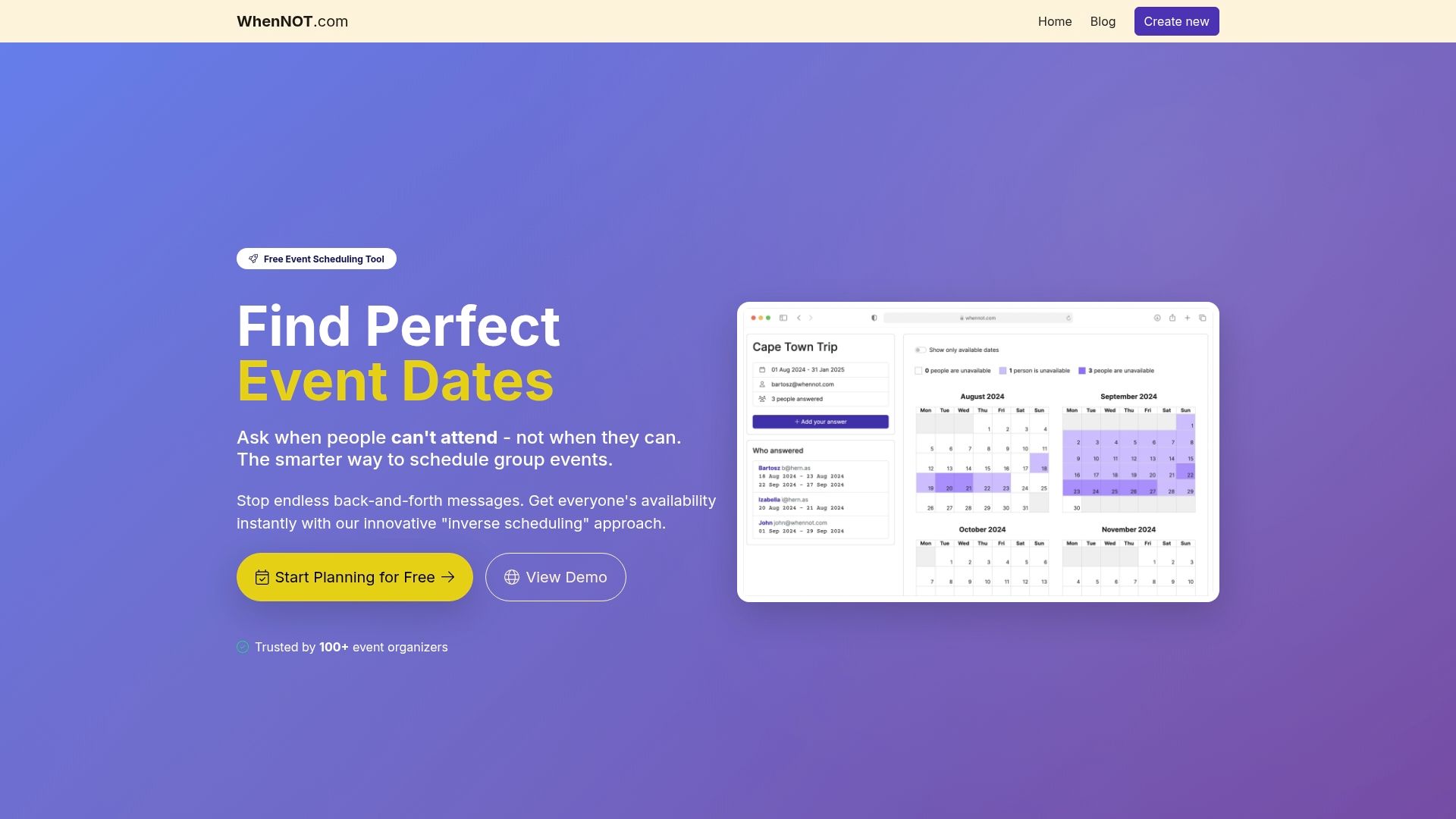
Take control of your family event planning today with WhenNOT. Whether it is a weekend reunion or a flexible multi-day vacation, our free and user-friendly platform helps you gather availability quickly from every family member without requiring sign-ups. Say goodbye to scheduling headaches and spend more time creating lasting memories. Start your next family event planning effortlessly right now at WhenNOT.
Frequently Asked Questions
What are the different types of family events that parents should consider?
Family events include family reunions, birthday parties, holiday gatherings, anniversaries, family vacations, graduations, and weekly family dinners. These events can strengthen family ties and create lasting memories. Consider planning a mix of these events throughout the year to keep family connections strong.
How far in advance should I start planning a family reunion?
Begin planning your family reunion at least six months in advance to ensure you can accommodate most family members' schedules. Gather preferences for date ranges and potential locations early to streamline the process.
What budgeting strategies can I use for celebrating birthdays and other family events?
To manage costs, consider potluck-style meals, DIY decorations, and homemade gifts that emphasize personal touches over expenses. Establish a budget that allows for creativity while keeping the focus on shared experiences rather than costly purchases.
How can technology assist in organizing family events?
Use online scheduling tools, collaborative planning documents, and digital photo albums to streamline the planning process for family events. These platforms can simplify logistics and enhance communication, making it easier to include everyone in the celebration.
What are some memorable activities I can plan for a family gathering?
Engage family members of all ages with activities like storytelling sessions, multi-generational games, and photo-sharing opportunities. Aim to create experiences that encourage participation and connection, ensuring everyone feels included and valued.
How can I make weekly family dinners special for everyone?
Ensure weekly family dinners are engaging by establishing consistent times and rotating meal responsibilities. Encourage each family member to share a meaningful moment from their day during dinner to promote connection and active listening.