
Planning a wedding in 2026 means coordinating 14 vendors and dedicating 200-400+ hours to bringing your vision to life. Many couples and planners struggle with juggling multiple disconnected tools, creating data silos and communication breakdowns that add unnecessary stress. This article delivers a practical framework for evaluating wedding planner software and showcases proven examples that consolidate vendor coordination, scheduling, and guest management into streamlined workflows. You'll discover how to select tools that reduce planning hours, prevent scheduling conflicts, and transform chaotic coordination into smooth execution.
Table of Contents
- Wedding Planner Examples That Boost Vendor And Schedule Coordination
- Comparison Of Top Wedding Planner Platforms And Their Key Features
- How Ai And Modern Workflows Transform Wedding Planning Coordination
- Streamline Your Wedding Planning With Whennot
- Frequently Asked Questions
Key takeaways
| Point | Details |
|---|---|
| Integrated platforms prevent data silos | All-in-one solutions eliminate contradictions between budgeting, scheduling, and vendor coordination tools |
| AI-driven workflows boost efficiency | Automated responses and vendor management reduce delays by 41% and improve planning speed |
| Focused tool stacks enhance outcomes | Limiting apps to core functions prevents overlap and streamlines guest experience |
| Proven platforms save significant time | Solutions like Aisle Planner and Planning Pod demonstrate measurable improvements in coordination |
| Clear criteria guide smart selection | Evaluating vendor integration, mobile accessibility, and scheduling features ensures you choose effectively |
Defining the criteria for efficient wedding planner tools
Selecting the right wedding planner software starts with understanding what separates efficient platforms from time-wasting tool collections. Most planners use 5-7 different tools, creating data silos and forcing manual reconciliation between budgets, schedules, and vendor communications. This fragmentation leads to contradictions and missed details that compound stress during critical planning phases.
Effective platforms integrate four essential functions into one ecosystem. First, vendor coordination features must centralize contracts, timelines, and communication threads so you can track every detail without switching apps. Second, scheduling capabilities should sync automatically with budget tracking, preventing the common scenario where payment deadlines conflict with vendor availability windows. Third, guest management systems need mobile-friendly interfaces that export data cleanly, allowing seamless transitions between planning stages. Fourth, real-time updates across all modules ensure everyone works from the same information.
Pro Tip: Prioritize platforms that offer native integrations over those requiring third-party connectors, which introduce failure points and maintenance overhead.
When evaluating options, examine how the software handles multi-vendor orchestration. Can you assign tasks to different vendors and track completion status in one view? Does the platform alert you to scheduling conflicts before they become problems? Essential event planning tools should reduce your workload, not add complexity through learning curves and compatibility issues.
The most efficient solutions eliminate the need for complex spreadsheets and duplicated budgeting apps that force you to update the same information in multiple places. Look for platforms where budget changes automatically update vendor payment schedules, and where guest count adjustments trigger timeline recalculations. This interconnected approach can cut your 200-400 planning hours significantly by eliminating redundant data entry and reducing coordination errors.
Key criteria checklist:
- Unified dashboard displaying all vendor statuses and deadlines simultaneously
- Mobile-responsive guest management with instant RSVP tracking
- Budget tools that sync with payment schedules and vendor contracts
- Real-time collaboration features allowing vendors to update their own timelines
- Export capabilities for seamless data transfer to other systems
Wedding planner examples that boost vendor and schedule coordination
Aisle Planner demonstrates how sustained platform development creates superior user experiences. The company collaborated with Lerpal over 6 years for continuous enhancements and a complete migration to React, resulting in faster performance and more intuitive workflows. This long-term investment in technical infrastructure translates to reliability when you're managing tight vendor schedules and guest communications during peak wedding season.
The platform excels at consolidating functions that typically require separate applications. Instead of juggling a budgeting spreadsheet, a separate timeline tool, and disconnected vendor communication channels, Aisle Planner centralizes these elements with automatic synchronization. When you update a vendor's timeline, the system recalculates dependent tasks and alerts affected parties immediately. This prevents the cascade failures that occur when one vendor's delay impacts three others downstream.

Planning Pod takes a different approach by emphasizing communication efficiency. The platform helps over 20,000 professionals save 62+ hours monthly through integrated messaging, automated reminders, and collaborative scheduling tools. Rather than sending individual emails to coordinate vendor arrival times, you can create shared schedules that vendors update directly, eliminating back-and-forth exchanges.
Pro Tip: Evaluate platforms by requesting demonstrations with your actual vendor count and event complexity to see how the software performs under realistic conditions.
Both tools address the fundamental challenge of multi-vendor orchestration by providing visibility into everyone's commitments simultaneously. You can identify scheduling conflicts before confirming bookings and adjust timelines proactively rather than reactively. This capability becomes critical when coordinating ceremony musicians, photographers, caterers, and decorators who must sequence their work precisely.
When assessing these examples against your needs, consider proven longevity and client testimonials as reliability indicators. Platforms with years of continuous operation and strong user communities signal stability and ongoing support. The 2026 event management plan you develop should build on tools that will remain functional and supported throughout your planning timeline.
Key advantages of established platforms:
- Regular feature updates based on real-world planner feedback
- Extensive integration libraries connecting to payment processors and design tools
- Responsive customer support familiar with common wedding planning challenges
- Proven track records managing high-stakes events with tight coordination requirements
Comparison of top wedding planner platforms and their key features
Understanding how leading platforms differentiate themselves helps you match capabilities to your specific workflow requirements. The ranking methodology combines features at 40%, ease of use at 30%, and overall value at 30%, providing a balanced assessment that accounts for both functionality and practical usability.
| Platform | Primary Strength | Best For | Notable Feature | Price Range |
|---|---|---|---|---|
| Aisle Planner | Vendor coordination | Professional planners | Timeline automation | Premium |
| Planning Pod | Communication efficiency | Multi-event coordinators | Integrated messaging | Mid-range |
| HoneyBook | CRM and invoicing | Solopreneurs | Client portal | Mid-range |
| Dubsado | Workflow automation | Service-based businesses | Custom workflows | Mid-range |
| Trello | Visual task management | Budget-conscious planners | Flexible boards | Free to low |
Platforms emphasizing budgeting typically offer robust expense tracking with vendor payment integration, while those focused on guest experience prioritize RSVP systems and seating chart tools. Some solutions excel in AI-assisted workflows that automate routine communications, whereas others specialize in design collaboration features for creating mood boards and layout plans.
The comparison reveals that no single platform dominates every category. Aisle Planner's strength in vendor timeline management comes with a higher price point, making it ideal for professional planners handling multiple simultaneous weddings. Planning Pod's communication tools deliver exceptional value for coordinators managing vendor relationships across different event types. HoneyBook and Dubsado serve solopreneurs who need client relationship management alongside planning features.
Your choice depends on workflow complexity and vendor count. Simple celebrations with fewer than eight vendors may function well with visual tools like Trello combined with spreadsheet budgeting. Complex multi-day events requiring precise vendor sequencing benefit from specialized platforms offering automated conflict detection and timeline recalculation.
Pro Tip: Start with free trials of your top three candidates and run them through a mock planning scenario matching your actual event scope to identify usability issues before committing.
The free event scheduling comparison provides additional context for evaluating how scheduling capabilities integrate with broader planning features. Platforms offering superior scheduling often sacrifice depth in other areas, requiring you to balance comprehensiveness against specialized excellence.
How AI and modern workflows transform wedding planning coordination
Artificial intelligence is revolutionizing how planners handle repetitive coordination tasks that previously consumed hours of manual effort. Agentic AI workflows accelerate bridal responses by 37%, reduce vendor delays by 41%, and improve event day issue resolution by 33%. These improvements stem from automated enquiry handling, intelligent schedule adjustment suggestions, and proactive vendor follow-up systems that work continuously without human intervention.
The technology addresses the core challenge of juggling enquiries, vendor communications, budget updates, and multi-day guest experiences simultaneously. Instead of manually tracking which vendors need payment reminders or which guests haven't confirmed attendance, AI systems monitor these elements and trigger appropriate actions automatically. This frees planners to focus on creative decisions and relationship building rather than administrative tracking.
Unified platforms eliminate silos across sales, design, hospitality, and finance functions, reducing administrative overhead by up to 70%. When a client approves a design change, the system automatically updates vendor orders, adjusts budget allocations, and notifies affected team members. This integration prevents the communication gaps that occur when information lives in separate tools requiring manual synchronization.
AI-powered workflows free event professionals to focus on creating memorable celebrations rather than chasing status updates and reconciling conflicting information.
Pro Tip: Incorporate AI tools as supplements to human vendor relationship management, not replacements, ensuring technology enhances rather than replaces the personal touch that distinguishes exceptional planners.
The transformation extends to day-of coordination, where AI systems monitor vendor arrival times, track setup progress, and alert coordinators to potential delays before they impact the schedule. This real-time visibility allows proactive problem solving instead of reactive crisis management. When the florist runs 20 minutes late, the system can suggest timeline adjustments and notify affected vendors automatically.
Integrated AI benefits:
- Automated client communication handling routine questions without planner involvement
- Predictive scheduling that identifies potential conflicts before confirmation
- Smart vendor matching based on budget, style preferences, and availability
- Real-time budget tracking with automatic alerts when spending approaches limits
These capabilities represent a fundamental shift from manual coordination to intelligent assistance. The technology doesn't replace planner expertise but amplifies it by handling routine tasks and providing data-driven insights. As you improve event coordination strategies for 2026, consider how AI integration can streamline your workflow while preserving the personalized service that clients value.
Streamline your wedding planning with WhenNOT
Coordinating vendor schedules and guest availability doesn't require expensive, complex platforms that demand extensive training. WhenNOT offers a streamlined approach specifically designed for event organizers who need efficient coordination without unnecessary features. The platform's inverse scheduling method asks participants when they're not available, simplifying the process for multi-day celebrations and vendor coordination.
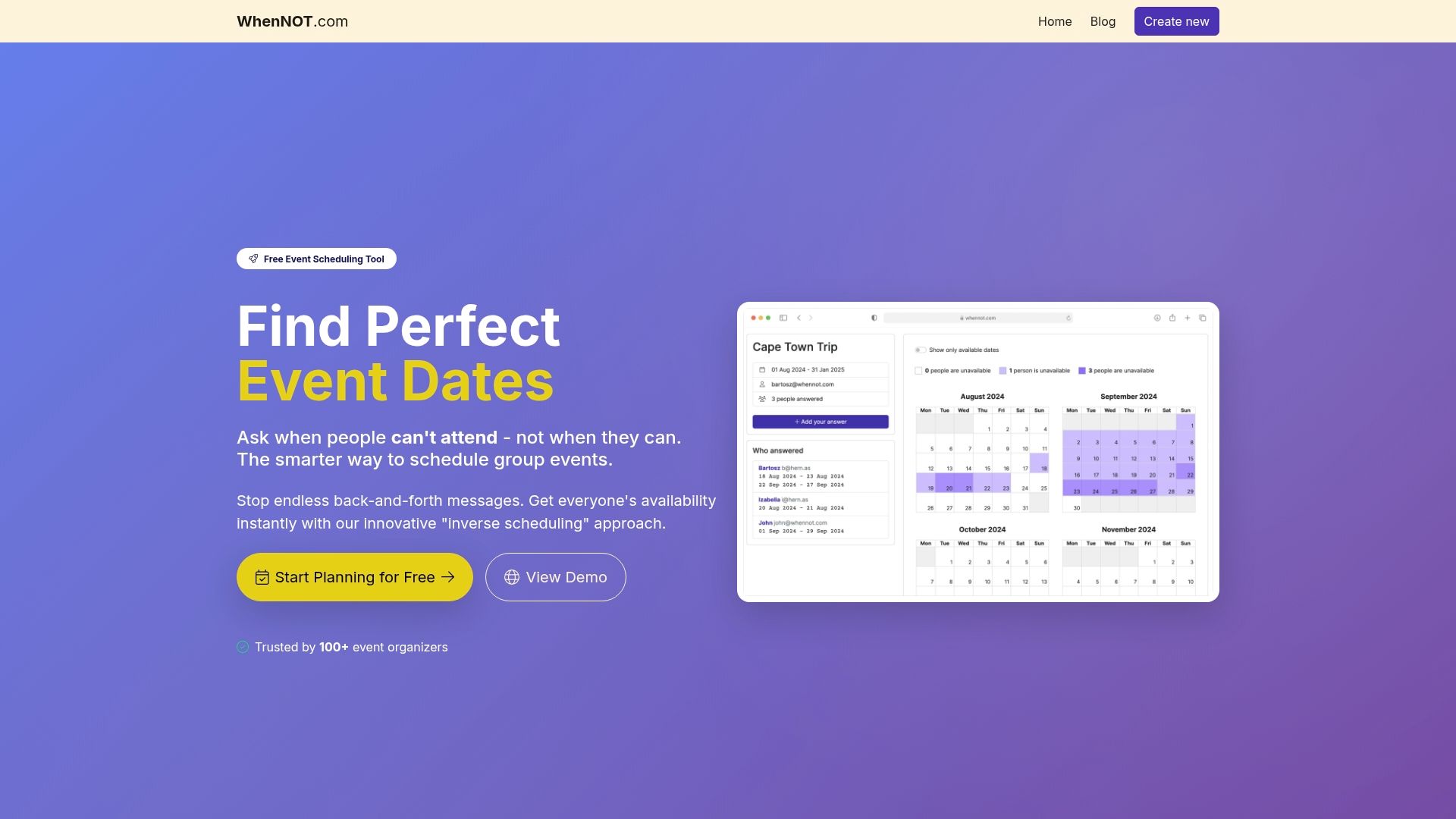
Connect all your vendors and guests through a unified tool that prevents scheduling conflicts before they occur. Share a single link, and participants mark their unavailable dates without creating accounts or downloading apps. This simplicity reduces friction and improves response rates, giving you complete availability visibility faster than traditional scheduling methods. The platform visualizes everyone's busy days concurrently, allowing you to identify optimal dates instantly and move forward with confident booking decisions. Visit WhenNOT to simplify your 2026 wedding planning and reduce coordination stress.
Frequently asked questions
What features should I prioritize when choosing a wedding planner tool?
Prioritize vendor coordination, scheduling, budgeting integration, and guest management that simplifies participation for all stakeholders. Ensure the tool supports mobile-friendly communication and real-time updates so you can manage details from anywhere. Look for platforms offering native integrations rather than requiring third-party connectors that introduce complexity.
How can AI improve my wedding planning process?
AI automates enquiry handling, schedule adjustments, and vendor follow-ups, with workflows improving bridal response times by 37% and reducing vendor delays by 41%. This automation allows you to focus on creative aspects and relationship building rather than administrative tracking. The technology works continuously, monitoring deadlines and triggering appropriate actions without manual intervention.
What are common mistakes to avoid when using wedding planning software?
Avoid using multiple unintegrated apps that create contradictions and communication silos requiring manual reconciliation. Choose platforms with guest-friendly RSVP systems that minimize friction and encourage participation. Prioritize tools offering data export capabilities so you're not locked into a single ecosystem if your needs change.
How many vendors are typically involved in a wedding, and how does software help?
The average wedding involves 14 vendors and requires 200-400+ planning hours, creating significant coordination complexity. Effective software centralizes vendor management, timeline tracking, and communication in one platform, reducing the stress of juggling multiple relationships. This consolidation ensures smooth coordination and prevents the scheduling conflicts that occur when information lives in separate systems.