
Nearly 85 percent of American event planners report that shifting to adaptive, technology-driven workflows has transformed how gatherings are organized. The event planning landscape in the United States now pushes beyond old routines, demanding quick thinking and real-time collaboration. This article explores how advanced tools and fresh strategies help American organizers build more flexible, engaging experiences while tackling the persistent hurdles of modern event coordination.
Table of Contents
- Defining The Event Planning Workflow 2025
- Types Of Group Events And Schedules
- Step-By-Step Event Coordination Process
- Leveraging Scheduling Tools Like Whennot
- Common Event Planning Challenges To Avoid
Key Takeaways
| Point | Details |
|---|---|
| Dynamic Collaboration | The event planning workflow in 2025 emphasizes flexible coordination and real-time collaboration, moving beyond traditional methods. |
| Holistic Approach | Successful planning integrates technology with human-centered design to create meaningful participant engagement. |
| Advanced Scheduling Tools | AI-driven solutions streamline scheduling, enhancing flexibility and precision in coordinating events. |
| Proactive Challenge Management | Anticipating challenges and establishing contingency plans is crucial for navigating complex event landscapes effectively. |
Defining the Event Planning Workflow 2025
Event planning in 2025 represents a strategic approach to orchestrating gatherings that transcends traditional scheduling methods. Modern workflows now emphasize dynamic collaboration and flexible coordination, moving beyond rigid linear processes. By integrating advanced technological frameworks, event planners can now create more adaptive and responsive planning strategies.
The emerging event planning workflow incorporates sophisticated modeling techniques for complex dynamic systems, which allow organizers to map event objectives with unprecedented precision. These new methodologies focus on understanding event intentions, causal relationships, and potential variations in planning scenarios. Specifically, the workflow intention framework enables planners to align input elements, process components, and desired outputs more effectively than ever before.
Key characteristics of the 2025 event planning workflow include:
- Adaptive scheduling technologies
- Real-time collaboration platforms
- Advanced predictive coordination tools
- Flexible participant engagement strategies
Successful event planning now requires a holistic approach that integrates technological capabilities with human-centered design principles. Planners must anticipate potential challenges, create multiple contingency scenarios, and remain agile throughout the coordination process. By embracing these innovative workflow modeling approaches, organizations can transform event planning from a logistical challenge into a strategic opportunity for meaningful connection and engagement.
Types of Group Events and Schedules
Modern event planning encompasses a diverse range of group events, each requiring unique scheduling approaches and coordination strategies. Event types range from professional conferences to social gatherings, demanding flexible and adaptive scheduling frameworks that can accommodate varying participant needs and logistical requirements.
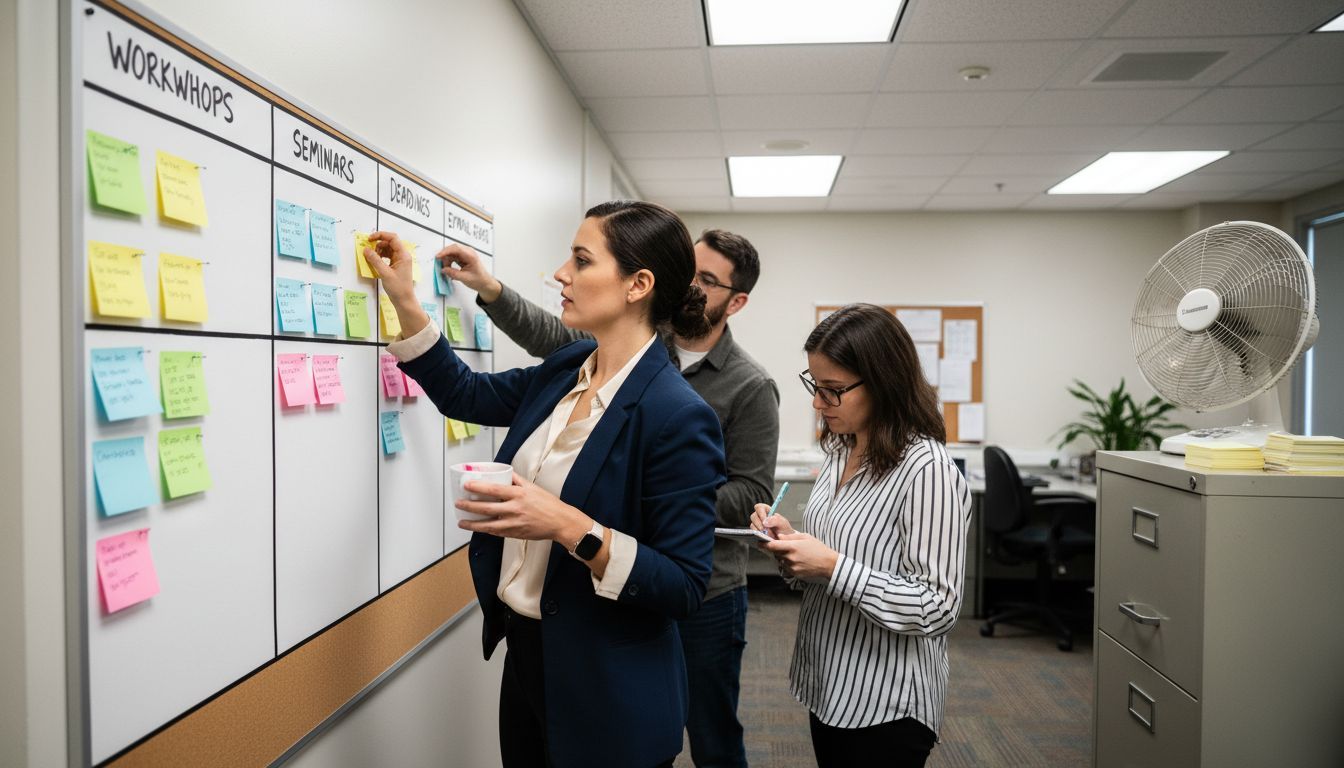
The complexity of group event scheduling has evolved significantly, with contemporary approaches moving beyond traditional linear planning models. Block scheduling techniques have influenced how organizers conceptualize time allocation and participant engagement, enabling more concentrated and purposeful event experiences. This approach allows planners to create more dynamic and interactive event structures that maximize participant interaction and learning potential.
Key types of group events in 2025 include:
- Corporate retreats and team-building workshops
- Academic conferences and symposiums
- Professional networking events
- Community and social gatherings
- Multi-day educational programs
- Collaborative research meetings
Effective event scheduling now requires a nuanced understanding of participant availability, technological integration, and adaptive planning methodologies. By understanding group scheduling processes, event organizers can create more inclusive, efficient, and engaging experiences that meet the diverse needs of modern participants. The future of group event planning lies in leveraging technology, understanding participant dynamics, and creating flexible frameworks that prioritize meaningful interaction and collaborative potential.
Step-by-Step Event Coordination Process
Event coordination has transformed into a sophisticated, multi-dimensional process that requires strategic planning and precise execution. Structured coordination processes have become critical for ensuring successful event outcomes across various contexts, from academic conferences to corporate gatherings.
The comprehensive event coordination workflow in 2025 encompasses several strategic stages that enable planners to navigate complex logistical challenges with greater efficiency. These stages are designed to create a holistic approach that balances technological integration, participant engagement, and adaptive planning methodologies.
Key stages of the event coordination process include:
- Initial Conceptualization and Goal Setting
- Define event objectives
- Identify target audience
- Establish key performance indicators
- Resource and Logistics Planning
- Budget development
- Venue selection
- Technical infrastructure assessment
- Participant Coordination
- Invitation and communication strategies
- Scheduling workflow optimization
- Availability management
- Implementation and Real-Time Management
- Execution of planned activities
- Continuous participant engagement
- Adaptable response mechanisms
Successful event coordination requires a dynamic approach that anticipates potential challenges and creates flexible frameworks. By integrating advanced technological tools and maintaining a participant-centric perspective, event planners can transform complex logistical challenges into seamless, engaging experiences that deliver meaningful outcomes and lasting impressions.
Leveraging Scheduling Tools Like WhenNOT
Modern event planning demands sophisticated technological solutions that streamline complex coordination challenges. Advanced scheduling frameworks now incorporate intelligent mechanisms that transform traditional event planning approaches, enabling more dynamic and responsive coordination strategies.
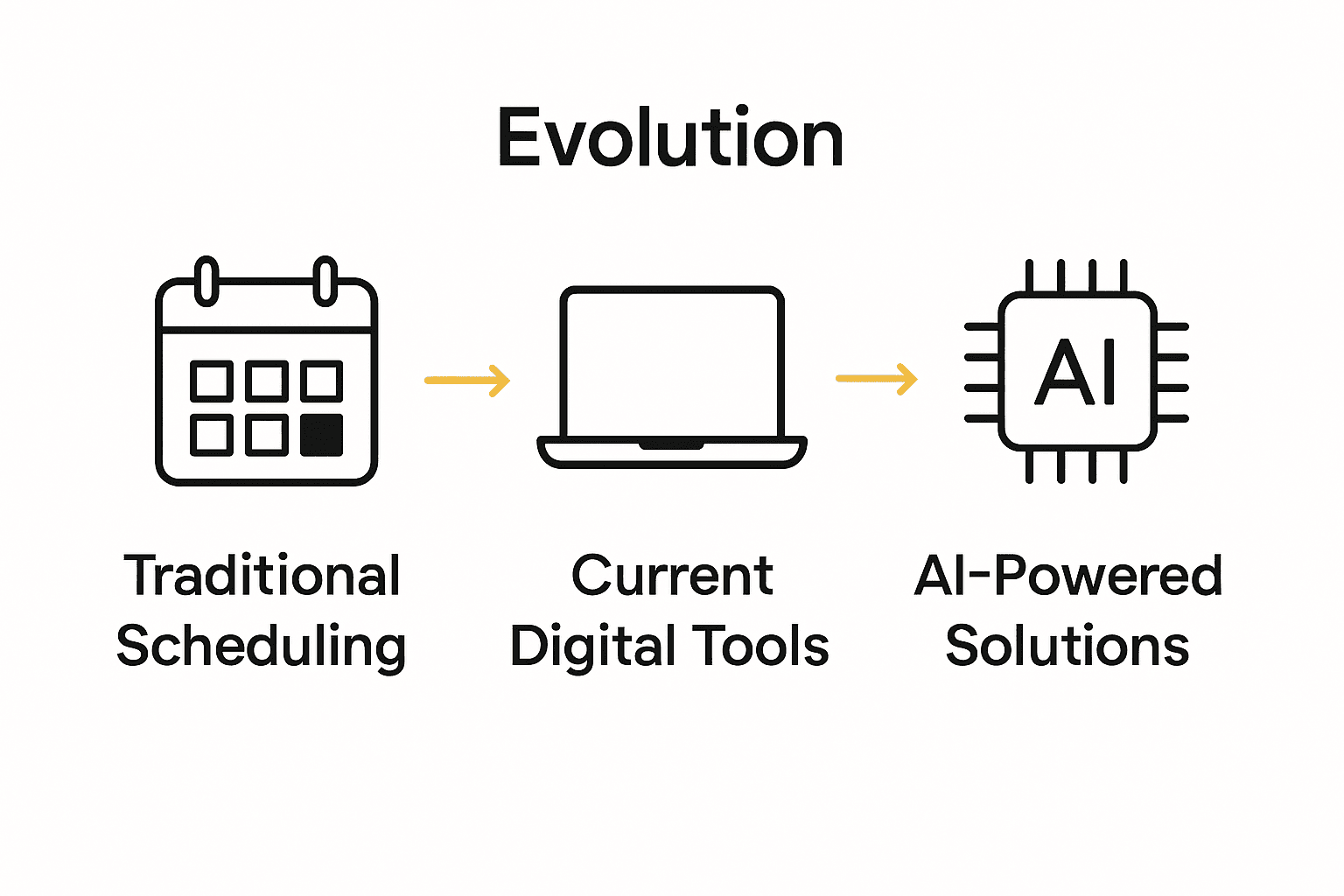
The emergence of AI-driven scheduling technologies has revolutionized how groups plan and manage events. Event-driven orchestration frameworks now leverage machine learning analytics to automate complex scheduling processes, providing unprecedented flexibility and precision in participant coordination. These technological innovations allow event planners to move beyond manual scheduling limitations, creating more intelligent and adaptive planning ecosystems.
Key advantages of modern scheduling tools include:
- Automated availability tracking
- Real-time participant coordination
- Intelligent conflict resolution
- Seamless communication integration
- Adaptive scheduling algorithms
Understanding the role of scheduling tools reveals their transformative potential in event planning. By leveraging intelligent platforms that prioritize user experience and technological efficiency, event organizers can dramatically reduce communication overhead, minimize scheduling conflicts, and create more engaging collaborative experiences. The future of event planning lies in these smart, user-centric tools that simplify complex coordination challenges while maintaining flexibility and personal connection.
Common Event Planning Challenges to Avoid
Event planning in 2025 demands sophisticated strategies to navigate increasingly complex coordination landscapes. Modeling complex dynamic systems requires precise attention to potential challenges that can derail even the most carefully designed events, emphasizing the need for proactive problem identification and resolution.
Understanding the critical dependencies and potential pitfalls is essential for successful event coordination. Workflow design challenges emerge from misalignments between input elements, process mechanisms, and desired outcomes, creating potential disruptions that can compromise event effectiveness. These challenges demand a strategic approach that anticipates potential obstacles and develops robust mitigation strategies.
Common event planning challenges include:
- Participant availability conflicts
- Communication breakdowns
- Inadequate contingency planning
- Resource allocation inefficiencies
- Technology integration gaps
Scheduling mistakes can significantly impact event success. Effective event planners must develop adaptive strategies that allow for real-time adjustments, maintain clear communication channels, and create flexible frameworks that can absorb unexpected changes. The key to overcoming these challenges lies in anticipation, preparation, and maintaining a holistic perspective that balances technological tools with human-centered planning approaches.
Simplify Your Event Planning Workflow with WhenNOT
The article highlights the complexities of the modern event planning workflow in 2025 including challenges such as participant availability conflicts and communication breakdowns. If you've ever struggled with managing multi-day events or coordinating large groups, you understand how critical it is to use adaptive scheduling strategies and workflow optimization techniques. WhenNOT addresses these pain points by offering an innovative inverse scheduling approach that transforms how you handle participant availability and event coordination.
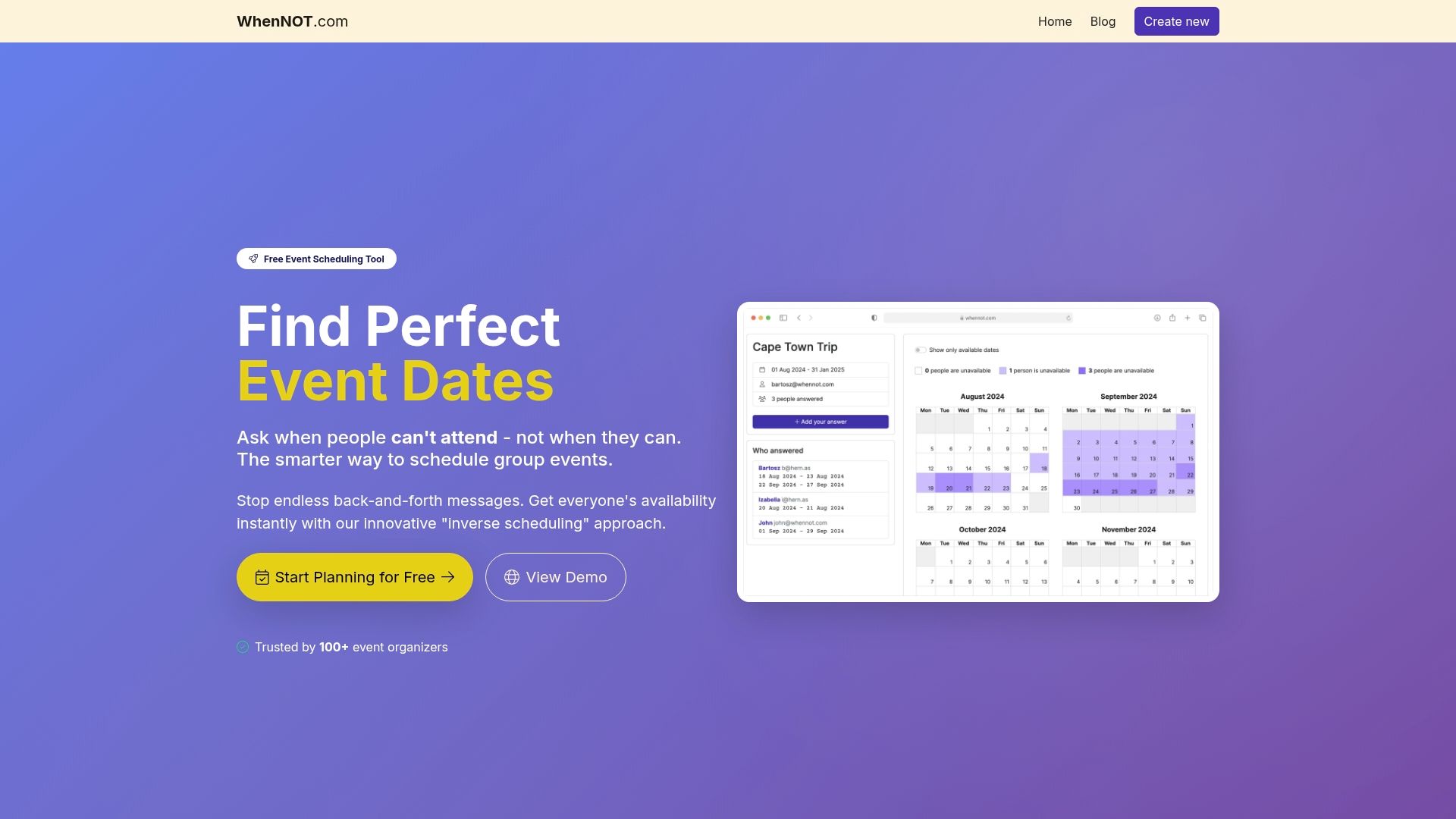
Experience a new level of efficiency with WhenNOT where participants mark only the dates they are unavailable, eliminating confusion and delays. Whether you are organizing professional conferences, corporate retreats, or social gatherings, WhenNOT's intuitive platform helps you quickly visualize everyone's busy days all in one place. Discover how you can avoid common event planning challenges and embrace flexible, real-time coordination by visiting WhenNOT. Take control of your event planning workflow now with Scheduling Workflow Optimization and Understanding Group Scheduling Processes—your bridge to seamless coordination starts here.
Frequently Asked Questions
What are the key characteristics of the event planning workflow in 2025?
The key characteristics include adaptive scheduling technologies, real-time collaboration platforms, advanced predictive coordination tools, and flexible participant engagement strategies.
How does modern event scheduling differ from traditional planning methods?
Modern event scheduling utilizes dynamic and adaptive frameworks, block scheduling techniques, and advanced technological tools, allowing for more interactive and engaging experiences compared to traditional linear planning models.
What are the main stages of the event coordination process in 2025?
The main stages include initial conceptualization and goal setting, resource and logistics planning, participant coordination, and implementation with real-time management, focusing on creating a holistic approach to event execution.
What common challenges should event planners anticipate in 2025?
Common challenges include participant availability conflicts, communication breakdowns, inadequate contingency planning, resource allocation inefficiencies, and technology integration gaps. Effective planners prepare adaptive strategies to address these potential obstacles.