
Managing a multi-day corporate retreat often feels like balancing a hundred moving pieces while still aiming for seamless participation. The demands of assigning rooms, managing resources, and adapting in real time leave little room for error. With increasingly complex event logistics and large, diverse teams, efficient scheduling is no longer just a luxury. By embracing automated scheduling systems powered by artificial intelligence, event planners can minimize communication delays and maximize engagement, giving every meeting and retreat the chance to reach its full potential.
Table of Contents
- Defining Efficient Scheduling In Events
- Types Of Scheduling: Traditional Vs. Inverse
- Key Features Of Advanced Scheduling Tools
- Applications In Multi-Day Corporate Retreats
- Cost Implications And Risk Management
- Common Mistakes And How To Avoid Them
Key Takeaways
| Point | Details |
|---|---|
| Embrace Advanced Scheduling Techniques | Utilize inverse scheduling and AI-driven tools to enhance event adaptability and resource optimization. |
| Integrate Real-Time Adjustments | Invest in scheduling tools that allow for immediate changes based on participant feedback and logistical needs. |
| Prioritize Strategic Planning | Focus on clear organizational goals and flexible session designs to maintain participant engagement throughout multi-day events. |
| Conduct Thorough Risk Assessments | Implement comprehensive financial and operational risk management strategies to ensure event viability and resilience against unforeseen challenges. |
Defining Efficient Scheduling in Events
Efficient scheduling represents a strategic approach to organizing events that maximizes resource utilization and minimizes potential conflicts. At its core, scheduling involves carefully allocating time slots, personnel, rooms, and activities while navigating complex logistical constraints. Sophisticated scheduling methods require advanced techniques that go beyond simple time management.
The key characteristics of efficient event scheduling include:
- Dynamic allocation of resources
- Minimizing scheduling conflicts
- Maximizing participant engagement
- Optimizing time slot utilization
- Adapting to stakeholder preferences
Modern scheduling increasingly relies on technological solutions that leverage artificial intelligence and algorithmic approaches. These advanced systems can process multiple variables simultaneously, creating conflict-free schedules that balance organizational needs with participant availability. By utilizing sophisticated optimization techniques, event planners can generate more flexible and responsive scheduling frameworks.
Understanding scheduling complexity requires recognizing the intricate interactions between resources, time constraints, and participant requirements. Automated scheduling systems now employ evolutionary algorithms and multi-objective optimization strategies to generate intelligent scheduling solutions that adapt to changing event dynamics.
Pro tip: Invest in scheduling tools that offer real-time adjustment capabilities and can integrate multiple participant preferences simultaneously.
Types of Scheduling: Traditional vs. Inverse
Scheduling approaches can be broadly categorized into two primary methodologies: traditional and inverse scheduling. Traditional scheduling techniques like Critical Path Method (CPM) and Gantt charts rely on predetermined sequences and fixed resource allocations, creating linear and somewhat rigid planning frameworks.
Key characteristics of traditional and inverse scheduling include:
-
Traditional Scheduling:
- Static task sequences
- Predetermined time allocations
- Linear planning approach
- Limited adaptability
-
Inverse Scheduling:
- Dynamic resource allocation
- Real-time adjustment capabilities
- Predictive analytics integration
- Flexible response mechanisms
Inverse scheduling represents a more sophisticated approach that leverages artificial intelligence and advanced algorithms to create more responsive and intelligent event management strategies. Dynamic scheduling algorithms enable planners to adapt quickly to unexpected changes, optimize resource utilization, and develop more nuanced scheduling frameworks that respond to real-time constraints and participant availability.
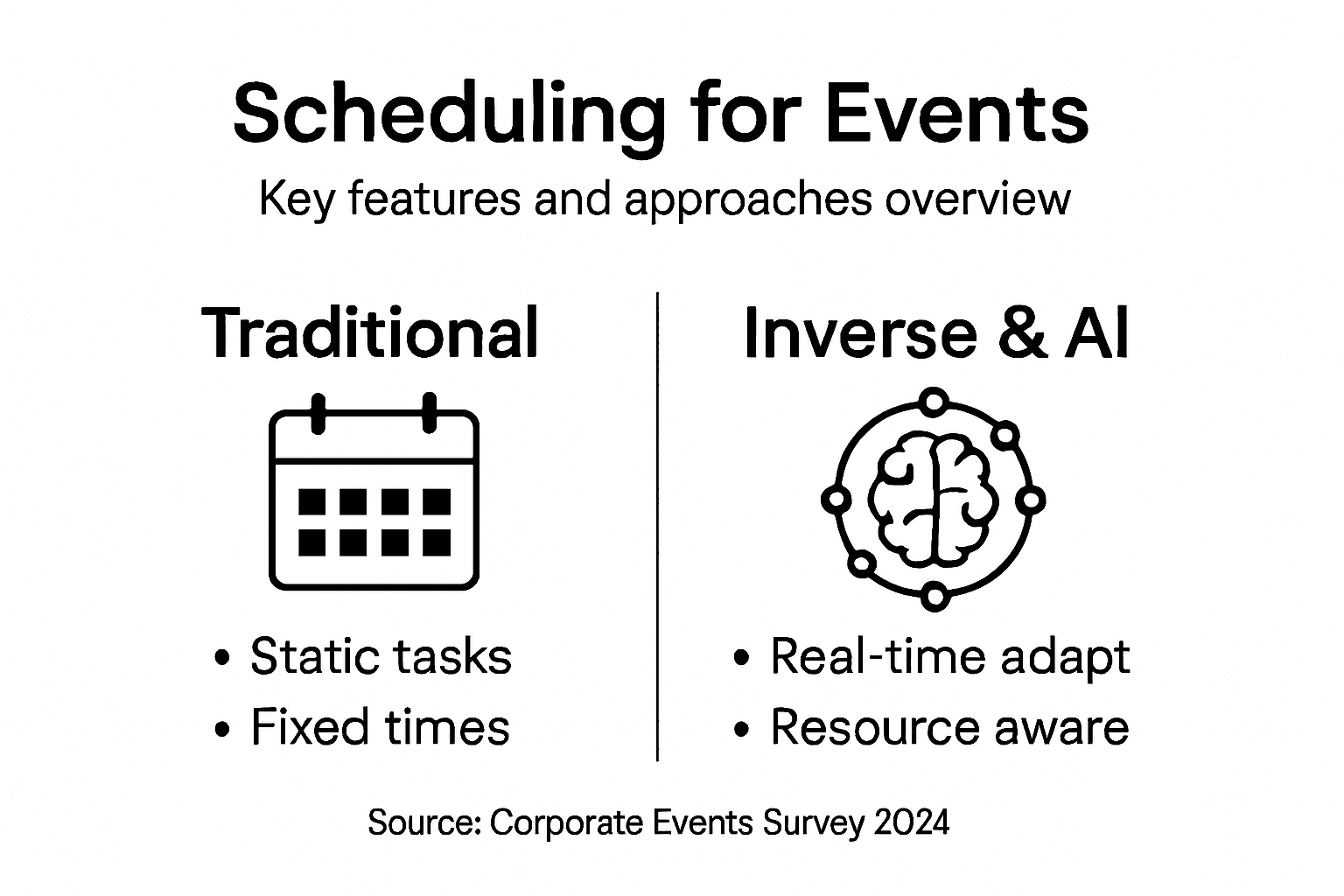
Here's a comparison of traditional and inverse scheduling for event planners:
| Criteria | Traditional Scheduling | Inverse Scheduling |
|---|---|---|
| Planning Flexibility | Fixed, difficult to change | Highly adaptive and responsive |
| Resource Utilization | Often inefficient | Optimized using algorithms |
| Management Approach | Manual, linear processes | Automated, data-driven methods |
| Responds to Changes | Slowly, with disruptions | Instantly, minimizes conflicts |
The evolution from traditional to inverse scheduling reflects the increasing complexity of modern corporate events, where rigid planning methods no longer suffice. By embracing more adaptive techniques, organizations can create more efficient, responsive, and participant-focused scheduling approaches that minimize conflicts and maximize engagement.
Pro tip: Consider implementing hybrid scheduling approaches that combine traditional planning frameworks with inverse scheduling technologies for maximum flexibility.
Key Features of Advanced Scheduling Tools
Advanced scheduling tools have revolutionized event management by incorporating sophisticated technologies that go far beyond traditional planning methods. Automated timetable generation now utilizes complex algorithms that can simultaneously manage multiple resources, preferences, and potential conflicts.
Key features of modern scheduling tools include:
-
Intelligent Conflict Resolution:
- Automatic detection of scheduling conflicts
- Real-time resolution suggestions
- Prioritization of participant preferences
-
Advanced Optimization Capabilities:
- Multi-resource allocation tracking
- Dynamic scheduling adjustments
- Predictive analytics integration
- Machine learning-powered recommendations
The technological backbone of these tools involves sophisticated algorithms that leverage artificial intelligence to create more responsive and intelligent scheduling frameworks. Metaheuristic scheduling algorithms enable planners to balance competing priorities, minimize scheduling conflicts, and automate traditionally manual scheduling tasks with unprecedented precision and efficiency.
These advanced tools represent a significant leap forward in event management, transforming scheduling from a rigid, time-consuming process into a dynamic, intelligent system that adapts to complex organizational needs. By integrating machine learning, real-time data processing, and sophisticated optimization techniques, modern scheduling tools provide unprecedented flexibility and control for event planners.
This table summarizes the business impact of advanced scheduling tool features:
| Feature | Description | Business Impact |
|---|---|---|
| AI Integration | Uses artificial intelligence for scheduling decisions | Increased efficiency, reduced manual errors |
| Conflict Resolution | Identifies and resolves scheduling overlaps | Higher participant satisfaction and fewer delays |
| Predictive Analytics | Forecasts attendance and resource needs | Improved planning and resource allocation |
| Preference Customization | Adapts to individual participant requirements | Enhanced engagement and participation |
Pro tip: Evaluate scheduling tools based on their AI integration, conflict resolution capabilities, and ability to customize preferences across multiple event parameters.
Applications in Multi-Day Corporate Retreats
Multi-day corporate retreats require sophisticated scheduling approaches that balance strategic objectives, team dynamics, and participant engagement. Effective event logistics management involves carefully designing an agenda that seamlessly integrates work sessions, team-building activities, and essential downtime.
Key considerations for multi-day corporate retreat scheduling include:
-
Strategic Session Planning:
- Clear organizational goals
- Balanced work and interaction time
- Flexible session durations
- Participant energy management
-
Team Dynamics Components:
- Collaborative workshop blocks
- Interactive networking opportunities
- Personal reflection periods
- Cross-departmental interaction design
Corporate retreat agenda design involves creating a thoughtful sequence of activities that align with natural team collaboration rhythms. This approach ensures that participants remain engaged, productive, and emotionally connected throughout the event, maximizing both professional development and team cohesion.
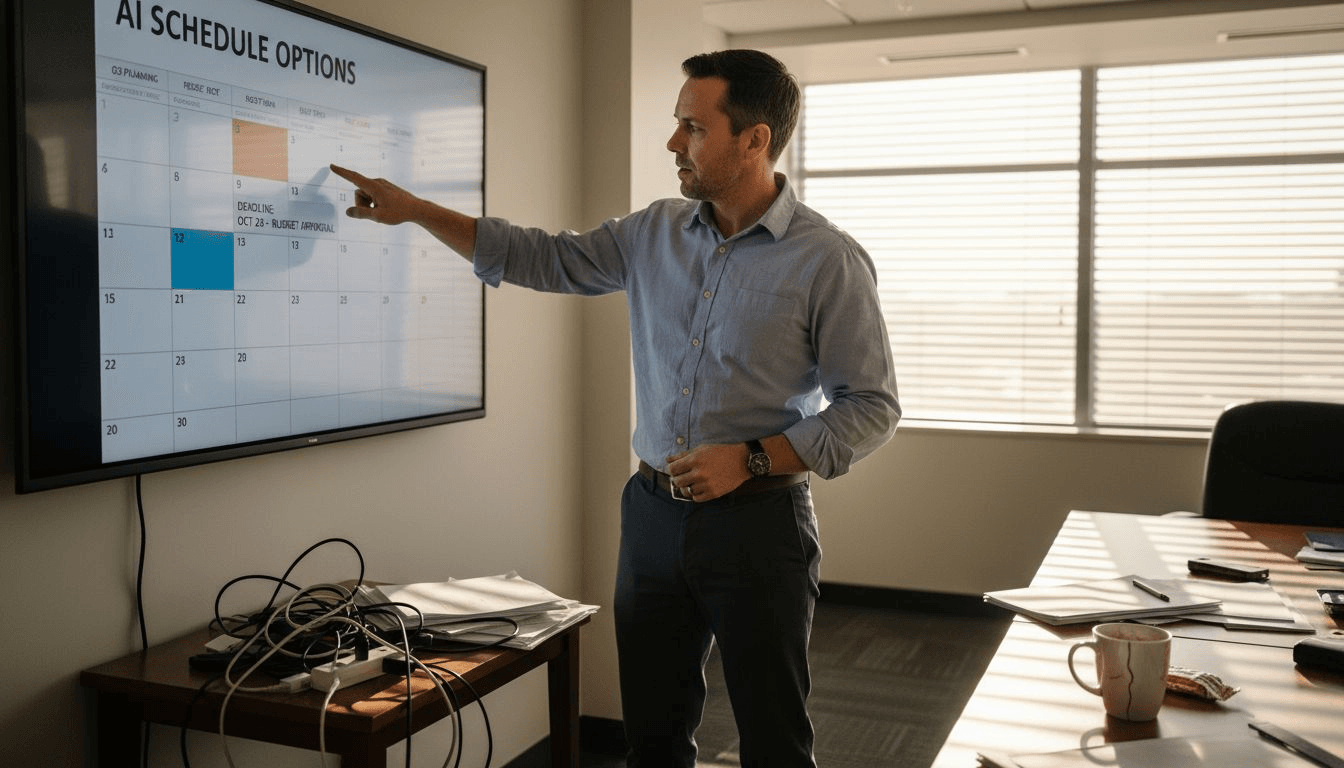
Successful multi-day retreats transform traditional corporate gatherings into dynamic, interactive experiences. By integrating strategic work blocks, experiential learning, and intentional social interactions, organizations can create powerful environments that foster innovation, strengthen relationships, and drive collective performance.
Pro tip: Design your retreat agenda with 60-90 minute focused work blocks interspersed with 15-30 minute interactive breaks to maintain high energy and engagement levels.
Cost Implications and Risk Management
Managing financial risks in corporate event scheduling requires a strategic and comprehensive approach that goes beyond simple budgeting. Financial risk assessment strategies are crucial for ensuring events remain financially viable while delivering high-quality experiences that meet organizational objectives.
Key risk management considerations include:
-
Budgetary Control Mechanisms:
- Comprehensive initial budget development
- Contingency fund allocation
- Continuous financial performance tracking
- Proactive cost mitigation strategies
-
Risk Identification Processes:
- Systematic risk assessment
- Potential scenario modeling
- Resource allocation optimization
- Stakeholder expectation alignment
Project management techniques provide structured frameworks for identifying, evaluating, and mitigating potential financial risks throughout the event lifecycle. These approaches enable organizations to develop robust contingency plans, minimize unexpected expenditures, and maintain financial predictability.
Successful risk management in corporate events involves creating a flexible financial strategy that can adapt to changing circumstances while maintaining strict fiscal discipline. By implementing comprehensive monitoring systems and developing multiple mitigation scenarios, organizations can confidently navigate the complex financial landscape of multi-day corporate retreats.
Pro tip: Allocate at least 15-20% of your total event budget as a contingency reserve to address unforeseen expenses and maintain financial resilience.
Common Mistakes and How to Avoid Them
Corporate event scheduling is fraught with potential pitfalls that can derail even the most well-intentioned planning efforts. Event scheduling mistakes often stem from inadequate preparation, poor communication, and a lack of strategic foresight.
Common scheduling mistakes to avoid include:
-
Planning and Communication Errors:
- Insufficient audience research
- Neglecting stakeholder input
- Poor communication channels
- Lack of clear event objectives
-
Operational Scheduling Challenges:
- Inadequate contingency planning
- Inflexible scheduling approaches
- Overlooking resource constraints
- Ignoring participant availability patterns
Event organization strategies emphasize the importance of proactive risk management and adaptable planning frameworks. By anticipating potential disruptions and building flexibility into scheduling processes, organizations can significantly reduce the likelihood of last-minute complications.
Effective event scheduling requires a holistic approach that balances detailed planning with the ability to adapt quickly to changing circumstances. Successful planners understand that scheduling is not a static process but a dynamic strategy that demands continuous monitoring, communication, and strategic adjustments.
Pro tip: Conduct a comprehensive pre-event risk assessment and develop at least three alternative scheduling scenarios to ensure maximum flexibility and resilience.
Transform Your Corporate Event Scheduling with WhenNOT
Efficient scheduling is key to overcoming the complexities highlighted in the article about corporate events. The challenges of managing multi-day retreats, balancing participant availability, and dynamically resolving conflicts demand innovative solutions. WhenNOT's unique inverse scheduling approach directly addresses these pain points by focusing on when participants are not busy rather than traditional availability requests. This method simplifies coordination, reduces communication delays, and enhances flexibility for planners dealing with shifting priorities and diverse stakeholder needs.
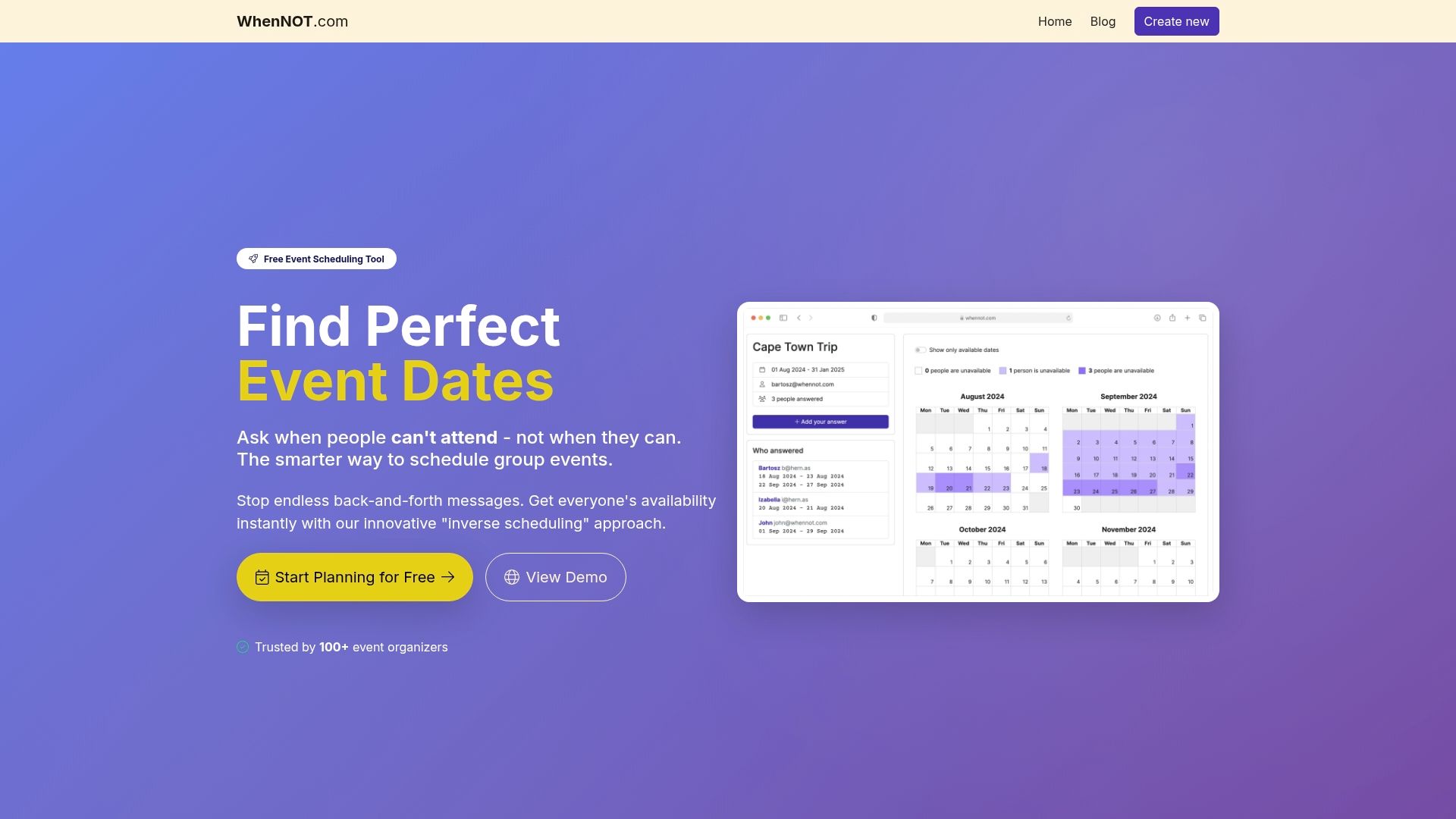
Experience smarter scheduling with WhenNOT, the free and easy-to-use tool that visualizes everyone's unavailable times concurrently for rapid decision-making. By adopting inverse scheduling, you gain the freedom to design adaptive, conflict-free event agendas that match the strategic complexities discussed in the article. Don’t let scheduling chaos drain your resources — visit WhenNOT today and start planning your next corporate retreat effortlessly with real-time adjustments and privacy-first features.
Frequently Asked Questions
What is efficient scheduling in corporate events?
Efficient scheduling is a strategic approach to organizing events that optimizes resource utilization and minimizes conflicts by carefully allocating time slots, personnel, and activities while addressing logistical constraints.
How does advanced scheduling impact participant engagement?
Advanced scheduling tools enable event planners to dynamically allocate resources and adapt to changing participant preferences, leading to increased engagement and satisfaction during corporate events.
What are the differences between traditional and inverse scheduling methods?
Traditional scheduling relies on static task sequences and predetermined time allocations, while inverse scheduling uses dynamic resource allocation and real-time adjustments to create more flexible and responsive event management strategies.
What key features should I look for in scheduling tools for corporate events?
Look for features such as intelligent conflict resolution, advanced optimization capabilities, AI integration, and predictive analytics to ensure your scheduling tools can effectively handle complex event logistics.
Recommended
- Understanding Efficient Scheduling Methods for Better Planning - WhenNOT Blog
- Role of Scheduling in Corporate Teams: Maximizing Efficiency - WhenNOT Blog
- Corporate Event Scheduling Checklist for Efficient Planning - WhenNOT Blog
- Defining Efficient Event Planning: Streamlining Corporate Retreats - WhenNOT Blog