
Juggling schedules for a multi-day retreat with a fast-paced team can quickly feel overwhelming. Coordinating everyone’s availability, managing time zones, and aligning shifting priorities often disrupt even the best-laid plans. For tech leaders aiming to advance productivity while minimizing planning delays, embracing intelligent algorithmic optimization is a practical way to balance resources, reduce conflicts, and maintain smooth team collaboration. Discover proven strategies that help you organize retreats efficiently, set clear expectations, and maximize every team member’s contribution.
Table of Contents
- Defining Scheduling in Corporate Teams
- Common Scheduling Methods and Tools Compared
- How Scheduling Drives Team Productivity
- Key Challenges in Multi-Day Team Planning
- Best Practices for Efficient Team Coordination
Key Takeaways
| Point | Details |
|---|---|
| Strategic Scheduling Importance | Scheduling in corporate teams is essential for optimizing productivity and ensuring efficient resource allocation. It involves complex coordination beyond basic calendar management. |
| Primary Scheduling Methods | Effective methods such as Critical Path Method, resource leveling, and Gantt charts provide frameworks for managing workflows and preventing team burnout. |
| Challenges in Multi-Day Planning | Multi-day planning can lead to role ambiguity and communication breakdowns; addressing these through clear role definitions and regular check-ins is critical for success. |
| Best Practices for Coordination | Establishing clear communication, leveraging technology, and fostering a culture of trust enhance team coordination and efficiency in workflows. |
Defining Scheduling in Corporate Teams
Scheduling in corporate teams represents a strategic process of systematically organizing time, resources, and human capital to optimize team productivity and operational efficiency. Unlike simple calendar management, corporate scheduling involves complex coordination of multiple professionals, tasks, and interdependent workflows.
At its core, scheduling requires intelligent algorithmic optimization that balances resource allocation, minimizes conflicts, and ensures smooth team collaboration. Managers must consider numerous variables including individual worker availability, project timelines, skill sets, and potential time zone differences when developing comprehensive scheduling strategies.
Effective corporate scheduling goes beyond simply tracking meetings. It encompasses creating structured frameworks that enable periodic team alignment, coordinate parallel tasks, and establish clear expectations for work distribution. Scheduling rules and coordination structures become increasingly critical as team size and worker diversity expand, helping organizations maintain productivity while managing complex interdependencies.
Pro tip: Implement a flexible scheduling approach that allows buffer time between tasks and encourages periodic team synchronization to maintain high performance and adaptability.
Common Scheduling Methods and Tools Compared
Corporate teams have several sophisticated scheduling methods to optimize workflow and resource management. Project scheduling techniques encompass multiple strategic approaches that enable teams to track, coordinate, and streamline complex work processes effectively.
Three primary scheduling methods dominate corporate team management: the Critical Path Method (CPM), resource leveling, and Gantt charts. CPM focuses on identifying the most time-critical tasks in a project, helping managers understand which activities directly impact overall project completion. Resource leveling balances workload distribution, preventing team member burnout and ensuring optimal productivity. Gantt charts provide visual timelines that allow teams to track task dependencies, progress, and potential bottlenecks in real-time.
Here's a comparison of core scheduling methods and their primary applications in corporate teams:
| Method | Main Purpose | Strengths |
|---|---|---|
| Critical Path Method | Identify critical project tasks | Uncovers key dependencies |
| Resource Leveling | Distribute workload evenly | Reduces overload, prevents burnout |
| Gantt Charts | Visualize task timelines and progress | Clear overview, highlights bottlenecks |
Modern project management software has revolutionized scheduling by integrating these techniques into comprehensive digital platforms. These tools offer dynamic features like automatic timeline adjustments, collaborative task assignment, progress tracking, and resource allocation analytics. Advanced scheduling platforms enable teams to adapt quickly to changing project requirements, providing unprecedented flexibility and transparency in workflow management.
Pro tip: Select a scheduling tool that offers visual task tracking, real-time collaboration features, and seamless integration with your existing team communication platforms.
How Scheduling Drives Team Productivity
Team productivity is fundamentally shaped by strategic scheduling approaches that transform work dynamics and performance expectations. Time management strategies play a critical role in creating structured environments that maximize individual and collective potential.
Effective scheduling operates through multiple productivity-enhancing mechanisms. By establishing clear task priorities, teams can minimize wasted effort and reduce cognitive overhead associated with uncertain work expectations. Structured schedules create psychological safety by providing transparent frameworks that help team members understand their responsibilities, deadlines, and contribution pathways. This clarity reduces stress, eliminates ambiguity, and allows professionals to focus intensely on delivering high-quality work.

Moreover, strategic scheduling enables dynamic adaptability within corporate environments. Well-designed scheduling systems allow teams to redistribute workloads, identify potential bottlenecks before they emerge, and create flexible response mechanisms that maintain momentum during complex project phases. By integrating goal-setting, prioritization, and continuous performance tracking, scheduling becomes more than an administrative function—it transforms into a powerful productivity optimization tool that aligns individual efforts with broader organizational objectives.
Pro tip: Implement a weekly team scheduling review that allows members to collaboratively adjust priorities, share progress insights, and proactively address potential workflow disruptions.
Key Challenges in Multi-Day Team Planning
Multi-day team planning presents a complex landscape of organizational and interpersonal challenges that can significantly impact project success. Team dynamics in collaborative settings reveal intricate barriers that teams must strategically navigate to maintain productivity and cohesion.
Key challenges emerge across multiple dimensions of team interaction. Scheduling complexities arise from managing diverse professional backgrounds, conflicting time zones, and varying individual work preferences. Role ambiguity becomes particularly pronounced during extended planning periods, with team members struggling to maintain clear boundaries and understanding of their specific contributions. Communication breakdowns can quickly escalate, especially when team members have different communication styles, technical expertise, or cultural backgrounds.
Additionally, multi-day team planning confronts deeper structural challenges that extend beyond surface-level logistical issues. Organizational factors such as staff turnover, inconsistent communication protocols, and misaligned goal-setting can create significant friction. Teams must develop robust mechanisms for continuous alignment, create flexible decision-making frameworks, and establish transparent processes that accommodate the dynamic nature of complex, long-duration projects. Successful navigation requires sophisticated interpersonal skills, including active listening, empathy, and the ability to synthesize diverse perspectives into cohesive action plans.
Below is a summary of key challenges in multi-day team planning and strategies to address them:
| Challenge | Impact on Teams | Mitigation Strategy |
|---|---|---|
| Time Zone Differences | Delays, missed communication | Use shared calendars, flexible hours |
| Role Ambiguity | Overlap, confusion of duties | Clear role definitions, documentation |
| Communication Breakdowns | Errors, low morale | Daily check-ins, open feedback |
| Staff Turnover | Disrupted workflows | Document processes, cross-training |
Pro tip: Establish a daily 15-minute synchronization meeting during multi-day events to realign priorities, address emerging challenges, and maintain team momentum.
Best Practices for Efficient Team Coordination
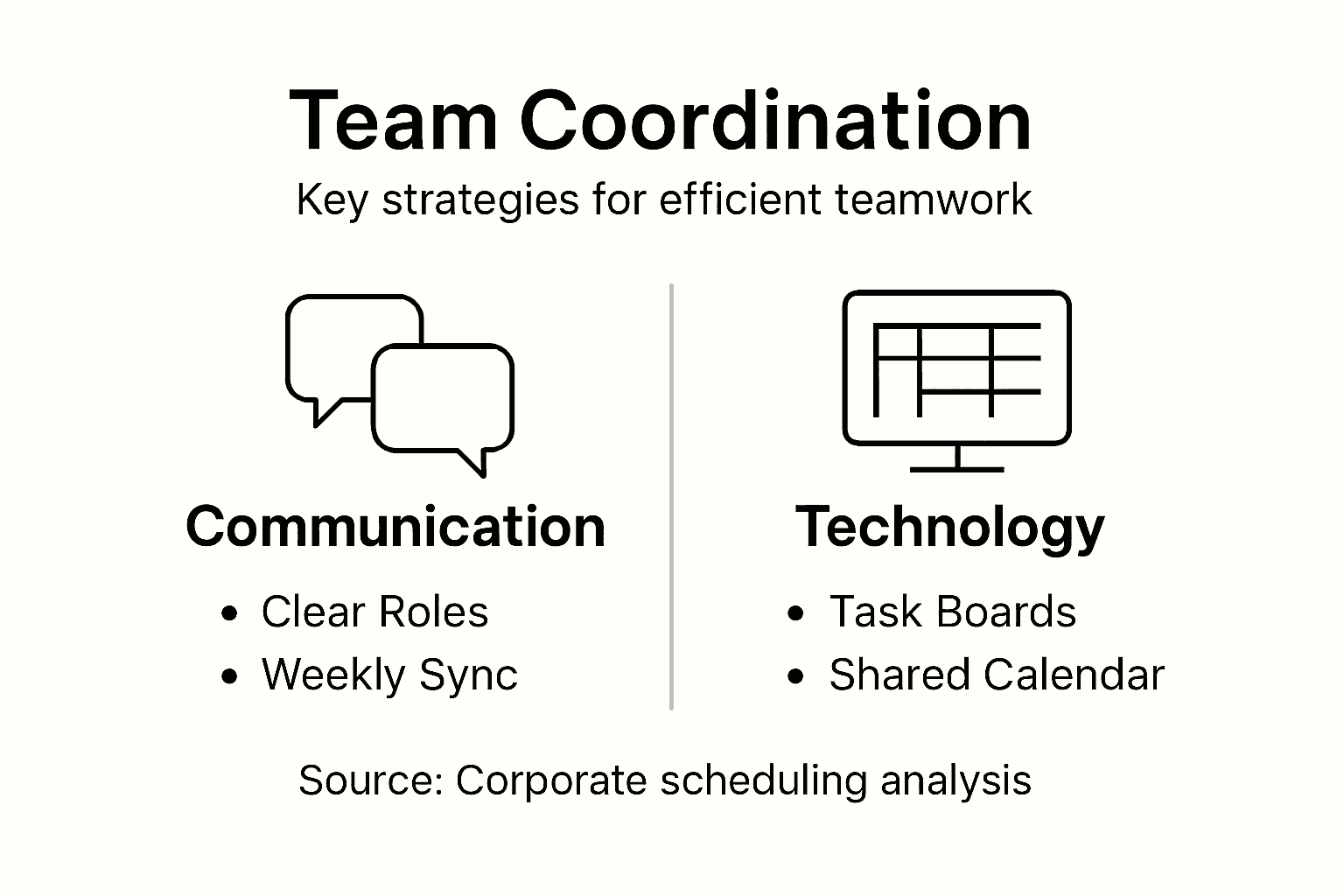
Efficient team coordination transcends traditional management approaches, requiring a holistic strategy that integrates interpersonal dynamics, technological tools, and strategic communication. High-performing team practices reveal that successful coordination demands more than mere task management.
The foundation of effective team coordination lies in establishing clear communication protocols and cultivating a culture of trust and psychological safety. This involves creating transparent role definitions, developing constructive feedback mechanisms, and ensuring every team member understands their unique contribution to collective goals. Critical components include regular check-ins, open dialogue channels, and a commitment to equitable treatment that recognizes individual strengths while promoting collaborative problem-solving.
Technological integration plays a crucial role in modern team coordination strategies. Advanced collaboration platforms, real-time communication tools, and project management software enable teams to synchronize efforts across different locations and time zones. By leveraging these technologies, organizations can create seamless workflows that promote agility, reduce communication barriers, and provide instant visibility into team progress. The most successful teams view technology not as a replacement for human interaction, but as a powerful enabler of more meaningful and efficient collaboration.
Pro tip: Implement a rotating leadership model where team members take turns facilitating meetings and coordinating tasks to build shared ownership and develop leadership skills across the entire team.
Simplify Complex Corporate Scheduling with WhenNOT
Scheduling in corporate teams often involves juggling multiple variables like time zones, role ambiguity, and communication breakdowns that can drain productivity and increase stress. This article highlights how effective multi-day planning and clear coordination structures are essential to overcoming these challenges. If you want to maximize efficiency and reduce scheduling conflicts in your team, embracing innovative scheduling methods is crucial.
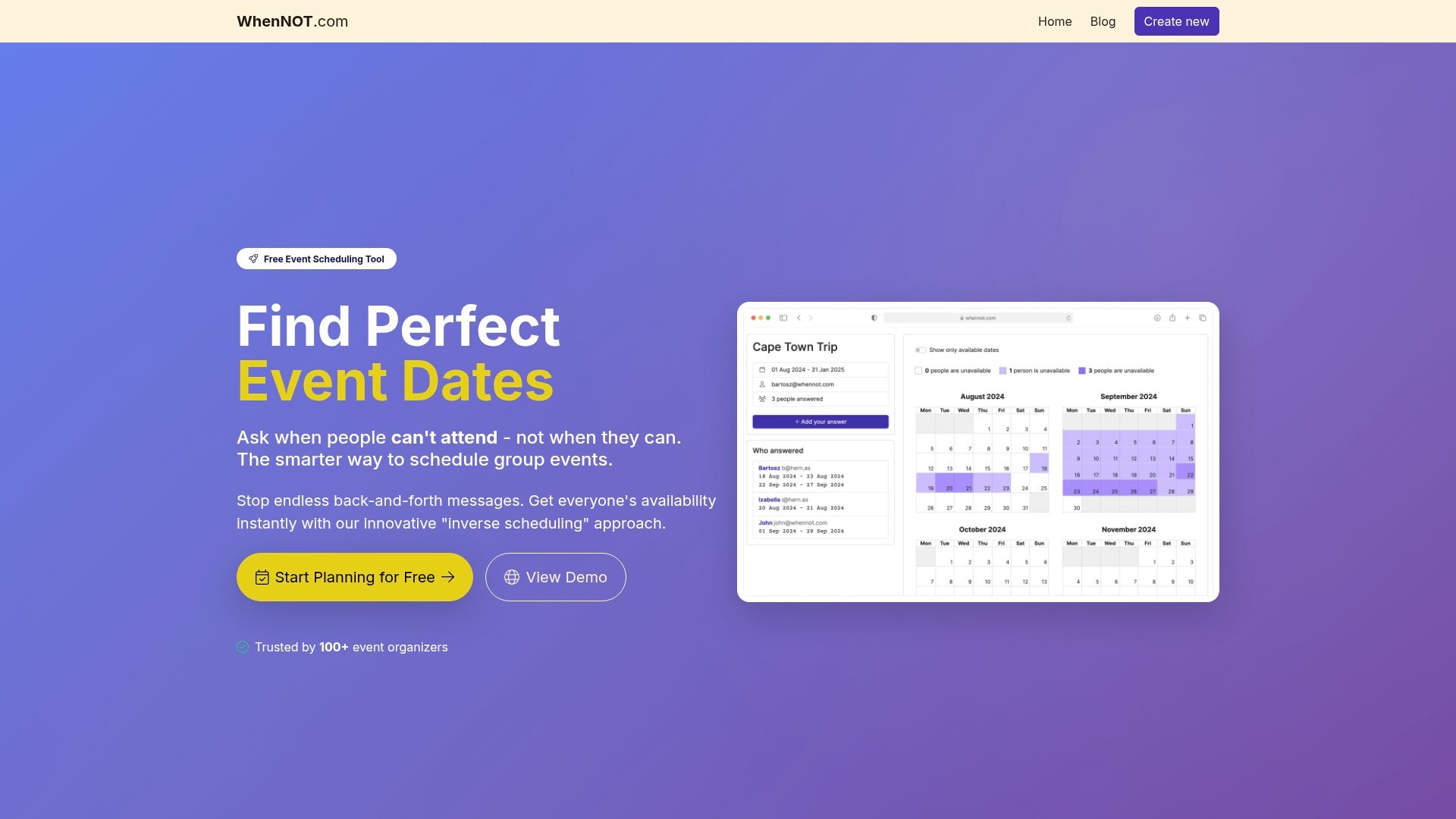
Discover how WhenNOT transforms corporate team scheduling by focusing on when participants are unavailable instead of asking when they are free. This unique approach eliminates endless email chains and reduces the friction caused by misaligned calendars. Whether you are managing cross-functional projects or planning multi-day events, WhenNOT’s simple interface and real-time visualization help you identify optimal dates quickly. Don’t let scheduling headaches slow down your team. Take control now by trying WhenNOT’s free scheduling tool and experience a smarter, faster way to coordinate your team’s time.
Frequently Asked Questions
What is the importance of scheduling in corporate teams?
Scheduling in corporate teams is crucial as it helps in organizing time, resources, and human capital efficiently. It enhances productivity by enabling clear task prioritization and reducing cognitive overload.
What are the common scheduling methods used in corporate teams?
Common scheduling methods include the Critical Path Method (CPM), resource leveling, and Gantt charts. Each method serves different purposes, such as identifying critical tasks, ensuring even workload distribution, and providing visual timelines for task progress.
How can effective scheduling drive team productivity?
Effective scheduling drives team productivity by creating structured environments that clarify responsibilities and deadlines, reduce stress, and allow for adaptive adjustments to workloads and priorities as projects evolve.
What are the key challenges faced in multi-day team planning?
Key challenges include time zone differences, role ambiguity, communication breakdowns, and staff turnover. Addressing these challenges requires clear role definitions, regular check-ins, and the establishment of transparent communication protocols.