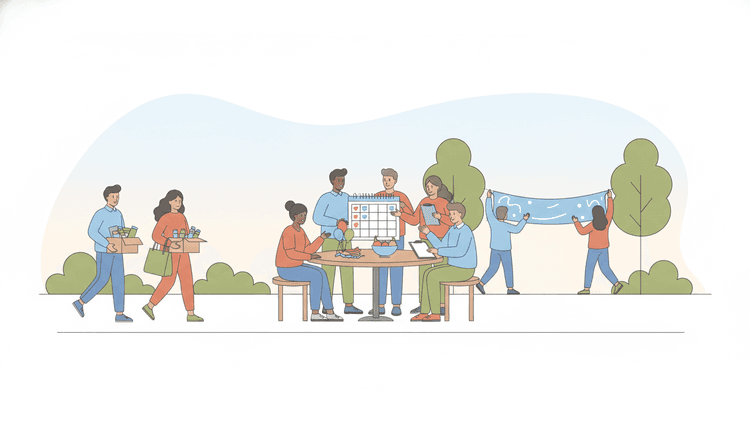
What Is a Community Event?
A community event is any organized gathering that brings people together around a shared interest, cause, or celebration. These events strengthen relationships, build trust, and create a sense of belonging in your neighborhood, organization, or online group.
Community events come in many shapes and sizes. Block parties, charity runs, volunteer days, town hall meetings, cultural festivals, workshops, and farmers markets all count. Some are small and informal. Others draw hundreds of attendees and require months of planning.
What makes community events special is their purpose. They exist to connect people, not to generate profit. That shared mission makes planning a community event both rewarding and uniquely challenging.
Step 1: Define Your Goal and Audience
Every successful community event starts with a clear purpose. Before you book a venue or send a single invitation, answer two questions: why are you hosting this event, and who is it for?
Choosing the Right Type of Community Event
Your goal determines the format. A neighborhood looking to build connections might host a potluck or block party. A nonprofit raising awareness could organize a charity walk or benefit concert. A school building parent engagement might run a family fun day.
Here are some common community event types matched to their goals:
| Goal | Best Event Types |
|---|---|
| Build neighborhood connections | Block party, potluck dinner, community picnic |
| Raise funds or awareness | Charity run, auction, benefit concert |
| Educate or inform | Workshop, town hall, panel discussion |
| Celebrate culture or heritage | Festival, parade, cultural showcase |
| Improve the community | Volunteer cleanup, beautification day, supply drive |
| Welcome new residents | Welcome mixer, neighborhood tour, open house |
Not sure which type fits? Check out our list of group event ideas for creative and seamless planning for more inspiration.
Setting Measurable Objectives
Vague goals lead to vague results. Instead of "we want a successful event," set specific targets you can measure after the event is over.
Good objectives look like this:
- Attract 100+ attendees from the local area
- Raise $2,000 for the community garden project
- Collect 500 pounds of donated food
- Get 30 new volunteers to sign up for the neighborhood watch
- Increase social media followers by 20%
Write down your objectives and share them with your planning team. They will guide every decision you make from here on out.
Step 2: Build Your Planning Committee
Planning a community event alone is a fast track to burnout. Build a small team of reliable people who bring different skills to the table. Even three to five committed volunteers can handle most community events.
Roles and Responsibilities
Assign clear roles from the start so nobody wonders who is doing what. Here are the core roles most community events need:
- Event lead: Oversees the big picture, makes final decisions, keeps the timeline on track
- Logistics coordinator: Handles venue, equipment, permits, and setup
- Communications lead: Manages invitations, social media, flyers, and press outreach
- Volunteer coordinator: Recruits, schedules, and manages event-day volunteers
- Budget manager: Tracks spending, manages donations, handles vendor payments
For smaller events, one person might cover two roles. For larger events, each role might need a sub-team.
Communication Channels
Your planning committee needs a reliable way to stay in touch between meetings. Pick one primary channel and stick with it. Group texts work for small teams. A dedicated Slack workspace or group chat keeps conversations organized for bigger groups.
Schedule regular check-ins. A 30-minute weekly call keeps everyone aligned without eating up too much time. Use a shared document or spreadsheet to track tasks, deadlines, and progress.
Step 3: Pick the Perfect Date
The wrong date can sink even the best-planned event. If half your community has conflicts, attendance drops and momentum fizzles. Finding a date that works for the most people is one of the most important steps in community event management.
Why Group Scheduling Tools Matter
Coordinating availability across a large group is tough. Email chains and group texts create confusion. Someone always gets left out of the loop. And the longer it takes to pick a date, the less time you have to plan everything else.
A scheduling poll solves this problem. Instead of going back and forth, you share one link. Everyone marks their available dates. You pick the option with the most overlap.
WhenNOT makes this simple. Create a free poll in seconds, share the link with your planning committee or the whole community, and let everyone vote on the best dates and times. No sign-ups required, no downloads, no confusion. You will see at a glance which dates work best for the group.
How to Poll Your Community for Availability
Here is how to run a smooth scheduling poll for your community event:
- List 4-6 potential dates spread across two to three weekends
- Create a WhenNOT poll with those date and time options
- Share the link through your communication channels (email, social media, flyers with QR codes)
- Set a response deadline of 5-7 days so you can move forward with planning
- Pick the date with the highest overlap and announce it immediately
A few scheduling tips to keep in mind:
- Avoid dates that conflict with major holidays, local festivals, or school events
- Check your city or town calendar for competing events
- Weekend mornings and early afternoons work best for family-friendly events
- Consider weather patterns if your event is outdoors
For more tips on avoiding scheduling conflicts, read our guide on when to travel and avoid the rush.
Step 4: Secure a Venue and Budget
With your date locked in, it is time to find a location and figure out how much everything will cost. These two decisions are closely linked because your venue choice drives a big chunk of your budget.
Free and Low-Cost Venue Ideas
Community events do not need expensive venues. Many of the best gathering spaces cost nothing or very little to reserve.
- Public parks: Most cities offer free or low-cost park permits for community events. Apply early because popular dates book up fast.
- Community centers: Many offer free event space for nonprofit and community use.
- School gymnasiums and cafeterias: Schools often lend space for neighborhood events outside of school hours.
- Places of worship: Churches, mosques, and temples frequently offer event space to community groups.
- Parking lots and streets: Block parties and street fairs use public right-of-way with a permit from your city.
- Libraries: Many public libraries have meeting rooms available for free community events.
Always visit your venue before committing. Check for parking, accessibility, restroom access, electrical outlets, and capacity limits.
Budget Planning Table
Here is a realistic budget breakdown for a mid-size community event (50-100 attendees):
| Category | Estimated Cost | Notes |
|---|---|---|
| Venue | $0-$300 | Free for parks/community centers with permit |
| Permits and insurance | $50-$200 | Required for some public spaces |
| Food and drinks | $200-$800 | Potluck reduces cost significantly |
| Decorations and signage | $50-$150 | Banners, tablecloths, balloons |
| Entertainment | $0-$500 | Local musicians often play for free exposure |
| Marketing materials | $30-$100 | Flyers, social media ads |
| Equipment rentals | $100-$400 | Tables, chairs, tents, speakers |
| Supplies | $50-$150 | Plates, cups, trash bags, first aid kit |
| Miscellaneous | $50-$100 | Buffer for unexpected costs |
| Total estimate | $530-$2,700 |
Funding ideas:
- Local business sponsorships (offer logo placement on banners and flyers)
- Community fundraising or crowdfunding campaigns
- Small grants from your city or county government
- Ticket sales or suggested donations at the door
- Bake sales or merchandise at the event
Step 5: Promote Your Event
A well-planned event means nothing if nobody shows up. Start promoting at least three weeks before the event date to build awareness and excitement.
Social Media Promotion
Social media is the fastest and cheapest way to spread the word about your community event. Here is a simple promotion timeline:
- 3 weeks out: Announce the event with date, time, location, and a compelling description. Create a Facebook event or Instagram post with a shareable graphic.
- 2 weeks out: Share behind-the-scenes content. Post photos of your planning team, share vendor spotlights, or run a countdown.
- 1 week out: Post reminders daily. Share logistics like parking info, what to bring, and the event schedule.
- Day before: One final reminder with weather updates and any last-minute changes.
- Day of: Post live updates, photos, and stories to engage people who could not attend.
Use a consistent hashtag so attendees can find and share content from the event.
Local Outreach Strategies
Not everyone in your community uses social media. Cover your bases with these offline promotion tactics:
- Flyers and posters: Post them at grocery stores, coffee shops, libraries, and community bulletin boards
- Local newspaper and radio: Many outlets run free community event listings
- Word of mouth: Ask your planning team and volunteers to personally invite 10 people each
- Email newsletters: If your community organization has a mailing list, use it
- Partnerships: Team up with local businesses, schools, or nonprofits to cross-promote
- Church and community center bulletins: Many publish weekly event announcements
Step 6: Manage Day-Of Logistics
Event day is where all your planning pays off. A clear run-of-show document and an organized team keep everything running smoothly, even when surprises pop up.
Community Event Management Checklist
Print this checklist and hand copies to your key team members on event day:
| Time | Task | Owner |
|---|---|---|
| 3 hours before | Arrive at venue, begin setup | Logistics coordinator |
| 3 hours before | Set up registration/welcome table | Volunteer coordinator |
| 2.5 hours before | Arrange tables, chairs, and decorations | Setup team |
| 2 hours before | Test sound equipment and microphones | Event lead |
| 1.5 hours before | Set up food and drink stations | Food team |
| 1 hour before | Brief all volunteers on roles and emergency procedures | Volunteer coordinator |
| 30 minutes before | Final walkthrough and photo of the setup | Event lead |
| Event start | Welcome attendees, start programming | Event lead |
| During event | Monitor supplies, manage crowd flow, handle issues | All team leads |
| During event | Take photos and post social media updates | Communications lead |
| Event end | Thank attendees and make closing announcements | Event lead |
| After event | Break down, clean up, pack out | Full team |
| After event | Secure all equipment and supplies | Logistics coordinator |
Day-of survival tips:
- Keep a printed copy of every vendor contract and contact number
- Have a first aid kit and know where the nearest hospital is
- Designate a lost-and-found area
- Assign one person as the "problem solver" who handles unexpected issues
- Stay hydrated and take breaks. You cannot run an event if you burn out by noon.
For a detailed planning timeline that covers the weeks leading up to your event, check out our event planning timeline and countdown checklist.
Step 7: Follow Up and Measure Success
The event is over, but your work is not quite done. A strong follow-up turns a one-time gathering into a lasting community tradition.
Within 48 hours of your event:
- Send thank-you messages to volunteers, sponsors, and key attendees
- Share photos and highlights on social media and your community channels
- Collect feedback with a short online survey (5 questions max)
- Review your objectives and measure actual results against your goals
- Debrief with your planning team while everything is fresh
Track these key metrics to measure success:
- Total attendance vs. your target
- Funds raised (if applicable)
- Social media engagement (shares, comments, new followers)
- Volunteer satisfaction scores
- Attendee feedback ratings
Document what worked and what you would change. This debrief becomes your playbook for the next event.
For tips on managing RSVPs and reducing no-shows, read our guide on event RSVP management.
Community Event Ideas by Type
Need inspiration? Here is a comparison table of popular community event types with key planning details:
| Event Type | Best Season | Group Size | Budget Range | Planning Time |
|---|---|---|---|---|
| Block party | Spring/Summer | 30-200 | $300-$2,000 | 4-6 weeks |
| Charity run/walk | Spring/Fall | 50-500 | $500-$5,000 | 8-12 weeks |
| Volunteer cleanup | Any | 10-100 | $50-$300 | 2-3 weeks |
| Cultural festival | Summer/Fall | 100-1,000+ | $2,000-$20,000 | 3-6 months |
| Town hall meeting | Any | 20-200 | $0-$200 | 1-2 weeks |
| Farmers market | Spring/Summer | 50-500 | $500-$3,000 | 2-3 months |
| Community workshop | Any | 10-50 | $50-$500 | 2-4 weeks |
| Holiday celebration | Winter | 30-300 | $500-$5,000 | 4-8 weeks |
| Neighborhood potluck | Any | 15-60 | $50-$200 | 1-2 weeks |
| Outdoor movie night | Summer | 30-150 | $200-$1,000 | 2-3 weeks |
Looking for more event format ideas? Browse our full list of group event ideas.
FAQ
How far in advance should I start planning a community event?
For small events like potlucks or volunteer cleanups, two to three weeks is enough. Medium events like block parties need four to six weeks. Large-scale events like festivals or charity runs require three to six months of lead time. The bigger the event, the more time you need for permits, sponsorships, and promotion.
How do I find a date that works for a large community group?
Use a free scheduling poll to let people vote on their available dates. WhenNOT lets you create a poll in seconds and share a single link with your entire community. Everyone marks their availability, and you pick the date with the most overlap. It removes the guesswork and endless back-and-forth.
Do I need a permit to host a community event?
It depends on your location, venue, and event type. Events in public parks, streets, or parking lots usually require a permit from your city or county. Indoor events at community centers or private property may not need one. Contact your local government office to find out what permits, insurance, or licenses apply to your event.
How do I keep a community event on budget?
Start with a detailed budget spreadsheet that lists every anticipated expense. Use free or donated venues, go potluck for food, and recruit local talent for entertainment. Seek sponsorships from local businesses in exchange for visibility. Track all spending in real time and keep a 10% buffer for unexpected costs.
What is the best way to promote a community event for free?
Social media, word of mouth, and community bulletin boards are your best free channels. Create a Facebook event, post on local community groups, and share on Instagram and Nextdoor. Print simple flyers for coffee shops and libraries. Ask every volunteer to personally invite at least 10 people. Free local newspaper and radio event listings also help.
How many volunteers do I need for a community event?
A general rule is one volunteer for every 10-15 attendees. A 50-person event needs about four to five volunteers. A 200-person event might need 15-20. Assign specific roles so everyone knows their job. Brief all volunteers at least one hour before the event starts.
How do I handle bad weather for an outdoor community event?
Always have a rain plan. Reserve an indoor backup space, rent a tent or canopy, or pick a venue with covered areas. Announce your weather policy in advance so attendees know what to expect. Make the call to move indoors or postpone at least four hours before the event starts so you have time to communicate the change.
What should I do after the event is over?
Send thank-you notes to volunteers and sponsors within 48 hours. Share event photos on social media. Send a short feedback survey to attendees. Debrief with your planning team to document what worked and what needs improvement. If you want to make the event annual, start a planning document for next year while everything is still fresh.
Ready to schedule your next group event without the headache? Find the perfect dates in minutes with WhenNOT.