
Every corporate event planner knows the headache of coordinating dozens of schedules for a North American team retreat. With tight deadlines and high expectations, even small delays risk undermining team collaboration. Mastering efficient scheduling solutions helps transform your next multi-day retreat into a focused, productive experience, eliminating unnecessary headaches and keeping your planning process on track from the very start.
Table of Contents
- Step 1: Define Event Scope And Objectives
- Step 2: Select Optimal Scheduling Tools For Coordination
- Step 3: Gather Participant Availability Efficiently
- Step 4: Finalize Event Dates And Logistics
- Step 5: Verify Plans For Accuracy And Readiness
Quick Summary
| Key Takeaway | Explanation |
|---|---|
| 1. Define Clear Event Scope | Establish specific goals and target audiences using the SMART framework to guide your team effectively. |
| 2. Choose Effective Scheduling Tools | Utilize digital scheduling platforms that promote collaboration, and automate tasks to streamline coordination. |
| 3. Collect Participant Availability Smoothly | Implement user-friendly systems for gathering availability, ensuring engagement without overwhelming participants. |
| 4. Finalize Dates and Logistics Strategically | Analyze participant availability data to determine optimal dates, ensuring increased attendance and fewer conflicts. |
| 5. Conduct Thorough Verification | Review every detail of your plan meticulously to prevent last-minute issues and ensure successful event execution. |
Step 1: Define event scope and objectives
Successfully planning an event starts with crystal-clear scope and objectives that align your entire team toward a common goal. This crucial first step will transform your event from a vague concept into a targeted, strategic initiative.
Defining your event's scope requires a systematic approach. Begin by identifying target audiences and core purposes with precision. Your objectives should follow the SMART framework - Specific, Measurable, Achievable, Relevant, and Time-bound. This means moving beyond generic aspirations to concrete, quantifiable outcomes.
Key elements for defining event scope include:
- Determine primary event goals
- Identify specific target audience demographics
- Outline expected participant outcomes
- Establish measurable success metrics
- Align event objectives with broader organizational priorities
A well-defined event scope acts as your strategic roadmap, guiding every subsequent planning decision.
When establishing objectives, consider both broad goals and specific checkpoints. Event objectives differ from general goals by providing measurable, actionable targets. For instance, instead of saying "increase networking," specify "facilitate 50 meaningful professional connections during the conference."
Pro tip: Schedule a focused planning meeting with key stakeholders to collaboratively draft and validate your event's scope and objectives, ensuring comprehensive input and commitment.
Step 2: Select optimal scheduling tools for coordination
Navigating the complex world of event scheduling requires selecting the right digital tools that streamline coordination and eliminate communication barriers. Your goal is to find a platform that transforms scheduling from a logistical nightmare into a smooth, efficient process.
Centralized scheduling platforms offer significant operational advantages by automating tasks and preventing potential conflicts. When evaluating scheduling tools, consider these critical selection criteria:
- Compatibility with team communication channels
- Real-time collaborative features
- Flexibility for multiple event types
- User-friendly interface
- Robust data privacy protections
- Integration capabilities with existing systems
The right scheduling tool doesn't just manage time - it creates harmony among participants.
Looking deeper, modern scheduling solutions leverage advanced multi-objective optimization algorithms that can handle complex constraints. This means the tool should adapt to your specific event requirements, whether you're coordinating a corporate retreat or a multi-day academic conference.
Key considerations include automated conflict prevention, real-time update capabilities, and intuitive participant invitation mechanisms. Prioritize tools that reduce administrative overhead while maintaining comprehensive scheduling flexibility.
Here's a summary comparing traditional and modern event scheduling approaches:
| Approach | Time Investment | Collaboration Level | Flexibility for Changes |
|---|---|---|---|
| Traditional (Manual) | High, many email chains | Low, limited visibility | Difficult, prone to errors |
| Digital (Modern Tools) | Low, automated reminders | High, real-time updates | Easy, instant notifications |
Pro tip: Always request a free trial and involve key team members in testing potential scheduling platforms to ensure the tool meets your specific coordination needs.
Step 3: Gather participant availability efficiently
Collecting participant availability is a critical step that can make or break your event planning process. Your mission is to streamline information gathering while respecting everyone's time and preferences.
Collect participant availability online through a strategic approach that minimizes back-and-forth communication. The key is creating a simple, user-friendly system that encourages prompt responses and reduces scheduling friction.
Effective availability collection strategies include:
- Use intuitive digital scheduling tools
- Set clear response deadlines
- Provide multiple time slot options
- Enable easy one-click availability marking
- Implement automatic time zone conversions
- Send friendly reminder notifications
Efficient availability gathering transforms potential scheduling chaos into organized collaboration.
Designing your availability collection process requires thoughtful consideration of participant preferences. Create a straightforward method that allows individuals to quickly indicate their open time windows without feeling overwhelmed by complex interfaces or excessive details.
Consider using platforms that allow participants to mark their unavailable times instead of manually selecting available slots. This inverse scheduling approach can significantly reduce cognitive load and increase response rates.
Pro tip: Send availability requests during low-stress times like mid-morning and include a clear, concise explanation of why you need their input to improve response rates.
Step 4: Finalize event dates and logistics
With participant availability collected, you're now ready to transform potential dates into a concrete event plan. This critical phase transforms your scheduling efforts into a actionable roadmap that aligns everyone's calendars and expectations.

Simplify event scheduling with a strategic workflow by carefully analyzing the collected availability data. Your goal is to identify the optimal time window that maximizes participant participation while minimizing scheduling conflicts.
Key steps for finalizing event logistics include:
- Confirm most compatible date ranges
- Verify venue and resource availability
- Cross-reference participant constraints
- Draft preliminary event schedule
- Secure necessary approvals
- Communicate final date selections
The art of event planning lies in transforming individual availabilities into a unified group experience.
Consider creating a priority matrix that ranks potential dates based on maximum participant attendance and critical stakeholder availability. This approach helps you make data-driven decisions that balance individual needs with overall event objectives.
Once you've identified the optimal dates, immediately send confirmations to all participants. Include comprehensive details about the finalized schedule, providing transparency and reducing potential future scheduling complications.
Pro tip: Create a backup date option during your initial planning to quickly pivot if unexpected conflicts arise with your primary event schedule.
Step 5: Verify plans for accuracy and readiness
Successfully executing an event requires meticulous verification of every detail, transforming your carefully crafted plan from concept to reality. This critical review phase ensures that nothing falls through the cracks and all logistics align perfectly.
Comprehensive event security and preparation demands a systematic approach to validation that leaves no room for last-minute surprises. Your verification process should be thorough, strategic, and designed to identify potential gaps before they become problems.
Key verification checkpoints include:
- Confirm all vendor contracts
- Review detailed event timeline
- Cross-check participant and speaker information
- Validate technical and logistical requirements
- Test communication and backup systems
- Conduct final budget reconciliation
Precision in planning prevents poor performance during your event.
Create a comprehensive verification checklist that covers every aspect of your event. This living document should be updated continuously, with each team member responsible for validating their specific areas of responsibility. Pay special attention to potential interdependencies that could create cascading issues if not properly addressed.
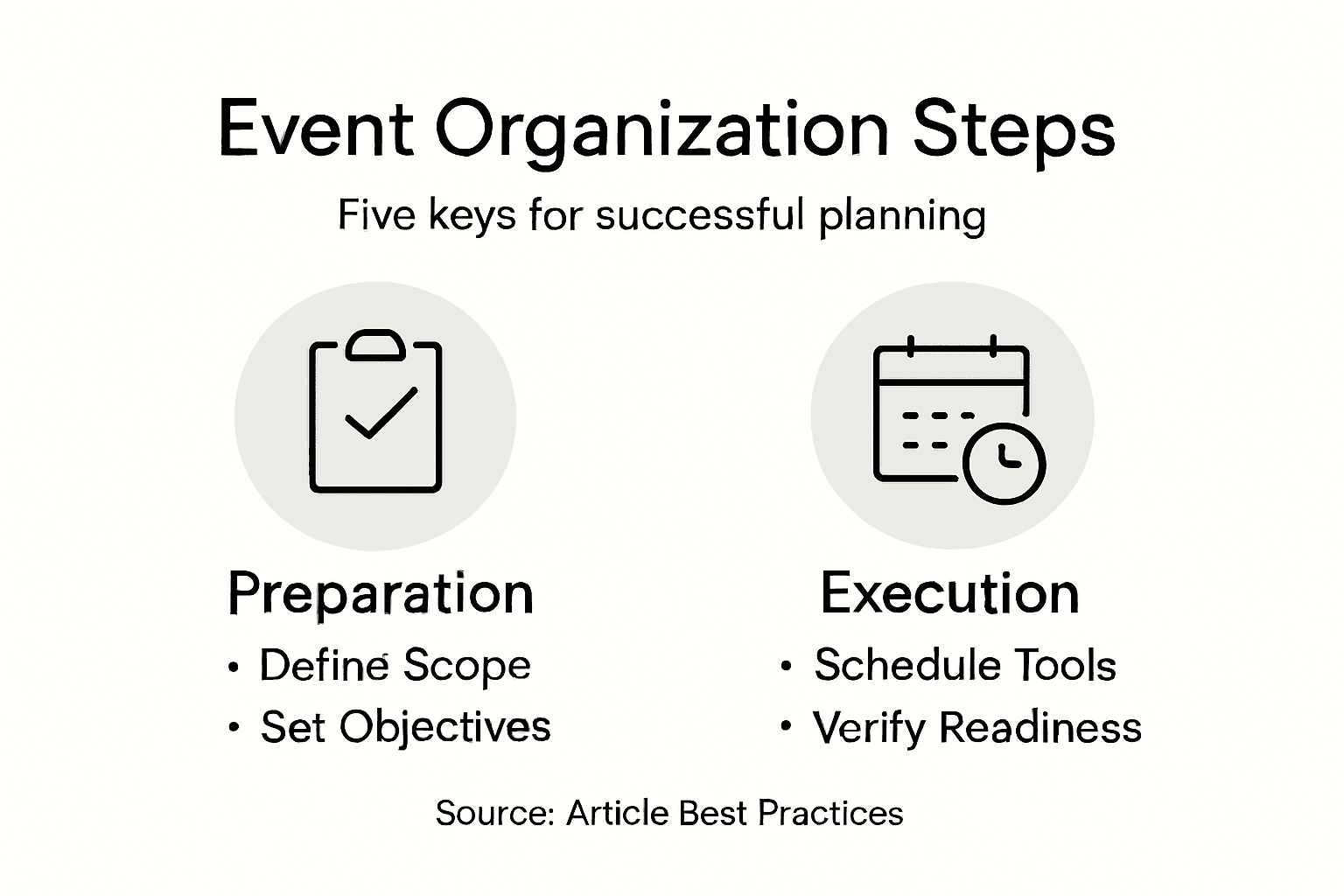
Use this checklist to verify event readiness across essential areas:
| Area | Key Checks | Who Should Verify |
|---|---|---|
| Vendors | Contracts and payments | Procurement lead |
| Technology | Equipment and backups tested | IT coordinator |
| Schedule | Final timeline confirmed | Event manager |
| Participants & Speakers | Registrations and roles clear | Communications manager |
Engaging in strategic simulation can help you uncover hidden vulnerabilities in your plan. Walk through potential scenarios, test communication protocols, and ensure that every team member understands their role and responsibilities during the event.
Pro tip: Schedule a final team walkthrough 48 hours before the event, where each team member presents their readiness status and confirms all critical elements are in place.
Simplify Your Event Planning with Smarter Scheduling Solutions
Planning an event requires clear objectives and efficient coordination of participant availability as highlighted in the article. The challenges of collecting availability, avoiding scheduling conflicts, and finalizing dates demand a tool that reduces complexity and saves time. If you want to turn vague scheduling tasks into a seamless process, focusing on concepts like "inverse scheduling" and effortless availability gathering can make all the difference.
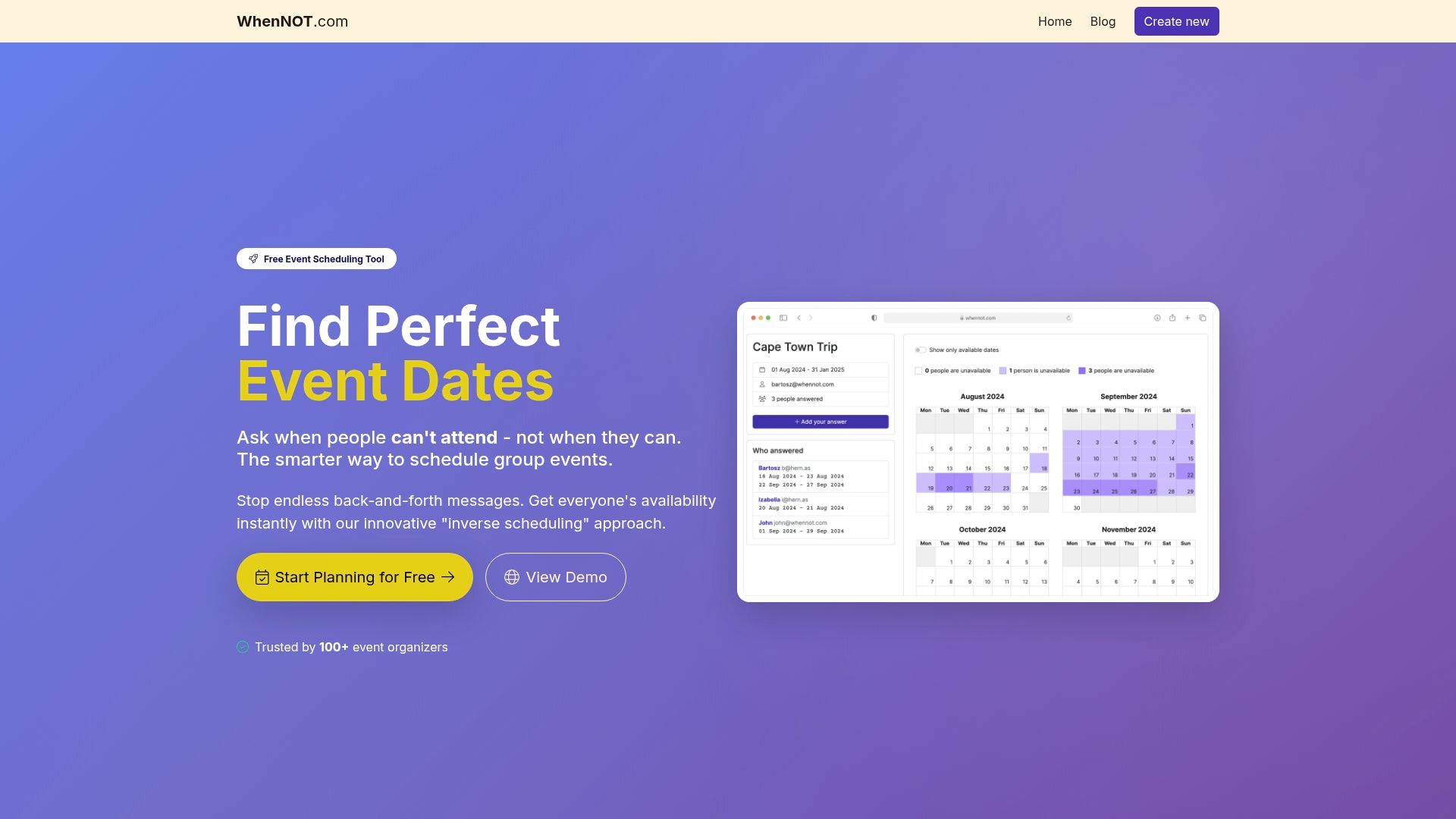
Experience how WhenNOT revolutionizes group event planning by asking participants when they are NOT busy instead of when they are free. This approach simplifies collecting availability especially for multi-day or flexible date events. Without requiring signups or accounts, your attendees can quickly mark unavailable dates, making it easier to identify the best date range and finalize your event logistics. Get started today to streamline your event coordination, reduce communication delays, and confidently plan successful gatherings with minimal hassle.
Frequently Asked Questions
How can I define the scope and objectives for my event?
A clear scope and objectives can be established by identifying your target audience, primary goals, and measurable success metrics. Organize a focused planning meeting with key stakeholders to collaboratively draft these elements and ensure alignment on your event's purpose.
What tools can help streamline event scheduling?
Select centralized scheduling platforms known for real-time collaboration and user-friendly interfaces. Evaluate potential tools based on their integration capabilities and ensure they fit your team's existing communication channels to enhance coordination efficiency.
How do I efficiently gather participant availability for my event?
Use intuitive digital scheduling tools that allow participants to indicate their availability quickly, ideally through an interface that enables them to mark unavailable times. Set clear response deadlines and send reminders to improve response rates and reduce scheduling friction.
What steps should I take to finalize event dates and logistics?
Analyze participant availability data to identify the optimal time window for your event, ensuring maximum attendance. Confirm venue availability, draft a preliminary schedule, and communicate the final date selections to all attendees promptly.
How do I verify plans for my event's accuracy and readiness?
Create a comprehensive verification checklist covering all aspects of your event, including vendor contracts and technical requirements. Schedule a final team walkthrough 48 hours before the event to confirm that each area is prepared and all team members are clear on their responsibilities.