
Every american planner knows that organizing a standout event requires more than just enthusiasm or a checklist. Communication breakdowns rank among the top reasons events fail, with over 60 percent of event missteps linked back to unclear objectives or poor coordination. Whether you are managing a small gathering or a major conference, success hinges on practical strategies that keep everyone informed, engaged, and on track. This guide delivers clear, actionable steps to transform chaos into well-coordinated results.
Table of Contents
- Set Clear Objectives And Expectations Early
- Use Smart Scheduling Tools For Availability
- Communicate Openly And Frequently
- Plan For Flexibility And Quick Adjustments
- Delegate Tasks And Encourage Participation
- Monitor Progress And Stay Organized
- Gather Feedback For Continuous Improvement
Quick Summary
| Takeaway | Explanation |
|---|---|
| 1. Establish Clear Goals Early | Define event objectives, audience, and success metrics for focused planning. |
| 2. Utilize Smart Scheduling Tools | Use technology to streamline coordination and improve scheduling efficiency among team members. |
| 3. Maintain Open Communication | Foster transparent dialogue and regular updates for team alignment and stakeholder satisfaction. |
| 4. Prepare for Flexibility | Anticipate changes and have contingency plans to adapt quickly to unexpected challenges. |
| 5. Gather Feedback for Improvement | Collect insights post-event to refine future planning and enhance participant experience. |
1. Set Clear Objectives and Expectations Early
Successful event planning starts with crystal clear communication and well defined goals. Developing a strategic roadmap for your event means establishing precise objectives that guide every subsequent decision and action.
According to University of Arts Communication Research, developing clear and concise communication strategies is essential for engaging with partners, team members, clients, and vendors. This means creating a comprehensive blueprint that everyone understands from the start.
To implement this strategy, start by documenting your event goals in specific terms. Ask yourself critical questions: What exactly do you want to achieve? Who is your target audience? What specific outcomes are you seeking?
Key Components to Define Early:
- Event purpose and primary objectives
- Target audience demographics
- Desired attendee experience
- Measurable success metrics
- Budget constraints
- Timeline and key milestones
By establishing these parameters upfront, you create a shared understanding that prevents misunderstandings, reduces potential conflicts, and provides a North Star for all event planning activities. Think of it like creating a detailed map before embarking on a complex journey - your objectives become the compass guiding every decision.
2. Use Smart Scheduling Tools for Availability
Modern event organization demands smart technological solutions that simplify complex scheduling challenges. Smart scheduling tools transform how teams coordinate availability and plan events with unprecedented efficiency.
According to Amrita University's research on communication strategies, utilizing electronic communication tools brings enormous benefits to event managers, especially when coordinating large group activities. These tools create seamless communication environments that eliminate traditional scheduling headaches.
Strategic Benefits of Smart Scheduling Tools:
- Eliminate endless email chains
- Provide real-time availability tracking
- Reduce communication miscommunications
- Save significant time in coordination
- Enable quick decision making
Understanding the Role of Scheduling Tools in Events reveals that these technologies go beyond simple calendar sharing. They create integrated platforms where participants can transparently communicate their constraints without extensive back and forth.
When selecting a scheduling tool, prioritize platforms that offer intuitive interfaces, mobile compatibility, and flexible sharing options. Look for features that allow participants to mark unavailable times quickly, generating optimal meeting windows automatically.
Remember that the right scheduling tool can transform your event planning from a logistical nightmare into a smooth, collaborative experience. By embracing technology, you put yourself leagues ahead of traditional event coordination methods.
3. Communicate Openly and Frequently
Mastering communication is the secret weapon of exceptional event organizers. Open and consistent communication can transform good events into outstanding experiences.
According to Event Management Institute, effective communication involves more than just exchanging information. It requires understanding body language, tone of voice, and projecting calm authority while consistently gauging stakeholder satisfaction.
Communication Strategy Elements:
- Regular status updates
- Transparent problem sharing
- Proactive information exchange
- Consistent check ins
- Active listening techniques
Successful event communication is not a one time activity but an ongoing process. Research suggests that continuous evaluation and improvement are critical. This means not just communicating during the event but also gathering feedback afterward to refine your approach.
Practical Communication Approaches:
- Schedule weekly team briefings
- Use collaborative digital platforms
- Create clear communication protocols
- Establish preferred communication channels
- Document key discussions and decisions
The goal is creating an environment where every team member feels informed, heard, and empowered. By prioritizing open communication, you reduce misunderstandings, build trust, and create a collaborative atmosphere that elevates your entire event planning process.
Understanding the Role of Scheduling Tools in Events can further support your communication strategy by providing integrated platforms that keep everyone connected and aligned.
4. Plan for Flexibility and Quick Adjustments
Event planning is an unpredictable journey where adaptability becomes your most valuable skill. Successful event organizers understand that rigid plans often crumble when unexpected challenges arise.
Research on virtual collaboration reveals fascinating insights into managing dynamic environments. According to ArXiv Research, effective event management requires merging synchronous and asynchronous communication strategies to maintain a common understanding and rapidly adapt to changing circumstances.
Flexibility Framework:
- Create backup plans for critical event components
- Develop contingency scenarios
- Build buffer time into your schedules
- Maintain open communication channels
- Prepare team for potential rapid shifts
Practical flexibility means anticipating potential disruptions before they occur. Think of your event plan like a GPS navigation system that automatically recalculates routes when unexpected roadblocks appear. You are not just planning an event you are creating a responsive living strategy.
7 Top Scheduling Challenges and How to Overcome Them provides additional insights into navigating complex event coordination scenarios. The key is maintaining a balance between structured planning and nimble responsiveness.
Ultimately, flexibility is about mental preparation. Train your team to view unexpected changes as opportunities for creative problem solving rather than insurmountable obstacles. Your ability to pivot quickly can transform potential disasters into memorable moments of event excellence.
5. Delegate Tasks and Encourage Participation
Successful event organization is rarely a solo performance. It is a collaborative symphony where effective delegation transforms individual efforts into remarkable collective achievements.
Research on collaborative environments reveals fascinating insights. According to ArXiv Research, task delegation can be most effective when participants self assign based on individual skills and interests, with natural leaders emerging through diverse strategies.
Effective Delegation Principles:
- Match tasks to individual strengths
- Provide clear expectations
- Create accountability mechanisms
- Offer necessary support resources
- Recognize individual contributions
Think of delegation like conducting an orchestra. Each team member represents a unique instrument with specific capabilities. Your role is not to play every instrument but to guide each performer toward creating harmonious results.
The key is creating an environment where participation feels voluntary and exciting rather than mandatory. Encourage team members to propose ideas, suggest improvements, and take ownership of their assigned responsibilities.
Pro Delegation Strategies:
- Communicate task objectives transparently
- Break complex tasks into manageable segments
- Establish regular check in points
- Create safe spaces for questions and feedback
- Celebrate team and individual achievements
7 Top Scheduling Challenges and How to Overcome Them offers additional insights into navigating team coordination complexities. Remember that great delegation is an art of empowerment not micromanagement.
6. Monitor Progress and Stay Organized
Event organization is a complex puzzle where constant tracking and strategic management determine success. Staying organized is not just about maintaining checklists but creating dynamic systems that adapt and evolve.
According to Event Management Institute, integrating event management software with mobile apps creates a unified communication environment that enhances scheduling and coordination.
Key Organization Strategies:
- Use centralized project management platforms
- Track progress with visual dashboards
- Set clear milestone checkpoints
- Create automated status reporting systems
- Implement real time communication channels
Think of event organization like piloting a sophisticated aircraft. You need multiple instruments tracking different metrics simultaneously to ensure smooth navigation. Your monitoring systems should provide instant insights into team performance resource allocation and potential bottlenecks.
Progress Monitoring Techniques:
- Weekly team status meetings
- Digital tracking spreadsheets
- Percentage completion metrics
- Risk assessment checkpoints
- Contingency plan evaluations
7 Types of Scheduling Tools for Effective Planning offers additional perspectives on streamlining your organizational approach. Remember that great monitoring is about creating transparency accountability and continuous improvement.
7. Gather Feedback for Continuous Improvement
The most successful event organizers view each event not as an endpoint but as a learning opportunity. Feedback is the compass that guides your future event planning strategies.
According to Event Management Institute, post event surveys should include specific questions about communication clarity, timeliness, and accessibility to effectively gather insights for continuous improvement.
Effective Feedback Collection Strategies:
- Create short concise surveys
- Use a mix of quantitative and qualitative questions
- Offer multiple response channels
- Provide incentives for participation
- Ensure anonymity for honest feedback
Think of feedback like a performance review for your event. Just as professionals seek constructive criticism to grow, event organizers can uncover hidden opportunities for enhancement through systematic feedback collection.
Key Survey Design Principles:
- Ask specific actionable questions
- Balance positive and critical inquiry
- Include open ended reflection opportunities
- Make surveys visually engaging
- Follow up with participants
Remember that gathering feedback is not about defending your past performance but about creating better experiences in the future. Your willingness to listen and adapt separates good event organizers from truly exceptional ones.
Understanding Efficient Scheduling Methods for Better Planning can provide additional context for implementing feedback insights into your event planning process.
This table provides a comprehensive summary of effective event planning strategies including setting clear objectives, using technological tools, enhancing communication, and more as discussed in the article.
| Strategy | Implementation | Expected Results |
|---|---|---|
| Set Clear Objectives | Define event goals, audience, outcomes, budget, and timeline | Guides decision-making, prevents misunderstandings |
| Use Smart Scheduling Tools | Implement electronic tools for easy availability tracking | Simplifies coordination, saves time, reduces miscommunications |
| Communicate Openly | Provide regular updates, use active listening, document discussions | Builds trust, reduces conflicts, supports collaboration |
| Plan for Flexibility | Develop backup plans and maintain open communication | Enhances adaptability, turns challenges into opportunities |
| Delegate Tasks | Match tasks to strengths, provide support, create accountability | Empowers team, improves efficiency, fosters engagement |
| Monitor Progress | Use project management tools, track key metrics | Ensures organization, facilitates strategic adjustments |
| Gather Feedback | Conduct surveys with actionable questions | Drives continuous improvement, improves future events |
Simplify Your Event Planning with WhenNOT Today
The article highlights challenges like coordinating schedules, maintaining clear communication, and adapting quickly to changes—common hurdles that can make event planning overwhelming. If you struggle with time-consuming back and forth or want to empower your team with better delegation and organization, WhenNOT offers a fresh approach designed exactly for these pain points. Its unique inverse scheduling method lets participants mark only when they are not available. This avoids endless email chains and guesswork while instantly visualizing everyone's availability in one place.
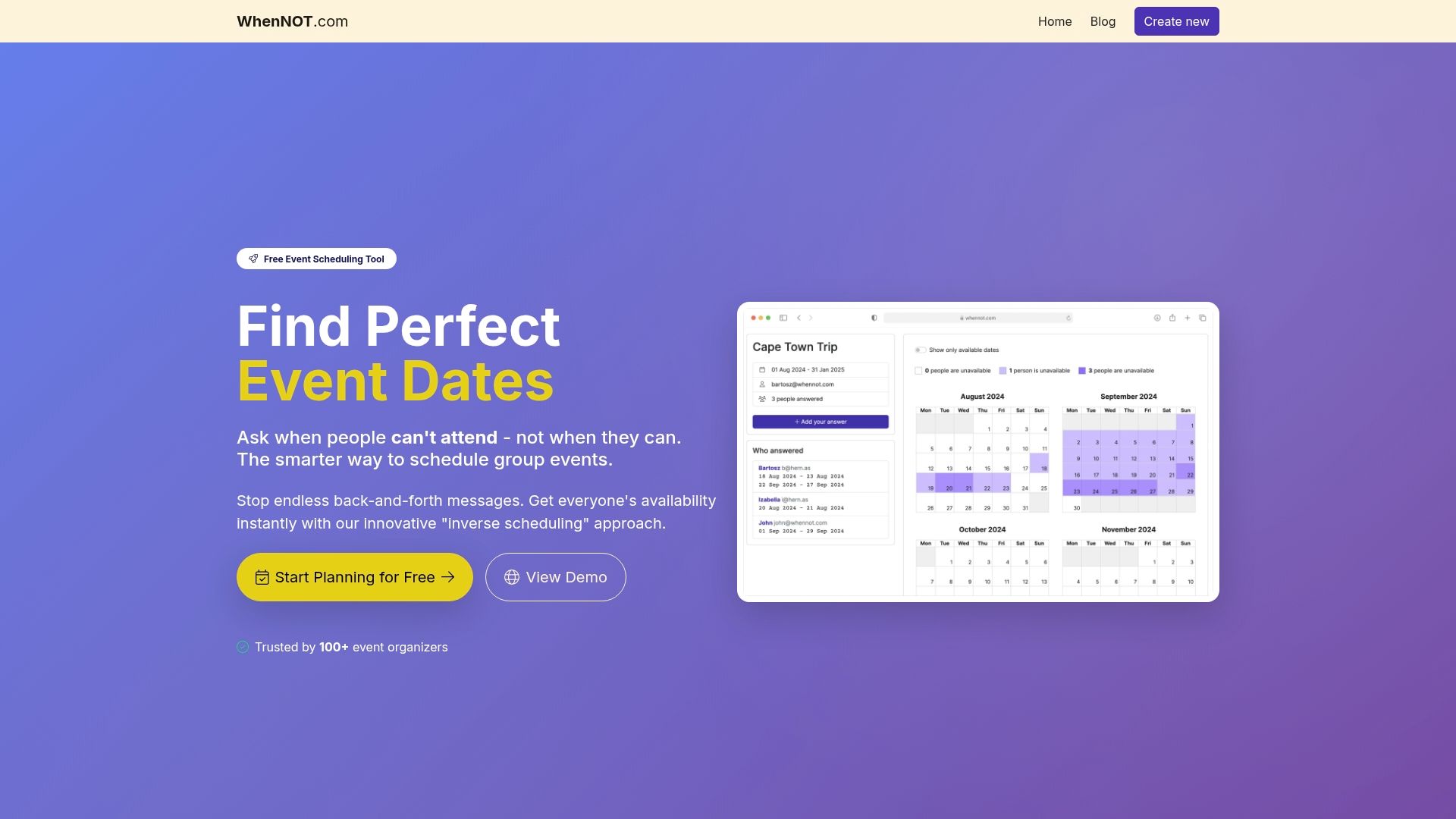
Ready to transform your event planning process into a smooth, stress-free experience? Visit WhenNOT now and create your free event with just a few clicks. Streamline group coordination, save valuable time, and keep communication clear and open—all without complicated sign-ups or hidden fees. Don’t let scheduling delays hold your event back any longer. Discover how efficient scheduling tools can empower you by exploring Understanding the Role of Scheduling Tools in Events and learn more about 7 Types of Scheduling Tools for Effective Planning. Take control of your next event today with WhenNOT.
Frequently Asked Questions
What are the key components to define early when planning an event?
Establish the event's purpose, target audience, desired attendee experience, budget constraints, and timeline. Document these components clearly to guide your planning process and prevent misunderstandings.
How can I effectively communicate with my event planning team?
Engage in regular status updates and set up consistent check-ins to keep everyone on the same page. Utilize collaborative digital platforms to facilitate transparent communication and active listening.
What tools can I use to simplify scheduling for my event?
Implement smart scheduling tools that track availability and streamline communication among team members. Focus on tools that allow participants to mark their unavailability quickly, minimizing back-and-forth emails.
How should I gather feedback after an event?
Create concise surveys with a mix of quantitative and qualitative questions to gather insights on communication clarity and attendee experience. Encourage honest feedback by ensuring anonymity and offering incentives for participation.
What is the role of flexibility in successful event planning?
Acknowledge that adaptability is crucial to overcome unexpected challenges during event execution. Prepare contingency plans and build buffer time into your schedules to ensure your team can respond to changes effectively.
How can I effectively delegate tasks within my event planning team?
Match tasks to individual strengths and set clear expectations for each role. Monitor progress and create accountability mechanisms to ensure everyone feels empowered and responsible for their contributions.