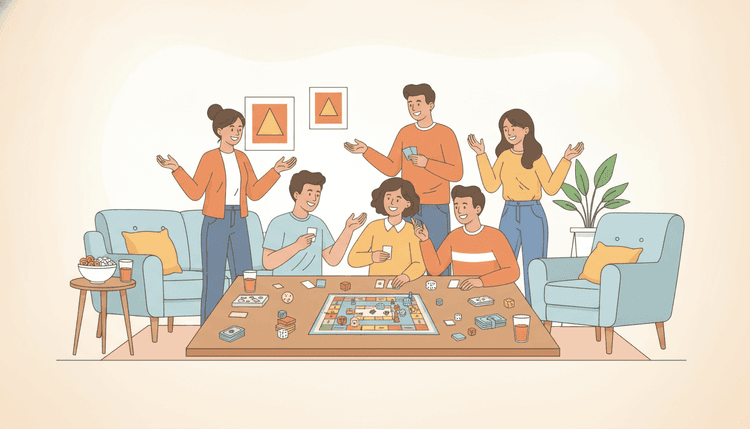
Getting a large group together for game night creates some of the best memories you will have all year. But the bigger the group, the trickier the logistics. This guide walks you through every detail so your next game night runs smoothly from the first dice roll to the last round of snacks.
Why Group Game Nights Are Worth the Effort
Game nights bring people together in a way that streaming a movie or grabbing dinner simply cannot match. You get real conversations, genuine laughs, and the kind of friendly competition that strengthens relationships.
For friend groups, game nights create shared traditions that keep people connected even when life gets busy. For families, they offer screen-free quality time. For social committees and workplace teams, they build camaraderie without the awkwardness of forced icebreakers.
The best part? Game nights scale well. Whether you have 6 people or 30, the right format keeps everyone engaged and having fun.
Choosing the Right Games for Your Group Size
The single biggest factor in game night success is picking games that match your group size. A game that shines with 4 players can fall flat with 12. Here are the best picks for every crowd.
Games for 4-8 Players
This is the sweet spot for most board games. You have enough players for team dynamics but few enough to keep turns moving.
- Codenames - Two teams compete to guess words from one-word clues. Easy to learn, endlessly replayable, and sparks great debates about word associations.
- Ticket to Ride - Players build train routes across a map. Strategic enough to stay interesting but simple enough for newcomers.
- Wavelength - A party game where teams try to read each other's minds on a spectrum. Perfect for groups that love discussion.
- Catan - The classic resource-trading game. With expansions, it handles up to 6 players smoothly.
- Betrayal at House on the Hill - A cooperative horror game where one player eventually turns traitor. Dramatic and memorable every time.
Games for 8-15 Players
Larger groups need games with simultaneous play or quick turns. Avoid anything with long wait times between turns.
- Werewolf / Mafia - A social deduction game where villagers try to identify hidden werewolves. No board needed, and it gets loud in the best way.
- Two Rooms and a Boom - Two teams occupy separate rooms and exchange hostages. Physical movement keeps energy high.
- Telestrations - Like telephone meets Pictionary. Each player draws a phrase, passes it, and the next person guesses. Results are always hilarious.
- Just One - A cooperative word game where everyone writes clues, but duplicate clues get eliminated. Simple and fun for any age.
- Deception: Murder in Hong Kong - A forensic investigator gives clues while a hidden murderer tries to mislead the group.
Games for 15+ Players
At this size, you need party games or station-based setups. Traditional board games will not work for the whole group at once.
- Jackbox Party Packs - Digital party games played on phones. One TV or laptop hosts, and everyone joins via their device. Handles up to 8 active players with audience mode for the rest.
- Trivia tournaments - Use free trivia apps or prepare your own questions. Split into teams of 3-5 for maximum participation.
- Game stations - Set up 3-4 different games around the room and let people rotate. This keeps everyone active and lets people try different games throughout the night.
| Group Size | Best Game Types | Example Games | Avg. Game Length |
|---|---|---|---|
| 4-8 | Strategy, cooperative, party | Codenames, Catan, Wavelength | 30-90 min |
| 8-15 | Social deduction, word games | Werewolf, Telestrations, Just One | 15-45 min |
| 15+ | Digital party, trivia, stations | Jackbox, trivia tournaments | 10-30 min per round |
How to Schedule a Game Night Everyone Can Attend
The hardest part of any group event is finding a date that works. The more people you invite, the harder this gets. Text chains turn into chaos, and someone always forgets to reply.
Instead of the back-and-forth, create a quick availability poll. Share a link, let everyone mark which dates work, and pick the winner in minutes. WhenNOT makes this effortless by letting your group vote on the best dates and times without the endless messaging.
Here are a few scheduling tips that boost attendance:
- Give at least 2 weeks of notice. Last-minute invites cut your turnout in half.
- Offer 3-4 date options. Too many choices create decision paralysis. Too few and you miss the sweet spot.
- Set a response deadline. "Please vote by Friday" gives people urgency without pressure.
- Pick a recurring schedule. Monthly game nights on the first Saturday, for example, become a habit people plan around.
- Send one reminder. A quick nudge 2 days before the event catches the people who said "maybe" and forgot.
If you are managing a recurring social event, a scheduling tool saves hours of coordination every month.
Setting Up the Perfect Game Night Space
Your setup affects the energy of the entire night. A cramped table with bad lighting kills the mood before the first game even starts.
Table space matters most. You need enough room for game boards, cards, and drinks without everything getting knocked over. If you do not have a large dining table, folding tables work great. Set up multiple smaller tables if you are running game stations.
Seating should be comfortable but not too comfortable. Dining chairs and folding chairs keep people alert and engaged. Deep couches make it hard to reach the table and encourage people to zone out.
Lighting should be bright enough to read cards. Dim mood lighting looks great but makes small text impossible. Use overhead lights or table lamps aimed at the play area.
Keep a separate snack station. Games and greasy fingers do not mix. Set up food and drinks away from the game tables so people can graze without risking the components.
Food and Snack Ideas for Game Night
The best game night food is easy to eat with one hand and does not leave a mess on cards or game pieces.
Top picks:
- Popcorn in individual bags or cups
- Veggie cups with hummus or ranch
- Cheese and cracker boards (pre-sliced)
- Mini sliders or pigs in a blanket
- Fruit skewers
- Pretzels and mixed nuts
- Cookies and brownies (pre-cut)
Drinks to stock:
- A mix of sodas and sparkling water
- A pitcher of lemonade or iced tea
- Coffee or tea for longer sessions
- Beer and wine if your crowd drinks
Pro tip: Ask each guest to bring one snack or drink. This spreads the cost, adds variety, and gives people ownership of the night. Use a shared sign-up list so you do not end up with five bags of chips and no drinks.
Game Night Themes and Variations
Themed game nights give your event a unique spin and make it easier to choose games, food, and decorations.
Trivia Night
Turn your living room into a pub quiz. Prepare 5-6 rounds of 10 questions each covering topics like pop culture, history, sports, science, and a wildcard round. Teams of 3-5 work best.
Hand out answer sheets and collect them after each round. Keep score on a whiteboard or TV screen. Award small prizes for first, second, and third place. Dollar-store trophies or gag gifts make the prizes memorable without breaking the bank.
Tournament Style
Pick one game and run a bracket. This works especially well with quick games like ping pong, foosball, Mario Kart, or even Connect Four. Create a bracket board that everyone can see, and have spectators cheer from the sidelines.
Single-elimination keeps the tournament moving fast. Double-elimination gives everyone a second chance but takes roughly twice as long. For groups over 12, start with a round-robin in small groups, then move the top finishers into a playoff bracket.
Casino Night
Set up 3-4 table games like poker, blackjack, and roulette using play money. Give each guest a starting stack of chips when they arrive. At the end of the night, the person with the most chips wins a prize.
You can buy inexpensive poker chip sets and felt table covers online. Casino night works best for groups of 12 or more because you need enough players to fill multiple tables. Add a dress code (cocktail attire or vintage Vegas) to make it feel special.
Making Game Night a Regular Event
One-off game nights are fun, but regular ones build something lasting. Here is how to make game night a fixture in your social calendar.
Set a recurring schedule and stick to it. The first Friday of every month, every other Saturday, or whatever pattern works for your core group. Consistency beats perfection. Even if only 6 out of 15 people can make it each time, those 6 will rotate.
Rotate hosts. Sharing hosting duties prevents burnout and gives everyone a chance to show off their space. The host picks the games for the night, which keeps things fresh.
Keep a game library. Build a shared collection over time. Ask guests to bring their favorites, and keep a running list of games the group has enjoyed. This prevents the "what should we play" debate every time.
Create a group chat dedicated to game night. Use it only for scheduling, game suggestions, and post-night highlights. Keep it separate from your main friend group chat so important messages do not get buried.
Ready to schedule your next group game night without the headache? Find the perfect dates in minutes with WhenNOT.
FAQ
How many games should I plan for a game night?
Plan 2-3 games for a 3-4 hour session. Start with a quick warm-up game (15-20 minutes), move to a main event game (45-90 minutes), and finish with a light party game. Having one extra game as a backup prevents downtime if a game ends faster than expected.
What is the ideal group size for game night?
The ideal size depends on your format. For traditional board games, 4-8 players works best. For party games and social deduction, 8-15 is the sweet spot. For 15 or more, use game stations or digital party games so everyone stays engaged.
How do I handle people who have never played before?
Choose games with simple rules for the first round. Assign experienced players as "team captains" who guide newcomers. Avoid games with heavy strategy or complicated rule books for mixed-experience groups. Codenames, Telestrations, and Just One are all newcomer-friendly picks.
What time should game night start and end?
Start between 6 PM and 7 PM on weeknights or 4 PM to 5 PM on weekends. Plan for 3-4 hours of play. Announce an end time upfront so night owls and early birds both feel comfortable. "We will wrap up around 10 PM" sets clear expectations.
How do I keep everyone engaged in a large group?
Rotate games every 30-45 minutes so no one gets stuck on something they dislike. Use team-based games so quieter players have partners. Set up game stations so people can move around. And most importantly, keep the snack station stocked so people stay fueled and happy.
How far in advance should I plan a game night?
Give at least 2 weeks of notice for a casual game night. For larger themed events like casino night or a tournament, plan 3-4 weeks ahead. Use a scheduling poll to find the best date quickly instead of guessing.
What if someone cancels last minute?
Have a flexible game lineup that works across different player counts. Keep 1-2 games in your rotation that play well with fewer people. If your group drops below 4, pivot to cooperative games or video games where player count matters less.