
Planning successful virtual group activities can feel overwhelming when every detail matters and the right choices can make or break your event. Whether you are managing a remote team meeting or organizing a multi-day conference, finding ways to keep participants engaged and connected is always a challenge. The solution lies in using purpose-built tools and proven engagement strategies that transform passive sessions into lively collaborative experiences.
This list will guide you through actionable methods that cover everything from choosing the best online platform to building team rapport and gathering essential feedback. You will uncover reliable tips that address common obstacles, ensuring your next virtual event is both memorable and productive. Prepare to discover practical steps that will upgrade your planning and unlock better results for your online group activities.
Table of Contents
- 1. Select the Right Online Platform
- 2. Engage Teams with Icebreaker Activities
- 3. Use Scheduling Tools for Multi-Day Events
- 4. Facilitate Collaborative Brainstorming Sessions
- 5. Organize Virtual Team-Building Challenges
- 6. Implement Efficient Feedback Mechanisms
- 7. Wrap Up with Relaxed Social Time
Quick Summary
| Takeaway | Explanation |
|---|---|
| 1. Choose an Engaging Platform | Selecting the right virtual event platform enhances participant interaction and experience, impacting the event's success. |
| 2. Incorporate Icebreaker Activities | Effective icebreakers build rapport, reduce anxiety, and stimulate creativity, making virtual meetings more engaging. |
| 3. Utilize Scheduling Tools | Dedicated scheduling tools streamline coordination for multi-day events, manage time zones, and track participants effectively. |
| 4. Foster Creative Brainstorming | Structured virtual brainstorming sessions can unlock innovative solutions and ensure all team members contribute. |
| 5. Plan Social Time | Integrating relaxed social time in virtual events enhances team bonding and reduces stress, making gatherings more memorable. |
1. Select the Right Online Platform
Choosing the right virtual event platform is a critical first step for event planners aiming to create engaging and seamless online group activities. The success of your virtual event hinges on selecting a platform that not only meets your technical requirements but also enhances participant interaction and experience.
When evaluating virtual platforms, consider these key selection criteria:
- Interactive Features: Look for platforms with robust engagement tools like polls, breakout rooms, and live chat
- Scalability: Ensure the platform can accommodate your expected number of participants
- User Interface: Select a platform with an intuitive design that minimizes technical barriers
- Integration Capabilities: Check for seamless connections with other software and tools
Platforms that support comprehensive virtual event management provide event planners with centralized solutions for registration, streaming, and participant engagement. These advanced tools transform online gatherings from mundane video calls into dynamic interactive experiences.
The right platform acts as the digital backbone of your virtual group activity, determining the overall quality and participant satisfaction.
Consider your specific event goals when making your selection. A small team training session will have different platform requirements compared to a large multi-day conference. Analyze features like analytics, customization options, and technical support to make an informed decision.
Pro tip: Always request a platform demo and test the interface with a small group before committing to a full-scale virtual event.
2. Engage Teams with Icebreaker Activities
Virtual team meetings can feel impersonal and disconnected, but strategic icebreaker activities can transform these digital interactions into vibrant collaborative experiences. Effective icebreakers help teams break down communication barriers and create meaningful connections in remote work environments.
Icebreaker activities serve multiple crucial purposes in virtual team settings:
- Build Rapport: Create opportunities for authentic personal interactions
- Reduce Anxiety: Help participants feel more comfortable and engaged
- Stimulate Creativity: Encourage open communication and innovative thinking
- Improve Team Dynamics: Foster a sense of connection and shared experience
When designing icebreakers, consider interactive strategies for remote teams. Select activities that match your team's size, personality, and meeting objectives. Short, engaging exercises work best for maintaining participant attention and enthusiasm.
Successful icebreakers transform virtual meetings from obligatory check-ins to dynamic collaborative experiences.
Some effective virtual icebreaker options include quick answer rounds (favorite travel destination, unique skill), collaborative visual games, or short storytelling challenges. These activities should be inclusive, low-pressure, and designed to make everyone feel welcome and valued.
Pro tip: Always have a backup icebreaker ready and keep activities under 10 minutes to maintain energy and engagement.
3. Use Scheduling Tools for Multi-Day Events
Multi-day events require sophisticated scheduling strategies that go far beyond traditional single-session planning. Powerful scheduling tools can transform complex event coordination from a logistical nightmare into a streamlined, manageable process.
Key advantages of using dedicated scheduling platforms include:
- Automated Coordination: Eliminate manual scheduling conflicts
- Time Zone Management: Seamlessly handle international participant availability
- Participant Tracking: Monitor registrations and session preferences
- Flexible Agenda Management: Adjust schedules in real-time
Event planners can leverage comprehensive event planning platforms to simplify the intricate details of multi-day gatherings. These tools provide centralized systems that integrate registration, session tracking, and participant management into a single intuitive interface.
Effective scheduling tools are the backbone of successful multi-day virtual events.
Successful implementation requires understanding your specific event needs. Consider factors like participant count, session diversity, and potential scheduling complexities when selecting a platform. Look for solutions that offer customizable templates and robust integration capabilities.
Pro tip: Always conduct a comprehensive test run of your scheduling tool at least one week before the actual event to identify and resolve potential technical issues.
4. Facilitate Collaborative Brainstorming Sessions
Virtual brainstorming sessions offer teams a powerful avenue for generating innovative solutions and driving collective creativity. Unlike traditional meetings, these digital collaboration spaces can unlock unique insights when facilitated with intention and strategic design.
Effective virtual brainstorming requires careful planning and specific strategies:
-
Clear Goal Setting: Define precise objectives before the session
-
Inclusive Participation: Ensure every team member has opportunity to contribute
-
Structured Framework: Use systematic approaches to capture and organize ideas
-
Technical Preparedness: Select appropriate collaborative digital tools
Event planners can develop structured brainstorming techniques that encourage free thinking while maintaining productive momentum. The key is creating an environment where participants feel psychologically safe to share unconventional thoughts.
Successful virtual brainstorming transforms individual perspectives into collective intelligence.
Consider breaking larger groups into smaller breakout rooms to encourage deeper discussion and ensure quieter team members have space to contribute. Assign specific roles like idea collector or time keeper to maintain session energy and focus.
Pro tip: Establish clear ground rules upfront that emphasize non-judgmental idea generation and create a supportive atmosphere for creative thinking.
5. Organize Virtual Team-Building Challenges
Virtual team-building challenges are more than just entertaining activities they are strategic interventions designed to strengthen remote team connections and overcome digital collaboration barriers. By thoughtfully crafting engaging online experiences, event planners can transform isolated team members into a cohesive collaborative unit.
Effective virtual team challenges should focus on:
- Communication Enhancement: Create activities that encourage dialogue
- Trust Building: Design experiences that promote mutual understanding
- Problem Solving: Develop challenges requiring collective effort
- Cultural Sensitivity: Incorporate inclusive activities respecting diverse backgrounds
Event planners can develop strategic team engagement techniques that transcend geographical limitations and foster genuine interpersonal connections. The most successful challenges blend technology interactive elements and meaningful collaborative goals.
Virtual team challenges are the bridge that transforms individual contributors into a unified team.
Consider implementing challenges like virtual scavenger hunts, online escape rooms, collaborative storytelling exercises, or cross-cultural knowledge sharing sessions. These activities should be designed to be enjoyable engaging and purposeful.
Pro tip: Rotate challenge leadership among team members to ensure everyone experiences both participation and facilitation roles.
6. Implement Efficient Feedback Mechanisms
Effective feedback mechanisms are the backbone of continuous improvement in virtual group activities. By creating structured channels for participant insights, event planners can transform subjective experiences into actionable strategic intelligence.
Key components of robust feedback systems include:
- Timely Collection: Gather insights immediately after activities
- Anonymous Options: Allow candid responses without professional risk
- Structured Questions: Design targeted queries for specific insights
- Multi-Format Responses: Support text, rating scales, and open comments
Event planners can leverage advanced collaborative feedback techniques that provide not just retrospective evaluation but forward-looking recommendations. These sophisticated mechanisms help teams learn and adapt more quickly.
Thoughtful feedback mechanisms turn individual experiences into organizational wisdom.
Consider implementing digital survey tools that integrate seamlessly with your virtual event platform. Use a mix of quantitative ratings and qualitative open-ended questions to capture comprehensive participant perspectives.
Pro tip: Create a standardized feedback template that can be quickly customized for different event types to ensure consistent data collection and comparative analysis.
7. Wrap Up with Relaxed Social Time
An often overlooked but critical component of virtual group events is dedicated time for casual social interaction. These unstructured moments are not simply optional extras but essential opportunities for building authentic team connections and psychological well-being.
Benefits of intentional social time include:
- Enhanced Team Bonding: Create space for genuine personal connections
- Stress Reduction: Provide mental breaks from formal event structure
- Increased Engagement: Encourage participation through low-pressure interactions
- Improved Communication: Foster more natural dialogue outside structured sessions
Event planners can design meaningful social interaction strategies that feel organic and enjoyable. Virtual coffee breaks breakout rooms and open chat sessions can transform disconnected digital experiences into vibrant collaborative moments.
Relaxed social time transforms virtual gatherings from mere meetings into memorable shared experiences.
Consider implementing structured yet flexible social activities like themed conversation rooms quick icebreaker games or optional hangout zones where participants can drop in and chat informally. The key is creating an environment that feels welcoming and low pressure.
Pro tip: Rotate informal conversation facilitators to ensure different team members get opportunities to lead and shape social interactions.
Below is a comprehensive table summarizing the main strategies and considerations for organizing successful virtual group activities discussed throughout the article.
| Topic | Description | Key Considerations |
|---|---|---|
| Select the Right Online Platform | Choose a virtual event platform that supports seamless interaction and participant engagement. | Evaluate features like scalability, user interface, integration, and interactive tools. |
| Engage Teams with Icebreaker Activities | Incorporate activities to foster rapport, creativity, and collaboration. | Opt for inclusive, engaging tasks tailored to the team's dynamics. |
| Use Scheduling Tools for Multi-Day Events | Utilize dedicated tools for managing complex event arrangements. | Ensure features for automated coordination, time zone handling, and flexible agenda scheduling. |
| Facilitate Collaborative Brainstorming Sessions | Execute brainstorming sessions that promote creative solutions through structured guidance. | Prioritize goal setting, inclusivity, frameworks, and suitable digital tools. |
| Organize Virtual Team-Building Challenges | Design challenges that enhance communication, trust, and problem-solving skills. | Include activities that are culturally respectful and technologically supported. |
| Implement Efficient Feedback Mechanisms | Create channels for structured participant input and event evaluation. | Focus on timely data collection, anonymity, structured formats, and adaptive analysis. |
| Wrap Up with Relaxed Social Time | Allocate time for informal social interaction to bolster team bonding. | Plan flexible activities like themed rooms and open-ended casual engagements. |
Streamline Your Virtual Group Activities with Smarter Scheduling
Planning engaging virtual group activities like icebreakers, brainstorming sessions, or multi-day events often hinges on solving the toughest problem event planners face getting everyone on the same page at the right time. This article highlights how effective scheduling tools are the backbone of success for complex virtual gatherings but coordinating diverse participant availability often drains valuable energy and time.
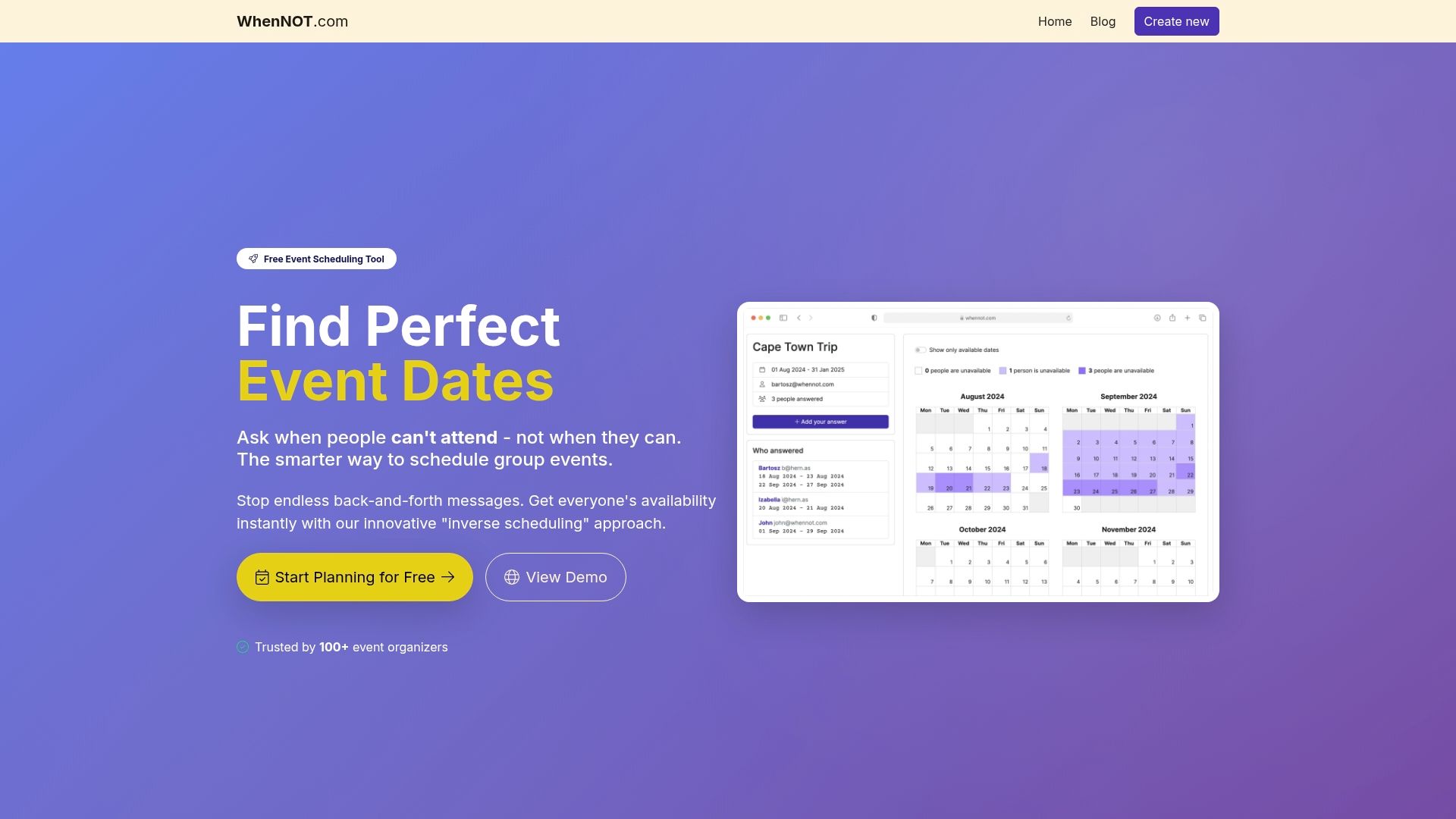
Experience the power of an innovative approach with WhenNOT an online scheduling tool that simplifies event planning by asking participants when they are not available rather than when they are free. This method reduces communication delays and confusion especially for multi-day or flexible date events frequently discussed in virtual event planning. With its privacy-first design and no account requirement, WhenNOT makes scheduling effortless so you can focus on creating engaging activities like those detailed in 7 Effective Virtual Group Activities for Event Planners.
Get started today with WhenNOT and discover how easy it is to visualize everyone's busy days concurrently, save time, and boost participant satisfaction. Don’t let scheduling headaches hold your virtual event back try WhenNOT now and elevate your next online group activity with streamlined coordination.
Frequently Asked Questions
What are the key factors to consider when selecting a virtual event platform?
Choosing the right virtual event platform is crucial for success. Focus on interactive features, scalability, user interface, and integration capabilities to enhance participant experience. Assess these aspects carefully to ensure your platform aligns with your event goals.
How can I engage my team with effective icebreaker activities during virtual meetings?
Implement icebreaker activities designed to build rapport and reduce anxiety among participants. Opt for short and engaging exercises that encourage open communication, ensuring they align with your team's size and objectives.
What tools are available for scheduling multi-day virtual events?
Dedicated scheduling platforms can automate coordination, manage time zones, and track participant registrations effectively. Utilize these tools to streamline the scheduling process and reduce manual conflicts, making your multi-day events more manageable.
How can I facilitate collaborative brainstorming sessions in a virtual setting?
To encourage productive brainstorming, establish clear goals, ensure inclusive participation, and employ structured frameworks for idea organization. Consider breaking larger groups into smaller discussions to foster deeper dialogues and creativity.
What are effective strategies for organizing virtual team-building challenges?
Focus on activities that enhance communication, build trust, and require collective effort. Select challenges like virtual scavenger hunts or collaborative storytelling to create enjoyable and meaningful team experiences.
How can I gather feedback after virtual group activities efficiently?
Implement timely and anonymous feedback mechanisms to collect insights right after activities. Use a mix of structured questions and open comments to gain comprehensive participant perspectives and improve future events.