
Multi-day corporate events demand seamless coordination, yet most planners lose over 30% of their time wrestling with endless email chains and calendar conflicts. Traditional scheduling methods create friction at every turn, from chasing availability responses to resolving double bookings. Frictionless scheduling flips this paradigm by removing communication barriers and automating conflict resolution, transforming chaotic coordination into streamlined efficiency. This guide reveals how inverse availability, structured workflows, and smart automation can save you hours while improving attendee experience across complex multi-day gatherings.
Table of Contents
- Key takeaways
- What is frictionless scheduling and why it matters in multi-day events
- Core mechanics and strategies behind frictionless scheduling
- Managing multi-day event complexities with frictionless scheduling
- Balancing automation with human oversight to optimize outcomes
- Explore frictionless scheduling tools for event planners
- FAQ
Key Takeaways
| Point | Details |
|---|---|
| Time savings | Frictionless scheduling reduces back and forth communication and can cut planning time for multi day events by more than thirty percent. |
| Inverse availability | Inverse scheduling collects unavailable times rather than available ones, simplifying input and lowering cognitive load. |
| Centralized coordination | A centralized calendar and a single coordination hub reduce scattered channels and speed up updates. |
| Automated conflict checks | Real time conflict detection prevents double bookings before they occur, improving attendee experience and planning confidence. |
| Structured workflows | Structured workflows use buffers and a mix of sequential, parallel, and staggered scheduling to manage complex multi day events. |
What is frictionless scheduling and why it matters in multi-day events
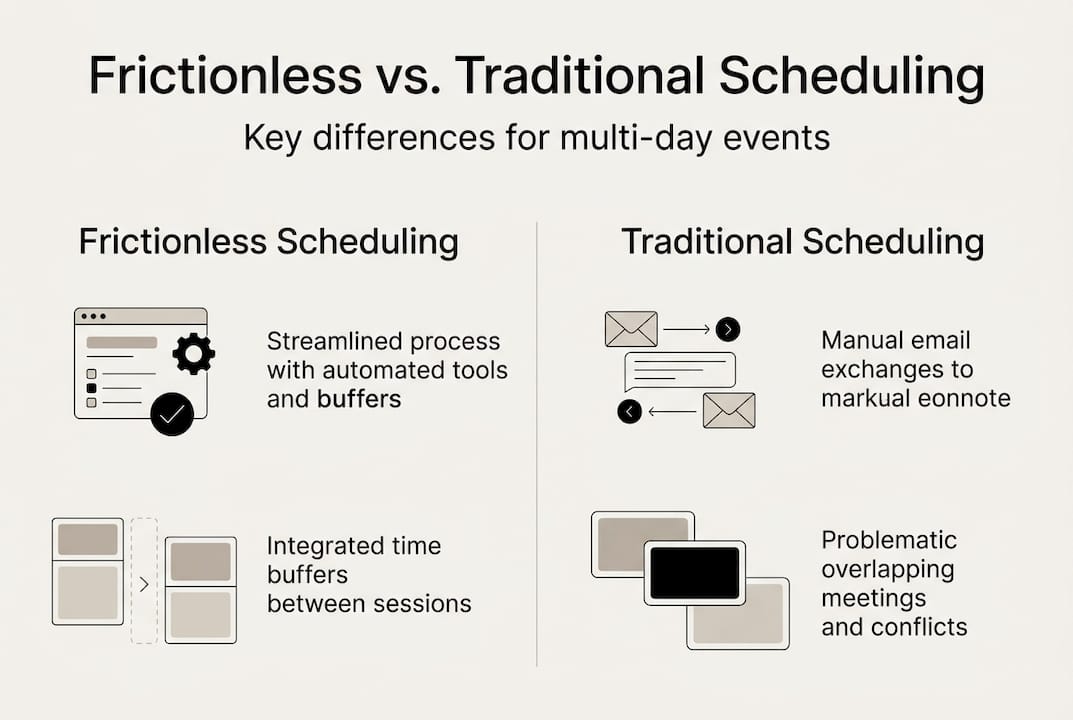
Frictionless scheduling uses modern digital tools to minimize coordination delays by eliminating repetitive communication and manual effort in event planning. Instead of endless email threads asking when people are free, these systems automate availability collection, conflict detection, and date selection. The result transforms what typically takes days into hours.
Traditional scheduling creates bottlenecks at every stage. You send availability requests, wait for responses, chase non-responders, manually compare calendars, and negotiate conflicts. Each step introduces friction that compounds with group size. Planners lose over 30% of their time to these communication delays in multi-day event coordination, time better spent on content design and attendee experience.
Multi-day events amplify these challenges exponentially. You're not just finding one meeting slot but coordinating multiple sessions, meals, breakouts, and travel across days or weeks. Each additional day multiplies potential conflicts and dependencies. Frictionless scheduling addresses this complexity through:
- Automated availability aggregation that visualizes group constraints instantly
- Real-time conflict detection preventing double bookings before they happen
- Centralized coordination hubs eliminating scattered communication channels
- Smart algorithms suggesting optimal dates based on participant patterns
The impact extends beyond time savings. Reduced friction improves attendee satisfaction by respecting their schedules and minimizing last-minute changes. It also decreases planner stress, allowing you to focus on strategic elements rather than administrative logistics. Understanding group scheduling friction helps you identify where traditional methods fail and where modern solutions deliver value.
"Pro Tip: Track your current scheduling process to quantify friction points. Measure how many emails, follow-ups, and iterations each event requires. This baseline reveals where frictionless tools can deliver maximum impact."
The distinction matters most when coordinating corporate retreats, conferences, or training programs involving dozens of stakeholders across departments or time zones. Traditional methods collapse under this complexity, while frictionless approaches scale effortlessly.
Core mechanics and strategies behind frictionless scheduling
Inverse scheduling forms the foundation of frictionless coordination by collecting unavailable times rather than available ones. This approach dramatically simplifies participant input, asking people to mark when they're busy instead of listing every free slot. The cognitive load drops significantly because blocking out committed time requires less mental effort than enumerating all possibilities. Key mechanics include inverse scheduling, sequential and parallel scheduling, buffers, auto-release protocols, and centralized calendar integration.
Scheduling styles adapt to different event structures and priorities:
- Sequential scheduling processes requests in order, ideal for first-come-first-served fairness
- Parallel scheduling evaluates all requests simultaneously, optimizing for maximum attendance
- Staggered scheduling spaces sessions with deliberate gaps, preventing participant fatigue
- Wave scheduling groups similar sessions together, creating thematic flow
- Earliest deadline first (EDF) prioritizes time-sensitive sessions, ensuring critical content gets prime slots
Buffers and auto-release mechanisms prevent the chaos of overlapping commitments. Auto-release after 10-15 minutes for no-shows and built-in buffers prevent overlaps and scheduling conflicts by automatically freeing held slots when participants don't confirm attendance. This creates breathing room between sessions while maintaining schedule integrity.
| Scheduling Component | Function | Benefit |
|---|---|---|
| Inverse availability | Collects busy times only | 60% faster participant input |
| Conflict detection | Real-time overlap alerts | Prevents double bookings |
| Auto-release | Frees unconfirmed slots | Maximizes space utilization |
| Calendar sync | Integrates existing commitments | Single source of truth |
Centralized coordination hubs tie everything together by integrating with existing calendar systems. Instead of juggling multiple platforms and communication channels, you manage everything from one interface. Participants see their commitments automatically reflected without manual updates, while you gain visibility across all moving parts. This integration eliminates the sync lag that causes last-minute surprises.
The workflow follows a structured sequence: planning phase defines event parameters and constraints, collection phase gathers participant availability through inverse scheduling, analysis phase identifies optimal dates using automated algorithms, selection phase finalizes dates with stakeholder input, and confirmation phase locks schedules and sends notifications. Each stage builds on the previous one, creating a systematic approach that scales from small team meetings to large corporate gatherings. Understanding the role of scheduling in corporate teams reveals how these mechanics support broader organizational goals.
"Pro Tip: Configure buffers based on session type. High-energy workshops need longer breaks than passive presentations. Build 15-20 minute buffers after interactive sessions, 10 minutes after lectures."
Managing multi-day event complexities with frictionless scheduling
Multi-day events demand structured workflows that sequence activities logically while accommodating dependencies and constraints. These workflows include pre-drop modeling, edge staging, soft launch, full roll, and post-mortem analysis to ensure smooth execution across extended timeframes. Each phase serves specific coordination needs that compound over multiple days.

Pre-drop modeling simulates the event schedule before committing, testing different configurations against known constraints. You identify potential bottlenecks, resource conflicts, and timing issues in a risk-free environment. Edge staging prepares contingency plans for common disruptions like speaker cancellations or room changes. Soft launch tests processes with a small participant subset, catching issues before full-scale execution. Full roll deploys the complete schedule with confidence built from earlier phases. Post-mortem analysis captures lessons for future improvements.
Attendee journey mapping enhances this structure by visualizing the participant experience across days. You track energy levels, engagement patterns, and attention spans to optimize session sequencing. Morning slots get analytical content when focus peaks, afternoon sessions emphasize interaction to combat post-lunch fatigue, and evening programming offers networking or lighter activities. This human-centered approach prevents the schedule efficiency from sacrificing attendee experience.
- Time zone conflicts require either rotating inconvenient times fairly or offering recorded alternatives
- Last-minute cancellations trigger automated waitlist notifications and backup speaker protocols
- No-shows activate auto-release mechanisms that free resources for standby participants
- Sync lag between calendar systems demands buffer periods and manual conflict checks
Edge cases include time zone conflicts, last-minute cancellations, no-shows, and sync lag causing overlaps, with automated buffers and fallback policies mitigating these challenges. The key lies in anticipating failure modes and building resilience into your scheduling architecture.
| Challenge | Frictionless Solution | Traditional Approach |
|---|---|---|
| Time zones | Automated conversion with fairness rotation | Manual calculation and negotiation |
| Cancellations | Waitlist auto-notification | Email chain to find replacements |
| No-shows | Auto-release after 15 minutes | Wasted resources and schedule gaps |
| Double bookings | Real-time conflict detection | Discovered at event start |
Technological limitations still exist despite automation advances. Calendar sync lag can create brief windows where overlaps occur before systems update. Privacy settings may hide some availability data, requiring manual verification. Integration gaps between different calendar platforms occasionally demand workarounds. Recognizing these limitations helps you build appropriate safeguards rather than assuming perfect automation.
Effective event coordination workflow planning addresses these complexities through layered redundancy. Automated systems handle routine coordination while human oversight catches edge cases and applies contextual judgment. This combination delivers reliability that neither approach achieves alone. The workflow structure also facilitates clear communication with stakeholders, setting expectations and providing transparency into the coordination process. Following step by step event planning for multi-day retreats ensures you address each complexity systematically.
Balancing automation with human oversight to optimize outcomes
Zero-friction scheduling creates unexpected risks when automation removes all barriers to meeting creation. This can cause back-to-back meeting overload and exhaustion if not balanced with guardrails like no-meeting days. The ease of scheduling encourages over-scheduling, filling every available slot until participants burn out. What begins as efficiency ends as productivity drain.
Participant fatigue manifests in declining engagement, reduced retention, and negative feedback. When your calendar fills automatically without friction, you lose the natural pause that prompts consideration of whether each meeting adds value. The solution requires intentional constraints that preserve automation benefits while preventing overload.
Recommended guardrails include:
- No-meeting days block entire days weekly for focused work and recovery
- Async-first defaults require justification for synchronous gatherings rather than assuming meetings
- Conflict locks prevent scheduling within certain hours or around specific commitments
- Maximum daily meetings cap how many sessions one person can attend
- Mandatory buffers enforce breaks between sessions regardless of availability
These constraints don't eliminate frictionless scheduling's advantages but channel them productively. You maintain automated coordination while respecting human limitations. The key lies in configuring guardrails during initial setup rather than relying on participants to self-regulate amid scheduling pressure.
Academic research highlights the tension between optimization and practicality. Algorithms can find mathematically optimal schedules that maximize attendance and minimize gaps, but these solutions sometimes create unrealistic participant experiences. A perfectly efficient schedule might demand someone attend eight consecutive hours without breaks. Technically feasible doesn't mean humanly sustainable.
"Pro Tip: Survey participants post-event about schedule intensity. Ask specifically about fatigue points and preferred pacing. Use this data to calibrate your automation guardrails for future events."
Blending advanced automation with buffers, conflict locks, and human oversight produces robust multi-day event schedules that balance efficiency with sustainability. The human element adds contextual awareness that algorithms lack, recognizing when a technically valid schedule creates problems. You might notice that key decision-makers are scheduled for conflicting sessions, or that back-to-back sessions lack time for travel between distant venues.
Implementing balanced oversight means reviewing automated schedules before finalizing them. Check for patterns indicating overload, verify that dependencies make logical sense, and confirm that session sequencing supports learning objectives. This review takes minutes compared to manual scheduling's hours, yet catches issues automation misses. The combination delivers speed without sacrificing quality.
Applying these principles to streamlined scheduling for corporate retreats demonstrates how guardrails enhance rather than hinder efficiency. You coordinate faster while producing schedules that participants can actually sustain. The time saving planning hacks for group retreats show how strategic automation placement maximizes benefits while preserving necessary human judgment.
Explore frictionless scheduling tools for event planners
Transforming multi-day event coordination from chaotic to streamlined requires the right tools backing your process. WhenNOT offers frictionless scheduling solutions specifically designed to eliminate the communication overhead that consumes your planning time. Their inverse availability approach collects when participants are busy rather than free, dramatically simplifying input for everyone involved.
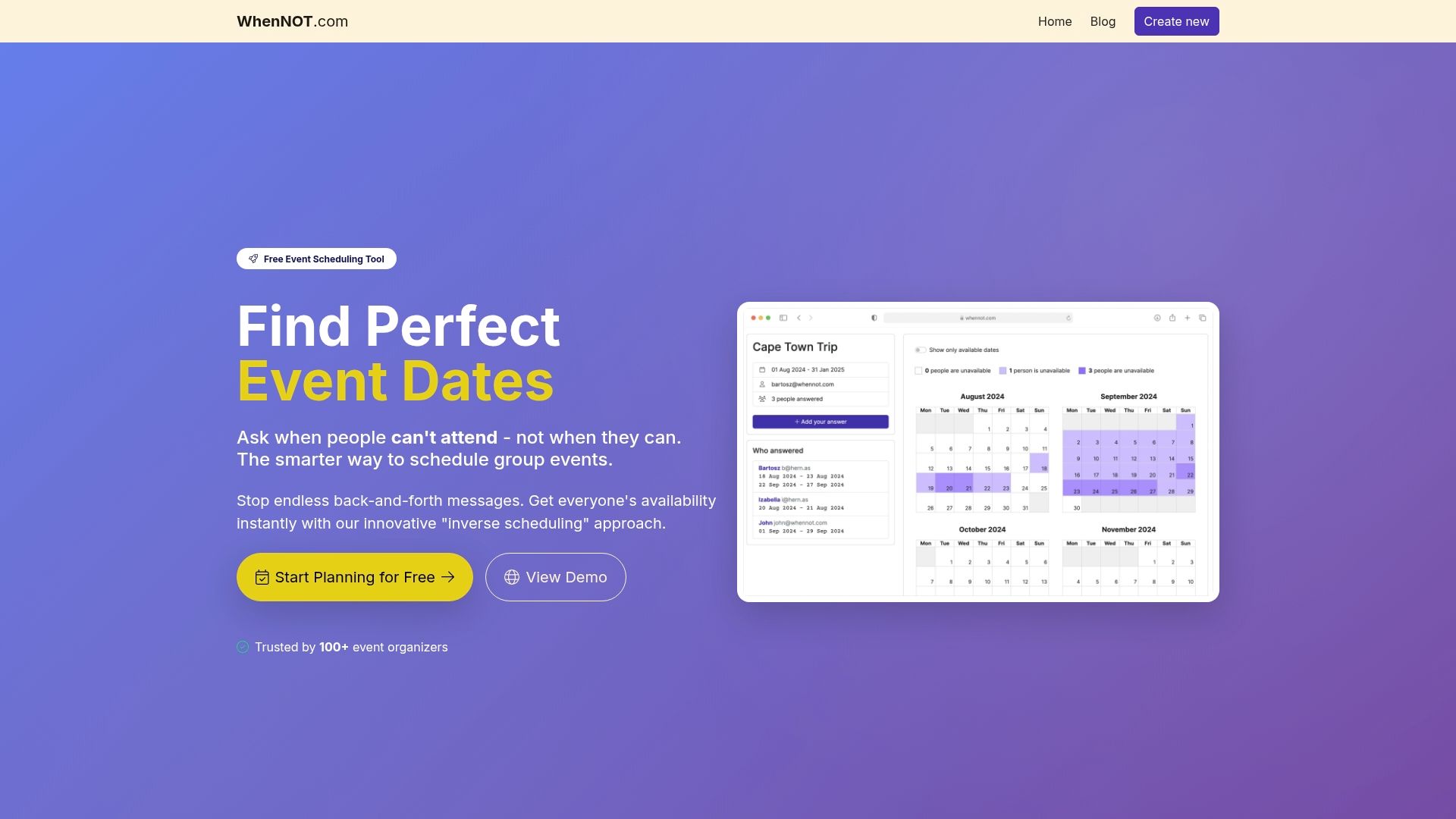
The platform integrates the core mechanics we've explored: automated conflict detection, real-time availability visualization, and centralized coordination that creates a single source of truth. No more scattered email threads or manual calendar comparisons. Participants mark their unavailable dates without creating accounts, while you gain instant visibility into optimal scheduling windows. This combination addresses the exact friction points that traditional methods create, especially for complex multi-day corporate meetings where coordination complexity multiplies with each additional session and stakeholder.
FAQ
What is frictionless scheduling?
Frictionless scheduling uses modern digital tools to minimize coordination delays by eliminating repetitive back-and-forth communication in event planning. It automates availability collection, conflict detection, and date selection, transforming what traditionally takes days into hours. The approach focuses on removing administrative barriers so planners can concentrate on content and attendee experience rather than logistics.
How does inverse scheduling improve event coordination?
Inverse scheduling collects unavailable times rather than available ones, dramatically reducing participant input complexity. This approach requires less cognitive effort because marking committed time is simpler than enumerating all free slots. It speeds up consensus among large groups by instantly visualizing when everyone is busy, making optimal dates obvious. Learn more about inverse scheduling benefits for corporate coordination.
What measures prevent scheduling conflicts in multi-day events?
Buffers around meetings and auto-release protocols after no-shows minimize overlaps by creating breathing room and freeing held resources. Real-time conflict detection alerts you before double bookings occur, while fallback policies handle last-minute changes systematically. Manual review of automated schedules catches edge cases that algorithms miss. Explore strategies for preventing scheduling conflicts in complex event workflows.
Can automation fully replace human oversight in scheduling?
Over-automation risks lead to participant overload and scheduling errors that algorithms don't recognize. While automation handles routine coordination efficiently, human oversight applies contextual judgment about schedule intensity, logical sequencing, and participant experience. Balanced guardrails like no-meeting days and manual conflict reviews are essential for sustainable schedules. Discover how automation and human oversight balance creates optimal outcomes for corporate retreats.