
Planning an event can feel overwhelming when you realize that over 50 percent of group meetings fail to land on a first-choice date. Every missed detail or late reply risks sending schedules into chaos and frustration. Today’s scheduling workflows use smart methods to help groups decide on dates and manage logistics with less hassle. Discover practical approaches that make coordinating events smoother and more reliable for everyone involved.
Table of Contents
- Defining Scheduling Workflow For Events
- Types Of Event Scheduling Methods
- Step-By-Step Event Scheduling Process
- Roles And Responsibilities In Event Planning
- Risks, Challenges, And Common Mistakes
- Comparing Traditional And Modern Scheduling Tools
Key Takeaways
| Point | Details |
|---|---|
| Defining Scheduling Workflow | A modern scheduling workflow enhances group coordination by focusing on collective input and efficiency rather than individual availability. |
| Types of Scheduling Methods | Different scheduling methods (sequential, parallel, staggered, wave, EDF) cater to various event types and logistical needs. |
| Structured Scheduling Process | A systematic approach involving initial planning, availability collection, and date selection ensures a seamless event experience. |
| Challenges & Solutions | Anticipating participant conflicts, communication breakdowns, and resource issues is crucial; proactive strategies enhance adaptability in event planning. |
Defining Scheduling Workflow for Events
A scheduling workflow is the strategic framework that guides how groups organize, coordinate, and finalize event dates and times. Unlike traditional scheduling methods that focus on individual availability, modern workflows prioritize collective planning and efficiency. According to Wikipedia's discrete-event simulation, these workflows model operations as a sequence of time-based events that mark significant state changes in the coordination process.
At its core, an event scheduling workflow encompasses several critical components designed to streamline group decision making. These typically include:
- Initial Date Proposal: Setting potential date ranges
- Participant Input: Collecting unavailability information
- Conflict Resolution: Identifying optimal meeting times
- Confirmation Process: Finalizing and communicating selected dates
The complexity of scheduling workflows varies depending on the event type. Exploring team scheduling best practices, corporate retreats might require more intricate workflows compared to casual social gatherings. The key is developing a systematic approach that minimizes communication overhead and maximizes participant convenience.
Effective scheduling workflows transform what could be a chaotic negotiation into a streamlined, transparent process. By leveraging modern tools and techniques, groups can reduce the traditional back-and-forth communication, saving time and reducing scheduling frustration. The goal is not just finding a time that works, but creating a collaborative experience that respects everyone's constraints and preferences.
Types of Event Scheduling Methods
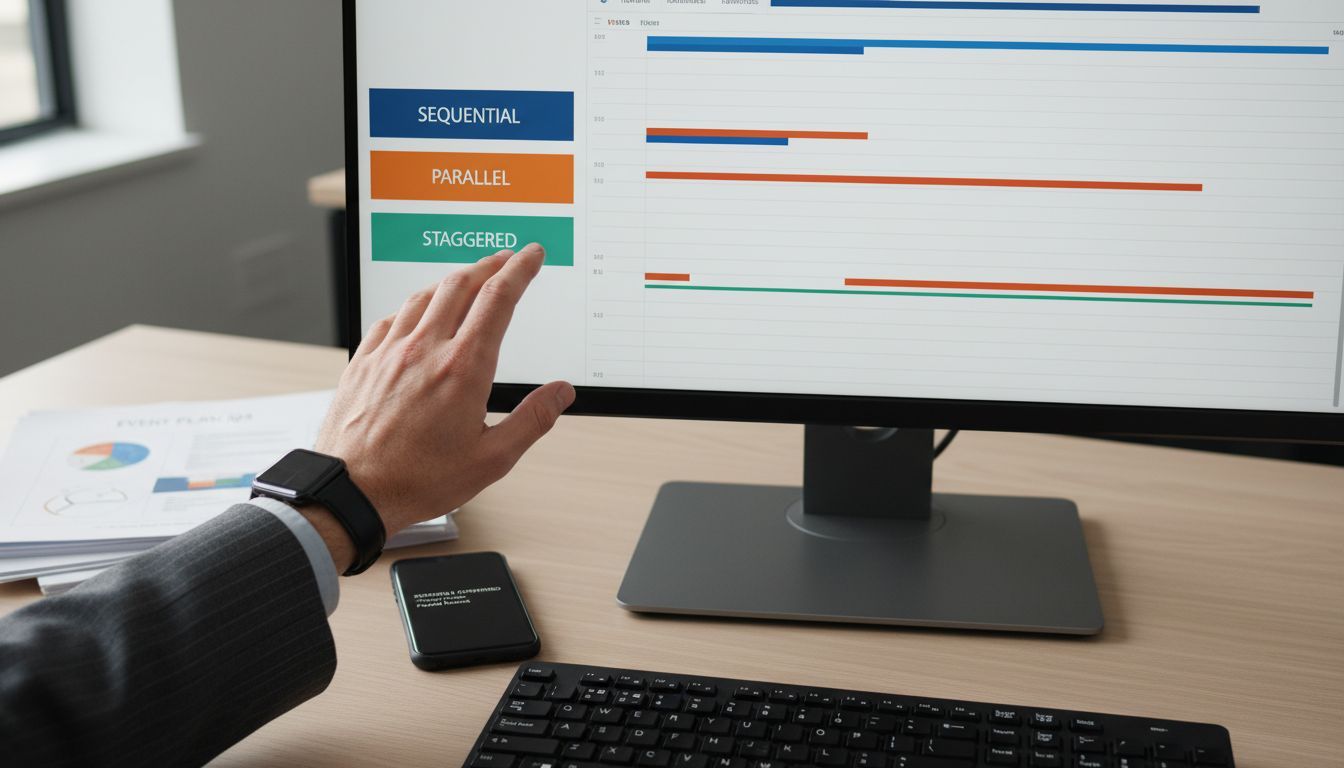
Event scheduling methods are diverse strategies designed to accommodate different group dynamics and event requirements. According to Imeetify, there are several primary approaches: sequential scheduling, parallel scheduling, staggered scheduling, and wave scheduling. Each method offers unique advantages depending on the complexity of the event and participant constraints.
Here's a breakdown of the key scheduling methods:
Here's a comparison of the primary event scheduling methods and their key characteristics:
| Scheduling Method | Key Features | Best For |
|---|---|---|
| Sequential Scheduling | Linear time slots, one participant at a time | Small groups Workshops |
| Parallel Scheduling | Multiple sessions at once, separate locations | Conferences Large events |
| Staggered Scheduling | Start times are offset, flow management | Resource-limited events |
| Wave Scheduling | Groups scheduled in batches with gaps | High-volume registrations |
| EDF (Earliest Deadline First) | Prioritizes urgent/time-sensitive tasks | Critical deadline management |
- Sequential Scheduling: Participants are assigned specific time slots in a linear progression
- Parallel Scheduling: Multiple event segments occur simultaneously across different tracks or locations
- Staggered Scheduling: Start times are deliberately offset to manage crowd flow or resource allocation
- Wave Scheduling: Groups are scheduled in batches with intentional gaps between waves
Understanding efficient scheduling methods reveals that the selection of a scheduling approach depends on several critical factors. These include the total number of participants, venue capacity, logistical constraints, and the specific goals of the event. For instance, a large conference might leverage parallel scheduling to host multiple sessions concurrently, while a small workshop might prefer sequential scheduling for more focused interactions.
Interestingly, some advanced scheduling techniques, like earliest deadline first (EDF) from real-time systems, are finding applications in event planning. This approach prioritizes scheduling based on the most urgent or time-sensitive requirements, ensuring that critical time slots are allocated efficiently. The key is flexibility—no single method works universally, and successful event planners often blend multiple scheduling strategies to create the most effective workflow for their specific needs.
Step-By-Step Event Scheduling Process
Successful event scheduling requires a structured and strategic approach. Imeetify highlights that the process involves defining clear objectives, selecting appropriate scheduling methods, coordinating resources, and implementing a schedule that ensures a seamless event experience.
Here's a comprehensive step-by-step breakdown of the event scheduling process:
- Initial Planning Phase
- Define event objectives and scope
- Determine target participants
- Establish preliminary date range
- Identify key stakeholders
- Availability Collection
- Distribute availability request
- Gather participant constraints
- Track and manage responses
- Identify potential scheduling conflicts
- Date Selection
- Analyze collected availability data
- Identify optimal meeting times
- Resolve scheduling conflicts
- Confirm preliminary event dates
Understanding the group scheduling process reveals that creating reusable templates can significantly streamline coordination. By developing standardized approaches for different event types, organizers can reduce administrative overhead and minimize communication complexities.
The final phase involves confirmation and communication.
After selecting the most suitable dates, event organizers must notify all participants, finalize logistical details, and ensure everyone has clear expectations. Flexibility remains crucial—unexpected changes can always arise, so maintaining open communication channels and having contingency plans will help manage any potential scheduling challenges effectively.
Roles and Responsibilities in Event Planning
Event planning is a collaborative effort that requires clear definition of roles and strategic distribution of responsibilities. Like a well-choreographed dance, each participant plays a crucial part in ensuring the event's success. Doodle highlights the importance of collaborative time management, which is fundamental to effective event coordination.
Key roles in event planning typically include:
- Event Coordinator: Overall project management and strategic oversight
- Logistics Manager: Venue selection, transportation, and technical arrangements
- Communication Specialist: Participant outreach and information dissemination
- Budget Coordinator: Financial planning and expense tracking
- Resource Allocator: Managing personnel, equipment, and scheduling
Group event organization process reveals that successful events depend on clear communication and well-defined responsibilities. Each team member must understand their specific duties and how they contribute to the overall event objectives. This means establishing clear expectations, setting measurable goals, and maintaining open channels of communication throughout the planning process.
The most effective event planning teams operate with flexibility and mutual support. While each role has specific responsibilities, there should be enough overlap to allow for backup and collaborative problem-solving. Unexpected challenges will inevitably arise, so team members must be prepared to adapt, communicate proactively, and work together to find creative solutions that keep the event on track and ensure a positive experience for all participants.
Risks, Challenges, and Common Mistakes
Event scheduling is rarely a straightforward process, and planners must anticipate potential pitfalls. ISR research on rescheduling strategies highlights the complexity of managing dynamic event requirements, emphasizing the need for adaptive approaches that can handle unexpected changes and disruptions.
Common challenges in event scheduling include:
-
Participant Availability Conflicts
- Multiple participants with competing schedules
- Last-minute cancellations
- Time zone complications
-
Communication Breakdowns
- Unclear expectations
- Incomplete information sharing
- Miscommunicated deadlines
-
Resource Management Issues
- Insufficient budget allocation
- Venue scheduling conflicts
- Inadequate contingency planning
7 Common Scheduling Challenges and How to Overcome Them suggests that proactive communication and flexible planning are critical to mitigating potential risks. The most successful event planners develop robust contingency strategies that allow for quick pivots when unexpected situations arise.
Unlike run-to-completion scheduling, which rigidly follows a predetermined path, effective event planning requires a more nuanced approach. Planners must remain adaptable, maintaining open communication channels and being prepared to make real-time adjustments. The key is to anticipate potential challenges, develop multiple scenario plans, and maintain the flexibility to modify strategies as circumstances evolve. By acknowledging that perfect planning is impossible, event organizers can create more resilient and responsive scheduling workflows.
Comparing Traditional and Modern Scheduling Tools
Event scheduling has undergone a significant transformation, moving from manual, time-consuming processes to sophisticated digital solutions. Doodle represents a prime example of modern collaborative scheduling tools that have revolutionized how groups coordinate their time and availability.
Traditional vs. Modern Scheduling Approaches:
Traditional Methods
- Manual email exchanges
- Phone call coordination
- Physical calendars and spreadsheets
- Limited participant tracking
- High communication overhead
Modern Digital Tools
- Real-time collaborative scheduling
- Automated availability tracking
- Instant communication channels
- Multi-participant synchronization
- Intuitive user interfaces
Understanding why choose simple scheduling tools highlights the critical shift towards user-friendly, efficient solutions. Modern scheduling platforms prioritize reducing complexity while increasing collaboration capabilities. They eliminate the traditional back-and-forth communication, replacing it with streamlined, visual approaches that save time and reduce scheduling frustrations.
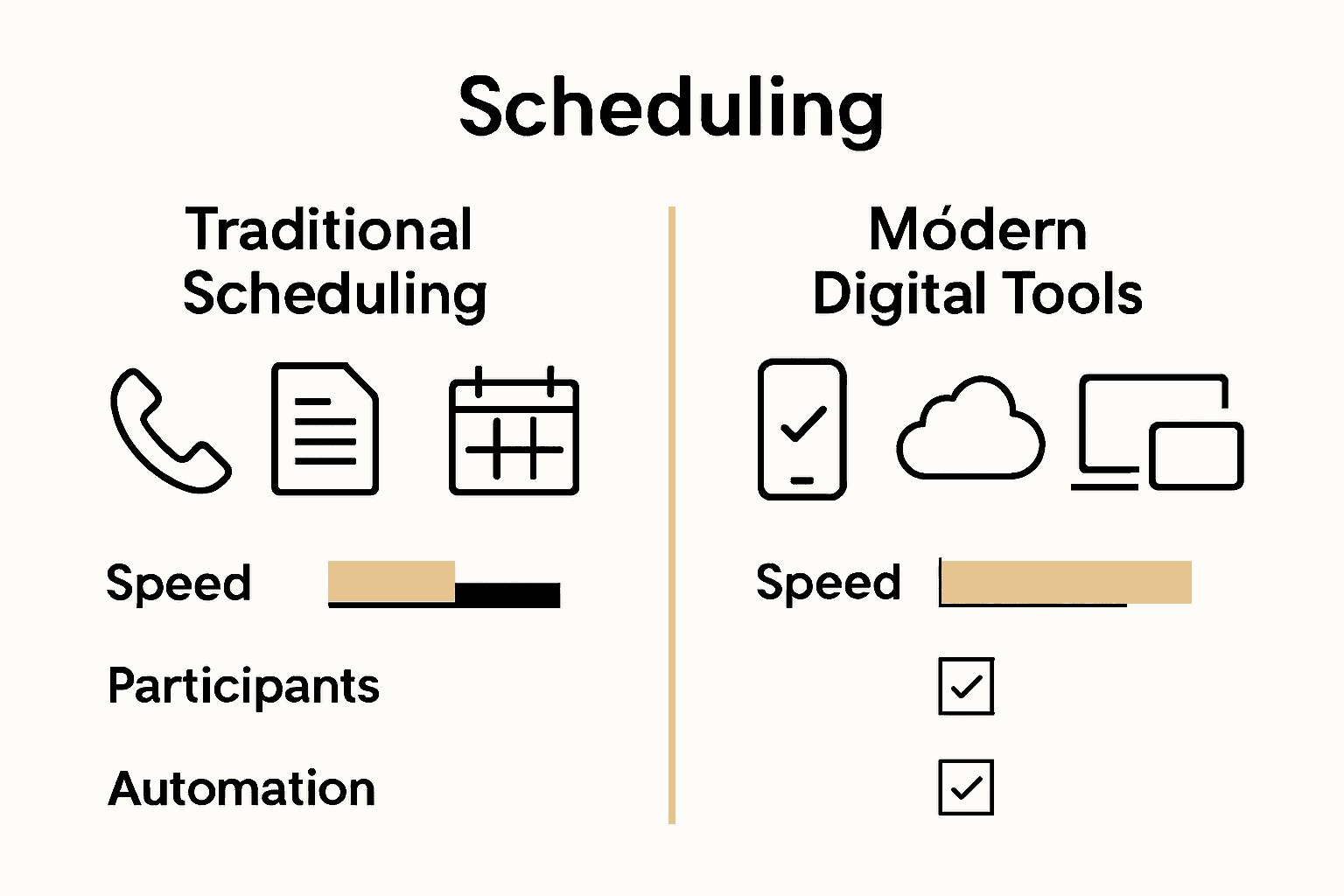
The evolution of scheduling tools mirrors broader technological trends toward simplification and user experience. Where traditional methods required significant manual intervention, contemporary tools leverage automation, intelligent algorithms, and user-centric design to transform event planning from a cumbersome task into a smooth, almost effortless process. The best modern scheduling solutions don't just track time—they anticipate needs, provide intuitive interfaces, and create more meaningful connections between participants.
Simplify Your Event Scheduling Workflow Today
Planning events can quickly become overwhelming with conflicting participant schedules and endless back-and-forth communication. This guide highlights key challenges like participant availability conflicts and the need for efficient conflict resolution within complex scheduling workflows. If coordinating group availability feels like a frustrating maze, there is a better way to take control and streamline the process.
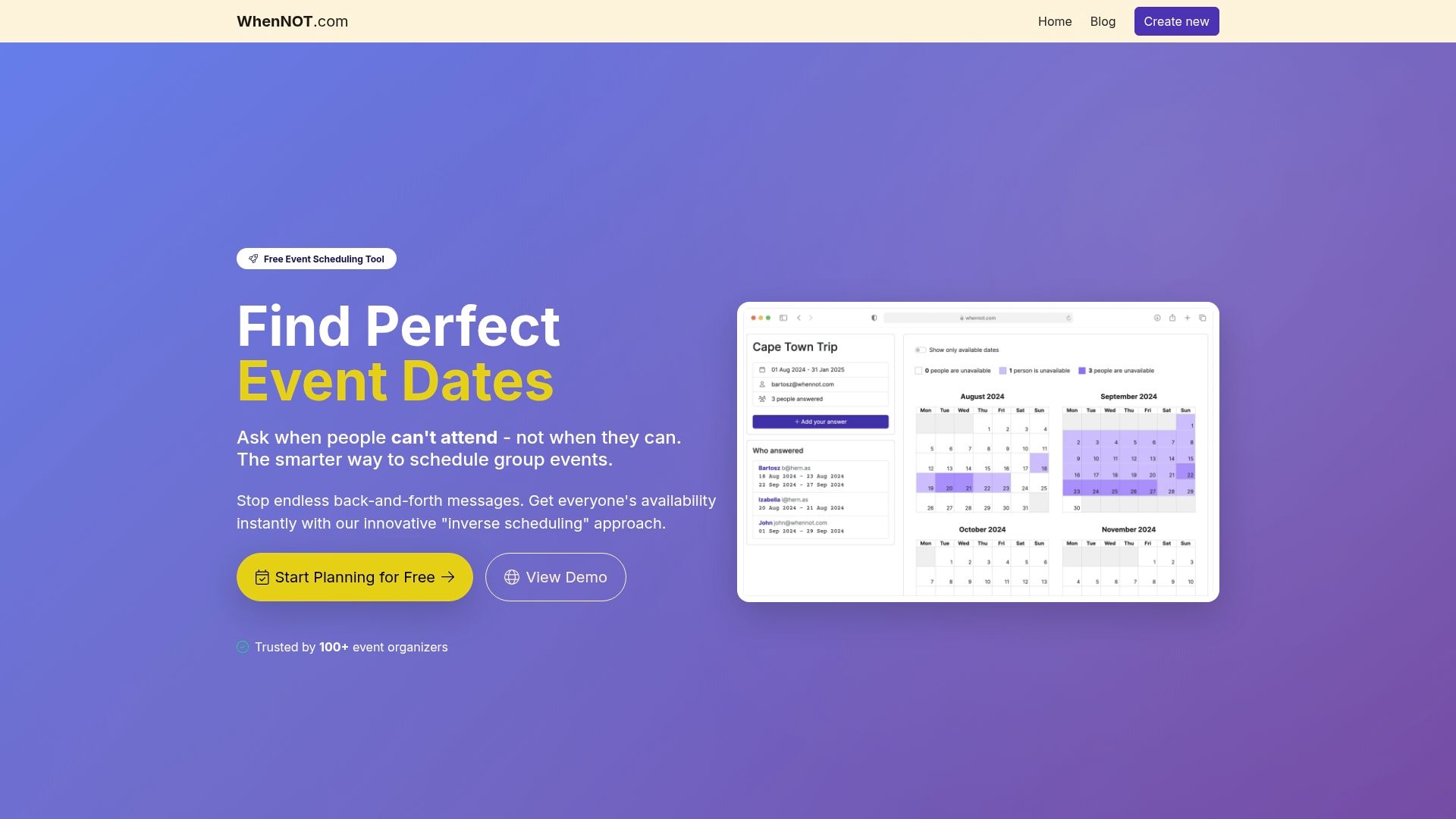
Discover how WhenNOT transforms traditional scheduling by asking when participants are unavailable instead of available. This unique "inverse scheduling" approach greatly reduces communication delays and confusion, helping you instantly pinpoint the best dates for your event. Whether you are organizing a corporate retreat, family gathering, or multi-day conference, WhenNOT's simple interface and no-account-needed participation make scheduling painless and fast. Stop letting scheduling frustrations hold you back. Visit WhenNOT now to experience a smarter, free solution that streamlines your group event planning from start to finish.
Frequently Asked Questions
What is a scheduling workflow for events?
A scheduling workflow for events is a framework that helps groups organize, coordinate, and finalize dates and times collectively, enhancing efficiency and minimizing communication overhead.
What are the steps involved in the event scheduling process?
The event scheduling process typically involves an initial planning phase, collecting participant availability, selecting dates based on that availability, and finally confirming and communicating the chosen dates to all participants.
What are the different event scheduling methods?
Different event scheduling methods include sequential, parallel, staggered, wave scheduling, and earliest deadline first (EDF). Each method serves different needs depending on the event's complexity and participant constraints.
How can I overcome common challenges in event scheduling?
To overcome challenges in event scheduling, proactive communication and flexible planning are essential. Developing contingency strategies allows you to handle unexpected changes and keep the event on track.