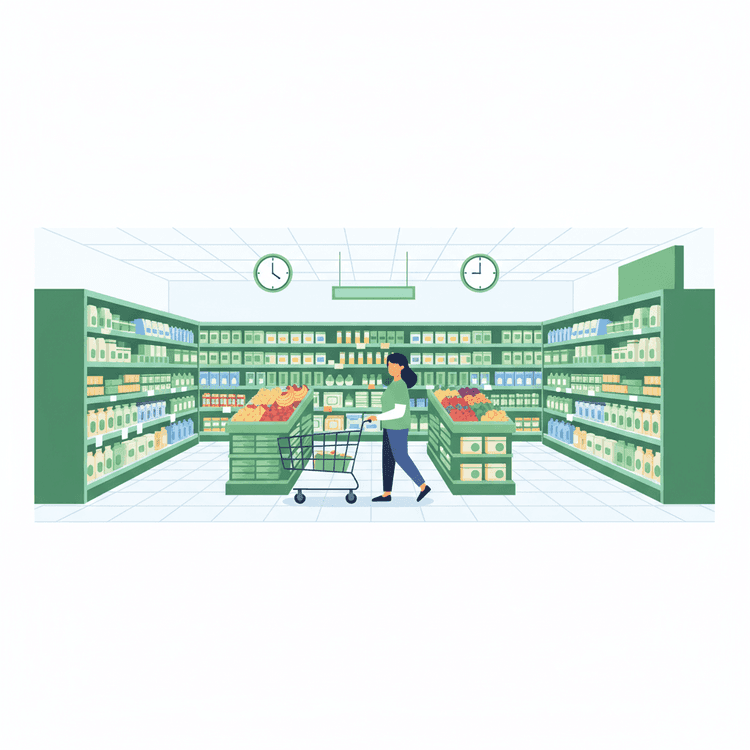
You have a list, a plan, and exactly 45 minutes before your next commitment. You pull into the grocery store parking lot and it is packed. Every cart is taken, every self-checkout lane has a line five deep, and someone is blocking the entire cereal aisle with a price comparison marathon. Sound familiar?
The truth is, most of us grocery shop on autopilot, heading to the store whenever it fits our schedule rather than when the store is actually quiet. But a small shift in timing can make an enormous difference. Understanding when grocery store crowds peak and when they thin out is one of the easiest lifestyle upgrades you can make.
The Worst Times to Grocery Shop
Before we get to the sweet spots, let's talk about when you should absolutely avoid grocery crowds if you can.
Saturday and Sunday Afternoons
Weekend afternoons are consistently the busiest times at grocery stores across the country. Most people default to weekend shopping because it feels like the only time they have. The result is predictable: overflowing parking lots between noon and 5 PM on Saturdays and Sundays. If you are shopping during this window, you are competing with the largest possible crowd.
Weekday Evenings (5 PM to 7 PM)
The after-work rush hits grocery stores hard. Shoppers stopping on their way home from the office create a second daily peak. Stores near business districts and commuter routes are especially slammed during this window.
The Day Before Major Holidays
Thanksgiving Eve is legendary for grocery chaos, but the pattern holds for nearly every major holiday. The day before Christmas, Easter, Fourth of July, and even Super Bowl Sunday all trigger massive shopping surges. If you wait until the last minute, expect the worst.
The Best Time to Grocery Shop: When the Aisles Are Empty
Now for the good news. There are predictable windows when stores are significantly quieter.
Early Mornings (6 AM to 8 AM)
The single best time to grocery shop is early morning, particularly on weekdays. Most stores open between 6 and 7 AM, and the first two hours see minimal traffic. Shelves are freshly stocked from overnight restocking crews, produce is at its freshest, and you can move through the store at your own pace. Early-bird shoppers consistently report completing their trips in half the time compared to peak hours.
Weekday Mid-Mornings (9 AM to 11 AM)
If a 6 AM alarm is not your style, mid-morning on Tuesday, Wednesday, or Thursday is your next best option. The morning rush of commuters has passed, and the lunch crowd has not yet arrived. These hours offer a comfortable balance between availability and calm.
Late Evenings (8 PM to Close)
Shopping after 8 PM is another reliable strategy to avoid grocery crowds. The after-work wave has subsided and most families are home for the evening. Selection may be slightly reduced compared to morning trips, but the trade-off in peace and speed is worth it for many shoppers.
The Midweek Sweet Spot
Tuesday and Wednesday are statistically the quietest grocery shopping days of the week. Most people put off shopping until the weekend, leaving midweek aisles noticeably emptier. Combining a midweek day with an early morning or late evening time slot gives you the absolute quietest shopping experience possible.
Seasonal Patterns That Affect Grocery Crowds
Grocery store traffic is not only about the day and hour. Broader seasonal patterns play a role too.
| Season | Crowd Pattern |
|---|---|
| January | Post-holiday lull. Stores are quieter as budgets tighten and holiday cooking winds down. |
| Spring | Gradual increase, especially around Easter and the start of grilling season. |
| Summer | Steady traffic with spikes around holiday weekends like Memorial Day and Fourth of July. |
| Back-to-School (August/September) | Noticeable uptick as families stock up for the school year. |
| November/December | Peak season. Thanksgiving and Christmas drive the highest grocery store traffic of the year. |
Understanding these seasonal swings helps you anticipate when even your usual quiet time slot might be busier than expected.
Practical Tips to Make Every Trip Smoother
Timing is the biggest lever, but a few extra strategies can make your trips even more efficient.
Use store traffic tools. Google Maps shows live busyness data for most grocery stores. Check before you leave to confirm your chosen time slot is actually quiet that day. Unexpected events like local sports games or weather changes can shift patterns.
Shop with a list and a route. Knowing exactly what you need and roughly where it is in the store cuts your time dramatically. Most grocery stores follow a similar layout: produce on the perimeter, staples in the center aisles. Plan your path to minimize backtracking.
Consider grocery delivery or pickup for peak times. If your schedule forces you to shop during busy windows, delivery and curbside pickup services let you skip the crowds entirely. Many stores offer free pickup with a minimum order, making this a zero-cost alternative to fighting the Saturday afternoon rush.
Avoid the first of the month. Stores tend to be busier at the beginning of the month when many households receive paychecks or benefits. Shopping mid-month can help you avoid this less obvious crowd trigger.
Why Timing Your Grocery Trips Matters More Than You Think
Avoiding grocery store crowds is not just about saving a few minutes. Shopping in a calm environment reduces decision fatigue, lowers stress, and can even help you stick to your budget. When you are not dodging carts and rushing through checkout, you make better choices about what goes into your basket.
A 2024 consumer behavior study found that shoppers in crowded stores spent an average of 17 percent more than those shopping during off-peak hours, largely due to impulse purchases driven by the pressure to grab and go. Shopping when the store is quiet gives you the space to compare prices, check labels, and skip the items you do not actually need.
Plan Smarter, Shop Better
The best time to grocery shop is not a secret. It is early mornings, midweek, and outside of holiday rush periods. The worst times are weekend afternoons, weekday evenings, and the day before any major holiday. Armed with this knowledge, you can reclaim your grocery trips and turn them into one of the calmest parts of your week.
Start by shifting just one shopping trip to a quieter time slot this week. You will notice the difference immediately, and you will wonder why you ever shopped on a Saturday afternoon.