
Coordinating a multi-day corporate retreat in 2025 often feels like piecing together a puzzle with moving parts. Demands for real-time adjustments, budget pressures, and unexpected schedule shifts can leave even the most seasoned event coordinator juggling competing priorities. Modern scheduling tools, equipped with cloud-based infrastructure and automated conflict resolution, now promise smoother planning and fewer headaches. This article explores the practical strategies and technologies that help simplify complex retreats while minimizing scheduling conflicts for mid-sized companies worldwide.
Table of Contents
- Core Concepts Of Effective Event Planning
- Types Of Scheduling Tools And Approaches
- Modern Scheduling Challenges For 2025
- Using Inverse Scheduling For Group Coordination
- Avoiding Pitfalls In Multi-Day Event Planning
- Privacy, Cost, And Technology Considerations
Key Takeaways
| Point | Details |
|---|---|
| Strategic Timeline Development | Create comprehensive schedules that account for participant availability to minimize conflicts. |
| Technology Integration | Utilize modern scheduling tools to streamline event coordination and enhance engagement. |
| Flexibility Mechanisms | Build contingency plans to adapt to unexpected changes in scheduling. |
| Proactive Communication | Establish clear communication channels to keep all stakeholders informed and involved throughout the planning process. |
Core Concepts of Effective Event Planning
Event planning is a complex strategic process that requires meticulous coordination, communication, and management of multiple moving parts. Successfully organizing corporate retreats, conferences, or multi-day events demands a systematic approach that minimizes scheduling conflicts and maximizes participant engagement. By understanding core planning principles, event coordinators can transform potential chaos into seamless experiences.
Effective event planning fundamentally revolves around several critical components:
- Strategic Timeline Development: Creating comprehensive schedules that account for multiple participant availability windows
- Communication Frameworks: Establishing clear channels for participant input and coordination
- Flexibility Mechanisms: Building contingency plans to address unexpected scheduling challenges
- Technology Integration: Utilizing modern scheduling tools that simplify complex coordination efforts
Understanding these core concepts requires deep knowledge of group dynamics and logistical considerations. Event planning terminology guide reveals the intricate language and strategic approaches professionals use to navigate complex scheduling landscapes. Each event represents a unique puzzle where participant preferences, organizational requirements, and logistical constraints must harmoniously intersect.
Successful event planning also demands proactive problem solving and adaptive strategies. Coordinators must anticipate potential scheduling conflicts, create transparent communication protocols, and develop robust backup plans. This approach transforms event planning from a reactive task into a strategic organizational capability.
Pro tip: Always build a 15-20% buffer into your event timeline to accommodate unexpected scheduling shifts and participant constraints.
Types of Scheduling Tools and Approaches
In the rapidly evolving landscape of event planning, scheduling tools have transformed from simple calendar applications to sophisticated platforms that enable complex coordination and communication. Understanding efficient scheduling methods reveals the intricate technological capabilities now available to event coordinators in 2025.
The primary categories of scheduling tools can be classified into several key types:
- Event Management Platforms: Comprehensive solutions handling registration, attendee tracking, and scheduling
- Communication Integration Tools: Systems enabling real-time collaboration and participant coordination
- Hybrid Event Solutions: Platforms supporting both virtual and in-person event formats
- Analytics and Reporting Tools: Software providing insights into participant engagement and scheduling effectiveness
Modern scheduling approaches prioritize flexibility and intelligent design. These tools now incorporate advanced features like automated conflict resolution, predictive scheduling algorithms, and seamless integration with existing organizational systems. Cloud-based infrastructure ensures scalability, while intuitive interfaces allow event coordinators to manage increasingly complex scheduling requirements with minimal friction.
The technological evolution of scheduling tools represents a significant leap forward in event planning capabilities. By leveraging intelligent software that can anticipate potential scheduling challenges and provide real-time adjustments, coordinators can create more dynamic, responsive event experiences that adapt to participant needs and organizational constraints.

Pro tip: Select scheduling tools with robust integration capabilities and flexible reporting features to maximize your event planning efficiency.
Here’s how major scheduling tool categories address modern event needs:
| Tool Type | Key Capability | Typical Use Case | Business Impact |
|---|---|---|---|
| Event Management Platform | Handles registration & logistics | Large conferences, corporate events | Simplifies complex coordination |
| Communication Integration Tool | Enables real-time messaging | Team meetings, small groups | Boosts participant collaboration |
| Hybrid Event Solution | Supports virtual and in-person | Global retreats, hybrid meetings | Expands event accessibility |
| Analytics & Reporting Tool | Tracks engagement & outcomes | Evaluating event success | Improves planning via data insights |
Modern Scheduling Challenges for 2025
Event planning in 2025 has evolved into a complex strategic endeavor fraught with unprecedented challenges that demand innovative solutions. Scheduling challenges require comprehensive strategies to navigate the intricate landscape of modern event coordination.
The most critical scheduling challenges facing event coordinators include:
- Dynamic Stakeholder Coordination: Managing rapidly changing participant requirements and expectations
- Budget Constraints: Balancing financial limitations with increasing technological expectations
- Technological Integration: Seamlessly incorporating emerging digital tools without disrupting workflow
- Last-Minute Adaptability: Creating flexible scheduling frameworks that can accommodate sudden changes
- Engagement Management: Maintaining participant interest across hybrid and virtual event formats
Modern event planners must develop sophisticated approaches to overcome these multifaceted challenges. Technological solutions now play a crucial role in mitigating scheduling complexities, with intelligent platforms offering real-time adjustment capabilities and predictive analytics that help anticipate potential disruptions before they occur.
The intersection of human creativity and technological innovation represents the most promising approach to solving scheduling challenges. By leveraging advanced tools that provide granular insights and flexible planning mechanisms, event coordinators can transform potential chaos into streamlined, adaptive experiences that meet the dynamic needs of diverse participant groups.
Pro tip: Develop a comprehensive contingency plan that includes at least three alternative scheduling scenarios to ensure maximum event flexibility.
Using Inverse Scheduling for Group Coordination
Inverse scheduling represents a revolutionary approach to solving complex group coordination challenges by fundamentally reimagining how availability is determined. Group scheduling techniques have evolved to minimize the traditional back-and-forth communication that typically derails event planning efforts.
The core principles of inverse scheduling include:
- Participant-Centric Approach: Focusing on individual unavailability instead of traditional availability matching
- Reduced Communication Overhead: Minimizing repetitive scheduling negotiations
- Flexible Time Range Selection: Allowing participants to indicate broader unavailable periods
- Privacy-Focused Design: Protecting individual scheduling details while facilitating group coordination
- Simplified Decision Making: Streamlining the process of finding optimal meeting times
Unlike traditional scheduling methods that require participants to manually propose and negotiate times, inverse scheduling flips the conventional model. Participants simply mark their unavailable dates, allowing the system to automatically identify the most compatible time windows. This approach dramatically reduces the complexity of coordinating multi-person events, particularly for corporate retreats, conferences, and collaborative projects.
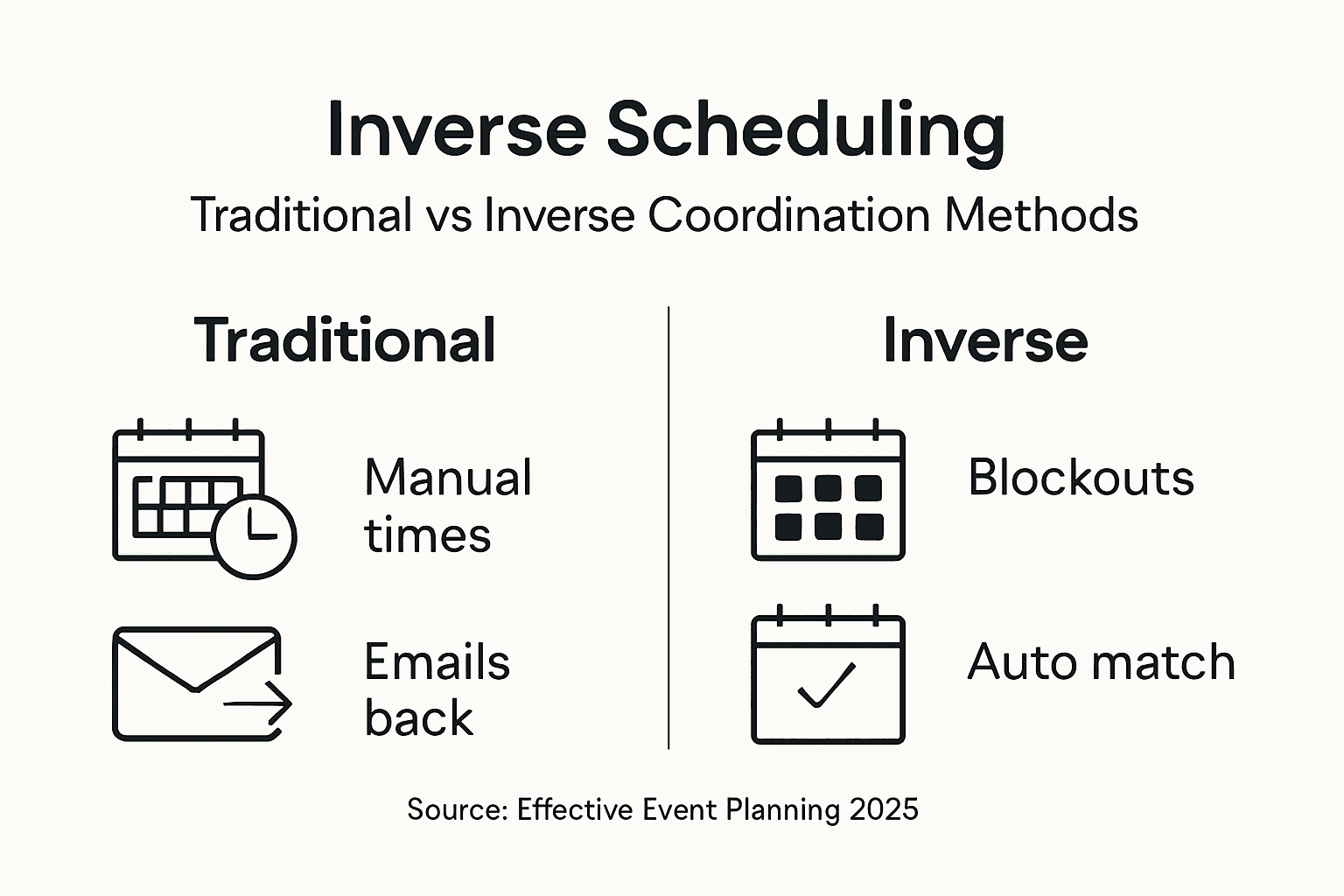
The technological innovation behind inverse scheduling leverages advanced algorithms that can quickly analyze complex availability patterns. By focusing on when people cannot meet, rather than when they can, the method provides a more intuitive and efficient way of finding common ground among diverse schedules.
Pro tip: Implement inverse scheduling at least two weeks before your event to maximize participant input and optimize scheduling flexibility.
This summary clarifies the differences between traditional and inverse scheduling approaches:
| Scheduling Method | Approach | Communication Style | Efficiency Benefit |
|---|---|---|---|
| Traditional | Match available times | Frequent back-and-forth | Can be slow for large groups |
| Inverse | Exclude unavailable times | Single input per person | Rapid multi-person coordination |
Avoiding Pitfalls in Multi-Day Event Planning
Multi-day event planning demands extraordinary strategic precision to prevent common organizational disasters that can derail entire conferences or corporate retreats. Multi-day event planning strategies provide critical insights into navigating the complex landscape of extended group gatherings.
The most significant pitfalls event coordinators must proactively address include:
- Schedule Overload: Creating unrealistic, high-intensity agendas that lead to participant exhaustion
- Communication Breakdowns: Failing to establish clear communication channels among stakeholders
- Inflexible Planning: Developing rigid schedules that cannot accommodate unexpected changes
- Budget Mismanagement: Underestimating financial requirements for multi-day events
- Engagement Fatigue: Neglecting participant energy levels and networking opportunities
Successful multi-day event planning requires a holistic approach that balances structured programming with strategic flexibility. Coordinators must design experiences that provide meaningful content while simultaneously allowing participants sufficient downtime, networking opportunities, and mental recovery periods. This means carefully mapping out not just session times, but also breaks, social interactions, and potential spontaneous networking moments.
Technological solutions and adaptive planning frameworks have become essential in mitigating risks associated with complex multi-day events. By implementing robust contingency mechanisms, leveraging real-time communication tools, and maintaining a flexible mindset, event coordinators can transform potential challenges into opportunities for exceptional participant experiences.
Pro tip: Build at least 20% buffer time into your multi-day event schedule to accommodate unexpected disruptions and participant needs.
Privacy, Cost, and Technology Considerations
Navigating the complex landscape of event planning requires a sophisticated understanding of technological, financial, and privacy constraints in 2025. Cybersecurity considerations for event management have become increasingly critical for organizations seeking to protect participant data and maintain event integrity.
Key considerations for event planners in 2025 include:
- Data Protection: Implementing robust security protocols to safeguard participant information
- Cost Management: Balancing technological investments with budget constraints
- Technology Integration: Selecting scalable tools that support diverse event formats
- Compliance Requirements: Adhering to evolving data privacy regulations
- Risk Mitigation: Developing comprehensive contingency strategies for potential technological failures
Modern event planning demands a holistic approach that seamlessly integrates technological capabilities with financial prudence and privacy protection. Organizations must carefully evaluate technological solutions that not only enhance event experiences but also provide comprehensive security frameworks. This involves selecting platforms with advanced encryption, minimal data collection practices, and transparent privacy policies that build participant trust.
The intersection of technology, cost, and privacy represents a complex strategic challenge for event coordinators. Successful implementation requires a nuanced understanding of emerging technologies, regulatory landscapes, and participant expectations. By prioritizing flexible, secure, and cost-effective solutions, event planners can create experiences that are both technologically advanced and ethically responsible.
Pro tip: Conduct a comprehensive technology audit at least three months before your event to identify potential security vulnerabilities and optimize cost-efficiency.
Simplify Your Event Planning with Inverse Scheduling Technology
The article highlights how complex event planning has become in 2025 with dynamic stakeholder coordination, last-minute adaptability challenges, and engagement management struggles for multi-day events. These pain points can lead to overwhelming communication overload, scheduling conflicts, and participant frustration. The concept of inverse scheduling introduced in the article offers a clear solution by focusing on marking unavailable times instead of available ones, drastically reducing negotiation cycles and simplifying group coordination — exactly the kind of innovation event organizers need today.
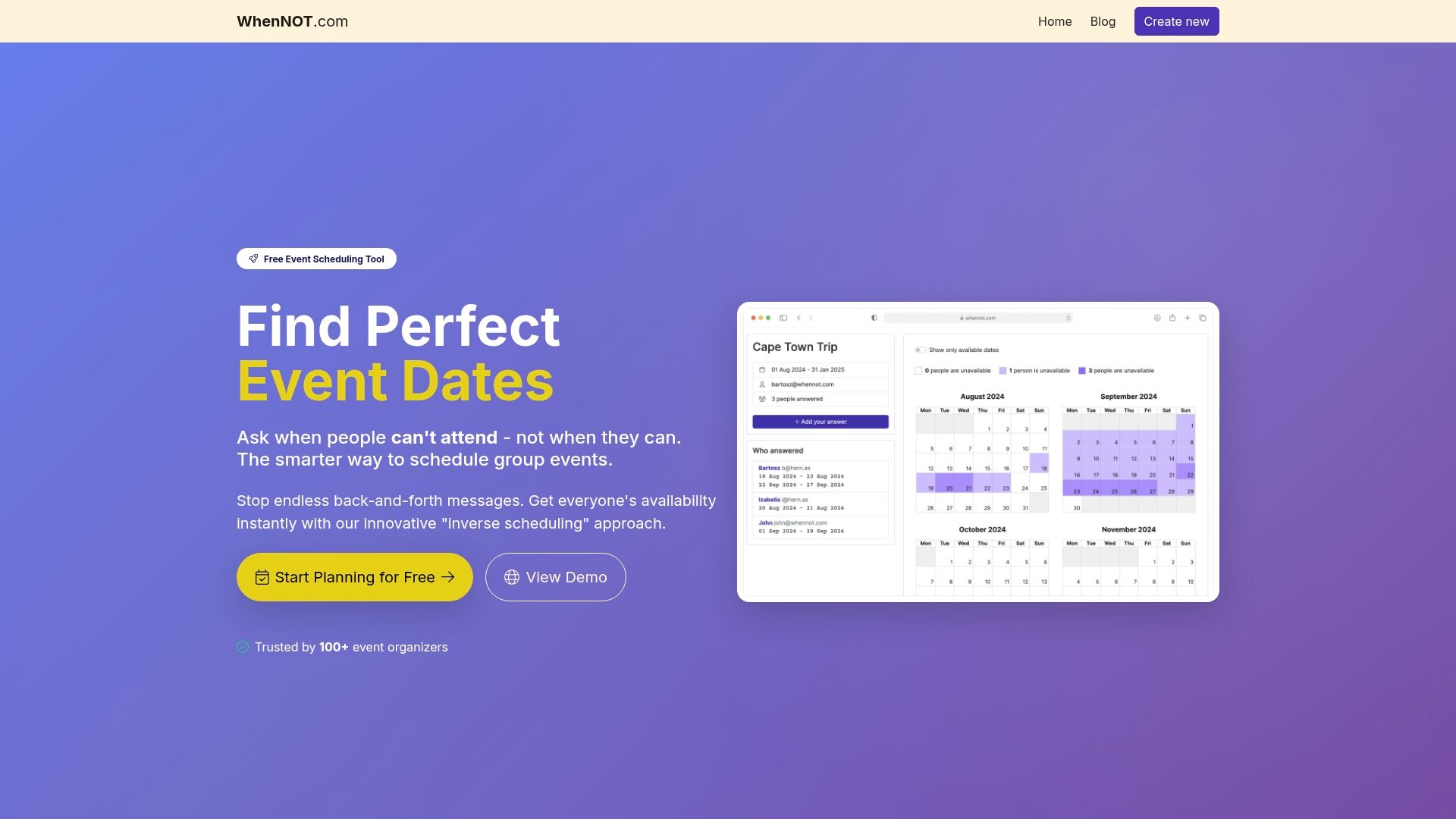
Experience the power of inverse scheduling yourself with WhenNOT, the innovative online scheduling tool designed to relieve scheduling chaos. WhenNOT lets participants simply mark when they cannot attend without creating accounts or endless back-and-forth messaging. This makes it perfect for managing multi-day events, corporate retreats, and large group activities where flexible date ranges are essential. With emphasis on privacy, ease of use, and robust data security, you can focus on crafting meaningful event experiences instead of battling calendars. Start planning smarter and save invaluable time by trying WhenNOT today.
Frequently Asked Questions
What are the core concepts of effective event planning?
Effective event planning revolves around strategic timeline development, communication frameworks, flexibility mechanisms, and technology integration. Understanding these principles can help coordinators manage logistics and engage participants effectively.
How can technology improve scheduling for events?
Modern scheduling tools improve event planning by offering features like automated conflict resolution, predictive scheduling, and seamless integration with organizational systems. These advancements help in managing complex coordination efforts.
What is inverse scheduling and how does it work?
Inverse scheduling is an approach where participants indicate their unavailability instead of manually proposing available times. This method simplifies group coordination by allowing the scheduling system to find optimal meeting times based on when people cannot meet.
What are some common pitfalls in multi-day event planning?
Common pitfalls in multi-day event planning include schedule overload, communication breakdowns, inflexible planning, budget mismanagement, and engagement fatigue. Addressing these areas strategically can enhance overall event success.