
Most group events succeed or fail based on whether everyone understands the plan. Over 60 percent of event planners cite communication breakdowns as their main challenge. Group event planning comes with a specialized vocabulary that helps turn scattered schedules and ideas into seamless team experiences. Mastering the key terms and definitions is the fastest way to get everyone on the same page and make your next group event run smoothly.
Table of Contents
- Defining Group Event Planning Terminology
- Types Of Group Events And Terms Used
- Key Processes And Scheduling Language
- Roles, Responsibilities, And Communication Terms
- Common Challenges And Mistakes To Avoid
Key Takeaways
| Point | Details |
|---|---|
| Understanding Terminology | Mastering event planning vocabulary is essential for effective communication and coordination. It transforms individual preferences into organized group experiences. |
| Role Clarity | Clearly defined roles and responsibilities within the planning team enhance collaboration and prevent oversight. Each role is essential for the successful execution of the event. |
| Anticipating Challenges | Proactive identification of potential challenges—such as scheduling conflicts and communication breakdowns—can significantly improve event outcomes. |
| Flexibility in Planning | An adaptive approach that balances structured planning with flexibility is critical for accommodating diverse participant needs and ensuring successful group interactions. |
Defining Group Event Planning Terminology
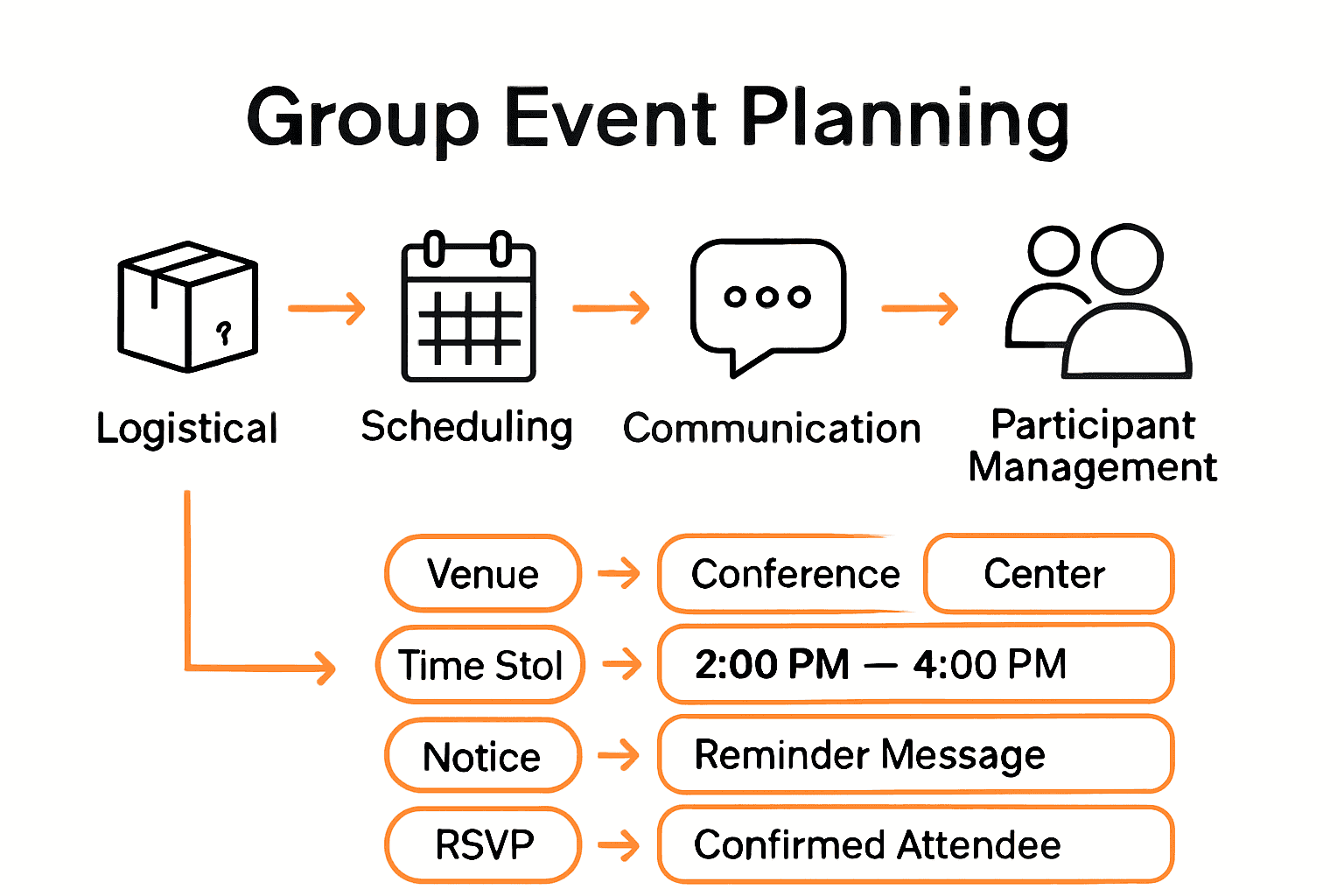
Group event planning involves a complex ecosystem of specialized vocabulary that transforms scattered individual schedules into coordinated collaborative experiences. Terminology helps event organizers communicate precisely, ensuring everyone understands expectations, roles, and processes when bringing people together for shared activities.
According to stgmktmedia, essential group event planning terms typically fall into several key categories:
Here's a summary of essential group event planning terminology by category:
| Category | Example Terms | Purpose |
|---|---|---|
| Logistical | Venue Capacity Layout | Physical setup and resource planning |
| Communication | Protocols Liaison Channels | Coordinate information and group messaging |
| Scheduling | Time Blocking Availability Convergence | Manage timing and synchronize schedules |
| Participant Management | Registration Roles Engagement | Track involvement and assign responsibilities |
- Logistical Terms: Describing physical planning elements like venue, capacity, layout
- Communication Terms: Defining interaction methods and coordination strategies
- Scheduling Terms: Outlining timeline management and participant availability
- Participant Management Terms: Tracking registration, roles, and engagement
Understanding these terminologies isn't just about academic knowledge—it's about creating smooth, efficient group experiences. Each term represents a specific concept that helps transform individual preferences into collective action. From synchronization (aligning multiple schedules) to collaborative blocking (identifying mutually unavailable time frames), these words are the building blocks of successful group event coordination.
When planning group events, mastering this vocabulary becomes crucial. Think of these terms as a shared language that helps transform potential chaos into organized, enjoyable shared experiences. Whether you're coordinating a family reunion, corporate retreat, or hobby group meetup, knowing the right terminology can make the difference between confusion and clarity.
For a deeper exploration of event scheduling strategies, check out our comprehensive guide to event scheduling terminology.
Types of Group Events and Terms Used
Group events represent diverse gathering formats, each with unique characteristics and specialized terminology that guide their planning and execution. Event classification helps organizers understand the specific requirements, communication strategies, and logistical nuances associated with different group interactions.
According to Wikipedia, corporate group events typically encompass several distinct categories:
- Conferences: Formal meetings for professional knowledge exchange
- Retreats: Intensive team-building and strategic planning sessions
- Team-Building Events: Activities designed to enhance group cohesion and collaboration
- Product Launches: Structured presentations introducing new organizational offerings
- Networking Mixers: Informal gatherings focused on professional relationship development
Academic settings offer another rich landscape of group event types. Wikipedia highlights that academic conferences represent complex gatherings with specific structural elements, including keynote presentations, panel discussions, poster sessions, and specialized workshops. These events require precise event nomenclature to effectively communicate participant roles, presentation formats, and interaction protocols.
Beyond professional contexts, group events span personal and social domains. Family reunions, hobby group meetups, community celebrations, and recreational trips all demand tailored planning approaches. Each event type carries its own set of specialized terms—from registration protocols to agenda management—that help transform individual schedules into coordinated, meaningful shared experiences.
Whether you're organizing a corporate strategy session or planning a community festival, understanding the nuanced terminology of group events becomes your roadmap to successful coordination.
For more insights into planning different group event types, explore our guide on essential group event types.
Key Processes and Scheduling Language
Group event scheduling is a complex dance of coordination, communication, and strategic planning that requires a sophisticated understanding of specialized processes and terminology. Event scheduling transforms individual availability into a collective experience, bridging personal schedules and group objectives.
According to UOU, key event planning processes involve several critical stages:
- Pre-Event Planning: Initial conceptualization and logistical framework
- Participant Coordination: Synchronizing individual schedules and preferences
- Communication Protocols: Establishing clear information exchange channels
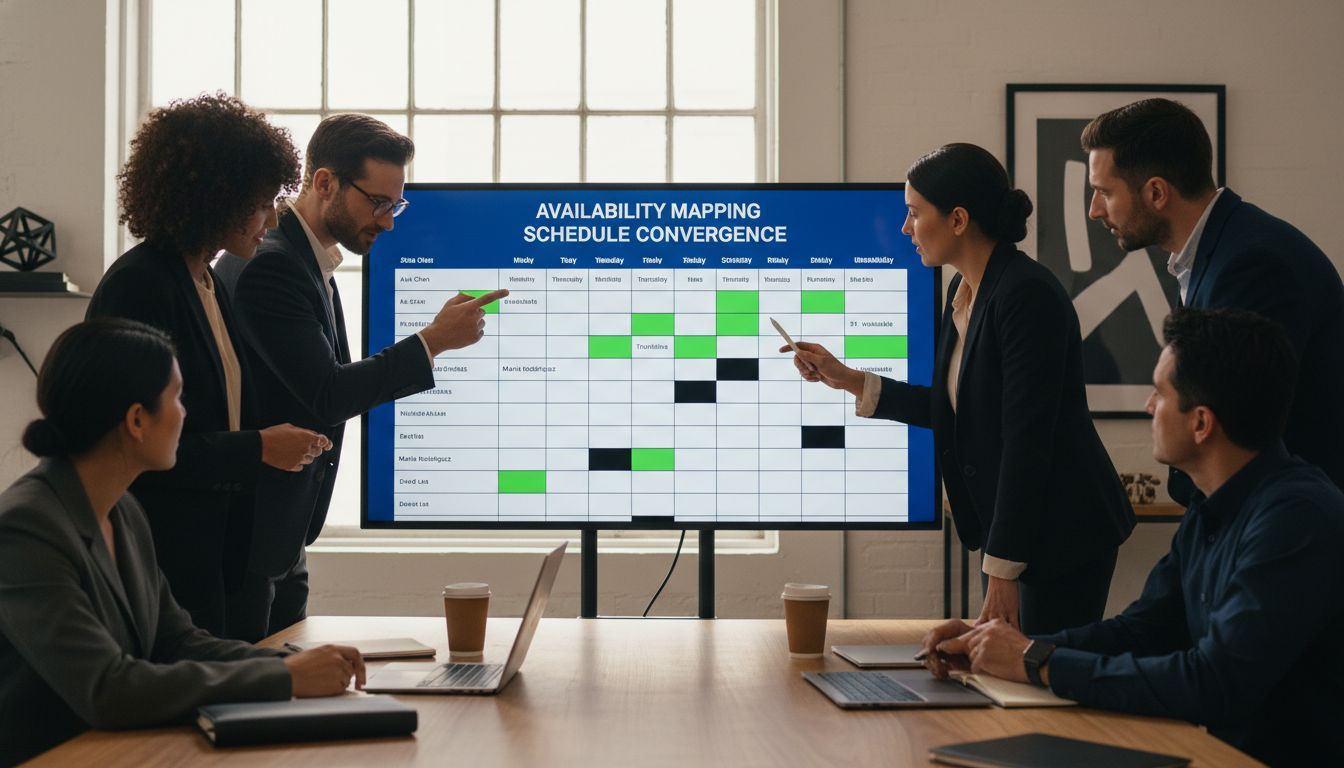
- Availability Mapping: Identifying overlapping time windows
- Conflict Resolution: Negotiating and adjusting scheduling challenges
The language of event scheduling is nuanced and precise. Scheduling terminology includes specialized concepts like time blocking (reserving specific time segments), availability windows (periods when participants can potentially meet), and schedule convergence (finding optimal meeting times that accommodate most participants). These terms aren't just technical jargon—they're the critical tools that transform potential scheduling chaos into structured, efficient group interactions.
Every group event, whether a professional conference or a casual family reunion, requires strategic scheduling language. Understanding these processes means recognizing that scheduling is more than just finding a common time—it's about creating meaningful connections, respecting individual constraints, and facilitating collaborative experiences. The right terminology and approach can turn scheduling from a logistical challenge into a smooth, inclusive process.
For event planners looking to refine their scheduling strategies, our guide on understanding efficient scheduling methods offers deeper insights into navigating these complex coordination landscapes.
Roles, Responsibilities, and Communication Terms
Group events require a complex network of interconnected roles and responsibilities, where clear communication becomes the fundamental linchpin of successful coordination. Event ecosystem describes the intricate relationships and specialized functions that transform individual contributions into a cohesive collective experience.
According to UOU, key roles in event management typically include:
- Event Planner: Primary strategic coordinator
- Venue Manager: Responsible for logistical infrastructure
- Communication Liaison: Manages information flow between participants
- Scheduling Coordinator: Tracks and synchronizes availability
- Participant Engagement Specialist: Ensures individual involvement and satisfaction
Wikipedia highlights that effective group dynamics rely on clearly defined communication protocols and role boundaries. Each participant brings unique responsibilities, from high-level strategic planning to granular execution tasks. Communication terminology becomes the bridge that connects these diverse roles, enabling smooth information exchange and collaborative decision-making.
Understanding these roles goes beyond simple job descriptions. It's about recognizing the delicate interdependencies that make group events successful. Responsibility mapping helps identify potential communication gaps, ensuring that no critical task falls through the cracks. Whether it's a corporate retreat, academic conference, or community celebration, knowing who does what—and how they interact—can mean the difference between chaos and a seamlessly executed event.
For event organizers seeking to refine their team coordination strategies, our guide on group event organization processes provides deeper insights into creating effective collaborative frameworks.
Common Challenges and Mistakes to Avoid
Group event planning is a complex process fraught with potential pitfalls that can derail even the most carefully constructed plans. Event complexity demands strategic anticipation and proactive problem-solving to navigate the numerous challenges that can emerge during coordination.
Research from arXiv highlights several critical challenges in group event planning:
- Scheduling Conflicts: Misaligning participant availabilities
- Communication Breakdowns: Inadequate information sharing
- Venue Selection Issues: Choosing inappropriate or insufficient spaces
- Participant Engagement: Failing to maintain individual motivation
- Decision-Making Bottlenecks: Ineffective consensus mechanisms
Wikipedia emphasizes that group dynamics play a crucial role in event planning success. Common mistakes often stem from overlooking individual preferences, mismanaging communication channels, or creating overly rigid planning structures. Collaboration friction emerges when planners fail to create flexible frameworks that accommodate diverse participant needs and expectations.
Mistakes in group event planning are rarely about a single catastrophic error, but rather a series of small miscalculations that compound over time. Successful event coordinators recognize that adaptive planning requires constant communication, willingness to adjust, and a deep understanding of group psychology. Whether organizing a corporate retreat, academic conference, or community gathering, the key is maintaining a balance between structured planning and flexible responsiveness.
For event organizers seeking to elevate their planning skills, our guide on group event planning tips offers comprehensive strategies to navigate these complex coordination challenges.
Simplify Your Group Event Planning with WhenNOT
Navigating the complex terminology of group event planning often reveals one key challenge scheduling conflicts and coordinating diverse availabilities. The article highlights terms like "schedule convergence" and "availability mapping" which emphasize just how complicated aligning multiple participants can be. These challenges can cause frustration and delay, making it hard to efficiently organize corporate meetings, family reunions, or hobby group events.
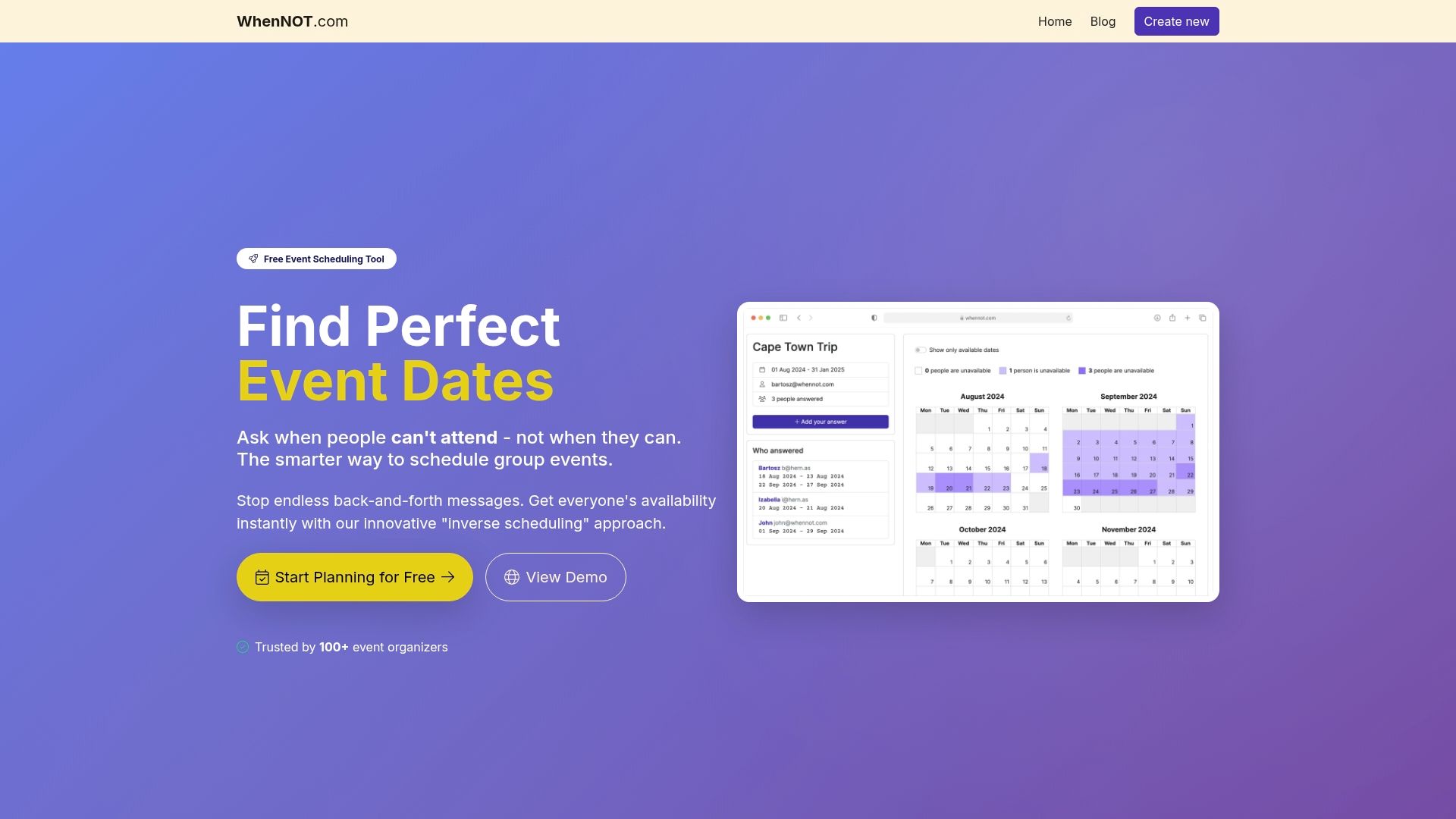
Experience a smarter way to coordinate your group events with WhenNOT. Our unique inverse scheduling approach lets participants mark only when they are unavailable which quickly reveals the best meeting times without endless back-and-forth. Whether you're managing participant engagement or logistical planning, WhenNOT puts powerful scheduling tools in your hands to overcome common coordination pitfalls described in the article. Take control of your event’s success today by visiting https://whennot.com and start planning with ease. For more tips on mastering group event organization, explore our guide on group event organization processes and discover how efficient scheduling can transform your next gathering.
Frequently Asked Questions
What is group event planning terminology?
Group event planning terminology refers to the specialized vocabulary used to describe the processes, roles, and elements involved in planning group events. This language helps organizers communicate effectively and coordinate activities smoothly.
What are the key categories of terms in group event planning?
The key categories include logistical terms (e.g., venue, capacity), communication terms (e.g., protocols, liaison), scheduling terms (e.g., time blocking, availability), and participant management terms (e.g., registration, roles).
How can understanding event planning terminology improve coordination?
Understanding event planning terminology allows organizers to communicate expectations clearly, recognize individual roles, and streamline processes. This shared language helps prevent confusion and enhances collaboration among participants.
What are common challenges faced in group event planning?
Common challenges include scheduling conflicts, communication breakdowns, venue selection issues, participant engagement difficulties, and decision-making bottlenecks. Anticipating these issues can lead to more successful event coordination.