
Coordinating a multi-day event across different teams can easily escalate from a simple meeting to a complex puzzle for organizers in the United States, France, or Singapore. The sheer number of sessions, logistic needs, and cultural preferences multiplies as each day unfolds, increasing the chance for scheduling errors and communication breakdowns. This guide explains how multi-day event planning transforms scattered coordination efforts into a more structured, engaging, and efficient process, helping your team stay on track and maximize participant involvement.
Table of Contents
- Defining Multi-Day Event Planning
- Types of Multi-Day Events Worldwide
- Inverse Scheduling Approach Explained
- Essential Roles and Organizer Responsibilities
- Legal, Safety, and Compliance Considerations
- Managing Costs, Mistakes, and Alternatives
Key Takeaways
| Point | Details |
|---|---|
| Multi-Day Planning Complexity | Multi-day events require meticulous logistical management and coordination, emphasizing scheduling, participant engagement, and contingency planning. |
| Role Specialization | Success hinges on a clear distribution of responsibilities among organizers, including event coordinators, logistics managers, and communication specialists. |
| Legal and Safety Protocols | Rigorous attention to safety, regulatory compliance, and participant consent is essential to mitigate risks throughout the event duration. |
| Cost Management Strategies | Strategic financial planning and alternative approaches, such as hybrid models, can enhance budget control and reduce potential errors. |
Defining Multi-Day Event Planning
Multi-day event planning represents a sophisticated approach to organizing extended gatherings that span multiple consecutive days, requiring strategic coordination and comprehensive logistical management. Unlike single-day events, these complex undertakings demand intricate preparation and nuanced participant engagement strategies. Comprehensive event scheduling models highlight the unique challenges inherent in coordinating activities across an extended timeframe.
At its core, multi-day event planning involves creating a structured framework that ensures seamless participant experience, consistent momentum, and strategic progression of activities. This approach necessitates meticulous attention to details such as scheduling, venue logistics, participant preferences, and dynamic group dynamics. Event organizers must anticipate potential challenges, build flexible timelines, and develop contingency plans that accommodate unexpected shifts in participant availability or event requirements.
Successful multi-day event planning encompasses several critical dimensions beyond traditional single-day event management. These dimensions include creating engaging content sequences, managing participant energy levels, coordinating complex scheduling requirements, and maintaining consistent communication channels. Academic event coordination strategies emphasize the importance of clear purpose, well-defined committee roles, and adaptable planning frameworks that can accommodate evolving group needs.
Pro tip: Develop a comprehensive communication matrix that outlines participant touchpoints, preferred communication channels, and real-time update mechanisms to ensure smooth information flow throughout your multi-day event.
Here's a concise overview comparing single-day and multi-day event planning challenges:
| Aspect | Single-Day Events | Multi-Day Events | Business Impact |
|---|---|---|---|
| Scheduling Complexity | Moderate, fewer variables | High, multiple sessions, shifts | Greater coordination required |
| Participant Engagement | Brief, less adjustment | Sustained, energy management | Supports deeper interaction |
| Logistics Demands | Simple setup, short duration | Multiple venues, varied setup | Higher resource allocation |
| Contingency Planning | Limited scope, quick fixes | Extensive, multi-day strategies | Reduces disruption risk |
Types of Multi-Day Events Worldwide
Multi-day events represent a dynamic landscape of professional, academic, and organizational gatherings that span diverse formats and purposes across global contexts. Academic conference classifications reveal a rich taxonomy of event types that cater to specialized professional and knowledge-sharing objectives. These events range from intensive workshops and academic symposiums to large-scale international conferences, each designed to facilitate targeted interaction and knowledge exchange.
The primary categories of multi-day events can be broadly categorized into professional, academic, corporate, and social domains. Professional conferences typically include medical symposiums, technology summits, industry conventions, and research forums that bring together experts from specific fields. Academic multi-day events encompass international research conferences, scholarly workshops, graduate student symposiums, and interdisciplinary seminars that promote intellectual discourse and collaborative learning. Global conference models highlight the nuanced differences in event scope, ranging from local regional gatherings to expansive international conventions.
Corporate multi-day events include strategic planning retreats, team-building workshops, annual leadership conferences, training seminars, and industry networking events. These gatherings serve critical organizational purposes such as skill development, strategic alignment, knowledge sharing, and team cohesion. Social and community-oriented multi-day events further expand this spectrum, incorporating family reunions, cultural festivals, music and arts celebrations, charitable fundraising conferences, and community development workshops that bring people together around shared interests and objectives.
Pro tip: When planning a multi-day event, carefully map out participant demographics, communication preferences, and engagement styles to design an experience that resonates with your specific audience and maximizes interactive potential.
Inverse Scheduling Approach Explained
Inverse scheduling represents a revolutionary approach to event planning that fundamentally transforms traditional coordination methods by focusing on participant unavailability rather than availability. Inverse scheduling problems provide a sophisticated mathematical framework for optimizing complex scheduling challenges, enabling event organizers to create more flexible and participant-friendly planning strategies.

At its core, inverse scheduling flips the conventional scheduling paradigm by asking participants to indicate their unavailable time slots instead of their available times. This approach dramatically simplifies the coordination process, reducing the typical back-and-forth communication that often accompanies traditional scheduling methods. The methodology recognizes that people find it easier to identify when they cannot attend an event, rather than pinpointing exact availability across multiple days and complicated personal schedules.
Use our multi-day event schedulers comparison to choose a date-collection workflow and check that the same attendees can join every consecutive day.
The strategic benefits of inverse scheduling extend beyond mere convenience. By collecting data on participant constraints, event planners can more efficiently identify optimal time windows that accommodate the maximum number of participants. This approach proves particularly valuable for multi-day events with complex scheduling requirements, such as academic conferences, corporate retreats, and international workshops. The technique allows for more nuanced understanding of group availability, accounting for individual limitations and creating more inclusive event planning strategies that respect participants' diverse schedules and commitments.
Pro tip: When implementing inverse scheduling, create clear instructions for participants and provide a user-friendly interface that makes marking unavailable times intuitive and straightforward.
Essential Roles and Organizer Responsibilities
Multi-day event planning requires a strategic allocation of responsibilities across multiple key organizational roles, each contributing critical components to the event's success. Event coordinators serve as the central orchestrators, responsible for overall vision, strategic planning, and seamless execution. These professionals must simultaneously manage logistical complexities, participant expectations, and dynamic scheduling challenges while maintaining a comprehensive understanding of the event's core objectives.
The core organizational team typically includes several specialized roles with distinct yet interconnected responsibilities. Logistics managers handle venue selection, transportation arrangements, technical infrastructure, and physical setup requirements. Communication specialists manage participant interactions, coordinate information dissemination, and ensure smooth communication channels between event organizers and attendees. Budget controllers track financial allocations, manage expenses, negotiate vendor contracts, and maintain fiscal accountability throughout the planning and execution phases.
Additional specialized roles may include participant experience coordinators who focus on creating engaging programming, managing attendee interactions, and designing interactive elements that maintain participant motivation and energy across multiple event days. Technical coordinators handle digital infrastructure, scheduling platforms, and technological support systems that enable seamless communication and coordination. Successful multi-day events require these roles to work collaboratively, maintaining flexible communication and adaptive problem-solving approaches that can address unexpected challenges and shifting participant needs.
Pro tip: Create a comprehensive responsibility matrix that clearly defines each team member's specific duties, decision-making authority, and communication protocols to prevent potential organizational gaps and ensure smooth collaborative execution.
The table below summarizes essential roles in multi-day event planning and their primary responsibilities:
| Role | Key Responsibility | Impact on Event |
|---|---|---|
| Event Coordinator | Oversees strategy and execution | Ensures project cohesion |
| Logistics Manager | Manages venues and transportation | Enables operational efficiency |
| Communication Specialist | Handles participant updates | Maintains positive engagement |
| Budget Controller | Tracks expenses, manages budget | Preserves financial stability |
| Experience Coordinator | Creates engaging programming | Enhances attendee satisfaction |
Legal, Safety, and Compliance Considerations
Multi-day event planning demands rigorous attention to legal, safety, and compliance frameworks that protect both organizers and participants. Visitor safety protocols represent a critical foundation for comprehensive event management, requiring systematic risk assessment and proactive mitigation strategies. Liability management becomes paramount, necessitating thorough documentation, participant waivers, and comprehensive insurance coverage that addresses potential risks across multiple event days.
Key compliance considerations encompass multiple critical domains. Regulatory compliance involves adhering to local, state, and potentially international regulations governing large gatherings, including venue capacity restrictions, accessibility requirements, and health safety standards. Participant consent mechanisms must be established, ensuring transparent communication about event expectations, potential risks, and participants' rights. This includes detailed registration processes, clear communication of event guidelines, and obtaining necessary legal permissions for data collection, photography, and participant engagement.
Safety planning requires a multifaceted approach integrating emergency response protocols, medical contingency arrangements, and comprehensive risk management strategies. Event organizers must develop detailed contingency plans addressing potential scenarios such as medical emergencies, security threats, natural disasters, and unexpected logistical disruptions. This involves coordinating with local emergency services, establishing clear communication channels, training event staff in emergency response procedures, and creating accessible evacuation and medical support mechanisms that can be quickly activated across the event's duration.
Pro tip: Develop a comprehensive risk management matrix that systematically identifies potential legal and safety risks, assigns mitigation responsibilities, and creates clear escalation protocols for addressing unexpected challenges during multi-day events.
Managing Costs, Mistakes, and Alternatives
Multi-day event planning requires strategic financial management and proactive error mitigation to ensure cost-effectiveness and smooth execution. Scheduling error prevention plays a critical role in minimizing financial risks and operational disruptions. Budget allocation represents the foundational element of cost management, demanding meticulous planning that balances participant experience with fiscal responsibility.
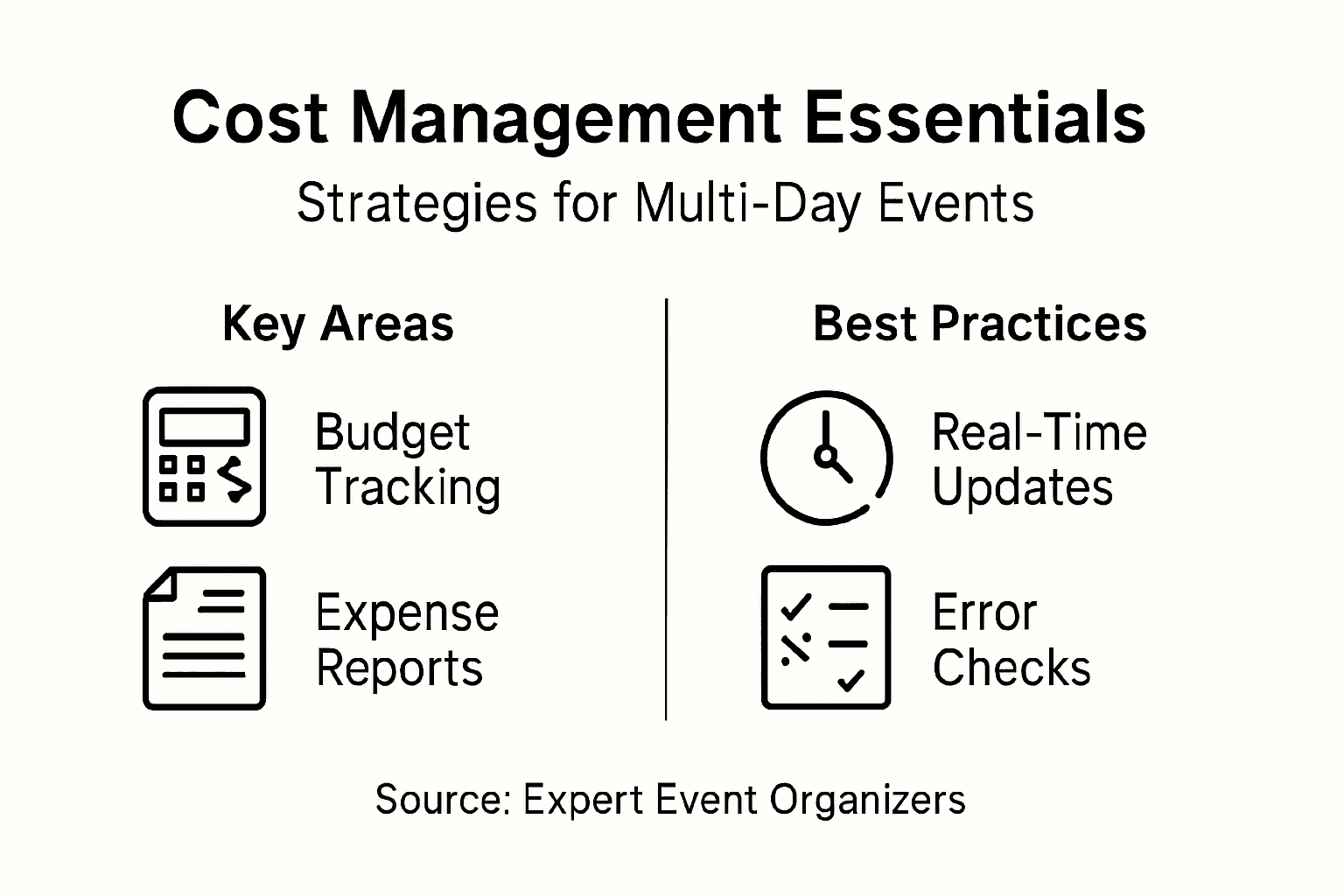
Cost management strategies encompass multiple critical dimensions. Expense categorization helps organizers systematically track and control spending across key areas such as venue rental, transportation, catering, technology infrastructure, and participant accommodations. Potential cost reduction techniques include early booking discounts, negotiating bulk rates, leveraging organizational partnerships, and implementing flexible scheduling approaches that minimize last-minute premium expenses. Comprehensive financial planning involves creating detailed budgetary contingencies that account for potential unexpected expenditures and provide financial buffers against potential disruptions.
Alternative planning approaches can significantly mitigate potential mistakes and reduce overall event costs. Hybrid event models combining in-person and virtual participation offer increased flexibility and potential cost savings. Digital collaboration tools, scalable technology platforms, and modular event designs enable organizers to create more adaptable and financially efficient event structures. Strategic alternatives might include phased event implementations, modular programming that allows participant customization, and technology-enabled coordination mechanisms that reduce traditional logistical expenses.
Pro tip: Develop a comprehensive financial tracking spreadsheet with real-time expense monitoring, categorized spending limits, and automated alert systems to prevent budget overruns and maintain precise financial control throughout the event planning process.
Simplify Your Multi-Day Event Planning with WhenNOT
Multi-day event planning involves managing complex schedules, coordinating participant availability, and balancing busy logistics. The article highlights the challenges of sustaining participant engagement over several days and using inverse scheduling to collect unavailable times rather than availability. This method reduces back-and-forth communications and helps organizers find optimal dates efficiently. If you are looking to overcome the common pain points of coordination, such as high scheduling complexity and the need for flexible timeline adjustments, WhenNOT offers a powerful solution.
Experience the ease of creating multi-day event schedules by allowing attendees to mark their unavailable times in just a few clicks without creating accounts. This approach aligns perfectly with the article’s emphasis on inverse scheduling and dynamic participant engagement strategies. WhenNOT’s intuitive interface and visual availability matrix save you time and reduce scheduling conflicts, enabling you to focus on delivering a memorable event.
Take control of your event planning now with WhenNOT.
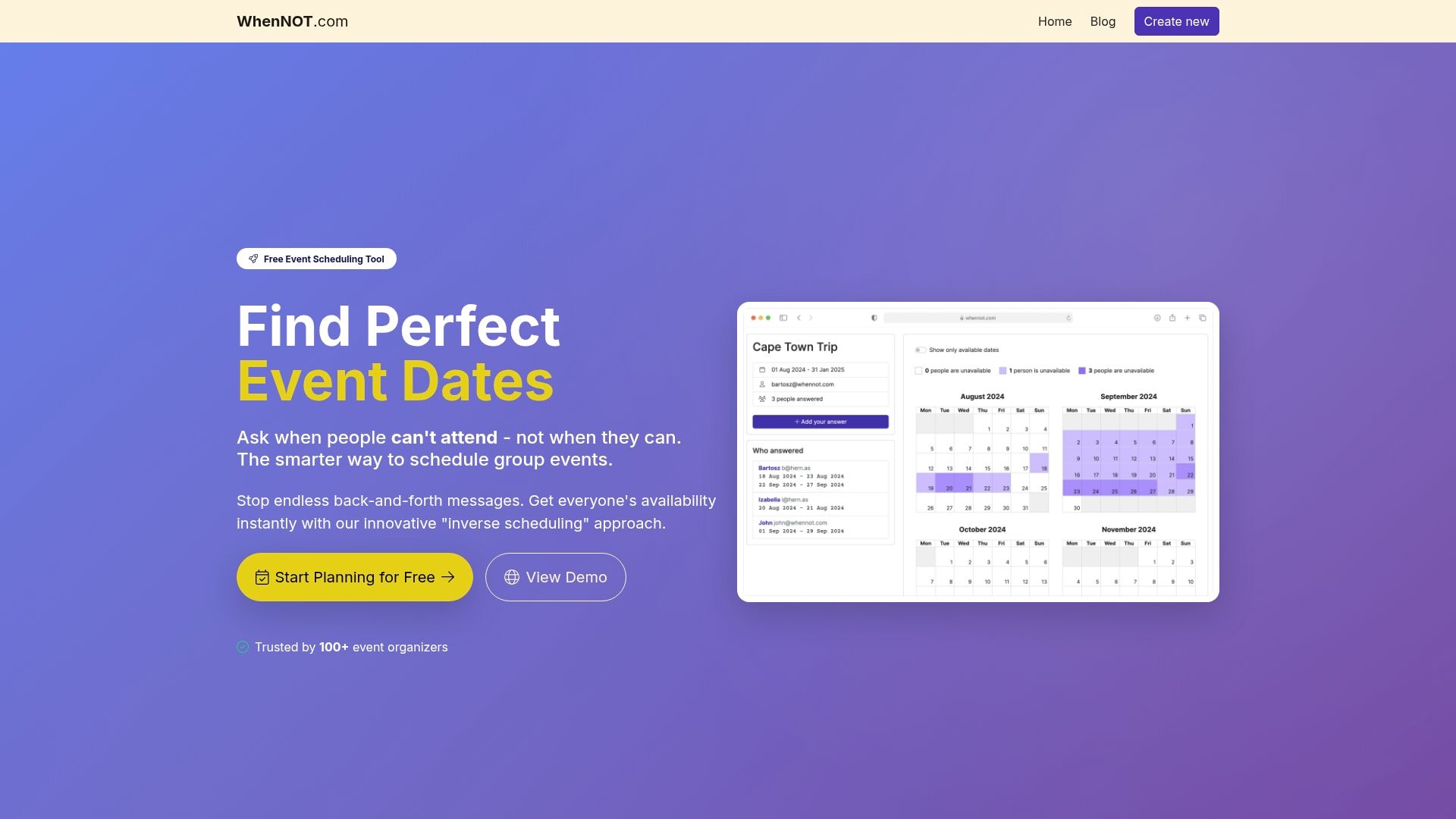
Ready to streamline your group coordination and avoid costly scheduling mistakes? Visit WhenNOT today to create your first inverse scheduling event. Simplify multi-day planning and ensure smooth communication from start to finish.
Frequently Asked Questions
What is multi-day event planning?
Multi-day event planning involves organizing events that span multiple days, requiring extensive coordination and logistical management to ensure a smooth experience for participants.
What are the key differences between single-day and multi-day event planning?
Multi-day events require more complex scheduling, sustained participant engagement, extensive logistics, and comprehensive contingency planning compared to single-day events, which are generally simpler and shorter in duration.
How can inverse scheduling benefit multi-day event planning?
Inverse scheduling focuses on participant unavailability rather than availability, simplifying the coordination process and allowing event planners to identify optimal times that accommodate the most participants.
What roles are essential in multi-day event planning?
Key roles include event coordinators, logistics managers, communication specialists, budget controllers, and experience coordinators, each contributing to different aspects of planning and execution.