
Scheduling seems simple until conflicts sneak up and wreak havoc on your plans. You might expect technology has solved all these headaches already, but over 60 percent of scheduling conflicts happen because of poor communication and lack of planning. The twist is that with a few smart strategies and the right tools, you can turn scheduling from a constant struggle into a smooth, almost effortless process.
Table of Contents
- Identifying Your Main Scheduling Conflicts
- Understanding Different Time Zones
- Prioritizing Activities For Better Planning
- Utilizing Scheduling Tools And Apps
- Communicating Clearly With Participants
- Flexibility: The Key To Managing Changes
- Reviewing And Improving Future Scheduling
Quick Summary
| Takeaway | Explanation |
|---|---|
| Identify scheduling conflicts early | Recognizing potential scheduling issues upfront aids in effective time management and coordination among team members. |
| Embrace technology for scheduling | Utilize advanced scheduling tools that offer features like real-time tracking and conflict detection to streamline coordination efforts. |
| Prioritize tasks strategically | Focus on differentiating between urgent and important tasks to maximize productivity and project outcomes. |
| Maintain clear communication | Ensure transparent and concise communication with all participants to prevent misunderstandings and enhance collaboration. |
| Continuously review scheduling practices | Regular reflection on past scheduling efforts helps identify areas for improvement and refine future processes. |
1: Identifying Your Main Scheduling Conflicts
Scheduling conflicts are the silent productivity killers that can derail even the most meticulously planned events and projects. Recognizing and understanding these conflicts early is crucial for successful time management and group coordination. According to research from UC Berkeley, identifying potential scheduling issues requires a strategic and proactive approach.
The first step in managing scheduling challenges is comprehensive conflict recognition. This involves mapping out all potential time constraints, individual availability, and competing priorities. Different types of scheduling conflicts can emerge, including:
- Time zone variations for remote teams
- Overlapping personal and professional commitments
- Resource allocation limitations
- Complex multi participant event planning
Effective conflict identification demands thorough communication and transparent tracking. Individuals and teams must develop a systematic method to understand each participant's constraints and potential unavailability windows. Advanced planning can significantly reduce last minute scheduling surprises.
Technological tools now offer sophisticated solutions for conflict mapping. Modern scheduling platforms enable real time availability tracking, helping groups visualize potential scheduling challenges before they become problematic. By leveraging these intelligent systems, organizations can preemptively address conflicts and optimize collective time management.
Most scheduling conflicts arise from inadequate initial planning and poor communication. Establishing clear expectations, maintaining open dialogue, and utilizing collaborative scheduling tools can transform how teams approach time coordination. The goal is not just avoiding conflicts but creating a flexible, responsive scheduling framework that adapts to changing circumstances.
2: Understanding Different Time Zones
In our increasingly connected global environment, managing time zones has become a critical skill for effective scheduling. Time zone differences can create significant communication and coordination challenges that impact project timelines, meeting effectiveness, and team productivity. According to research from the National Institutes of Health, these challenges are particularly pronounced in international collaborative settings.
Navigating time zone complexities requires strategic approaches and advanced planning. Global teams must develop robust communication protocols that account for geographical and temporal variations. Some key considerations include:
- Establishing a standard reference time (such as UTC)
- Using digital tools that automatically convert time zones
- Clearly communicating meeting times in multiple time zones
- Rotating meeting times to distribute inconvenience fairly
Technology has evolved to provide sophisticated solutions for time zone management. Smart scheduling platforms now offer real time conversion tools, allowing participants to instantly see proposed meeting times in their local context. These innovations minimize confusion and reduce the likelihood of missed connections.
Understanding time zone nuances goes beyond simple mathematical calculations. Different regions observe unique daylight saving time rules, which can create additional scheduling complexities. Some countries shift time zones seasonally, while others maintain consistent time throughout the year. Successful scheduling demands awareness of these regional variations.
Effective time zone management is not just about technical accuracy but also about cultural sensitivity. Recognizing and respecting participants' local time constraints demonstrates professional courtesy and promotes inclusive communication. By implementing thoughtful strategies and leveraging advanced scheduling technologies, teams can transform time zone challenges into opportunities for seamless global collaboration.
3: Prioritizing Activities for Better Planning
Effective scheduling hinges on the critical skill of prioritizing activities with precision and strategic insight. Successful planning transforms overwhelming task lists into manageable, goal oriented workflows. According to research from the Journal of Management in Engineering, systematic prioritization can dramatically improve project outcomes and resource allocation.
Prioritization is not about completing every task but strategically selecting which activities deserve immediate attention. Understanding the difference between urgent and important tasks becomes crucial. This approach helps individuals and teams focus energy on activities that generate maximum impact and align with broader objectives.
Key strategies for effective activity prioritization include:
- Categorizing tasks based on potential impact and time sensitivity
- Identifying critical path activities that directly influence project progression
- Eliminating or delegating low value tasks
- Creating buffer time for unexpected challenges
Technology and strategic frameworks can enhance prioritization processes. Modern scheduling tools offer sophisticated algorithms that help rank tasks based on multiple parameters such as deadline proximity, resource requirements, and potential downstream effects. These intelligent systems transform complex scheduling challenges into clear, actionable roadmaps.
Mental frameworks like the Eisenhower Matrix provide practical methods for task assessment. By classifying activities into quadrants of urgency and importance, individuals can make informed decisions about task allocation and time investment. This approach prevents the common pitfall of mistaking busyness for productivity.
Ultimately, prioritization is a dynamic process requiring continuous reassessment. Successful planners remain flexible, regularly reviewing and adjusting their strategies as project landscapes evolve. By maintaining a disciplined yet adaptive approach to activity management, teams can consistently optimize their scheduling effectiveness and achieve more meaningful results.
4: Utilizing Scheduling Tools and Apps
The digital revolution has transformed scheduling from a manual, error prone process to a sophisticated, intelligent experience. Modern scheduling tools offer unprecedented capabilities for managing complex time requirements. According to research published in the International Journal of Environmental Research and Public Health, digital scheduling applications significantly reduce work life conflicts and enhance overall time management efficiency.
Today's scheduling technologies go far beyond simple calendar applications. Intelligent platforms now integrate advanced features that anticipate user needs and streamline coordination. These tools leverage artificial intelligence and machine learning to provide predictive scheduling insights, automatic conflict detection, and seamless collaboration mechanisms.
Key considerations when selecting scheduling tools include:
- Integration capabilities with existing workplace systems
- User friendly interface and intuitive design
- Cross platform accessibility
- Real time synchronization features
- Robust privacy and data protection mechanisms
Advanced scheduling applications offer nuanced solutions for diverse scenarios. Whether managing remote team meetings, coordinating multi participant events, or tracking individual project timelines, these tools provide granular control and comprehensive visibility. They eliminate traditional communication barriers by offering centralized platforms where all stakeholders can view, modify, and confirm scheduling details.
Interoperability has become a critical feature in modern scheduling technologies. The best tools seamlessly connect with email systems, messaging platforms, and project management software. This interconnected approach ensures that schedule updates are instantly communicated and automatically reflected across multiple systems.
The future of scheduling lies in predictive and adaptive technologies. By continuously learning from user behaviors and organizational patterns, these tools will become increasingly sophisticated in anticipating scheduling challenges and proactively suggesting optimal solutions. Embracing these intelligent scheduling technologies represents a strategic approach to managing time more effectively and efficiently.
5: Communicating Clearly with Participants
Effective scheduling hinges on transparent, precise communication with all participants. Clear communication eliminates ambiguity and prevents potential misunderstandings that can derail collaborative efforts. According to research on meeting effectiveness, proactive and inclusive communication strategies significantly enhance participant engagement and scheduling success.
Communication is more than simply transmitting information. It involves crafting messages that are accessible, concise, and considerate of participants diverse backgrounds and constraints. This approach requires intentional communication strategies that respect individual preferences and potential limitations.
Key principles for effective participant communication include:
- Providing comprehensive context for each scheduling request
- Offering multiple communication channels
- Using clear and unambiguous language
- Confirming receipt and understanding of scheduling details
- Allowing flexible response mechanisms
Digital communication tools now offer sophisticated options for streamlining participant interactions. Automated reminder systems, personalized scheduling links, and real time status updates reduce communication friction. These technologies enable participants to respond conveniently and maintain transparency throughout the scheduling process.
Participant communication also demands cultural sensitivity. Different individuals have varying communication preferences influenced by professional roles, personal schedules, and cultural backgrounds. Successful schedulers recognize and adapt to these nuanced communication requirements.
Timely and respectful follow up communication is equally critical. Sending pre event details, meeting summaries, and acknowledging participant contributions demonstrates professionalism. This approach transforms scheduling from a transactional process into a collaborative experience that values each participants time and input.
Ultimately, clear communication is the cornerstone of effective scheduling. By prioritizing transparency, empathy, and technological efficiency, organizers can create scheduling experiences that are smooth, inclusive, and productive.
6: Flexibility: The Key to Managing Changes
In an ever changing world, scheduling flexibility has emerged as a critical skill for successful planning and coordination. Adaptability transforms potential disruptions into opportunities for creative problem solving. According to research on flexible working arrangements, organizations that embrace bounded flexibility can optimize their scheduling processes while maintaining core structural integrity.
Flexibility is not about abandoning structure but creating intelligent frameworks that can absorb and adapt to unexpected changes. Successful scheduling requires a delicate balance between predictability and adaptability, allowing participants to modify plans without causing systemic disruptions.
Key strategies for maintaining scheduling flexibility include:
- Creating buffer times between critical activities
- Developing contingency plans for potential disruptions
- Establishing clear communication protocols for changes
- Maintaining open channels for rapid negotiation
- Documenting and learning from scheduling adjustments
Technological tools now offer sophisticated mechanisms for managing dynamic scheduling requirements. Advanced platforms provide real time modification capabilities, allowing participants to propose alternative time slots, negotiate conflicts, and receive instant feedback. These intelligent systems transform scheduling from a rigid process into a fluid, collaborative experience.
Cultural attitudes toward flexibility have also evolved. Modern teams recognize that rigid schedules can impede productivity and individual well being. Embracing a more human centric approach to scheduling acknowledges the complex, multifaceted nature of personal and professional commitments.
Effective flexibility requires trust, communication, and a shared understanding of collective goals. By cultivating an environment that values adaptability, teams can create scheduling systems that are resilient, responsive, and ultimately more successful. The most powerful scheduling strategies are those that can gracefully navigate uncertainty while maintaining forward momentum.
7: Reviewing and Improving Future Scheduling
Scheduling is an iterative process that demands continuous reflection and strategic refinement. Effective scheduling requires ongoing evaluation and systematic improvement. According to research in service environment management, structured retrospective analysis provides critical insights for enhancing future scheduling practices.
The review process is more than a mere post mortem examination. It represents an opportunity to transform past challenges into future strengths. By systematically analyzing scheduling performance, teams can identify patterns, predict potential conflicts, and develop more intelligent coordination strategies.
Key elements of an effective scheduling review include:
- Documenting actual time spent versus originally planned time
- Identifying recurring scheduling conflicts
- Gathering participant feedback and suggestions
- Analyzing root causes of scheduling disruptions
- Tracking metrics related to scheduling efficiency
Technological advancements now enable sophisticated performance tracking. Modern scheduling platforms offer comprehensive analytics that transform raw scheduling data into actionable insights. These tools can highlight inefficiencies, predict potential bottlenecks, and suggest optimization strategies based on historical performance.
Improvement is not just about addressing problems but also about recognizing and replicating successful strategies. Successful scheduling teams celebrate what works while remaining committed to continuous learning. This balanced approach ensures that each scheduling cycle becomes more refined and efficient than the last.
Critical to the review process is maintaining an open, non punitive environment. Participants should feel comfortable sharing genuine insights about scheduling challenges. Transparent communication transforms the review from a mechanical assessment into a collaborative opportunity for collective improvement.
Ultimately, scheduling improvement is a journey of incremental enhancements. By adopting a structured, data driven approach to review and refinement, teams can progressively develop scheduling practices that are increasingly precise, responsive, and aligned with their evolving organizational needs.
The table below provides a comprehensive summary of the article's key scheduling challenges and the actionable solutions offered to overcome them.
| Scheduling Challenge | Key Issues Addressed | Solutions & Best Practices |
|---|---|---|
| Identifying Scheduling Conflicts | Overlapping commitments, resource limits, poor planning | Early conflict recognition, transparent tracking, collaborative tools |
| Managing Different Time Zones | Communication gaps, meeting confusion due to global participants | Use reference time, digital converters, fair meeting rotation, and region awareness |
| Prioritizing Activities | Overwhelming task lists, lack of focus on important work | Categorize by urgency/impact, focus on critical path, use frameworks (e.g., Eisenhower) |
| Leveraging Scheduling Tools & Apps | Manual errors, inefficient communication, fragmented information | Adopt integrated, AI-driven, real-time, and interoperable digital platforms |
| Communicating with Participants | Misunderstandings, missed updates, lack of clarity | Offer context, multiple channels, confirmation, automated reminders, and cultural sensitivity |
| Maintaining Flexibility | Disruptions from last-minute changes, rigid schedules stifling productivity | Buffer times, contingency plans, open negotiation, adaptive tech, human-centric approach |
| Reviewing and Improving Scheduling | Recurring problems, missed optimization opportunities | Analyze outcomes, gather feedback, track metrics, promote transparent and iterative reviews |
Transform Group Scheduling Challenges into Seamless Success
Are you tired of the endless back-and-forth that comes with trying to coordinate dates for meetings, events, or group projects? The article on the top scheduling challenges shows how issues like conflicting time zones, unclear communication, and last-minute changes can make organizing even simple get-togethers stressful and time-consuming. You need an easy, efficient way to turn complex group coordination into a smooth experience that respects everyone’s time and privacy.
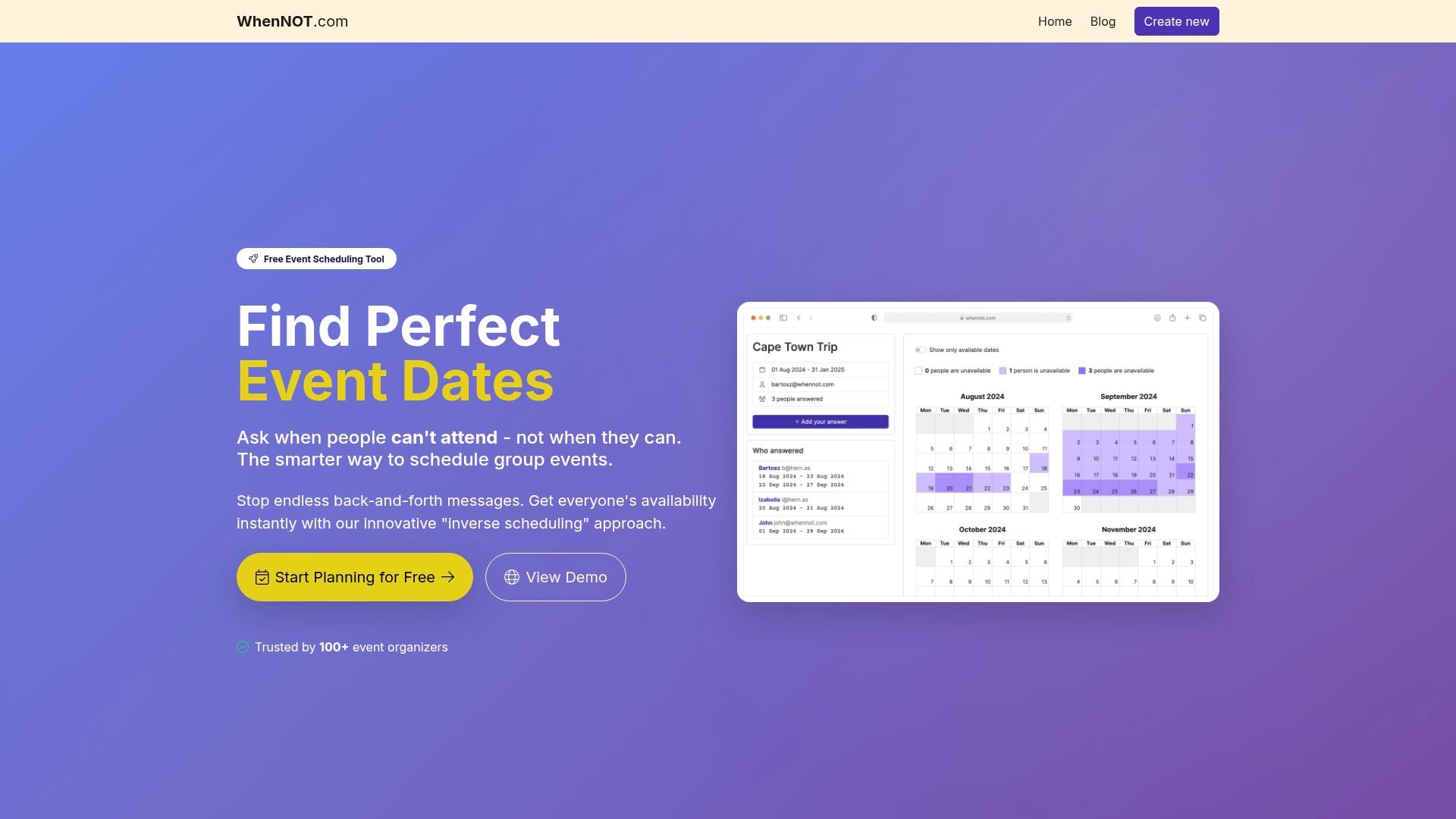
Experience the difference with our innovative online scheduling tool. WhenNOT flips the traditional approach by focusing on when participants are not busy, eliminating miscommunication and speeding up coordination. No sign-ups, no hidden costs, no barriers. Take control of your group’s scheduling today—visit WhenNOT, share your first event link, and see just how simple and stress-free planning together can be.
Frequently Asked Questions
What are common scheduling conflicts that teams face?
Scheduling conflicts can arise from overlapping personal and professional commitments, time zone variations, resource allocation limitations, and complex multi-participant event planning.
How can technology help in managing scheduling challenges?
Modern scheduling platforms provide real-time availability tracking, predictive scheduling insights, and automatic conflict detection, making it easier to visualize and address potential scheduling conflicts before they occur.
What strategies can enhance prioritization of tasks during scheduling?
Effective prioritization can be achieved by categorizing tasks based on impact and urgency, identifying critical path activities, eliminating low-value tasks, and allowing buffer time for unexpected challenges.
Why is flexibility important in scheduling?
Flexibility allows teams to adapt to unexpected changes, creating a scheduling framework that absorbs disruptions while maintaining productivity. This balance is essential for effective and resilient time management.