
Scheduling feels simple until you're juggling 20 calendars for a three-day corporate retreat. What looks like a basic coordination task quickly spirals into endless email chains, conflicting preferences, and frustrated participants. The hidden complexity of multi-day event scheduling catches organizers off guard, turning what should take hours into weeks of back-and-forth. Consensus-based scheduling transforms this chaos by reducing conflicts and boosting satisfaction, giving you a strategic framework that actually works.
Table of Contents
- Why Consensus Matters In Scheduling Multi-Day Events
- Consensus Mechanisms And Their Impact On Scheduling Efficiency
- Managing Complexities: Participant Roles, Time Zones, And Conflict Resolution
- Applying Consensus-Based Scheduling For Your Event Success
- Streamline Your Event Scheduling With WhenNot
Key takeaways
| Point | Details |
|---|---|
| Conflict reduction | Consensus-based scheduling cuts conflicts by up to 35% compared to traditional methods. |
| Efficiency gains | Ranked-choice voting reduces scheduling time by 30% in large corporate events. |
| Satisfaction boost | Incorporating participant preferences increases satisfaction by approximately 20%. |
| Communication management | Structured consensus mechanisms prevent communication overhead from derailing timelines. |
| Conflict resolution | Built-in resolution processes reduce scheduling iterations by 40%. |
Why consensus matters in scheduling multi-day events
Organizing a multi-day event means coordinating availability across dozens of people, each with their own commitments, travel constraints, and personal preferences. Traditional scheduling approaches treat this as a simple availability puzzle, but that ignores the human element. When you pick dates without considering participant input, you end up with conflicts that surface days before the event, forcing last-minute changes that damage credibility.
Consensus-based scheduling significantly reduces conflicts by treating scheduling as a collaborative decision rather than a top-down mandate. Instead of the organizer choosing dates and hoping everyone can make it work, consensus methods gather input from all stakeholders and identify options that maximize collective satisfaction. This approach cuts scheduling conflicts by significant margins while building participant commitment from day one.
The satisfaction boost matters more than you might think. When participants feel heard in the scheduling process, they're more invested in attending and less likely to cancel. Studies show participant satisfaction improves by around 20% when organizers use consensus methods compared to autocratic date selection. That translates directly to better attendance rates and more engaged participants who show up ready to contribute.
As Dr. Emily Carter notes:
"Consensus-based scheduling is not just about finding a date; it's about building a shared understanding and commitment to the event."
This psychological component separates successful events from mediocre ones. People support what they help create.
Of course, consensus comes with challenges. Communication overhead can balloon if you're not careful, especially with groups over 15 people. Every additional participant adds complexity to the coordination process. You need clear mechanisms to gather input efficiently without turning scheduling into a months-long saga. The key is structuring your consensus process to minimize back-and-forth while still capturing genuine preferences.
Pro Tip: Set a clear deadline for input collection. Open-ended scheduling discussions drag on forever. Give participants 3-5 days to submit their constraints, then move forward with the data you have.
Consensus benefits include:
- Reduced scheduling conflicts and last-minute cancellations
- Higher participant satisfaction and engagement
- Stronger commitment to attending the event
- Fewer misunderstandings about date selection rationale
- Better accommodation of diverse participant needs
For consensus scheduling event planning strategies, the investment in upfront coordination pays dividends in smoother execution and happier participants.
Consensus mechanisms and their impact on scheduling efficiency
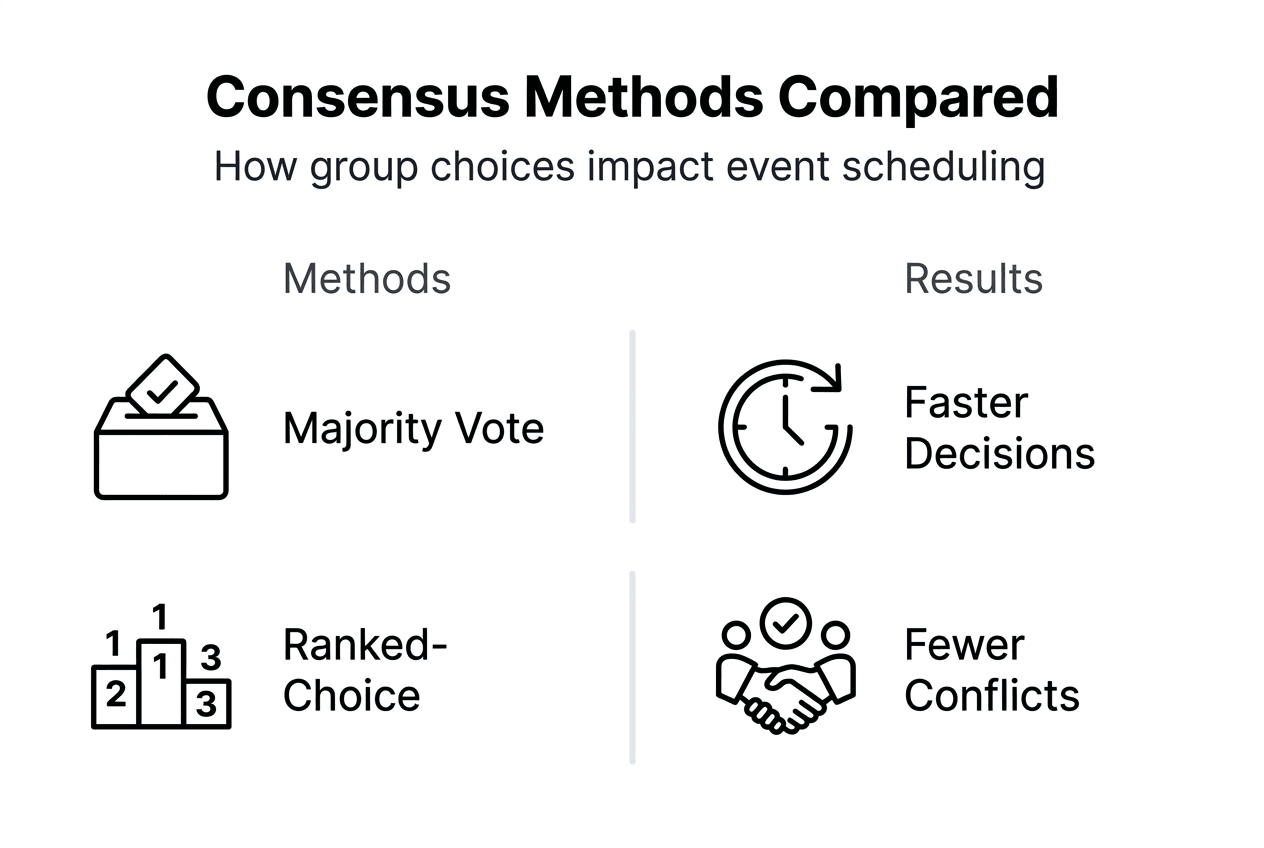
Not all consensus methods work the same way. The mechanism you choose directly impacts how fast you reach a decision and how satisfied participants feel with the outcome. Majority voting and ranked-choice voting represent the two most popular approaches for event scheduling, each with distinct advantages.
Majority voting is straightforward. Present three to five date options, have participants vote for their preferred choice, and select whichever option gets the most votes. This works well for smaller groups where you need a quick decision. The downside is that it can create a winner-takes-all dynamic where 49% of participants feel ignored if the vote splits closely.

Ranked-choice voting adds sophistication. Participants rank all options in order of preference rather than picking just one. If no option wins a majority of first-place votes, you eliminate the lowest-ranked option and redistribute those votes based on second preferences. This approach reduced scheduling time by 30% in large corporate events by finding compromise options that satisfy more people.
The efficiency gains are substantial. A University of California study showed a 35% conflict reduction when using consensus-based scheduling compared to first-come-first-served date selection. That difference compounds over multiple events, saving organizers hundreds of hours annually while improving participant experiences.
| Mechanism | Best For | Average Decision Time | Conflict Reduction |
|---|---|---|---|
| Majority voting | Small groups (5-15 people) | 1-2 days | 20-25% |
| Ranked-choice voting | Large groups (15+ people) | 2-4 days | 30-35% |
| Preference weighting | Family/social events | 3-5 days | 25-30% |
| Consensus with veto | Critical stakeholder events | 4-7 days | 15-20% |
Communication efficiency determines whether consensus helps or hurts your timeline. Each round of input collection adds time. The goal is gathering quality information in as few iterations as possible. Structure your initial request to capture availability windows, hard constraints, and preference levels simultaneously rather than asking follow-up questions later.
Pro Tip: Use a single consolidated form that captures all scheduling dimensions at once. Asking participants to fill out multiple surveys tanks response rates and drags out the process.
Implementing consensus effectively requires:
- Define your decision rule upfront (majority, supermajority, ranked-choice)
- Set clear deadlines for each round of input
- Limit the number of date options to prevent decision paralysis
- Communicate the rationale behind the final selection
- Build in a brief confirmation step before finalizing
For conflict free scheduling events, choosing the right mechanism matters as much as the dates themselves. The process shapes participant perception of fairness and influences their willingness to accommodate the final decision.
Managing complexities: participant roles, time zones, and conflict resolution
Real-world scheduling introduces complications that simple consensus models don't address. Time zones fragment availability windows. Key stakeholders hold veto power that can derail otherwise popular options. Participant roles create hierarchies where some voices carry more weight than others. Managing these nuances separates competent organizers from exceptional ones.
Time zone differences hide conflicts that surface only after you've committed to dates. A 9 AM start time in New York means 6 AM in Los Angeles and 11 PM in Tokyo. Accounting for time zones is critical to avoid hidden conflicts that force participants to choose between attending and maintaining reasonable sleep schedules. Always display proposed times in each relevant time zone when gathering input.
Participant roles complicate consensus because not all stakeholders are equal. The keynote speaker's availability matters more than an optional attendee's preferences. Weighted voting systems let you assign influence based on participant importance. For executive retreats, you might give C-suite executives double voting weight compared to middle managers. This reflects reality while still incorporating broader input.
Conflict resolution mechanisms prevent minor disagreements from derailing your entire schedule. Incorporating these mechanisms reduces scheduling iterations by 40% by establishing clear escalation paths. When two popular options tie, having a predetermined tiebreaker (organizer decides, defer to most senior participant, schedule both) keeps momentum going.
Veto powers are necessary for key stakeholders but dangerous if overused. When veto powers go unchecked, scheduling becomes hostage negotiation rather than collaborative planning. Limit veto usage by requiring stakeholders to propose alternative dates when exercising veto rights. This prevents purely negative input that blocks progress without offering solutions.
Pro Tip: Always verify time zone conversions using a reliable tool rather than mental math. A single miscalculation can invalidate your entire consensus process.
Key complexity management strategies include:
- Display all proposed times in relevant time zones simultaneously
- Weight votes based on participant criticality to the event
- Establish clear conflict resolution procedures before gathering input
- Require alternative proposals when stakeholders veto popular options
- Use hierarchical structures to minimize communication rounds in large groups
| Challenge | Impact | Mitigation Strategy |
|---|---|---|
| Time zone differences | 15-20% hidden conflicts | Display times in all zones, verify conversions |
| Veto power overuse | 25% longer decision times | Require alternative proposals with vetoes |
| Unequal participant importance | 30% satisfaction loss | Implement weighted voting systems |
| Communication overhead | 40% timeline extension | Use hierarchical input collection |
Preference weighting systems improve satisfaction particularly in family events where relationship dynamics matter. Giving the guest of honor at a birthday celebration stronger input weight than distant cousins makes intuitive sense and reflects how decisions actually get made. The key is being transparent about weighting rather than applying it secretly.
For inclusive event scheduling benefits, managing complexities well means accommodating diverse needs without letting the process become unwieldy. The scheduling mistakes to avoid guide highlights common pitfalls that derail even well-intentioned consensus processes.
Applying consensus-based scheduling for your event success
Translating consensus principles into practice requires a structured approach tailored to your specific event type and participant group. The steps below provide a framework you can adapt whether you're organizing a family reunion, corporate retreat, or social gathering.
Start by defining your decision rule before gathering any input. Will you use simple majority, supermajority (66% or 75%), ranked-choice voting, or weighted preferences? Communicating this upfront prevents confusion and sets clear expectations. Participants need to understand how their input will be used and what threshold determines the final decision.
Next, identify your hard constraints and communicate them clearly. If the venue is only available on certain weekends, or if budget considerations limit you to specific months, state these boundaries explicitly. Consensus within constraints is still consensus, and participants appreciate knowing the real limitations rather than discovering them after submitting preferences.
Implementation steps:
- Select your consensus mechanism based on group size and event complexity
- Identify and communicate hard constraints (venue, budget, key participant availability)
- Create a consolidated input form capturing availability, preferences, and constraints
- Set a firm deadline for input submission (3-5 days typically works well)
- Analyze responses and identify top 2-3 options that maximize collective satisfaction
- Present finalists with clear rationale and confirm final selection
- Communicate decision with explanation of how consensus was reached
Preference weighting elevates satisfaction when participant importance varies. These systems increase satisfaction by 20% in family events by acknowledging that some voices naturally carry more weight. The bride and groom's availability matters more than extended family for wedding planning. Making this explicit prevents resentment.
Minimizing communication rounds maintains momentum. Optimizing these rounds improves consensus efficiency, especially in large groups. Use hierarchical structures where possible: have department heads gather input from their teams rather than the organizer collecting feedback from 50 individuals directly. This reduces your coordination burden while still capturing comprehensive input.
| Approach | Pros | Cons | Best Use Case |
|---|---|---|---|
| Consensus-based | Higher satisfaction, fewer conflicts, stronger commitment | Longer initial timeline, requires more coordination | Multi-day events with flexible dates |
| Traditional (organizer decides) | Faster initial decision, simpler process | Higher conflict rates, lower satisfaction, more cancellations | Time-sensitive events with rigid constraints |
| Hybrid (consensus with bounds) | Balances speed and satisfaction | Requires skilled facilitation | Events with some flexibility and mixed stakeholder importance |
Practical conflict resolution tactics keep scheduling on track when disagreements arise:
- When options tie, defer to participant with highest travel cost
- For persistent conflicts, schedule a brief video call rather than endless emails
- Offer micro-adjustments (start time shifts, partial remote participation) before abandoning popular options
- Build in a 24-hour cooling-off period before finalizing contentious decisions
Participant engagement determines whether your consensus process succeeds or becomes an abandoned survey with 30% response rates. Send personalized invitations to provide input rather than mass emails. Explain how the consensus process works and why their participation matters. Follow up individually with non-responders rather than sending group reminders.
For group planning time savers and inclusive scheduling event planning approaches, the investment in proper consensus design pays massive dividends in execution quality and participant satisfaction.
Streamline your event scheduling with WhenNot
Scheduling multi-day events shouldn't consume weeks of your life in email chains and spreadsheet hell. The consensus principles you've learned here work even better when you have purpose-built tools that automate the tedious parts. That's where WhenNot comes in.
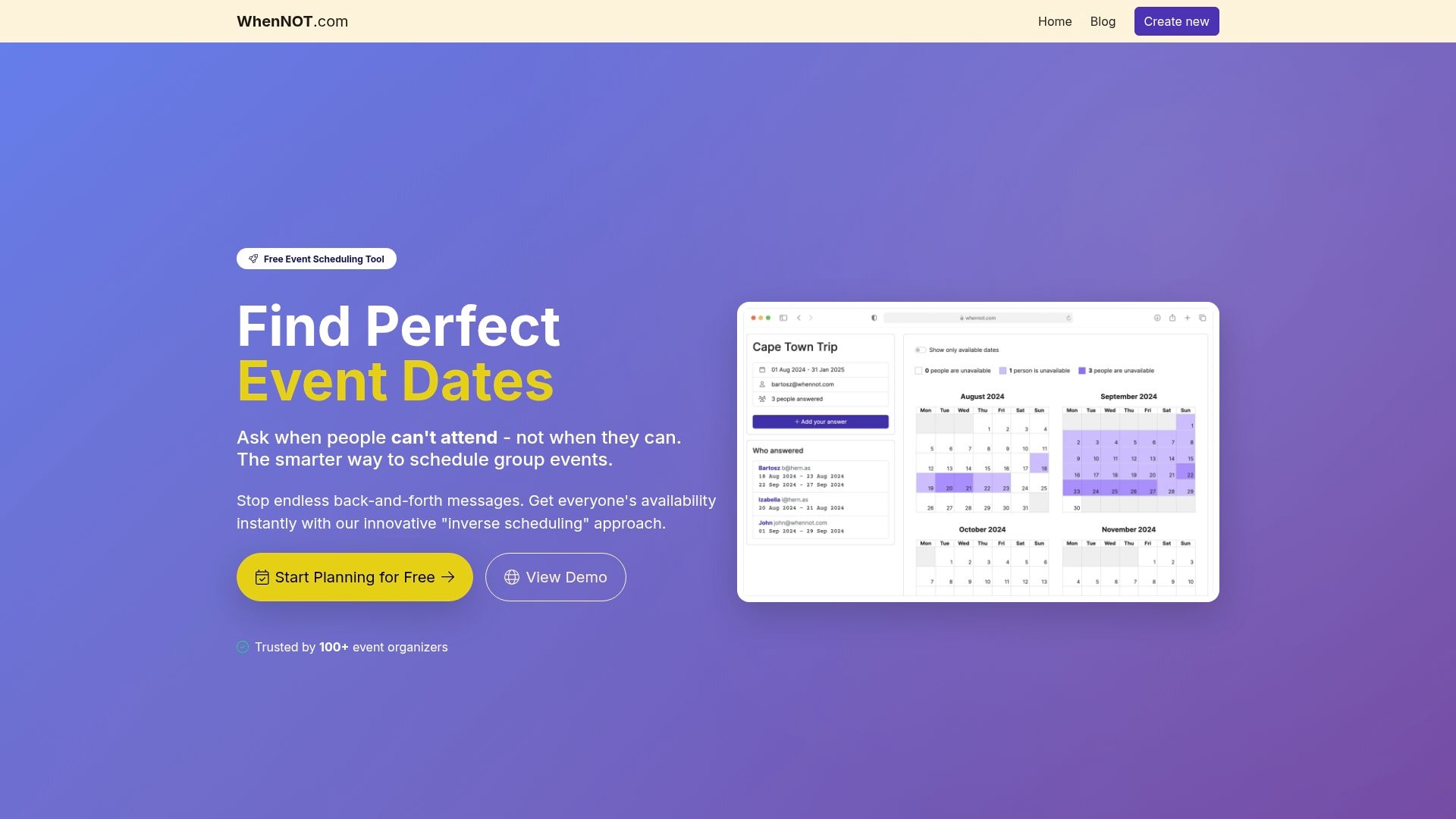
WhenNot's inverse scheduling approach flips traditional availability polling on its head. Instead of asking when everyone's available (which creates complex data to analyze), it asks when they're NOT available. This simple shift makes identifying consensus options dramatically faster. Participants mark their unavailable dates on a shared calendar, and WhenNot instantly visualizes the best options where maximum participants can attend.
The platform handles time zone conversions automatically, weights preferences based on participant roles if you choose, and provides conflict resolution tools that keep your scheduling moving forward. No sign-ups required for participants, no software to install, just a simple link that makes collecting consensus input painless. For practical tools implementing consensus scheduling event planning and group planning time savers, WhenNot removes friction from the entire process.
How does consensus differ from unanimous agreement in scheduling?
Consensus scheduling typically means agreement by majority or a predefined threshold, not requiring every single participant to prefer the selected option. This practical approach enables faster decisions while still incorporating broad input. Unanimous agreement is rarely achievable for multi-day events with large groups, making consensus the realistic path to inclusive scheduling that respects participant needs without creating impossible standards.
What are the best consensus methods for large groups?
Ranked-choice and majority voting optimize scheduling efficiency in large groups by reducing the number of communication rounds needed. Ranked-choice voting particularly shines with 15+ participants, reducing scheduling time by up to 30% compared to simple yes/no voting. These methods identify compromise options that satisfy the broadest group rather than forcing winner-takes-all outcomes.
How can I handle time zone differences when scheduling events?
Always verify time zone conversions using reliable tools rather than mental calculations to avoid hidden conflicts. Display proposed times in all relevant time zones simultaneously when gathering participant input. Inclusive scheduling tools automate these conversions, preventing the common mistake of optimizing for one time zone while creating impossible participation times for others.
What should I avoid when using consensus for scheduling?
Avoid giving any participant unchecked veto power that can stall the entire process without proposing alternatives. Limit communication rounds by gathering comprehensive input upfront rather than asking follow-up questions across multiple surveys. Set firm deadlines for each input phase, and establish clear escalation procedures for resolving ties or persistent disagreements before conflicts emerge.