
Over 80 percent of teams experience productivity drops due to poor scheduling practices. When everyone’s calendar looks different and deadlines shift without warning, even the most skilled group can struggle to stay on track. Understanding how to structure and coordinate tasks is key to transforming scattered work into effective collaboration. This article breaks down proven scheduling strategies that help teams work smarter, not harder, and highlights simple ways to sidestep the most common pitfalls.
Table of Contents
- Defining Scheduling In Team Productivity
- Major Scheduling Methods And Variations
- How Scheduling Boosts Team Collaboration
- Common Scheduling Pitfalls And Challenges
- Digital Tools Optimizing Scheduling Processes
Key Takeaways
| Point | Details |
|---|---|
| Effective Scheduling | Scheduling is essential for maximizing team productivity by aligning individual availability and balancing workloads. |
| Diverse Scheduling Methods | Employing various scheduling methods allows teams to tailor their approach to unique operational needs, enhancing flexibility and adaptability. |
| Collaboration Enhancement | Strategic scheduling fosters greater team collaboration by creating structured communication opportunities and minimizing isolation. |
| Digital Tools Impact | Advanced digital scheduling tools can automate processes and improve efficiency, allowing for real-time updates and intelligent resource management. |
Defining Scheduling in Team Productivity
Scheduling represents a strategic planning process that determines when activities will occur within a team or organizational context. According to ajabs, scheduling is fundamentally a plan prepared for the smooth conduction of activities, essentially answering the critical question of "when".
At its core, team scheduling involves coordinating multiple individuals' time, resources, and tasks to maximize collective efficiency. This process goes beyond simply marking dates on a calendar - it requires understanding each team member's availability, workload, and potential constraints. Effective scheduling transforms individual calendars into a synchronized blueprint for productivity.
Key aspects of team scheduling include:
- Aligning individual availability
- Establishing clear task timelines
- Balancing workload distribution
- Creating transparent communication channels
- Minimizing scheduling conflicts
The ultimate goal of scheduling in team productivity is not just tracking time, but optimizing collaborative potential. By creating a structured yet flexible framework, teams can reduce wasted effort, improve communication, and ensure that collective goals are met efficiently and systematically.
For more comprehensive insights, check out our guide on understanding efficient scheduling methods.
Major Scheduling Methods and Variations
Team scheduling methods have evolved significantly, offering diverse approaches to optimize productivity and time management. Eric.ed.gov highlights several prominent scheduling models, including block scheduling variations that provide structured yet flexible frameworks for team coordination.
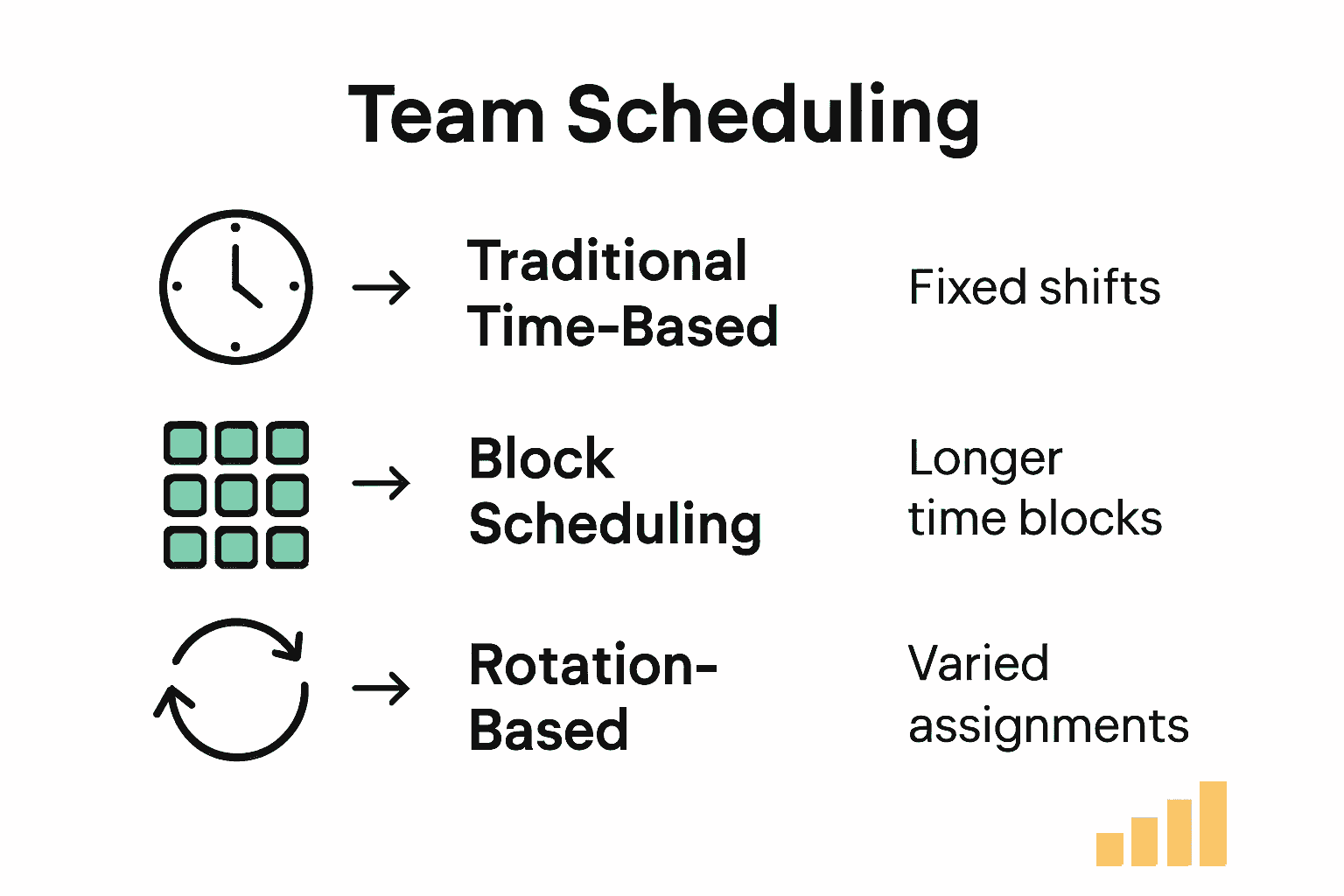
Three primary scheduling methods dominate modern team productivity strategies:
- Traditional Time-Based Scheduling
- Fixed working hours
- Consistent daily/weekly patterns
- Predictable workflow structure
- Block Scheduling
- Concentrated work periods
- Flexible time allocation
- Focused task management
- Rotation-Based Scheduling As demonstrated by PMC, rotation models like the 4:1 schedule offer innovative approaches where teams alternate between intensive work blocks and recovery/review periods. This method allows for deep work cycles while preventing burnout.
Modern scheduling techniques prioritize adaptability, recognizing that one-size-fits-all approaches rarely meet complex team dynamics. By understanding and implementing varied scheduling methods, teams can create customized productivity frameworks that align with their unique operational requirements.

For more comprehensive strategies, explore our guide on real-time scheduling techniques.
How Scheduling Boosts Team Collaboration
Effective scheduling is more than just managing time - it's a powerful tool for enhancing team dynamics and collaborative potential. Strategic scheduling creates intentional opportunities for team interaction, communication, and synchronized work efforts.
Research demonstrates the profound impact of thoughtful scheduling approaches. PMC reveals that staggered shifts with significant overlap can dramatically improve team collaboration, particularly in high-stakes environments like medical residency programs. This approach ensures continuous knowledge transfer and maintains seamless workflow continuity.
Key mechanisms through which scheduling boosts collaboration include:
- Creating predictable communication windows
- Establishing shared work rhythms
- Minimizing individual isolation
- Facilitating cross-functional interactions
- Providing structured opportunities for team synergy
Interestingly, collaborative scheduling extends beyond mere time management. PMC highlights how cohort-based scheduling can enhance social integration, demonstrating that well-designed schedules can significantly improve team members' interpersonal connections and collective performance.
For deeper insights into building effective collaborative workflows, explore our guide on collaborative scheduling techniques.
Common Scheduling Pitfalls and Challenges
Scheduling complexity can derail even the most well-intentioned team productivity efforts. While planning might seem straightforward, numerous hidden challenges can dramatically impact team performance and morale.
PMC highlights significant challenges in shift-based systems, particularly the intricate balance between maintaining continuous workflow and ensuring effective communication. In medical residencies, for instance, complex scheduling can create communication gaps that directly impact team coordination and overall performance.
Primary scheduling challenges include:
- Overlapping individual commitments
- Misaligned time zone differences
- Inadequate buffer time between tasks
- Insufficient communication channels
- Lack of flexibility in rigid scheduling structures
SEDL demonstrates that even innovative scheduling approaches like modified calendars can introduce unexpected complications. Their research on year-round schooling reveals how seemingly beneficial scheduling modifications can lead to unintended consequences such as increased administrative complexity and potential team member burnout.
Navigating these challenges requires a nuanced, adaptive approach that prioritizes clear communication, individual flexibility, and strategic planning. Teams must remain vigilant and proactive in identifying and addressing potential scheduling bottlenecks.
For a deeper exploration of scheduling challenges, check out our guide on top scheduling obstacles.
Digital Tools Optimizing Scheduling Processes
Digital scheduling solutions have revolutionized how teams coordinate and manage their time, transforming complex logistical challenges into streamlined, intelligent processes. Modern technology enables unprecedented levels of efficiency and collaboration across diverse work environments.
Stanford Scale reveals that advanced scheduling tools and AI-driven systems are capable of creating strategic, highly efficient scheduling frameworks. These digital solutions go beyond simple calendar management, offering intelligent resource allocation, predictive analytics, and real-time adaptation capabilities.
Key features of sophisticated digital scheduling tools include:
- Automated conflict resolution
- Real-time collaborative updates
- Intelligent time zone management
- Predictive availability forecasting
- Cross-platform synchronization
- Advanced reporting and analytics
CASN Berkeley emphasizes the critical importance of selecting scheduling tools that can dynamically optimize resource allocation. The most effective digital solutions provide flexibility, intuitive interfaces, and robust integration capabilities that adapt to unique team requirements.
As workplace dynamics continue evolving, digital scheduling tools will become increasingly sophisticated, leveraging machine learning and predictive technologies to anticipate and resolve scheduling complexities before they emerge.
Ready to explore cutting-edge scheduling approaches? Check out our guide on modern scheduling tools.
Simplify Your Team's Scheduling Challenges and Boost Productivity
The article highlights common pain points in team scheduling such as balancing individual commitments, avoiding communication gaps, and managing complex workflows. These challenges can lead to wasted time and reduced collaboration if not handled effectively. If you are looking for a way to transform scheduling from a source of stress into a strategic advantage, focusing on clear communication and flexible planning is key.
WhenNOT offers a fresh, user-friendly approach that directly addresses these scheduling complexities by asking participants when they are not available rather than when they are free. This simple shift streamlines coordination for multi-day events and flexible date plans, reducing overlap and minimizing conflicts. With no sign-ups required and a visual overview of everyone’s unavailable times, your team can quickly identify the best dates and stay aligned throughout the project.

Take the next step toward effortless scheduling and improved team collaboration. Visit WhenNOT to experience how modern scheduling tools can eliminate common pitfalls described in the article, empower your workflow, and save valuable time. Learn more about real-time scheduling techniques and explore collaborative scheduling workflows to fully unlock your team’s productivity potential today.
Frequently Asked Questions
What is the importance of scheduling in team productivity?
Scheduling is crucial as it optimizes collaborative potential by coordinating team members' time, resources, and tasks, thereby enhancing efficiency and communication.
What are the main scheduling methods used in teams?
The primary scheduling methods include Traditional Time-Based Scheduling, Block Scheduling, and Rotation-Based Scheduling, each offering unique frameworks to improve team coordination and productivity.
How does effective scheduling enhance team collaboration?
Effective scheduling creates predictable communication windows, establishes shared work rhythms, and minimizes individual isolation, thus facilitating better team synergy and performance.
What challenges can arise from team scheduling?
Common scheduling challenges include overlapping commitments, time zone differences, inadequate buffer time between tasks, and insufficient communication channels, all of which can hinder team coordination and morale.