
Over 85 percent of professionals now rely on digital scheduling tools to organize meetings and events. The old days of phone calls and paper calendars have given way to smarter solutions that use algorithms and real-time collaboration to save time and avoid conflicts. Choosing the right scheduling technology can turn a complicated planning process into a smooth experience, whether you are coordinating a team project or hosting a large event.
Table of Contents
- Defining Modern Scheduling Tools And Concepts
- Variations: Traditional Versus Innovative Approaches
- How Inverse Scheduling Technology Works
- Key Benefits For Event And Group Planning
- Comparing Costs, Risks, And Limitations
Key Takeaways
| Point | Details |
|---|---|
| Modern Scheduling Tools | Digital solutions optimize time management through features like automated conflict detection, real-time collaboration, and flexible participation options. |
| Inverse Scheduling Technology | This innovative approach simplifies coordination by identifying participant unavailability, reducing the need for extensive communication. |
| Key Benefits | Advanced scheduling technologies enhance efficiency, reduce communication overhead, and promote inclusive participation in event planning. |
| Cost and Risk Considerations | Organizations must carefully evaluate financial investments, data privacy issues, and integration challenges when adopting scheduling tools. |
Defining Modern Scheduling Tools and Concepts
Scheduling tools have transformed dramatically in recent years, moving far beyond traditional paper calendars and manual coordination methods. These digital solutions now leverage advanced algorithms and user-friendly interfaces to streamline complex planning processes across various contexts. According to research from ijfmr, technology-driven scheduling software has become crucial in addressing inefficiencies inherent in manual time management systems.
Modern scheduling tools typically incorporate several key features that distinguish them from legacy approaches. These include:
- Automated conflict detection
- Real-time collaboration capabilities
- Cross-platform synchronization
- Intelligent time zone management
- Flexible participation options
The computational complexity behind contemporary scheduling platforms is significant. As research from arxiv demonstrates, advanced scheduling models now utilize sophisticated techniques like Integer Linear Programming to optimize meeting arrangements. These tools can handle intricate constraints such as minimum intervals between meetings, varying time requirements for different participant types, and even emergency time slot allocations.

For most group event organizers, the primary appeal of modern scheduling tools lies in their ability to dramatically reduce communication overhead. Understanding Why Choose Simple Scheduling Tools highlights that the best platforms prioritize user experience, offering intuitive interfaces that make coordination seamless and efficient. Whether you're planning a family reunion, corporate retreat, or academic conference, these tools transform what was once a complex logistical challenge into a straightforward, collaborative process.
Variations: Traditional Versus Innovative Approaches
Traditional scheduling approaches have historically been rigid and time-consuming, often relying on manual coordination and limited flexibility. These legacy methods typically involved phone calls, email chains, and physical calendars that made group planning a complex and frustrating experience. In contrast, innovative scheduling tools have fundamentally reimagined how time and availability can be managed across diverse groups and contexts.
Interestingly, different domains have experimented with flexible scheduling models to optimize time management. According to Wikipedia, educational institutions have pioneered unique approaches like modular scheduling, where time is divided into flexible 20 or 40-minute modules. This allows for customized instructional periods that can adapt to different learning activities like one-to-one sessions, group workshops, or laboratory work.
Block scheduling provides another fascinating example of innovative time management. As Wikipedia highlights, this approach enables longer, more concentrated class periods that differ dramatically from traditional hourly schedules. Some variations include daily rotational cycles or extended periods where a single class occupies an entire block of time. These models demonstrate how scheduling can be reimagined to enhance learning, productivity, and engagement.
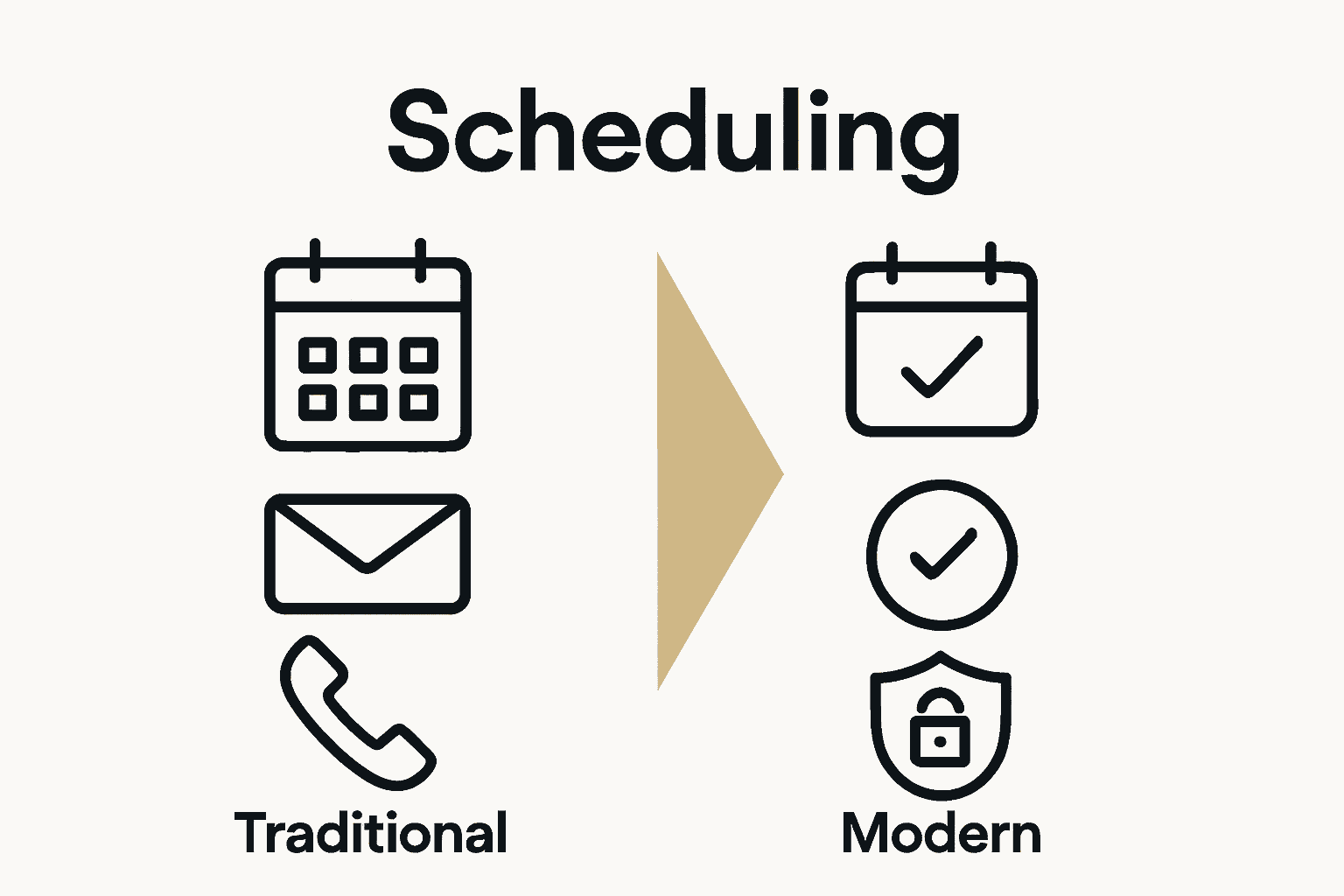
The evolution from traditional to innovative scheduling approaches reflects broader technological and organizational shifts. Modern tools now prioritize:
- Participant-centric design
- Real-time collaboration
- Intelligent conflict resolution
- Seamless cross-platform integration
- Highly customizable time allocation
Understanding Efficient Scheduling Methods reinforces that the best scheduling solutions are those that reduce complexity while providing maximum flexibility. Whether for academic planning, corporate meetings, or social events, innovative scheduling tools transform what was once a logistical nightmare into a streamlined, user-friendly experience.
How Inverse Scheduling Technology Works
Inverse scheduling technology represents a revolutionary approach to time management that fundamentally challenges traditional scheduling methods. Instead of asking participants when they are available, this innovative technique flips the conventional process by inquiring about their unavailable times. This subtle but powerful shift dramatically simplifies the coordination process, especially for complex group events with multiple participants and flexible date ranges.
As research from arxiv suggests, adaptive scheduling frameworks can significantly improve system efficiency by dynamically adjusting task execution based on importance and constraints. Inverse scheduling builds on this principle by creating a more participant-friendly method of collective time planning. The core mechanism involves participants marking their unavailable periods, which allows the system to quickly identify optimal meeting or event windows without requiring extensive back-and-forth communication.
The technological architecture behind inverse scheduling is remarkably sophisticated. Participants receive a unique link where they can input their time constraints, with the platform simultaneously tracking and visualizing collective unavailability. This approach offers several critical advantages:
- Reduced communication overhead
- Enhanced privacy protection
- Faster decision-making
- Simplified user experience
- Flexible date range exploration
Collaborative Scheduling Workflow emphasizes that the most effective scheduling tools prioritize user convenience and intelligent data processing. By focusing on when people cannot meet, inverse scheduling eliminates the traditional complexity of finding a universally convenient time slot, transforming a typically frustrating process into a streamlined, efficient experience.
Key Benefits for Event and Group Planning
Event and group planning has been dramatically transformed by modern scheduling technologies, offering unprecedented efficiency and collaboration capabilities. The traditional challenges of coordinating multiple participants with diverse schedules have been systematically dismantled by intelligent, user-centric tools that prioritize simplicity and flexibility.
Research from arxiv highlights the emerging trend of structured workflow scheduling, where complex coordination tasks are broken down into manageable, automated microtasks. Group scheduling tools now provide comprehensive solutions that go far beyond simple date matching, enabling seamless communication and decision-making across diverse participant groups.
The key benefits of advanced scheduling technologies include:
- Elimination of endless email threads
- Real-time collaborative planning
- Instant visual representation of group availability
- Reduced administrative overhead
- Enhanced privacy and data protection
- Efficient conflict resolution
- Inclusive participation without technical barriers
Understanding the Benefits of Group Scheduling emphasizes that modern scheduling solutions are about more than just finding a common time—they're about creating meaningful connections and reducing the stress associated with complex event planning. By leveraging intelligent algorithms and user-friendly interfaces, these tools transform what was once a logistical nightmare into a streamlined, enjoyable process that empowers organizers and participants alike.
Comparing Costs, Risks, and Limitations
Navigating the landscape of scheduling tools requires a critical examination of their potential costs, inherent risks, and operational limitations. While these technologies offer remarkable advantages, understanding their potential drawbacks is crucial for making informed decisions about implementation and usage.
Research from arxiv suggests that optimization algorithms must carefully balance multiple constraints, including system utility, fairness, and data management. Scheduling technologies are no exception, presenting a complex ecosystem of potential benefits and potential pitfalls that organizations and individuals must carefully evaluate.
The primary considerations when comparing scheduling tools include:
- Initial and ongoing financial investment
- Data privacy and security vulnerabilities
- Learning curve and user adoption challenges
- Integration complexity with existing systems
- Potential technical limitations
- Scalability constraints
- Dependency on internet connectivity
Essential Group Event Scheduling Tips underscores the importance of a nuanced approach. While scheduling technologies can dramatically improve coordination efficiency, they are not universal solutions. Successful implementation requires careful assessment of specific group needs, technological infrastructure, and potential adaptation challenges. Organizations must approach these tools as strategic investments, understanding that their value lies not just in their features, but in their ability to genuinely simplify complex coordination processes.
Transform Your Group Planning with Smarter Scheduling Solutions
The challenges of coordinating group events mentioned in the "Why Adopt New Scheduling Tools: Complete Guide" article are real and common. Endless back-and-forth messages, complex conflicts, and confusing availability all drain your time and energy. Key concepts like inverse scheduling and real-time collaboration show how traditional processes need an upgrade that respects your time and privacy while making planning more flexible and inclusive.
WhenNOT tackles these pain points head-on by letting participants mark when they are not available rather than when they are free. This approach eliminates the usual hassle of trying to fit everyone else's schedule into one slot. With no sign-ups required and a simple link to share, WhenNOT helps you quickly visualize group availability across multiple days or flexible date ranges. Its ease of use and privacy focus mean less stress and faster decisions for any event, whether it is a family reunion or a corporate retreat.
Take control of your group scheduling now by trying WhenNOT’s intuitive online platform.
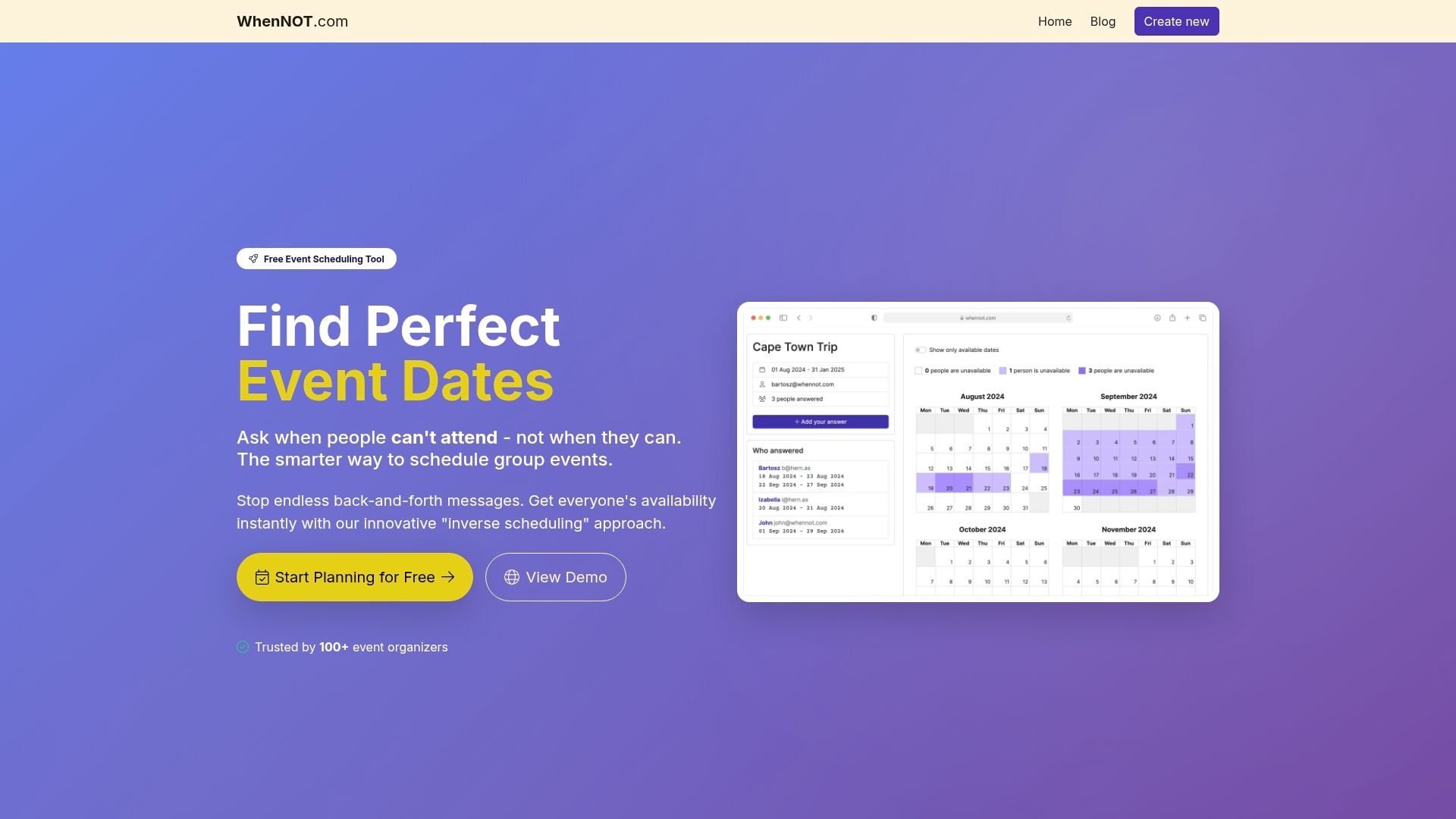
Discover how effortless scheduling can be by visiting WhenNOT today. See firsthand how intelligent inverse scheduling can reduce communication delays and make complex coordination simple. Don’t let outdated methods hold you back—explore Collaborative Scheduling Workflow and Essential Group Event Scheduling Tips on our blog to maximize your event planning efficiency.
Frequently Asked Questions
What are modern scheduling tools?
Modern scheduling tools are digital solutions that streamline planning processes by leveraging advanced algorithms and user-friendly interfaces to facilitate coordination among participants.
How do innovative scheduling tools differ from traditional methods?
Innovative scheduling tools provide features like real-time collaboration, automated conflict detection, intelligent time zone management, and flexible participation options, making them much more efficient than traditional manual coordination methods.
What is inverse scheduling technology and how does it work?
Inverse scheduling technology inverts the traditional scheduling approach by asking participants to indicate their unavailable times, simplifying the coordination process for complex group events and significantly reducing communication overhead.
What are the key benefits of using advanced scheduling technologies?
Key benefits include reduced administrative overhead, instant visibility of group availability, enhanced privacy and data protection, efficient conflict resolution, and an overall improved user experience in planning events and meetings.