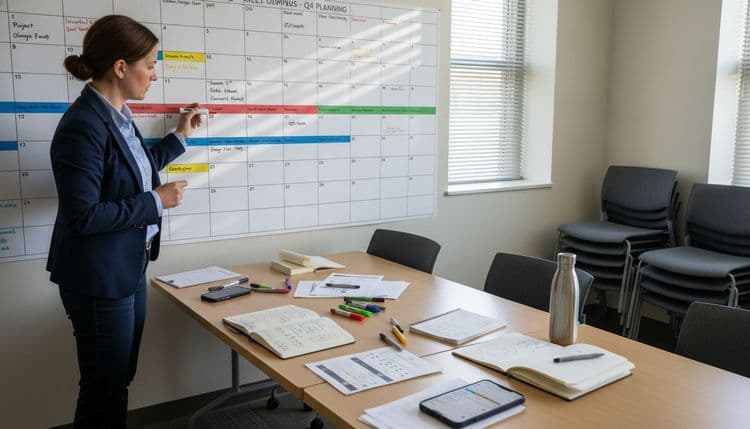
Over 80 percent of american event organizers report that managing multi-day events is much more complex than handling single-day gatherings. This difference matters because a poorly scheduled multi-day event can leave participants overwhelmed or disengaged, while a well-coordinated experience boosts satisfaction and retention. Whether you are planning conferences, festivals, or workshops, understanding multi-day event scheduling helps you avoid common pitfalls and create experiences that stand out.
Table of Contents
- Defining Multi-Day Event Scheduling
- Types of Multi-Day Event Scenarios
- How Multi-Day Scheduling Tools Work
- Benefits and Challenges for Organizers
- Comparing Multi-Day and Single-Day Planning
- Mistakes to Avoid in Scheduling Processes
Key Takeaways
| Point | Details |
|---|---|
| Multi-Day Scheduling Complexity | Multi-day events require intricate planning beyond single-day events, incorporating logistical management and participant engagement over several days. |
| Critical Tools and Features | Advanced scheduling tools are essential for managing participant registration, resource allocation, and conflict resolution effectively. |
| Benefits vs. Challenges | While multi-day events enhance participant engagement and learning opportunities, they also introduce significant logistical complexities that must be managed. |
| Avoiding Common Mistakes | Organizers should be aware of common pitfalls in scheduling such as inflexible frameworks and poor communication to ensure a successful event. |
Defining Multi-Day Event Scheduling
Multi-day event scheduling is a strategic process of coordinating activities, sessions, and participant engagement across multiple consecutive days. Unlike single-day event planning, this approach requires comprehensive logistics management to ensure smooth progression and participant experience. Multi-day events typically span several days and demand intricate scheduling to align resources, availability, and participant requirements.
The core principle of multi-day event scheduling involves creating a structured framework that accounts for various complexities. Scheduling workflows for events reveal that successful multi-day planning requires careful consideration of participant availability, session timing, resource allocation, and potential conflicts. Participants register once for the entire event duration, which means organizers must design a cohesive schedule that maintains engagement and minimizes logistical disruptions.
Key characteristics of multi-day event scheduling include:
- Comprehensive participant tracking across multiple dates
- Synchronized resource management
- Flexible scheduling to accommodate varying participant constraints
- Strategic session and activity planning
- Integrated communication channels
From academic conferences to corporate training programs, multi-day events demand meticulous planning. Event scheduling terminology highlights the nuanced approach required to manage complex scheduling scenarios. Successful multi-day event scheduling transforms a collection of individual sessions into a seamless, interconnected experience that maximizes participant value and organizational efficiency.
Types of Multi-Day Event Scenarios
Multi-day event scenarios encompass a wide range of complex gatherings that require intricate scheduling and coordination across multiple days. These events vary significantly in purpose, structure, and participant engagement, demanding tailored approaches to planning and management. From professional conferences to extended training programs, each scenario presents unique challenges in logistical coordination and participant experience.
Professional conferences represent a classic multi-day event scenario, often spanning 2-5 days and featuring multiple tracks, keynote sessions, workshops, and networking opportunities. Comparing multi-day event schedulers reveals the critical importance of flexible scheduling tools that can handle diverse session types and participant preferences. Academic and industry conferences typically require sophisticated scheduling to manage concurrent sessions, speaker availability, and participant movement between venues.
Other prominent multi-day event scenarios include:
- Corporate training retreats
- Academic symposiums and research conferences
- Extended sports tournaments and competitions
- Music and cultural festivals
- Educational workshops and certification programs
Unique multi-day event scenarios, such as endurance events spanning multiple days, demonstrate the complexity of coordinating participant logistics, resource allocation, and continuous engagement. These events require meticulous planning to manage participant schedules, rest periods, and activity progression, highlighting the sophisticated nature of comprehensive multi-day event scheduling strategies.

How Multi-Day Scheduling Tools Work
Multi-day scheduling tools represent sophisticated digital platforms designed to simplify the complex process of coordinating events spanning multiple days. These advanced systems go beyond traditional single-day scheduling by providing comprehensive frameworks that enable organizers to manage intricate logistical challenges. Scheduling technologies have evolved to address the nuanced requirements of multi-day event planning, offering dynamic solutions that streamline participant coordination and resource management.
The fundamental mechanics of multi-day scheduling tools revolve around creating flexible event templates that can accommodate various scheduling scenarios. Understanding the role of scheduling tools reveals that these platforms typically feature robust capabilities such as participant registration, session tracking, and cross-day activity synchronization. Scheduling tools for multi-day events allow organizers to set up comprehensive event structures where participants can register once for the entire event duration, eliminating repetitive registration processes.
Key functional components of multi-day scheduling tools include:
- Centralized event management dashboard
- Comprehensive participant tracking systems
- Integrated communication channels
- Real-time availability tracking
- Conflict resolution mechanisms
- Customizable event templates
- Session and resource allocation features
Advanced scheduling tools leverage intelligent algorithms to analyze participant constraints, optimize session timing, and provide visual representations of complex scheduling scenarios. By transforming intricate logistical challenges into manageable, user-friendly interfaces, these tools empower event organizers to create seamless multi-day experiences that maximize participant engagement and minimize administrative overhead.
Benefits and Challenges for Organizers
Multi-day event organization presents a complex landscape of strategic opportunities and intricate challenges that demand sophisticated planning and adaptive management. Event organization strategies reveal that successful multi-day events require a delicate balance between comprehensive planning and flexible execution. Organizers must navigate a complex terrain of logistical, participant, and resource management considerations that extend far beyond traditional single-day event planning.
The strategic benefits of multi-day events are substantial, offering deep engagement and comprehensive exploration of topics. Top scheduling challenges highlight that while these events provide unique opportunities for in-depth learning and networking, they simultaneously introduce significant organizational complexities. Successful multi-day events create immersive experiences that allow participants to dive deeper into subjects, build meaningful connections, and engage in more comprehensive learning and collaboration.
Key benefits and challenges for event organizers include: Benefits:
- Extended participant engagement
- In-depth topic exploration
- Enhanced networking opportunities
- Comprehensive learning experiences
- Potential for more meaningful interactions
Challenges:
- Maintaining participant interest across multiple days
- Complex logistical coordination
- Resource management and allocation
- Scheduling conflicts and constraints
- Managing participant energy and motivation
Ultimately, multi-day event organization requires a strategic approach that combines meticulous planning, adaptive management, and a deep understanding of participant dynamics. By anticipating potential challenges and leveraging the inherent benefits, organizers can create transformative experiences that deliver substantial value to participants while maintaining operational efficiency.
Comparing Multi-Day and Single-Day Planning
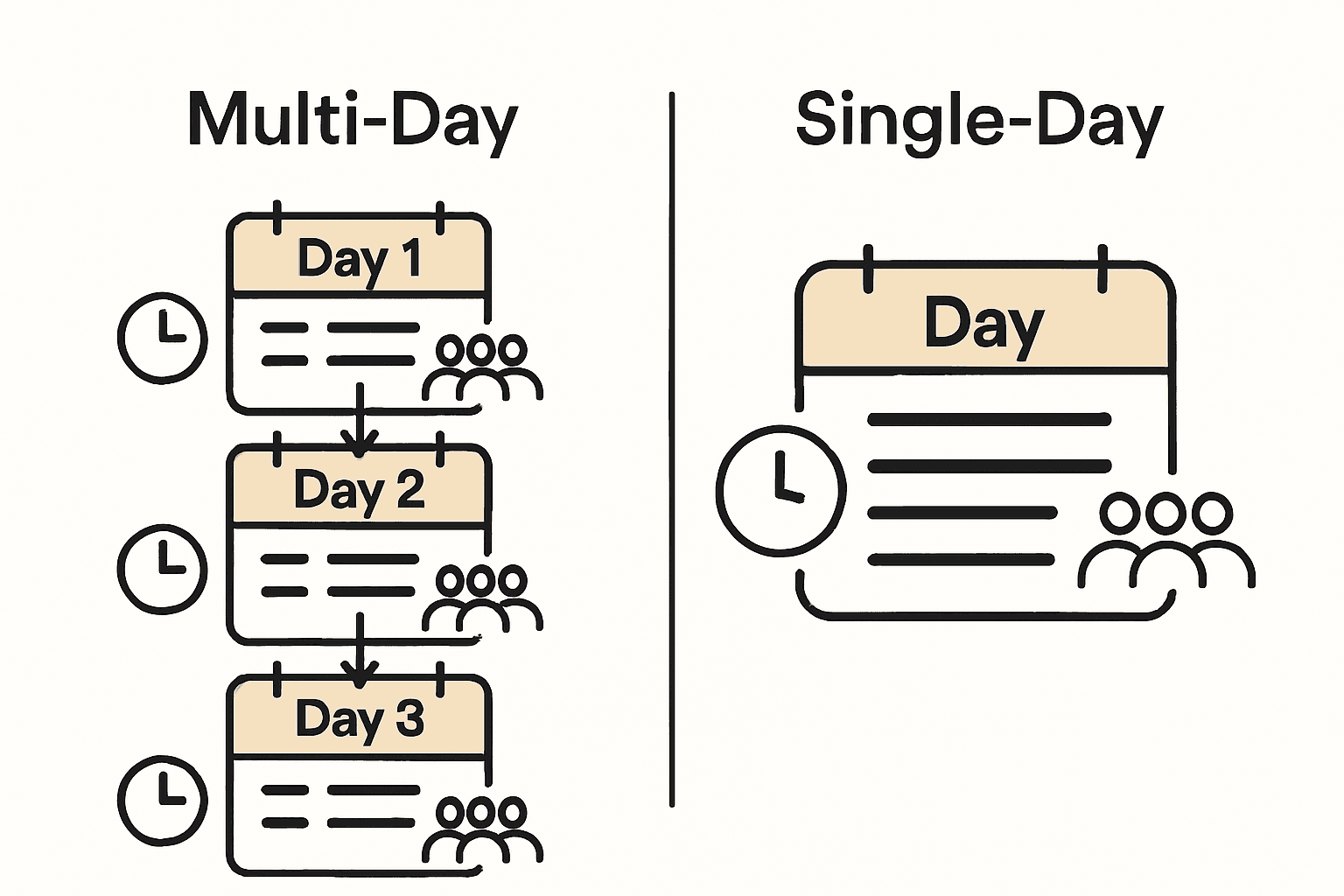
The fundamental distinction between multi-day and single-day event planning lies in their complexity, scope, and participant engagement strategies. Why effective scheduling saves time reveals that while single-day events require straightforward logistical management, multi-day events demand sophisticated coordination across extended timeframes. Event planning approaches vary significantly based on the event's duration and intended participant experience.
Common scheduling challenges highlight the key differences in planning methodologies. Single-day events typically involve concentrated scheduling where all participants engage simultaneously, with predictable resource allocation and linear activity progression. In contrast, multi-day events require dynamic scheduling that accommodates:
- Varying participant availability
- Complex session interconnections
- Extended resource management
- Participant energy and engagement fluctuations
- Flexible activity selections
Key comparative aspects between single-day and multi-day planning include:
Single-Day Planning Characteristics:
- Fixed time and location
- Uniform participant experience
- Straightforward logistical requirements
- Limited scheduling complexity
- Concentrated resource allocation
Multi-Day Planning Characteristics:
- Extended time span
- Diverse participant engagement options
- Complex scheduling requirements
- Adaptive resource management
- Interconnected session designs
Ultimately, multi-day event planning represents a more nuanced approach that demands strategic foresight, flexible design, and comprehensive participant experience management. By understanding these fundamental differences, organizers can create more engaging, efficient, and meaningful event experiences that transcend traditional single-day planning limitations.
Mistakes to Avoid in Scheduling Processes
Multi-day event scheduling involves complex coordination that can quickly unravel without strategic planning and proactive management. Scheduling mistakes to avoid reveal that many organizers underestimate the intricate challenges of managing extended event timelines. Scheduling errors can cascade into significant disruptions, potentially compromising the entire event experience and participant satisfaction.
Scheduling error examples highlight critical mistakes that can derail multi-day event planning. Common pitfalls include:
- Inadequate buffer time between sessions
- Poor communication channels
- Inflexible scheduling frameworks
- Insufficient participant preference tracking
- Overlooking resource constraints
- Neglecting participant energy management
Key mistakes to avoid in multi-day event scheduling encompass:
- Rigid Schedule Design
- Creating overly structured timelines
- Failing to accommodate unexpected changes
- Limiting participant flexibility
- Communication Breakdowns
- Inconsistent information sharing
- Complex registration processes
- Lack of real-time update mechanisms
- Resource Mismanagement
- Inadequate venue and equipment planning
- Poor speaker and facilitator coordination
- Inefficient logistical support
Successful multi-day event scheduling requires anticipating potential disruptions, maintaining adaptable frameworks, and prioritizing participant experience. By recognizing and proactively addressing these common scheduling mistakes, organizers can create more resilient, engaging, and seamless event experiences that meet participant expectations and organizational goals.
Simplify Your Multi-Day Event Scheduling Today
Multi-day event scheduling can feel overwhelming with challenges like managing complex participant availability, avoiding scheduling conflicts, and maintaining engagement across several days. The article highlights the necessity of flexible frameworks and comprehensive participant tracking to create seamless and efficient multi-day experiences. These pain points often lead to confusion, wasted time, and stressed organizers.
If you are searching for an easier way to coordinate complex events where participants may have varying busy schedules, WhenNOT offers a revolutionary solution. By asking participants when they are not available rather than when they are free, our tool removes guesswork and streamlines the entire scheduling process. Key features like centralized management, real-time availability visualization, and no-signup participation directly address the common scheduling mistakes and challenges discussed in the article.
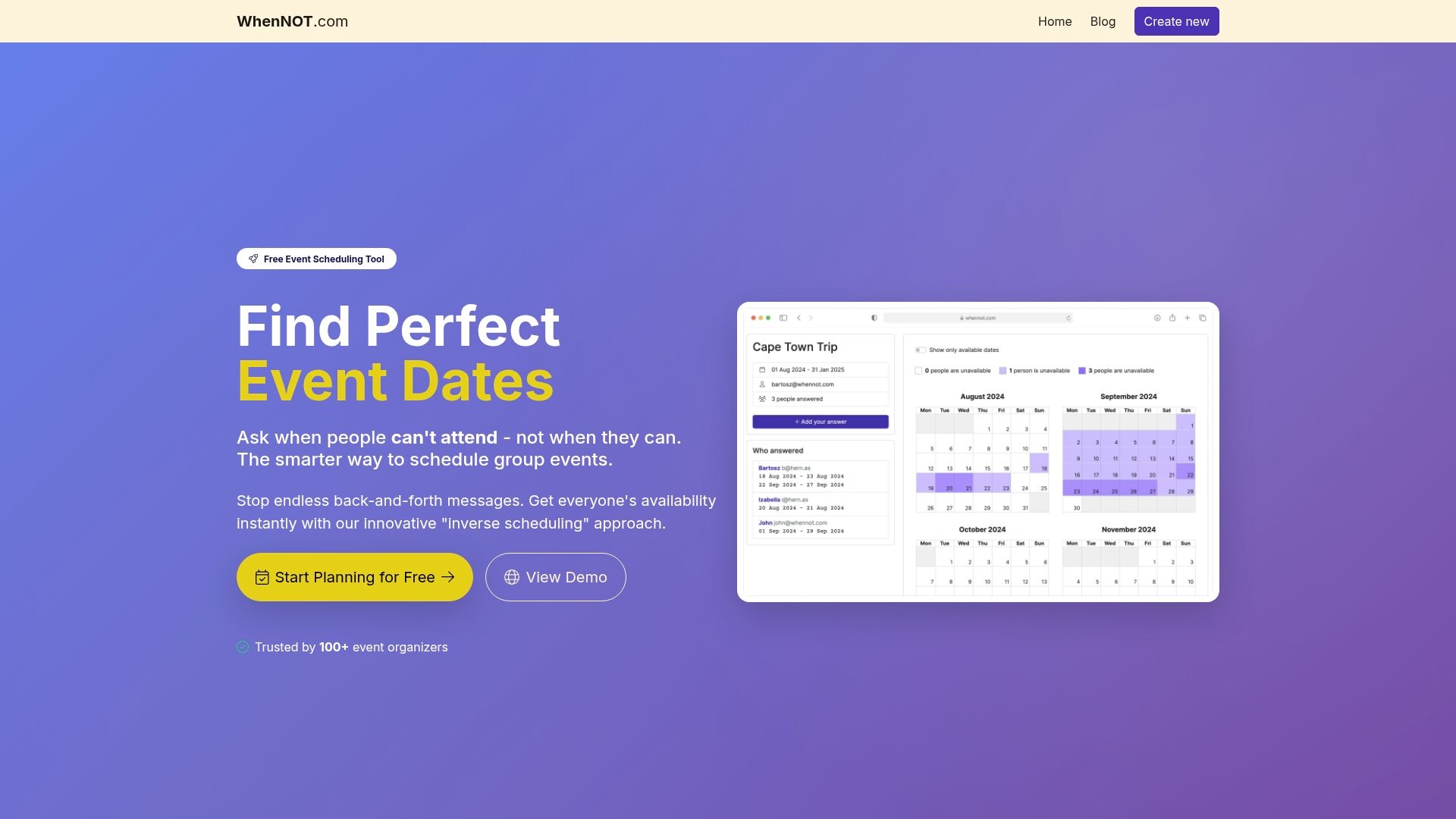
Take control of your multi-day event planning with WhenNOT’s intuitive platform that values simplicity, privacy, and speed. Discover how you can save countless hours and reduce communication delays by creating your event now at https://whennot.com. Explore how our unique inverse scheduling approach can transform your event coordination by visiting the Scheduling Workflows for Events Guide and deepen your understanding with our Understanding the Role of Scheduling Tools article.
Frequently Asked Questions
What is multi-day event scheduling?
Multi-day event scheduling is the process of coordinating activities and sessions across multiple consecutive days, requiring careful management of logistics and participant engagement.
What are the key characteristics of multi-day event scheduling?
Key characteristics include comprehensive participant tracking, synchronized resource management, flexible scheduling, strategic session planning, and integrated communication channels.
What are some examples of multi-day event scenarios?
Examples include professional conferences, corporate training retreats, academic symposiums, extended sports tournaments, and music festivals.
What tools can help with multi-day event scheduling?
Multi-day scheduling tools often include features like centralized event management dashboards, participant tracking systems, real-time availability tracking, and customizable event templates.