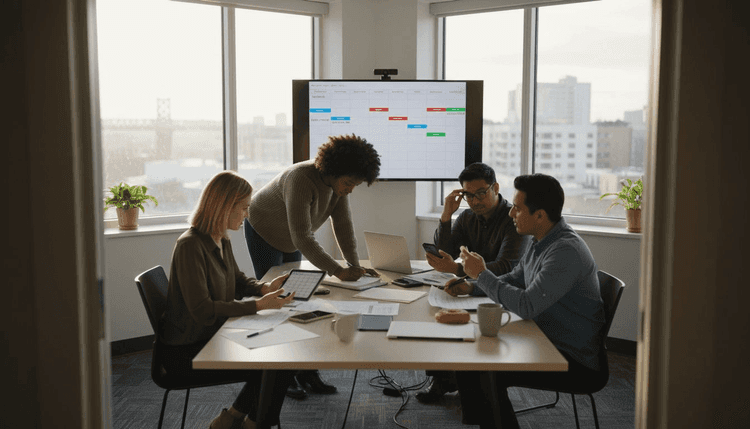
Nearly 90 percent of American event coordinators encounter scheduling headaches when planning multi-day retreats for corporate teams. Balancing packed calendars, varied personal commitments, and unique professional roles makes group event planning a real challenge in North America. This guide shows how strategic tools, communication tactics, and technology can help overcome the most common scheduling conflicts and create seamless experiences for every attendee.
Table of Contents
- What Defines Group Event Planning Challenges
- Types of Scheduling Conflicts in Groups
- The Impact of Multi-Day Event Complexity
- Managing Conflicting Calendars and Roles
- Technology Solutions for Streamlined Planning
- Common Mistakes and How to Avoid Them
Key Takeaways
| Point | Details |
|---|---|
| Complex Coordination | Effective group event planning requires aligning diverse stakeholder needs and preferences while navigating logistical challenges. |
| Mitigating Scheduling Conflicts | Utilize centralized scheduling systems and collaborative tools to reduce communication overhead and address common scheduling conflicts. |
| Embracing Technology | Implement advanced technology solutions, such as AI tools, to streamline planning processes and enhance decision-making efficiency. |
| Avoiding Common Errors | Proactively establish clear communication channels and expectations to prevent misalignment and ensure successful event execution. |
What Defines Group Event Planning Challenges
Group event planning represents a complex orchestration of human dynamics, logistical considerations, and strategic coordination. At its core, these challenges emerge from the intricate process of aligning multiple stakeholders with divergent schedules, preferences, and objectives. Multifaceted coordination difficulties require event planners to navigate a landscape of competing priorities and potential communication barriers.
The complexity of group event planning extends beyond mere scheduling. Modern event coordination demands understanding diverse participant needs while maintaining flexibility. Stakeholders often bring unique expectations - from corporate retreats requiring precise professional alignment to social gatherings demanding personalized experience. Communication infrastructure becomes critical, necessitating robust systems that can translate individual constraints into collective solutions.
Technological shifts and post-pandemic expectations have further transformed event planning paradigms. Sustainable event planning strategies now incorporate environmental, social, and governance considerations alongside traditional logistical planning. Event coordinators must simultaneously manage participant preferences, technological integration, hybrid engagement models, and institutional objectives - a challenging multidimensional puzzle.
Pro tip: Invest in collaborative scheduling tools that allow participants to indicate unavailable dates quickly, reducing communication overhead and streamlining group event coordination.
Types of Scheduling Conflicts in Groups
Scheduling conflicts represent a significant challenge in group event planning, manifesting in multiple complex forms that can derail collaborative efforts. Scheduling conflicts typically emerge through several distinct patterns: double bookings, overlapping events, resource allocation challenges, and individual availability misalignments. These conflicts are not merely logistical inconveniences but can profoundly impact team productivity and event success.
The most common scheduling conflicts include scenarios where team members inadvertently commit to multiple events simultaneously, creating cascading coordination challenges. Double booking occurs when participants schedule competing commitments, while resource conflicts emerge when limited facilities or resources cannot accommodate simultaneous group requirements. Complex scheduling challenges often stem from inadequate communication, reactive planning approaches, and insufficient visibility into collective calendars.
Technological and human factors contribute to scheduling conflicts. Overcommitment, poor communication channels, unexpected personal changes, and misaligned priorities can transform seemingly straightforward scheduling into a complex negotiation. Corporate retreats, professional workshops, and team events are particularly vulnerable to these intricate coordination demands, requiring sophisticated strategies to navigate competing individual schedules and organizational objectives.
Here is a comparison of common scheduling conflict types and effective mitigation strategies:
| Conflict Type | Typical Cause | Impact on Group | Effective Mitigation |
|---|---|---|---|
| Double Booking | Overlapping commitments | Low attendance | Use real-time calendars |
| Resource Conflict | Limited venue/equipment | Event delays | Reserve resources early |
| Availability Clash | Diverse participant schedules | Poor engagement | Poll for preferred dates |
| Role Misalignment | Multiple responsibilities | Missed sessions | Assign clear priorities |
Pro tip: Implement a centralized scheduling system that allows real-time availability tracking and provides transparent visibility into team member calendars to preemptively identify and resolve potential scheduling conflicts.
The Impact of Multi-Day Event Complexity
Multi-day events introduce exponentially more complex planning requirements that challenge even experienced event coordinators. Multi-day event logistics demand sophisticated management strategies that extend far beyond traditional single-day event planning. The extended timeframe creates a multilayered coordination challenge involving intricate scheduling, participant engagement, resource allocation, and continuous momentum maintenance.
The primary complexity stems from sustaining attendee interest and energy across multiple consecutive days. Participant fatigue management becomes crucial, requiring carefully designed session variations, networking opportunities, and strategic breaks. Different event segments must seamlessly integrate while accommodating diverse participant needs, from professional development workshops to social interactions. Comprehensive event coordination requires adaptive approaches that can dynamically respond to changing group dynamics and unexpected logistical challenges.

Technological integration plays a pivotal role in managing multi-day event complexity. Advanced scheduling platforms, real-time communication tools, and data tracking systems enable event coordinators to monitor participant experiences, adjust schedules dynamically, and create personalized engagement pathways. The goal shifts from mere event execution to crafting a holistic, interconnected experience that maintains participant motivation and delivers consistent value across multiple days.
Pro tip: Create a flexible event timeline with built-in buffer periods and alternative activity options to manage unexpected changes and maintain participant engagement during multi-day events.
Managing Conflicting Calendars and Roles
Navigating the complex landscape of competing professional and personal responsibilities requires strategic approaches to calendar and role management. Effective boundary management strategies are critical for individuals balancing multiple roles, whether in corporate, academic, or collaborative environments. The fundamental challenge lies in creating flexible systems that accommodate diverse scheduling needs while maintaining individual productivity and group cohesion.
Role conflicts emerge from the inherent tension between different responsibilities and time constraints. Prioritization frameworks become essential tools for event coordinators and team leaders seeking to harmonize competing demands. Organizational role coordination requires transparent communication channels, adaptive scheduling techniques, and a nuanced understanding of individual team members' constraints. This approach transforms potential scheduling conflicts from obstacles into opportunities for strategic collaboration.
Technological solutions play a pivotal role in managing complex scheduling dynamics. Advanced coordination platforms enable real-time visibility into individual availability, allowing teams to identify optimal intersection points between different roles and responsibilities. The key is developing a holistic approach that respects individual boundaries while creating collective alignment, recognizing that each team member brings unique scheduling complexities to the collaborative environment.
Pro tip: Implement a shared digital calendar system with granular privacy controls, enabling team members to selectively display availability while maintaining personal scheduling boundaries.
Technology Solutions for Streamlined Planning
Technology solutions have revolutionized event planning by introducing sophisticated tools that transform complex coordination challenges into manageable processes. Technology integration strategies now encompass advanced models that blend organizational, technological, and human factors to create adaptive planning frameworks. These solutions go beyond traditional scheduling approaches, enabling event coordinators to navigate intricate logistical landscapes with unprecedented precision and flexibility.
Artificial intelligence and machine learning technologies are particularly transformative in streamlining event planning workflows. AI-powered planning tools enhance data analysis capabilities, automate repetitive tasks, and provide real-time insights that help planners make informed decisions. The key advantage lies in their ability to process complex information quickly, identify potential scheduling conflicts, and suggest optimal coordination strategies that human planners might overlook.
Modern technological solutions integrate multiple functionalities to create comprehensive event planning ecosystems. Digital platforms now offer features like real-time collaboration, automated communication tracking, resource allocation optimization, and predictive analytics. These tools enable event coordinators to maintain holistic visibility across different planning dimensions, from participant availability and logistical constraints to budget management and engagement tracking. The result is a more responsive, efficient, and data-driven approach to group event coordination.
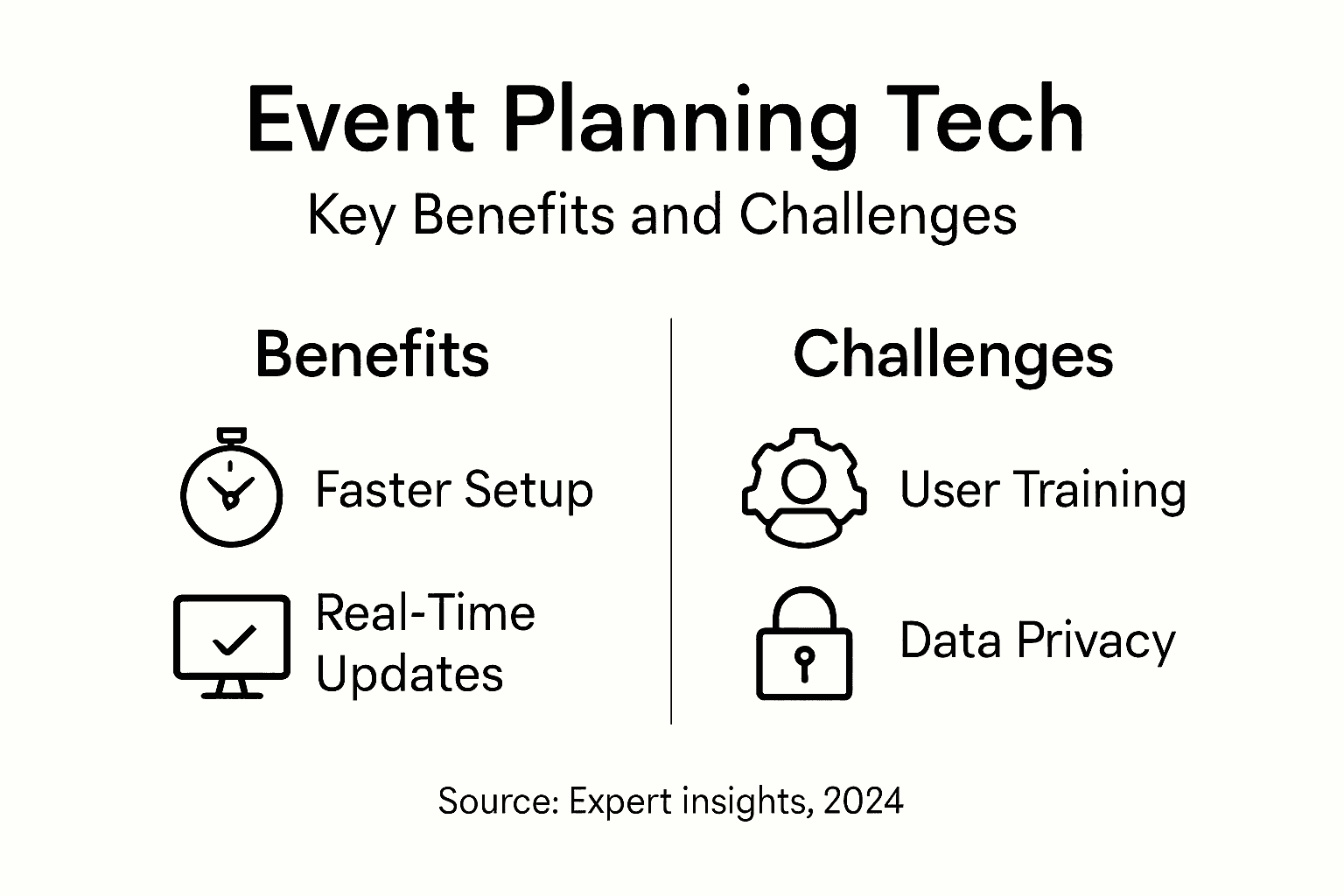
The following table summarizes how technology solutions enhance group event planning efficiency:
| Technology Feature | Planning Benefit | Business Impact |
|---|---|---|
| Real-time Collaboration | Instant schedule updates | Reduces coordination time |
| AI-based Conflict Detection | Flags overlaps proactively | Lowers event failure risk |
| Automated Communications | Streamlines information sharing | Improves attendee response |
| Analytics and Reporting | Tracks engagement and resources | Informs future events |
Pro tip: Select technology solutions that offer API integration and cross-platform compatibility to ensure seamless communication between different planning and scheduling tools.
Common Mistakes and How to Avoid Them
Group event planning is fraught with potential pitfalls that can derail even the most meticulously designed gatherings. Scheduling error examples reveal recurring patterns of miscommunication, poor time management, and inadequate contingency planning. Event coordinators must develop keen awareness of these common mistakes to proactively prevent disruptions and maintain smooth operational flow.
The most critical errors typically emerge from communication breakdowns and insufficient stakeholder alignment. Common missteps include failing to establish clear expectations, neglecting participant availability constraints, and overlooking individual role-specific requirements. Overcommitting resources, underestimating preparation time, and creating inflexible scheduling frameworks can transform potentially successful events into logistical nightmares. Successful planners recognize that flexibility and comprehensive communication are not optional luxuries but essential strategic imperatives.
Technology and human factors intersect to create complex planning challenges. Relying exclusively on digital tools without personal verification, assuming universal participant availability, and neglecting potential conflict zones can introduce significant planning risks. Advanced event coordination demands a nuanced approach that balances technological efficiency with human adaptability, recognizing that no single solution fits every scenario. Proactive planners continuously refine their strategies, maintain open communication channels, and build redundancy into their planning frameworks.
Pro tip: Create a comprehensive pre-event communication matrix that explicitly outlines expectations, clarifies roles, and establishes multiple communication channels to mitigate potential misunderstandings.
Simplify Complex Group Event Planning with WhenNOT
Group event planning challenges like managing conflicting calendars, overcoming scheduling conflicts, and coordinating multi-day events demand smart, flexible solutions. The article highlights how difficult it is to align diverse participant schedules while maintaining clear communication and avoiding common mistakes like double bookings and resource conflicts. WhenNOT addresses these pain points by using an innovative inverse scheduling approach that directly targets unavailable dates, making it easier to find the best times for everyone without endless back-and-forth.
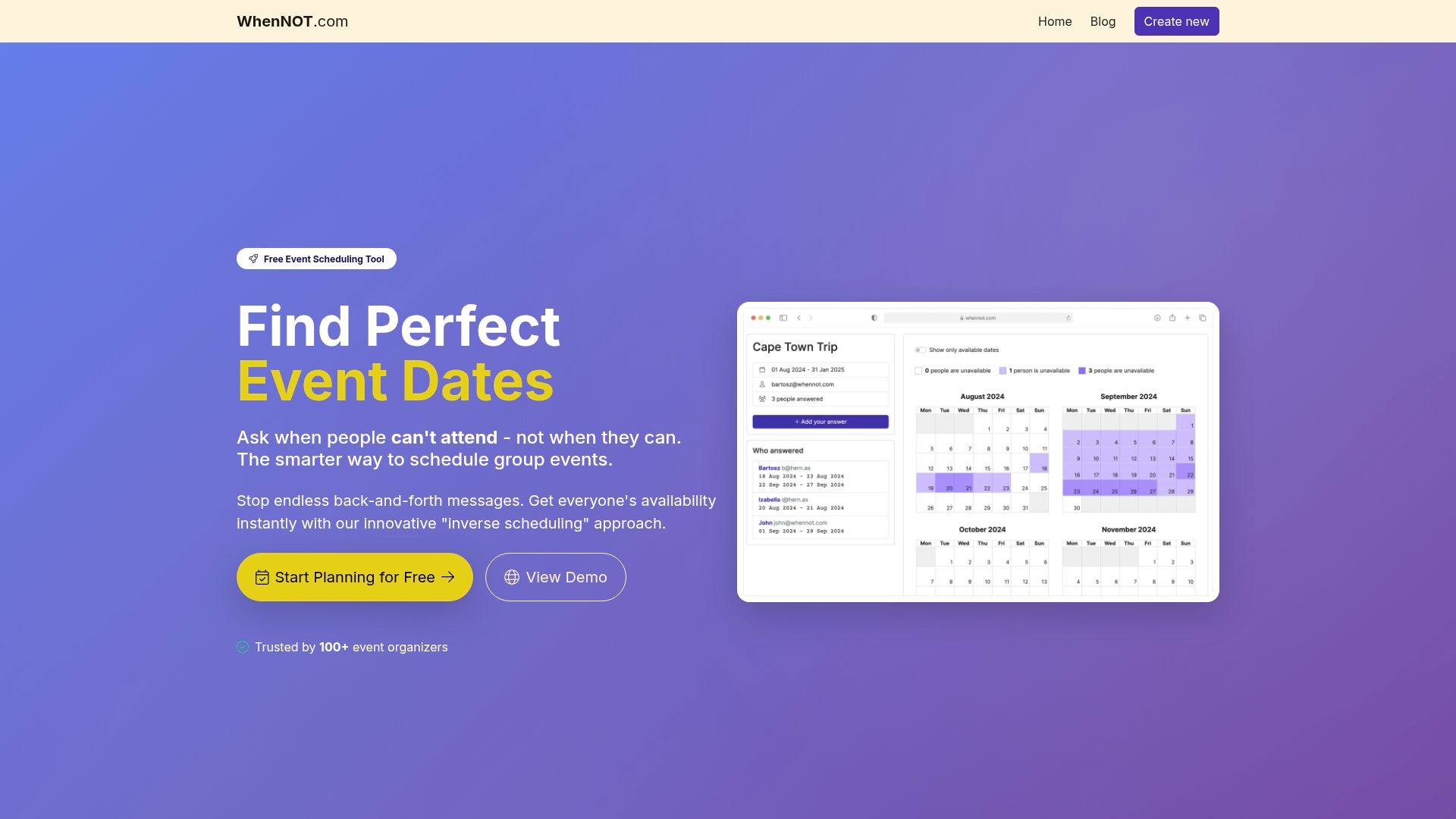
Discover how you can streamline group coordination and reduce event planning stress with WhenNOT. Whether you are organizing a corporate retreat, family gathering, or multi-day workshop, WhenNOT lets you create an event, share a unique link, and instantly view everyone’s unavailable dates in one place. Take control of your scheduling challenges now and experience a free, user-friendly alternative designed to unlock effortless group event planning. Get started today at WhenNOT and turn complicated coordination into simple success.
Frequently Asked Questions
What are the common scheduling conflicts in group event planning?
Scheduling conflicts in group event planning typically include double bookings, overlapping events, resource allocation challenges, and individual availability misalignments. These issues can significantly impact team productivity and overall event success.
How can technology improve group event planning efficiency?
Technology improves group event planning efficiency by offering real-time collaboration, AI-based conflict detection, automated communications, and analytics for tracking engagement and resources, which helps streamline the planning process and reduce errors.
What strategies can help manage participant fatigue during multi-day events?
To manage participant fatigue during multi-day events, it is essential to design session variations, include networking opportunities, and incorporate strategic breaks into the event schedule to maintain attendee interest and energy.
What are some common mistakes to avoid in group event planning?
Common mistakes in group event planning include communication breakdowns, neglecting stakeholder availability, underestimating preparation time, and failing to build flexibility into the schedule. Proactive communication and proper planning can help mitigate these pitfalls.
Recommended
- Group Event Coordination Process: Streamlining Planning for Busy Schedules - WhenNOT Blog
- Efficient Event Coordination: Step-by-Step Guide for Success - WhenNOT Blog
- Group Event Organization Process: Complete Guide - WhenNOT Blog
- Ultimate Event Planning Checklist for Successful Gatherings - WhenNOT Blog