
Nearly 60 percent of American companies struggle to keep corporate retreat schedules on track as participant needs change unexpectedly. For event coordinators juggling busy calendars and diverse teams, scheduling flexibility has become more than just a convenience. Understanding how modern, adaptable frameworks work makes it possible to achieve smoother planning, higher engagement, and stronger outcomes at every American team-building event.
Table of Contents
- Defining Scheduling Flexibility For Events
- Types Of Scheduling Flexibility In Group Planning
- How Flexible Scheduling Works In Practice
- Benefits Of Adopting Flexible Scheduling
- Challenges And Risks Of Inflexible Scheduling
- Comparing Flexible And Traditional Scheduling Tools
Key Takeaways
| Point | Details |
|---|---|
| Scheduling Flexibility | It accommodates diverse participant needs by allowing adaptations in time, location, and participation modes, enhancing accessibility and engagement. |
| Flexible Scheduling Models | Different models (fixed, mixed, fully flexible) cater to varying levels of participant control and adaptability, crucial for effective group planning. |
| Technological Advancements | Modern scheduling tools offer real-time updates and multiple participation modes, significantly improving planning efficiency and participant inclusion. |
| Benefits of Flexibility | Adopting flexible scheduling leads to higher engagement and satisfaction rates while reducing logistical complications and participant anxiety. |
Defining Scheduling Flexibility for Events
Scheduling flexibility represents a strategic approach to event planning that accommodates diverse participant needs and circumstances. At its core, scheduling flexibility means creating adaptable frameworks that allow modifications to time, location, format, and participation modes. This concept goes beyond simple date adjustments, encompassing a holistic view of event design that prioritizes participant accessibility and engagement.
Research highlights scheduling flexibility as a multidimensional strategy that addresses complex logistical challenges. Innovative event scheduling approaches emphasize the importance of designing systems that can dynamically respond to changing participant requirements. This means developing event structures that can seamlessly adapt to variations in availability, technological constraints, and individual participant preferences.
Effective scheduling flexibility involves several key components. These include dynamic date ranges, multiple participation options (in-person and virtual), flexible time slots, contingency planning, and mechanisms for easy rescheduling. Event coordinators must consider factors like geographical distribution of participants, potential scheduling conflicts, and technological infrastructure that supports diverse engagement methods. The goal is creating an environment where participants feel accommodated and events can proceed smoothly despite potential logistical complications.
Pro tip: Always build a 25% buffer into your event scheduling timeline to account for unexpected participant availability shifts and potential rescheduling needs.
Types of Scheduling Flexibility in Group Planning
Group event planning encompasses multiple distinct types of scheduling flexibility, each designed to address unique organizational and participant needs. Scheduling dimensions vary significantly across different event contexts, ranging from rigid time structures to highly adaptable frameworks that accommodate diverse participant requirements.
Research identifies three primary scheduling flexibility models: fixed scheduling, mixed scheduling, and fully flexible scheduling. Fixed scheduling maintains predetermined time slots with minimal adaptation, while mixed scheduling combines structured and dynamic elements. Fully flexible scheduling represents the most adaptive approach, allowing participants maximum autonomy in determining event times and participation modes. Scheduling flexibility dimensions typically include variations in deadlines, participation modalities (in-person, virtual, or hybrid), assessment formats, and correspondence methods.
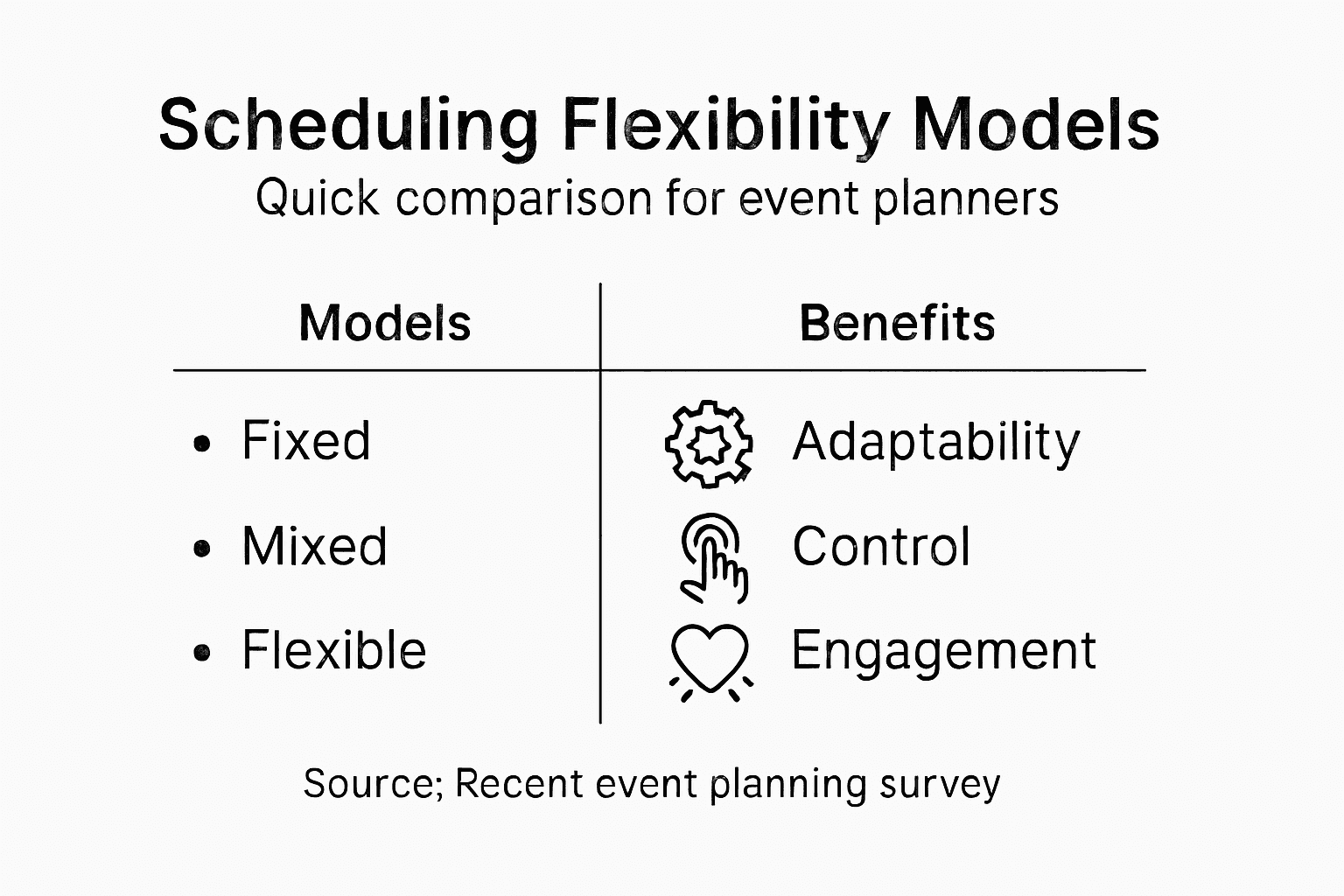
Here's a summary of common scheduling flexibility models and their characteristics:
| Scheduling Model | Adaptability Level | Participant Control | Ideal Use Case |
|---|---|---|---|
| Fixed Scheduling | Low | Minimal | Large conferences, exams |
| Mixed Scheduling | Moderate | Shared | Trainings, group workshops |
| Fully Flexible Scheduling | High | Maximum | Team projects, webinars |
The practical implementation of scheduling flexibility requires careful consideration of several key factors. Event coordinators must evaluate participant geographic distribution, technological capabilities, individual scheduling constraints, and desired engagement levels. Successful flexible scheduling strategies create frameworks that balance organizational requirements with participant convenience, ensuring high engagement and minimal logistical friction. This might involve offering multiple participation channels, providing clear communication about scheduling options, and developing robust contingency plans for potential conflicts.
Pro tip: Create a flexible scheduling matrix that maps potential participation modes and time ranges before finalizing your event framework to maximize participant accessibility.
How Flexible Scheduling Works in Practice
Flexible scheduling transforms event planning by creating dynamic frameworks that prioritize participant needs and organizational goals. Practical scheduling strategies enable on-demand access and short-term adjustments, allowing event coordinators to optimize participant engagement through more responsive planning approaches.
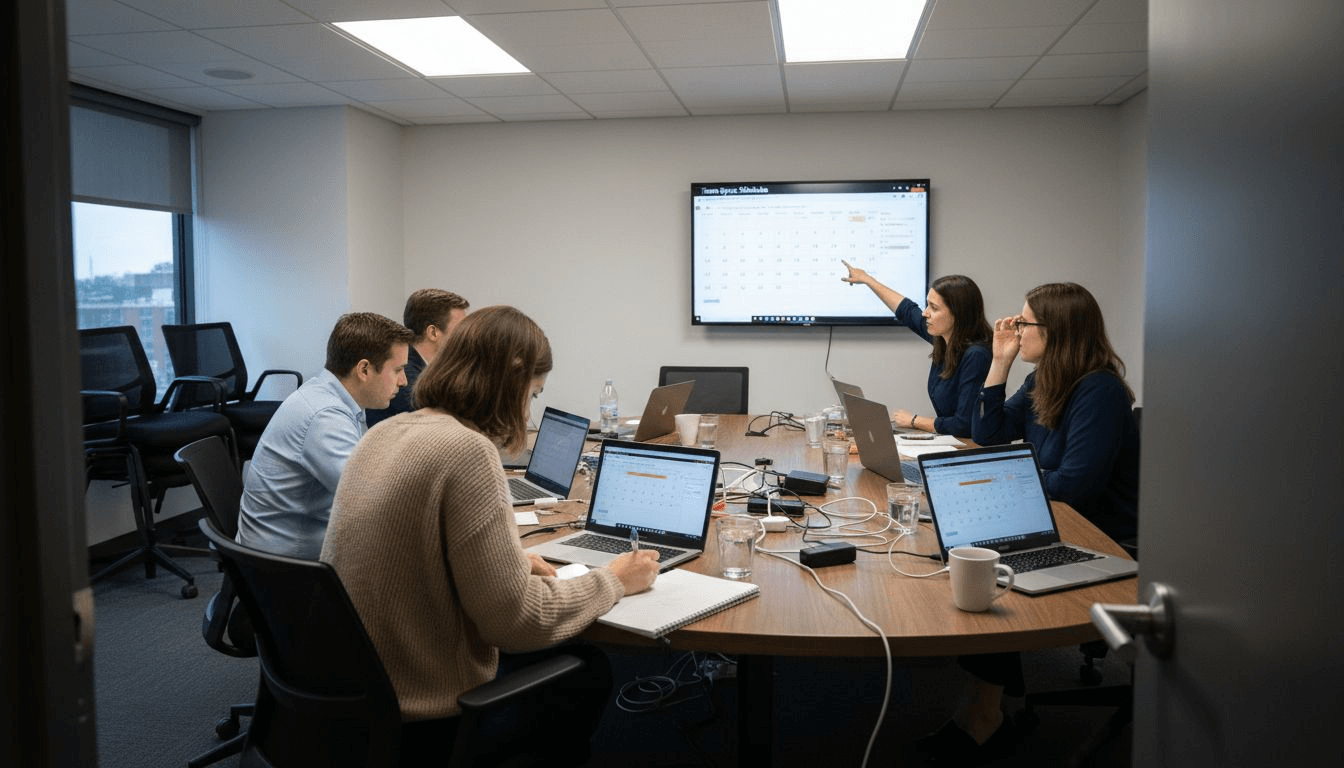
In practice, flexible scheduling involves several key implementation techniques. Collaborative scheduling methods typically incorporate adaptive elements like multiple attendance modalities, negotiable deadlines, and customizable participation options. This might include offering virtual and in-person attendance simultaneously, creating sliding time windows for participation, and developing assessment formats that accommodate different participant constraints.
Successful flexible scheduling requires sophisticated communication and technology infrastructure. Event organizers must develop clear protocols for communicating scheduling options, create user-friendly platforms that support multiple participation modes, and build robust tracking systems that can manage complex scheduling variations. This approach demands technological agility, advanced communication strategies, and a willingness to move beyond traditional rigid event frameworks.
Pro tip: Design a preliminary scheduling survey that captures participant constraints and preferences before finalizing your event framework to maximize potential attendance and engagement.
Benefits of Adopting Flexible Scheduling
Flexible scheduling provides organizations with transformative advantages that extend far beyond traditional event planning approaches. Organizational benefits of flexible scheduling demonstrate significant improvements in participant engagement, accessibility, and overall event effectiveness by creating more inclusive and adaptive frameworks.
The primary benefits of flexible scheduling encompass multiple dimensions of organizational performance. Participant engagement increases dramatically when individuals can customize their involvement, reducing stress and increasing motivation. These approaches support diverse populations by accommodating different time constraints, learning styles, and personal circumstances. For instance, scheduling approaches improve participant satisfaction by allowing customized engagement methods that respect individual preferences and capabilities.
Moreover, flexible scheduling generates broader systemic advantages for organizations. By removing rigid time constraints, institutions can attract more diverse participants, improve retention rates, and create more inclusive event environments. This approach supports non-traditional participants, reduces barriers to engagement, and demonstrates organizational commitment to accessibility. The strategic implementation of flexible scheduling signals an adaptive, participant-centered approach that values individual needs while maintaining organizational objectives.
Pro tip: Conduct a pre-event participant preference survey to identify potential scheduling constraints and design your flexible framework around those specific needs.
Challenges and Risks of Inflexible Scheduling
Inflexible scheduling represents a significant organizational risk that can undermine event effectiveness and participant engagement. Scheduling challenges create substantial barriers by imposing rigid structures that neglect individual participant circumstances and diverse needs.
The primary risks of inflexible scheduling manifest across multiple dimensions of organizational performance. These challenges include heightened participant stress, reduced engagement, and limited capacity to accommodate diverse scheduling requirements. Systematic scheduling reviews highlight how rigid approaches lead to inefficient resource utilization, increased administrative burden, and potential exclusion of participants with complex scheduling constraints.
Furthermore, inflexible scheduling can create significant organizational and individual challenges. Participants facing strict deadlines and uniform participation models often experience increased anxiety, reduced motivation, and decreased overall satisfaction. The inability to adapt to individual circumstances can result in missed opportunities, lower participation rates, and diminished event outcomes. Organizations that maintain rigid scheduling frameworks risk alienating diverse participant groups and reducing the overall effectiveness of their events.
Pro tip: Develop a preliminary scheduling assessment that maps potential participant constraints and builds adaptability into your initial event framework.
Comparing Flexible and Traditional Scheduling Tools
Scheduling technologies have evolved dramatically, creating significant distinctions between traditional and flexible tools. Automated scheduling approaches demonstrate remarkable improvements in planning efficiency, resource allocation, and participant accommodation compared to manual methods.
Traditional scheduling tools typically rely on static spreadsheets, manual input, and rigid time frameworks that limit adaptability. In contrast, modern flexible scheduling solutions offer dynamic features like real-time updates, multiple participation modes, and intelligent conflict resolution. Cloud-based scheduling technologies enable unprecedented levels of accessibility, allowing event coordinators to manage complex scheduling requirements with significantly reduced administrative overhead.
The following table highlights key differences between traditional and flexible scheduling tools:
| Feature | Traditional Tools | Flexible Scheduling Tools | Impact on Planning |
|---|---|---|---|
| Data Entry | Manual | Automated & cloud-based | Faster updates |
| Participation Modes | Single (usually in-person) | Multiple (virtual, hybrid) | Higher participant engagement |
| Conflict Management | Limited | Intelligent resolutions | Fewer scheduling blockers |
| Accessibility | Restricted by location | Available anywhere | Broader reach & inclusion |
The key differentiators between traditional and flexible scheduling tools extend beyond technological capabilities. Flexible tools prioritize participant experience by providing customizable engagement options, comprehensive communication channels, and adaptive planning mechanisms. These advanced platforms can automatically suggest optimal scheduling windows, integrate multiple time zones, and offer seamless conflict management that traditional tools cannot support. The result is a more inclusive, efficient, and participant-centered approach to event planning that reduces friction and increases overall engagement.
Pro tip: Evaluate potential scheduling tools by testing their conflict resolution and participant accommodation features before full implementation.
Enhance Your Event Planning with Flexible Scheduling Solutions
Struggling with coordinating multiple dates and participant availability can feel overwhelming and stressful. As the article "Scheduling Flexibility: Unlocking Efficient Event Planning" highlights, adopting a flexible scheduling approach that allows dynamic date ranges and accommodates different participation modes is key to maximizing engagement and minimizing scheduling conflicts. If you are looking for a practical way to implement these strategies and overcome the challenges of traditional rigid event planning, WhenNOT offers a simple yet powerful solution.
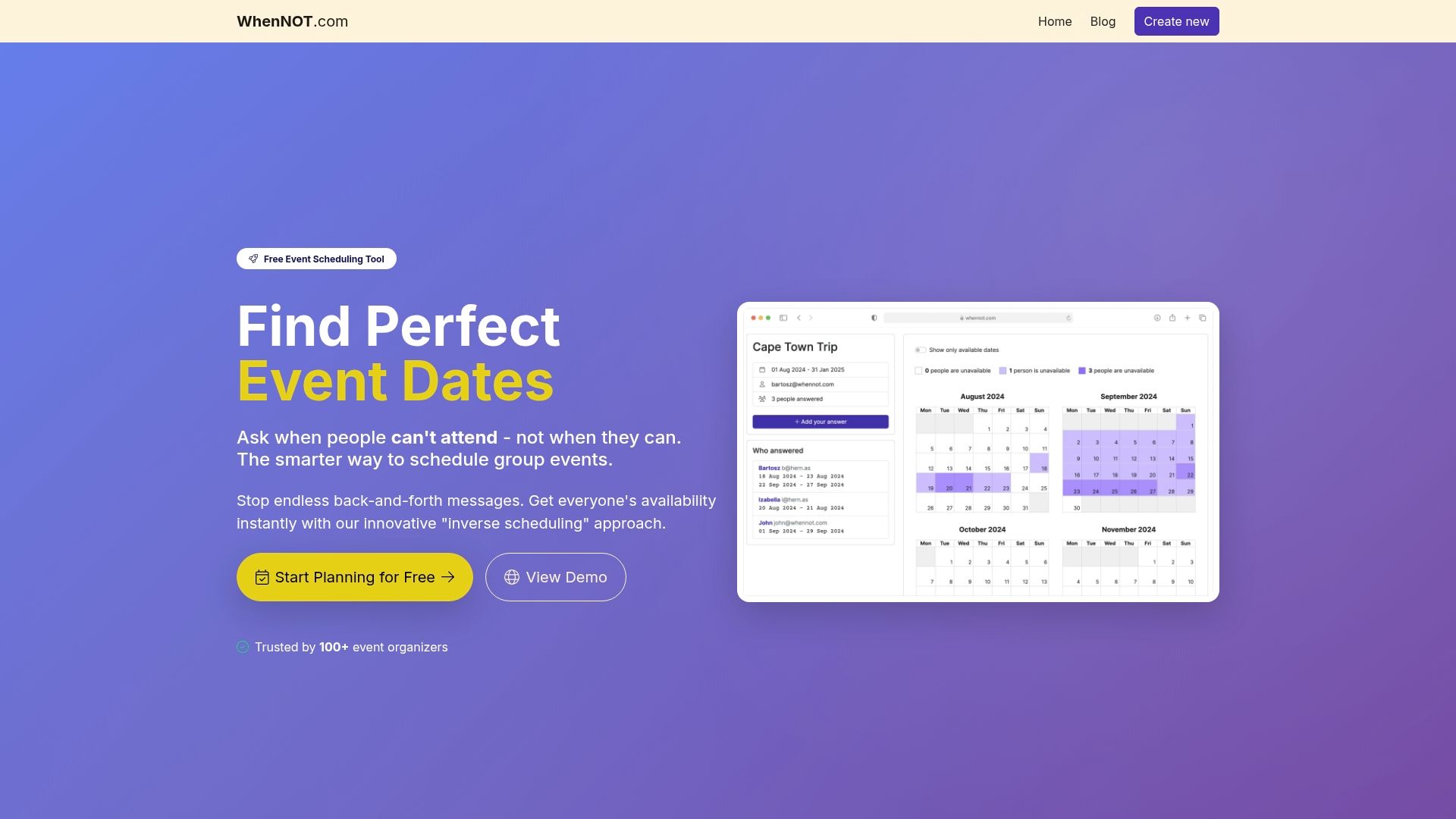
Experience the advantage of our innovative inverse scheduling method where participants indicate when they are not available instead of when they are free. This unique approach significantly reduces the back-and-forth communication that often stalls the planning process. Whether you are organizing a corporate retreat, group travel, or a social gathering, our tool provides real-time visualization of everyone’s busy days to quickly find the perfect fit for your event. Don’t let inflexible scheduling limit your success. Start streamlining your group event planning today with WhenNOT and see how effortless scheduling flexibility can be.
Ready to simplify your event planning process and unlock efficient scheduling flexibility? Visit WhenNOT now and create your event with ease.
Frequently Asked Questions
What is scheduling flexibility in event planning?
Scheduling flexibility refers to an approach in event planning that accommodates diverse participant needs and circumstances by allowing adjustments to time, location, format, and participation modes.
What are the different types of scheduling flexibility models?
There are three primary models: fixed scheduling (low adaptability), mixed scheduling (moderate adaptability), and fully flexible scheduling (high adaptability). Each model offers varying levels of participant control and is suited for different event types.
How does flexible scheduling benefit participant engagement?
Flexible scheduling increases participant engagement by allowing individuals to customize their involvement based on their preferences, reducing stress, and accommodating different time constraints and learning styles.
What are the risks associated with inflexible scheduling?
Inflexible scheduling can lead to increased participant stress, reduced engagement, and inefficiencies in resource utilization. It may also alienate participants with complex scheduling constraints, impacting overall event effectiveness.