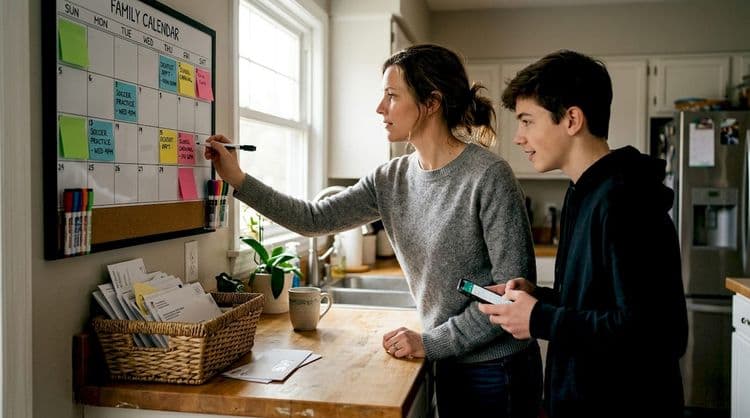
Planning family gatherings often feels like solving a puzzle with too many moving pieces. Between work schedules, school activities, sports commitments, and personal obligations, finding a date that works for everyone can drain your energy before the event even begins. This guide delivers practical strategies to streamline scheduling, accommodate diverse availability, and reclaim the joy in family time. You'll discover how digital tools, early planning, flexible buffers, and smart delegation transform chaotic coordination into smooth, stress-free experiences that let you focus on what matters most: connecting with loved ones.
Table of Contents
- Key takeaways
- Setting up your family command center: tools and essentials
- Preparing for diverse family schedules: planning and polling methods
- Executing your family event plan: scheduling, delegating, and follow-up
- Troubleshooting and adapting your plan: common challenges and how to handle them
- Plan your family events effortlessly with WhenNOT
- Frequently asked questions
Key Takeaways
| Point | Details |
|---|---|
| Calendar transparency boosts efficiency | Using a shared master calendar and digital tools reduces planning time and increases attendance. |
| Inverse scheduling reduces conflicts | Asking when people are not available typically requires less mental effort and yields faster, more compatible date options. |
| Family planning meetings | Regular meetings surface scheduling conflicts early and help assign roles so everyone knows what to do. |
| Start with calendar first | Begin by using the calendar feature alone for a month to build the habit before adding meal planning and tasks. |
| Simplicity over features | Choose tools that are simple and accessible for all generations rather than feature heavy apps. |
Setting up your family command center: tools and essentials
A Family Command Center serves as your centralized hub for schedules, RSVPs, meal plans, and communications. Think of it as mission control for your household, where everyone can see what's happening and when. Establishing a shared master calendar with digital tools creates transparency and reduces the mental load of remembering every commitment.
The right tools make all the difference. Google Calendar offers color coding for different family members and automatic reminders. Cozi provides grocery lists and meal planning alongside scheduling features. Free event scheduling platforms simplify availability gathering without requiring everyone to create accounts. Research shows digital tools boost attendance by 20-25% while cutting planning time nearly in half.
Comparing your options helps you choose what fits your family's needs:
| Tool | Best For | Key Features | Cost | Learning Curve |
|---|---|---|---|---|
| Google Calendar | Tech-savvy families | Color coding, reminders, sharing | Free | Low |
| Cozi | Meal planning integration | Shopping lists, recipes, calendar | Free/Premium | Low |
| WhenNOT | Multi-day events | Inverse scheduling, no signup | Free | Very Low |
| FamCal | Visual organization | Photo sharing, task lists | Free/Premium | Medium |
| TimeTree | Couples and families | Chat, shared notes, reminders | Free | Low |
Setting up your command center takes just a few steps:
- Choose one primary calendar platform everyone agrees to check regularly
- Add all family members with unique colors or labels for easy identification
- Input recurring commitments like work hours, school schedules, and sports practices
- Create separate calendars for meal planning, household tasks, and special events
- Enable notifications so everyone receives updates about changes or new additions
- Schedule a weekly review time to keep information current and accurate
Pro Tip: Start with just the calendar feature for the first month. Once everyone develops the habit of checking it daily, gradually add meal planning, task lists, and other features. Overwhelming your family with too many tools at once creates resistance instead of buy-in.
The beauty of a well-organized command center lies in its visibility. When everyone can see the full picture of family commitments, they understand why certain dates work better than others. This transparency naturally reduces conflicts and helps family members make informed decisions about adding new activities. Comparing scheduling tools reveals that simplicity and accessibility matter more than fancy features, especially when coordinating across generations with varying tech comfort levels.
Preparing for diverse family schedules: planning and polling methods
Gathering availability from busy family members requires strategic approaches that respect everyone's time. Traditional methods ask when people are free, forcing them to review entire calendars and list multiple available dates. Inverse scheduling flips this by asking when people are NOT available, which typically requires less mental effort and produces faster responses. This polling approach reduces conflicts by quickly revealing the few dates that work for everyone.
Family meetings provide structured opportunities to identify scheduling challenges before they derail your plans:
- Send a meeting agenda 48 hours in advance listing topics like upcoming events, known conflicts, and decision points
- Gather input from all stakeholders, including children old enough to have their own commitments
- Review shared calendars together, highlighting potential problem dates with overlapping activities
- Discuss flexible options like splitting events across multiple days or adjusting start times
- Assign preliminary roles and responsibilities so everyone knows their contribution
- Document decisions and share meeting notes within 24 hours for reference
Building flexibility into your timeline prevents minor hiccups from becoming major disasters. Allowing 24 to 48 hour change windows acknowledges that life happens and rigid plans often backfire. These buffers give family members breathing room to adjust without guilt or stress.
Diverse family structures present unique coordination challenges:
- Blended families juggling multiple households and custody schedules
- Interfaith families balancing different religious holidays and observances
- Multi-generational families accommodating varied energy levels and mobility needs
- Geographically dispersed families coordinating across time zones
- Families with special needs members requiring specific accommodations
Experts emphasize the importance of flexibility in complex family dynamics:
Planning committees of 2 to 3 people make decisions faster and communicate more effectively than large groups. Edge cases like blended families benefit from maintaining separate calendars for each household tradition while identifying shared dates that honor everyone's commitments.
Pro Tip: Designate scheduling leads for different family branches or subgroups. One person coordinates the maternal side, another handles the paternal side, and they collaborate on the final schedule. This distributed approach prevents one organizer from becoming overwhelmed and improves communication across family networks.
Successful polling requires clear communication about date ranges and constraints. Instead of asking for general availability over several months, narrow the window to specific weekends or holiday periods. Simplifying the decision space increases response rates and speeds up consensus building. When family members see only five potential weekends instead of twenty, they engage more readily with the process.
Executing your family event plan: scheduling, delegating, and follow-up
Transforming availability data into a concrete schedule requires methodical time blocking. Start with non-negotiable events like travel arrival times, religious services, or venue reservations, then build flexible activities around these anchors. This approach ensures critical elements receive priority while leaving room for spontaneity.
Creating your detailed schedule:
- Block travel time with 15 to 20% padding for traffic or delays
- Schedule meals at consistent times to maintain routine and energy levels
- Add rest periods, especially important for young children and elderly family members
- Insert main activities with clear start and end times
- Build in unstructured free time for casual conversation and relaxation
- Mark setup and cleanup windows with assigned helpers
- Include technology checks for any presentations or video calls
Delegation transforms overwhelming tasks into manageable pieces while giving family members ownership in the event's success:
- Food coordinators handle meal planning, grocery shopping, and kitchen management
- Activity directors organize games, entertainment, and age-appropriate programming
- Technology managers ensure WiFi works, set up video calls, and handle music playlists
- Cleanup crews tackle dishes, trash removal, and post-event tidying
- Communications leads send reminders, collect RSVPs, and answer questions
- Childcare coordinators arrange supervision and activities for younger attendees
A sample schedule with built-in buffers demonstrates how structure and flexibility coexist:
| Time | Activity | Buffer | Assigned To |
|---|---|---|---|
| 10:00 AM | Guest arrival | 10:00-10:30 AM | Hosts |
| 11:00 AM | Brunch | 15 min setup | Food team |
| 1:00 PM | Free time | Open | Everyone |
| 3:00 PM | Group activity | 20 min setup | Activity director |
| 5:00 PM | Dinner prep | 30 min buffer | Kitchen crew |
| 6:30 PM | Dinner | Flexible end | Everyone |
| 8:00 PM | Evening social | Open end | Hosts |
Weekly Sunday planning sessions keep everyone aligned as the event approaches. These 20 to 30 minute check-ins review task completion, identify emerging conflicts, and adjust assignments as needed. Regular touchpoints prevent last-minute scrambling and ensure nothing falls through the cracks.

Pro Tip: Anchor free time around your fixed schedule items rather than trying to plan every minute. Knowing that dinner happens at 6:30 PM gives people freedom to nap, play games, or chat without watching the clock. This balance between structure and flexibility reduces stress for both organizers and attendees.
Effective delegation requires matching tasks to people's strengths and availability. The family member who loves cooking should coordinate meals, while the tech-savvy teenager handles digital logistics. Sample time management plans show that distributed responsibility increases participation and reduces organizer burnout.
Follow-up communications maintain momentum between planning sessions. Quick text updates about completed tasks, gentle reminders about upcoming deadlines, and appreciation for contributions keep everyone engaged. Group calendar tips emphasize that visibility and acknowledgment motivate continued participation throughout the planning process.
Troubleshooting and adapting your plan: common challenges and how to handle them
Even well-crafted plans encounter obstacles. Last-minute cancellations, technology failures, and conflicting planning styles test your flexibility and problem-solving skills. Anticipating these challenges and preparing adaptive strategies keeps stress levels manageable when complications arise.
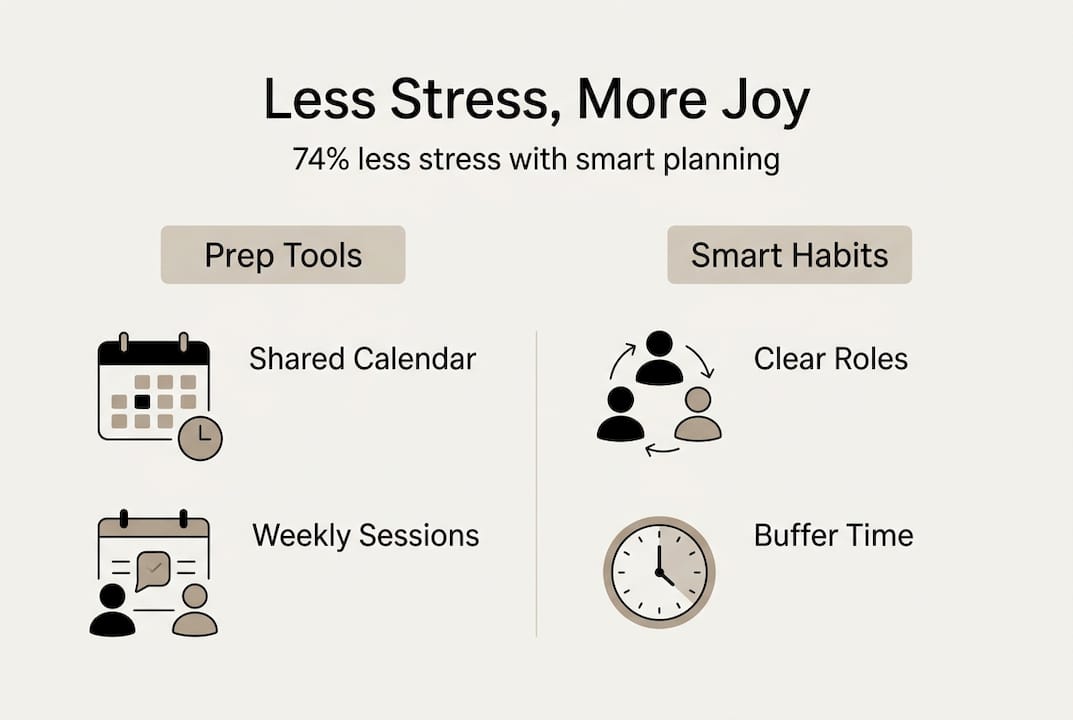
Common planning obstacles include unexpected work commitments that force schedule changes, family members who prefer spontaneity clashing with detailed planners, dietary restrictions discovered late in the process, weather disruptions for outdoor activities, and technology glitches during virtual participation attempts. Each challenge requires specific solutions rather than generic advice.
Adaptive strategies that maintain flexibility:
- Maintain 15 to 20% buffer time in all schedule blocks for absorption of delays
- Communicate any changes with 24 to 48 hour advance notice whenever possible
- Keep backup indoor activities ready for weather-dependent outdoor plans
- Stock extra non-perishable food items for unexpected dietary needs or extra guests
- Test all technology connections 24 hours before events requiring video calls
- Designate a point person for day-of questions and last-minute coordination
- Simplify rather than elaborate when stress levels rise during execution
Expert perspectives reinforce the value of realistic expectations:
Focus on quality interactions over perfect execution. Family events succeed when people feel connected and valued, not when every detail matches Pinterest-worthy standards. Delegate generously and accept that different approaches to tasks are valid as long as they get done.
Pro Tip: Create a backup box with paper plates, disposable utensils, simple games, and non-perishable snacks. When something goes wrong with your primary plan, this emergency kit provides instant alternatives without additional stress or shopping trips.
Conflicting planning styles often create tension between family members who want detailed itineraries and those who prefer going with the flow. Bridge this gap by providing a skeleton schedule with fixed anchor points but leaving large blocks of unstructured time. This compromise gives planners the security of knowing key events are set while offering spontaneous family members freedom within the framework.
Mental load sharing between caregivers and planners prevents burnout. When one person carries all the scheduling, communication, and decision-making responsibilities, resentment builds and quality suffers. Rotating leadership roles for different events or dividing responsibilities by category distributes the cognitive burden more equitably.
Technology glitches deserve special attention since many families now include remote participants. Have phone numbers ready as backup communication channels when video platforms fail. Record important moments for family members who can't attend in real time. Simplifying event planning means accepting that hybrid events require extra preparation but enable broader participation.
Regular communication throughout the planning process builds trust and reduces anxiety. When family members understand the reasoning behind scheduling decisions and feel heard in the process, they respond more gracefully to necessary changes. Transparency about challenges and collaborative problem-solving strengthen family bonds while improving event outcomes.
Plan your family events effortlessly with WhenNOT
You've learned the strategies for efficient family event planning. Now put them into action with tools designed specifically for coordinating diverse schedules. WhenNOT simplifies the entire process through inverse scheduling that asks when people are busy rather than free, dramatically reducing the back-and-forth typically required for finding common availability.
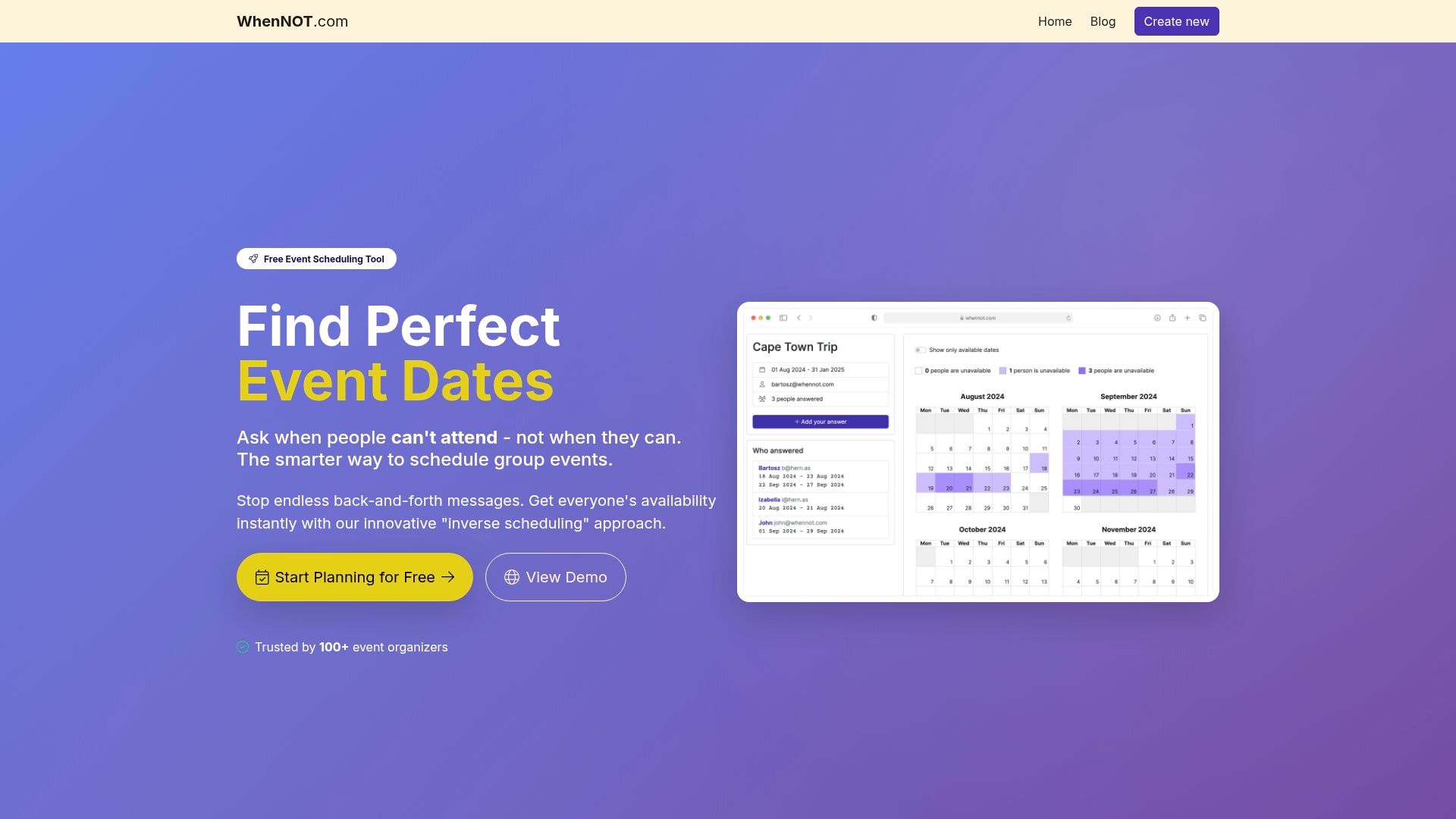
The platform's no-signup approach means even your least tech-savvy relatives can participate by simply clicking a link and marking their unavailable dates. Visual displays instantly reveal optimal dates that work for everyone, cutting planning time by up to 40% compared to traditional methods. Whether you're coordinating a weekend family gathering or a multi-day reunion, WhenNOT handles the complexity while you focus on creating memorable experiences.
Explore research-backed strategies and additional resources on the WhenNOT blog. Start your next family event with confidence by visiting WhenNOT today and discover how simple scheduling can be when you have the right tools supporting your efforts.
Frequently asked questions
How far in advance should I start planning a family event?
Begin planning large family events 6 to 12 months ahead to secure dates that accommodate most schedules. Smaller gatherings like birthday parties or casual dinners need only 4 to 6 weeks lead time. Early polling for availability increases attendance rates and reduces scheduling conflicts.
What digital tools work best for coordinating family schedules?
Google Calendar, Cozi, and free platforms like WhenNOT offer shared calendars and polling features that simplify coordination. No-signup tools remove barriers for family members uncomfortable with technology. Choose platforms emphasizing simplicity and accessibility over complex features.
How can I handle last-minute changes without stress?
Build 15 to 20% buffer time into your schedule and allow 24 to 48 hour change windows for adjustments. Communicate updates promptly through your shared calendar and backup communication channels. Keep simple backup plans ready for key activities and meals.
What are best practices for planning with blended or interfaith families?
Maintain separate calendars for different household traditions and custody schedules while identifying shared dates that honor everyone's commitments. Schedule family meetings with clear agendas to surface conflicts early. Delegate planning to small committees of 2 to 3 people for faster decisions and better communication across family networks.