
Nearly 60 percent of american teams report missed deadlines due to poor scheduling workflow. In collaborative environments, even a small misstep in planning can set projects back and frustrate team members. A clear understanding of scheduling workflow helps teams map out responsibilities, avoid conflicts, and stay on track with shared goals. This article offers insights and practical strategies to help every american team create an organized, flexible approach to planning their work.
Table of Contents
- Defining Scheduling Workflow For Teams
- Types Of Team Scheduling Approaches
- How Inverse Scheduling Simplifies Planning
- Real-World Uses For Team Scheduling Tools
- Risks, Costs, And Common Mistakes To Avoid
Key Takeaways
| Point | Details |
|---|---|
| Effective scheduling workflows are essential for team productivity | Clear objectives, defined responsibilities, and realistic timelines are crucial components of an efficient scheduling process. |
| Modern scheduling approaches prioritize team constraints | Techniques such as inverse scheduling focus on marking unavailable times, reducing conflicts, and enhancing planning efficiency. |
| Various scheduling strategies cater to organizational needs | Different approaches—like sequential and parallel scheduling—allow teams to optimize task management based on their specific contexts. |
| Avoid common pitfalls in scheduling workflows | Teams should be mindful of overcommitting resources and ensuring flexibility to adapt to unforeseen changes. |
Defining Scheduling Workflow for Teams
A scheduling workflow represents the strategic process teams use to coordinate, plan, and execute collaborative activities within predetermined timeframes. According to the cdio.org Project Management Syllabus, effective team scheduling involves critical skills like communication, planning, and coordinated execution.
At its core, scheduling workflow encompasses several key components. Teams must first establish clear objectives, then map out potential tasks, assign responsibilities, determine realistic timelines, and create mechanisms for tracking progress.
 The biz.libretexts.org resource highlights the importance of a linear, geometric approach that allows predictable progression through project stages.
Successful scheduling workflows typically involve several strategic elements:
- Clear communication channels
- Defined project milestones
- Flexible yet structured timelines
- Individual and collective accountability
- Regular progress assessments
While traditional scheduling methods often focus on availability, modern approaches like those used by scheduling workflow tools emphasize understanding team members' constraints and potential scheduling conflicts. This shift enables more dynamic, collaborative planning that respects individual schedules while maintaining overall team productivity.
Types of Team Scheduling Approaches
Team scheduling approaches have evolved significantly, offering multiple strategies to meet diverse organizational needs. According to the apmic.org Project Scheduling Guide, advanced techniques like fast tracking, resource leveling, and crashing provide teams with flexible methodologies to manage complex project timelines.
Flexible work arrangements play a crucial role in modern scheduling approaches. The hr.cornell.edu Flexible Work Resource highlights several strategic scheduling models that enhance team productivity and staff morale. These approaches include:
- Sequential Scheduling: Linear task progression with strict dependencies
- Parallel Scheduling: Multiple tasks executed simultaneously
- Hybrid Scheduling: Combining sequential and parallel task management
- Adaptive Scheduling: Dynamic approach allowing real-time adjustments
Understanding different scheduling approaches requires recognizing their unique strengths. For instance, sequential scheduling works best for highly interdependent tasks, while parallel scheduling maximizes efficiency in independent workstreams. When exploring understanding efficient scheduling methods, teams can discover nuanced strategies that align with their specific project requirements and organizational culture.
How Inverse Scheduling Simplifies Planning
Inverse scheduling represents a revolutionary approach to team planning that fundamentally transforms traditional scheduling methods. According to research from PMC, dynamic staffing strategies can significantly enhance project management by providing more adaptive and flexible workflow solutions.
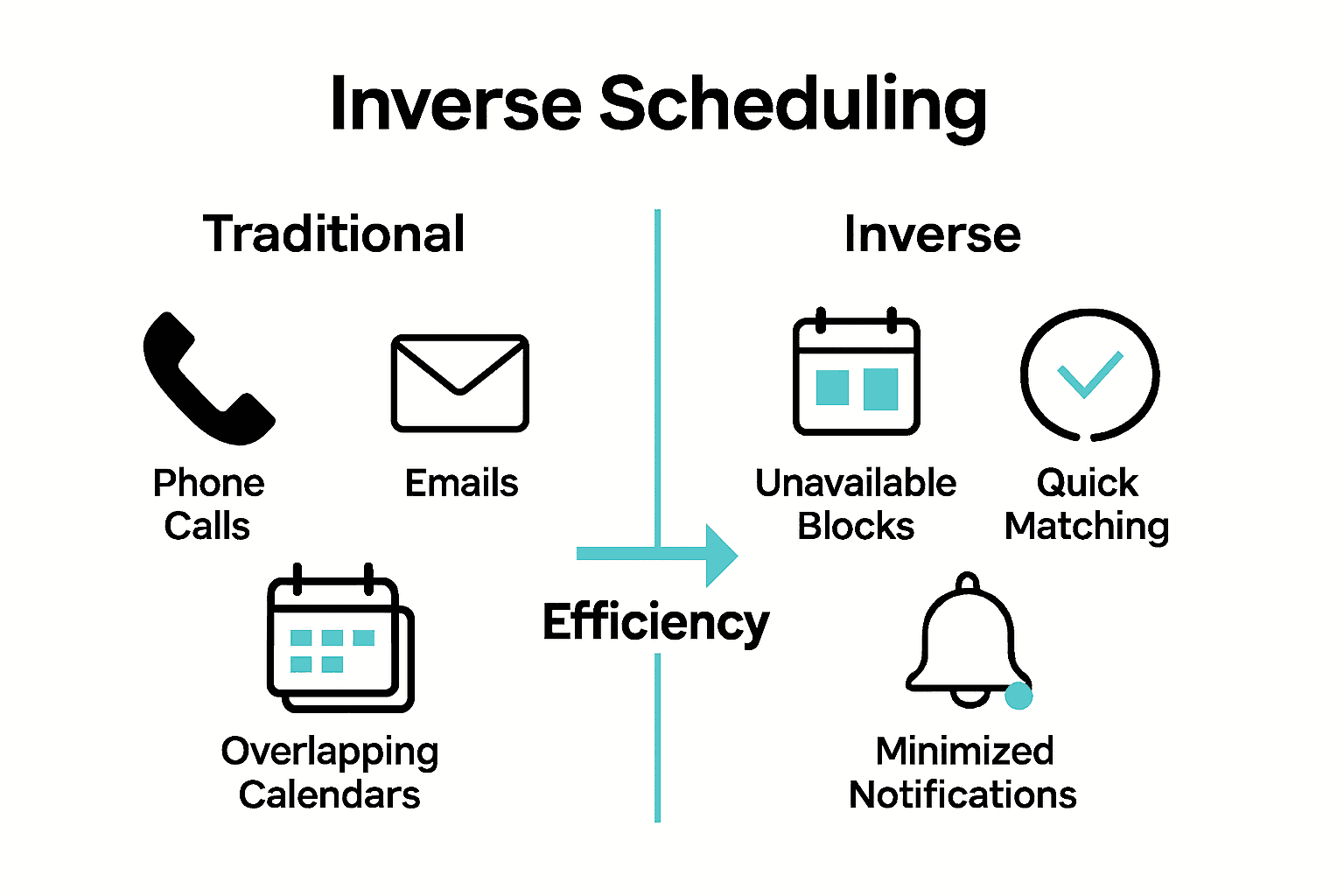
Unlike conventional scheduling techniques that focus on finding available times, inverse scheduling flips the paradigm by asking participants to mark their unavailable periods. This approach offers several critical advantages:
- Reduces communication overhead
- Minimizes scheduling conflicts
- Provides a more holistic view of team constraints
- Increases overall planning efficiency
The PMC clinical staffing research highlights how flexible scheduling strategies can streamline workflow and enhance collaboration. When exploring why effective scheduling saves time, teams discover that inverse scheduling eliminates the endless back-and-forth typically associated with traditional scheduling methods. By focusing on unavailability, teams can quickly identify optimal meeting windows, making the entire planning process more intuitive and user-friendly.
Real-World Uses for Team Scheduling Tools
Team scheduling tools have transformed collaboration across diverse industries, offering sophisticated solutions for complex coordination challenges. According to UMATechnology, modern scheduling applications now integrate predictive analytics to optimize resource management and forecast workload distribution.
Different sectors leverage scheduling tools in unique ways:
- Corporate Teams: Coordinate multi-location meetings
- Event Planners: Synchronize complex group schedules
- Educational Institutions: Manage faculty and student interactions
- Healthcare: Coordinate staff rotations and patient appointments
- Remote Workforce: Align distributed team members across time zones
The UMATechnology research on scheduling configurations emphasizes the importance of user-friendly interfaces and seamless tool integration. When exploring the role of scheduling in team productivity, organizations discover that intelligent scheduling tools can dramatically reduce administrative overhead and create more collaborative work environments. By automating complex scheduling processes, teams can focus on their core objectives rather than getting bogged down in logistical coordination.
Risks, Costs, and Common Mistakes to Avoid
Scheduling workflows are complex landscapes fraught with potential pitfalls that can derail team productivity. According to APMIC, advanced scheduling techniques like fast tracking and resource allocation can introduce significant risks, including unexpected cost escalations and potential quality compromises.
Common mistakes teams frequently encounter in scheduling workflows include:
- Overcommitting Resources: Assigning too many responsibilities
- Inadequate Buffer Time: Not accounting for unexpected delays
- Poor Communication: Failing to synchronize team expectations
- Ignoring Individual Constraints: Overlooking personal scheduling limitations
- Rigid Planning: Creating inflexible schedules that cannot adapt
Research from PMC highlights the challenges of dynamic staffing, emphasizing that misalignment between planned and actual project execution can severely impact team performance. When understanding the role of scheduling tools, organizations must recognize that successful scheduling is not just about creating a timeline, but about building a flexible, responsive framework that can accommodate real-world complexities and unexpected changes.
Simplify Your Team's Scheduling Workflow Today
Struggling with complex scheduling workflows that involve endless back-and-forth just to find the right meeting times? This article highlights key challenges like poor communication, ignoring individual constraints, and inflexible planning that often lead to costly delays and frustration. If your team is seeking a way to reduce scheduling conflicts while embracing dynamic, adaptable planning approaches such as inverse scheduling you need a solution designed for simplicity and efficiency.

Experience how WhenNOT transforms traditional scheduling by focusing on marking unavailable times instead of available slots. This unique approach streamlines coordination for multi-day and flexible date events, eliminating the communication overhead that slows many teams down. Join thousands of organizers who benefit from a free, privacy-focused platform that requires no signups or complicated processes. Discover more about why effective scheduling saves time and how you can implement understanding efficient scheduling methods with WhenNOT. Take control of your team’s scheduling at https://whennot.com and make collaboration effortless.
Frequently Asked Questions
What is a scheduling workflow for teams?
A scheduling workflow for teams is a strategic process that helps coordinate, plan, and execute collaborative activities within set timeframes. It involves establishing clear objectives, assigning responsibilities, determining timelines, and tracking progress to enhance team productivity.
What are some common scheduling approaches teams can use?
Teams can use various scheduling approaches, including sequential scheduling (linear task progression), parallel scheduling (simultaneous tasks), hybrid scheduling (a combination of both), and adaptive scheduling (dynamic adjustments based on real-time needs).
How does inverse scheduling differ from traditional scheduling methods?
Inverse scheduling focuses on identifying unavailable times for team members rather than seeking available times. This approach reduces communication overhead, minimizes scheduling conflicts, and provides a clearer view of team constraints to improve overall efficiency in planning.
What mistakes should teams avoid when creating a scheduling workflow?
Common mistakes to avoid include overcommitting resources, not allowing adequate buffer time for unexpected delays, poor communication among team members, ignoring individual constraints, and creating rigid plans that cannot adapt to real-world changes.