
Coordinating a meeting with several busy people often feels impossible. Researchers found that advanced group scheduling algorithms can juggle dozens of preferences and even handle complex time zone puzzles in seconds. Most people think group scheduling is purely technical but the real secret is how these tools actually help groups work together more fairly and creatively.
Table of Contents
- What Is The Group Scheduling Process?
- Why Group Scheduling Matters In Event Planning
- How The Group Scheduling Process Works
- Key Concepts Of Group Scheduling
- Real-World Applications Of Group Scheduling
Quick Summary
| Takeaway | Explanation |
|---|---|
| Effective scheduling enhances participation. | Prioritizing group scheduling maximizes attendee involvement and ensures smooth coordination, ultimately leading to successful events. |
| Utilize technology for streamlined scheduling. | Advanced scheduling platforms facilitate the gathering and analysis of participant availability, simplifying the coordination process. |
| Transparency is key in communication. | Openly sharing scheduling conflicts and preferences fosters mutual respect and effective negotiation among participants. |
| Flexibility improves negotiation outcomes. | Willingness to adapt and compromise is crucial for finding suitable meeting times that accommodate everyone involved. |
| Group scheduling supports diverse contexts. | This approach proves valuable across various settings, such as corporate meetings, family events, and community activities. |
What is the Group Scheduling Process?
The group scheduling process is a collaborative approach to coordinating events and meetings where multiple participants need to align their availability and preferences. Research from collaborative computing experts reveals this process involves complex negotiation and communication strategies to find optimal meeting times.
Understanding Core Mechanics
At its fundamental level, group scheduling represents a systematic method for resolving scheduling conflicts by gathering input from all participants. The process requires transparent communication, flexibility, and a shared commitment to finding mutually acceptable solutions. Participants must share their time constraints, preferences, and potential availability windows.
Key characteristics of an effective group scheduling process include:
- Transparent communication about individual availability
- Willingness to compromise and negotiate
- Using collaborative tools to streamline decision making
Challenges in Group Scheduling
Group scheduling is not a straightforward linear process. Different participants bring unique constraints such as work commitments, personal obligations, and varying time zones. These complexities make finding a universally convenient time challenging. Learn more about efficient group scheduling techniques to navigate these intricate coordination dynamics.
Successful group scheduling demands patience, strategic thinking, and often technological assistance to overcome logistical hurdles.
The table below summarizes the primary challenges encountered in group scheduling, along with strategies that can help address them.
| Challenge | Description | Recommended Strategy |
|---|---|---|
| Time zone differences | Participants are located in various geographic regions, complicating scheduling. | Use scheduling tools with time zone support |
| Conflicting personal/professional obligations | Individuals have varying commitments outside the group event. | Collect availability early and transparently |
| Varying participant preferences | Different priorities and preferences for meeting times may exist. | Encourage open negotiation and flexibility |
| Communication overhead | Excessive back-and-forth can delay decision making. | Use collaborative scheduling platforms |
| Difficulty finding universally convenient times | Overlapping windows may be limited or nonexistent. | Prioritize transparency and compromise |
Why Group Scheduling Matters in Event Planning
Group scheduling plays a critical role in successful event planning by addressing complex coordination challenges that can derail even the most well-intentioned gatherings. Research in organizational management demonstrates that effective scheduling directly impacts event participation and engagement rates.
The Impact of Effective Coordination
When event planners prioritize group scheduling, they create opportunities for seamless collaboration and maximize participant involvement. Proper scheduling transforms potential logistical nightmares into smooth, well-executed events. This process is not just about finding a time slot but creating an inclusive environment where all participants feel their availability and constraints are respected.
Key reasons group scheduling matters include:
- Ensuring maximum participant attendance
- Reducing communication overhead
- Minimizing scheduling conflicts
- Creating a fair and transparent selection process
Strategic Importance in Different Contexts
Group scheduling becomes particularly crucial across various event types. Whether organizing corporate meetings, academic conferences, family reunions, or community gatherings, the ability to coordinate efficiently determines an event's success. Explore strategies for effective event coordination that can help planners navigate complex scheduling landscapes.
The strategic value of group scheduling extends beyond mere time management. It represents a nuanced approach to respecting individual schedules, promoting inclusivity, and creating meaningful shared experiences. By understanding and implementing sophisticated group scheduling techniques, event planners can transform potential organizational challenges into opportunities for connection and collaboration.
How the Group Scheduling Process Works
Group scheduling is a dynamic computational approach that transforms the complex challenge of coordinating multiple participants into a systematic decision-making process. Research in computational scheduling models reveals the intricate mechanisms behind effectively aligning diverse individual schedules.
Gathering and Analyzing Participant Availability
The core of the group scheduling process involves collecting detailed availability information from all participants. This stage requires transparent communication where each individual shares their time constraints, preferences, and potential conflicts. Advanced scheduling platforms leverage intelligent algorithms to analyze these inputs, identifying potential overlap and optimal time windows.
Key components of the availability gathering phase include:

- Collecting individual time constraints
- Identifying potential scheduling conflicts
- Mapping overlapping availability windows
- Prioritizing participant preferences
Computational Decision-Making Strategies
Once participant data is collected, sophisticated algorithms work to find the most suitable scheduling solution. These computational strategies consider multiple variables simultaneously, such as individual preferences, time zone differences, and overall group convenience.
Learn more about advanced scheduling techniques to understand the nuanced approaches used in modern scheduling platforms.
The process is not merely about finding a common time but creating a fair and inclusive scheduling environment. By leveraging technology and intelligent decision-making frameworks, group scheduling transforms what was once a tedious negotiation process into a streamlined, efficient experience that respects every participant's constraints and preferences.
Key Concepts of Group Scheduling
Group scheduling encompasses a sophisticated framework of interconnected principles that enable effective coordination across diverse participant needs. Research on collaborative scheduling methodologies reveals the complexity behind seamlessly aligning individual schedules.
Core Foundational Principles
Collaborative scheduling is more than simple time matching. It represents a nuanced approach to understanding and reconciling individual constraints within a collective context. The process requires a delicate balance between personal preferences and group objectives, creating a dynamic negotiation environment that respects each participant's unique scheduling landscape.
Fundamental principles guiding group scheduling include:
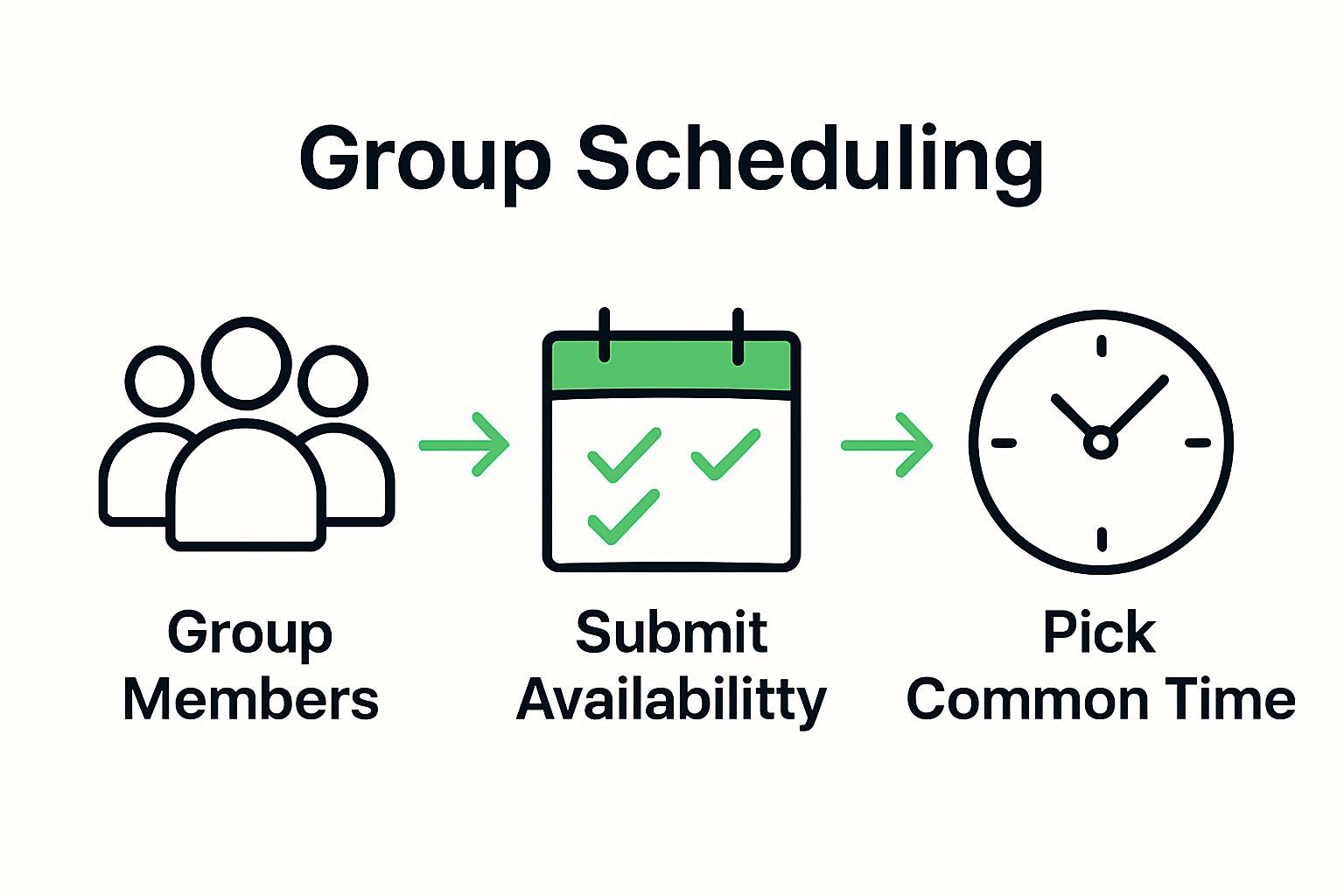
- Transparency in availability communication
- Equitable consideration of individual constraints
- Flexible negotiation mechanisms
- Prioritization of collective goals
Computational Decision Frameworks
Modern group scheduling relies on advanced computational frameworks that transform complex scheduling challenges into manageable solutions. These frameworks employ intelligent algorithms that analyze multiple variables simultaneously, including time zones, individual preferences, and potential conflict points. Discover advanced scheduling techniques that revolutionize how groups coordinate their time.
At its essence, group scheduling transcends mere logistical coordination. It represents a sophisticated social technology that enables meaningful collaboration by creating shared understanding and mutual accommodation. By integrating human flexibility with computational precision, these frameworks help transform potential scheduling conflicts into opportunities for effective collective planning.
The table below outlines key principles and computational frameworks that underpin effective group scheduling, helping clarify the distinction between human-centered and technical aspects.
| Aspect | Description | Example Component |
|---|---|---|
| Transparency in communication | Open sharing of availability, constraints, and scheduling conflicts among all participants | Input of time constraints |
| Negotiation and compromise | Collective willingness to adjust or shift preferences for group benefit | Flexible date suggestions |
| Equitable consideration | Ensuring each participant's needs and conflicts are regarded fairly during scheduling decisions | Weighted preference analysis |
| Algorithmic optimization | Use of intelligent computational models to propose optimal meeting times | Overlap mapping algorithm |
| Prioritization of group goals | Balancing individual desires against the overall event objective or group success | Majority availability selection |
Real-World Applications of Group Scheduling
Group scheduling transcends theoretical frameworks, emerging as a practical solution across numerous professional and personal domains. Research in healthcare management demonstrates how strategic scheduling transforms operational efficiency in complex environments.
Professional and Organizational Contexts
In corporate settings, group scheduling becomes a critical tool for coordinating multinational teams, managing cross-functional project timelines, and organizing critical meetings. Organizations leverage advanced scheduling techniques to navigate time zone differences, accommodate remote work arrangements, and ensure seamless collaboration among distributed teams.
Significant professional applications include:
- Coordinating global team meetings
- Scheduling interdepartmental project reviews
- Managing complex conference and training logistics
- Aligning executive leadership consultations
Diverse Sector Implementations
Beyond traditional business environments, group scheduling plays pivotal roles in sectors ranging from healthcare and education to community organizations and scientific research. The adaptability of scheduling frameworks enables nuanced coordination across complex human networks. Explore innovative scheduling strategies that demonstrate the versatility of modern scheduling approaches.
These implementations highlight group scheduling as more than a logistical tool. It represents a sophisticated social technology that bridges individual constraints with collective objectives, facilitating meaningful collaboration and efficient resource allocation across diverse human ecosystems.
Simplify Group Scheduling & Discover Effortless Coordination
Tired of endless back-and-forth messages trying to align multiple busy calendars for your next event? The article outlined just how complex group scheduling can become when participants juggle personal obligations and communicate over different time zones. These challenges increase stress and waste valuable time. Whether you are organizing a corporate meeting, family gathering, or community event, the need for transparent processes and quick decision-making was clear.
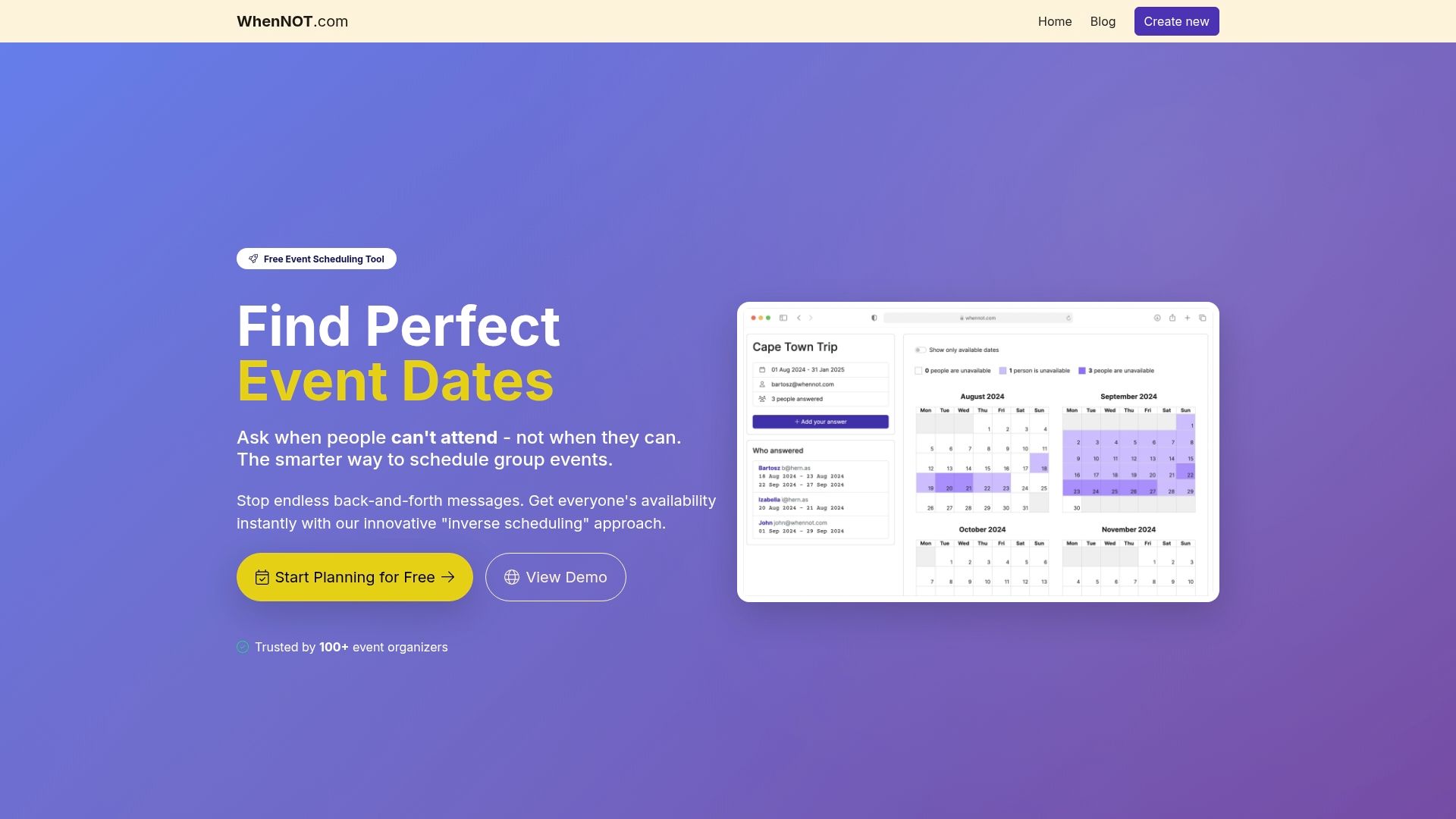
Break free from scheduling headaches with WhenNOT. Our platform turns group coordination into a fast, frustration-free process by letting people simply mark their busy days—no account required. In just minutes, you can visualize everyone's availability for multi-day or flexible-date events. Protect participants’ privacy and save yourself hours of follow-up. Ready to streamline your next group event? Try WhenNOT's innovative scheduling tool today and experience how easy planning can be when you choose a solution built for real group challenges.
Frequently Asked Questions
What is the group scheduling process for events?
The group scheduling process for events is a collaborative approach where participants coordinate their availability to find suitable meeting times. To effectively implement this, gather input from all attendees on their time constraints and preferences to streamline decision-making.
How can I gather participant availability for scheduling an event?
To gather participant availability, create a simple survey or use scheduling tools that allow attendees to indicate their open time slots. Start this process early to ensure everyone has ample time to respond, ideally providing a deadline of 3-5 days for feedback.
What are some key challenges in the group scheduling process?
Key challenges in group scheduling include managing different time zones, individual commitments, and varying participant preferences. To mitigate these issues, maintain open communication and be prepared to negotiate to find mutually acceptable solutions.
How does effective group scheduling impact event success?
Effective group scheduling can significantly increase participant attendance and engagement at events by minimizing conflicts and ensuring that everyone feels their availability is considered. Focus on scheduling well in advance to allow maximum participation.
What tools can help with the group scheduling process?
There are various collaborative tools available that simplify the group scheduling process by consolidating availability data and suggesting optimal meeting times. Consider using project management tools or dedicated scheduling software to enhance efficiency and reduce scheduling conflicts.
How can I ensure a fair selection process in group scheduling?
To ensure a fair selection process, prioritize transparency and take into account all participants' preferences and constraints equally. Create a system that allows everyone to express their needs and utilize that information to propose meeting times that accommodate the majority.