You just found the perfect destination. The excitement kicks in, and your finger hovers over the "Book Now" button. Stop right there. When you book that flight matters almost as much as where you're going, and booking at the wrong time could cost you hundreds of dollars.
Most travelers focus on finding the cheapest time to book flights by hunting for deals. But the real savings come from knowing when not to book. Avoiding the most expensive booking windows is one of the simplest flight booking tips that seasoned travelers swear by.
The Worst Times to Book a Flight
Last-Minute Bookings (Under 7 Days Before Departure)
Unless you're chasing a rare last-minute error fare, booking a flight within a week of departure is almost always the most expensive option. Airlines know that last-minute travelers are often flying for business or emergencies, meaning they're less price-sensitive. Domestic flights booked within seven days of departure can cost 50 to 100 percent more than the same seat purchased a few weeks earlier.
Peak Holiday Windows
Booking flights during the days immediately surrounding major holidays is another classic money pit. Thanksgiving week, Christmas and New Year's, spring break, and the Fourth of July weekend all trigger massive demand spikes. Airlines respond with premium pricing because they know seats will fill regardless.
The real trap is booking during the holiday itself. Flying on December 23rd will always cost more than flying on December 18th or 27th, even though the destination and airline are identical.
Fridays and Sundays
Day of the week matters more than most people realize. Historically, flights departing on Fridays and Sundays tend to be pricier because they align with weekend leisure travel and business return trips. If your schedule has any flexibility, shifting your departure by a single day can unlock noticeably lower fares.
Right After an Airline Sale Ends
Airlines run flash sales and promotional events regularly. If you just missed one, resist the urge to book immediately at the higher price. Fare sales tend to come in cycles, and another promotion is usually around the corner. Patience here is a real money-saver.
The Best Times to Book Instead
Now that you know what to avoid, here's when to pull the trigger.
The Sweet Spot: 1 to 3 Months Before Domestic Flights
For domestic travel, the cheapest time to book flights is generally between 30 and 90 days before departure. This window gives airlines enough time to fill seats while still offering competitive fares. Book too early and prices may be artificially high as airlines test demand. Book too late and you're in the last-minute surge zone.
For international flights, the window extends a bit further. Booking 2 to 8 months ahead often yields the best prices, depending on the route and season.
Tuesdays and Wednesdays
Midweek bookings remain one of the most reliable flight booking tips. Airlines frequently release new fares and sales early in the week, and competition between carriers tends to push prices lower by Tuesday afternoon. Wednesday departures also tend to be cheaper since demand is lower midweek.
Shoulder Seasons
Flying during shoulder seasons (the period between peak and off-peak) is a game-changer. For Europe, that means late April through mid-June and September through October. For the Caribbean, consider late November before the holiday rush or April. You get pleasant weather, fewer crowds, and significantly lower airfare.
After Midnight
This one sounds quirky, but airfare pricing algorithms update overnight. Checking fares late at night or very early in the morning can sometimes surface lower prices that haven't been snatched up yet. It's not guaranteed, but it's a low-effort trick worth trying.
How Pricing Patterns Actually Work
Airline pricing is driven by sophisticated algorithms that analyze demand in real time. These systems consider factors like:
- Seat inventory: As seats fill up, prices climb. A flight at 40 percent capacity will almost always be cheaper than the same flight at 85 percent.
- Competitor pricing: Airlines monitor each other's fares constantly. A price drop on one carrier often triggers matching drops on competing routes.
- Historical demand: If a route was popular last year during a specific week, expect higher prices during that same week this year.
- Booking velocity: If seats are selling faster than expected, the algorithm raises prices. Slow sales trigger discounts.
Understanding these patterns helps you see why timing is everything. You're not just looking for a "cheap flight." You're trying to book during the window where the algorithm hasn't yet ramped up prices.
Stop Guessing, Start Using Data
Here's where most budget travelers get stuck. You can memorize all the flight booking tips in the world, but applying them manually across dozens of routes and dates is exhausting. That's exactly the problem WhenNot was built to solve.
WhenNot analyzes flight pricing data across routes and dates to show you not just the best time to book, but critically, the worst times too. Instead of guessing whether next Tuesday is a good day to buy, WhenNot highlights the booking windows you should avoid entirely, so you never overpay out of impatience or bad timing.
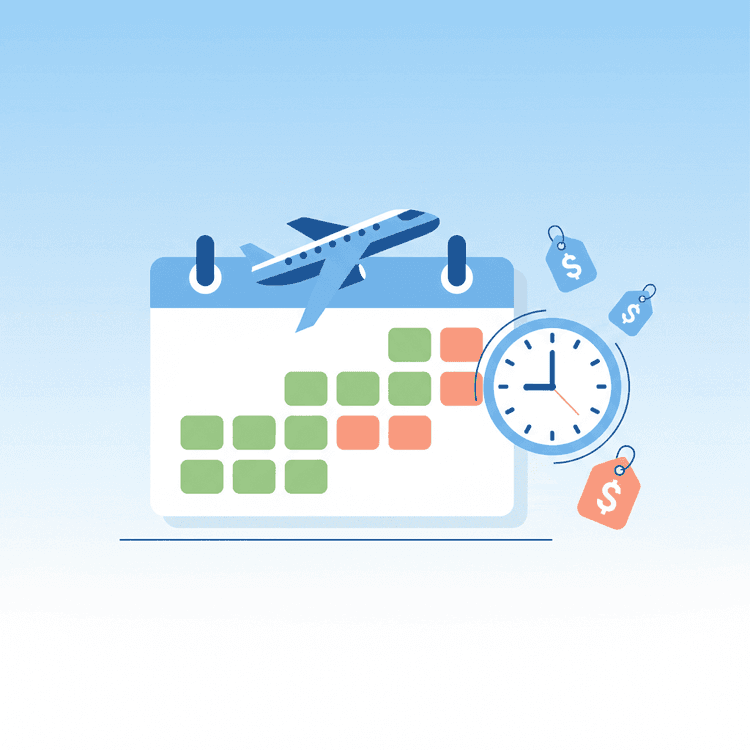
Think of it as a pricing calendar that works in reverse. Rather than telling you one magic date, it flags the danger zones, the price spikes, and the windows where waiting a few days could save you a meaningful amount. It's the difference between hoping for a deal and making an informed decision.
Practical Tips to Put This All Together
Ready to start saving? Here's a quick action plan:
-
Set your travel dates with flexibility. Even a one- or two-day shift can make a big difference. Avoid flying on peak days when possible.
-
Start watching prices 2 to 3 months out for domestic trips. For international flights, begin your search even earlier.
-
Avoid booking on impulse. If you just missed a sale, wait. Another one is likely coming.
-
Use WhenNot to identify pricing danger zones. Let the data do the heavy lifting instead of relying on rules of thumb that may not apply to your specific route.
-
Book midweek when possible. Tuesday and Wednesday remain your best bets for both searching and departing.
-
Consider shoulder seasons for your destination. You'll save on flights and hotels, and the experience is often better with fewer crowds.
The Bottom Line
The cheapest time to book flights isn't a single magic moment. It's about avoiding the expensive moments. Last-minute bookings, peak holiday windows, and weekend departures will consistently drain your travel budget. By shifting your habits and leaning on tools like WhenNot to spot pricing patterns, you take the guesswork out of flight booking and keep more money where it belongs: in your pocket, ready for the trip itself.
Smart timing isn't about obsessing over fares. It's about knowing when not to book and acting on that knowledge with confidence.