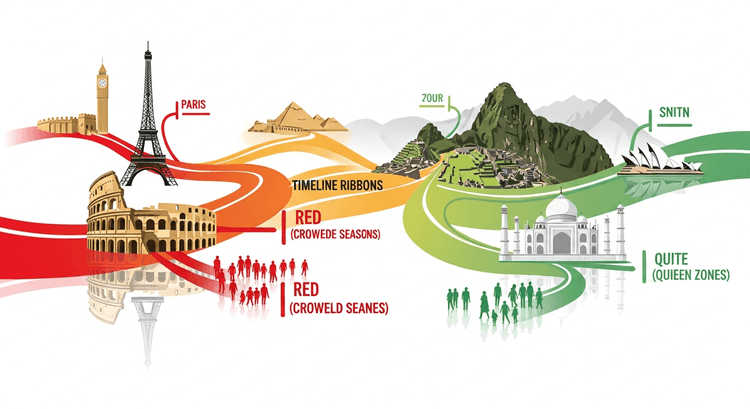
Visiting a world-famous landmark should feel awe-inspiring, not anxiety-inducing. Yet every year, millions of travelers arrive at bucket-list destinations only to find themselves shoulder-to-shoulder with thousands of other visitors, waiting in hour-long queues under the blazing sun.
The difference between a magical trip and a miserable one often comes down to one simple factor: when you go.
This guide breaks down the best times to visit popular tourist attractions in 2026, backed by crowd data, seasonal patterns, and insider timing strategies. Whether you are planning a European adventure, an Asian cultural tour, or a South American expedition, you will find actionable advice to help you avoid tourist crowds and make the most of every destination.
Why Timing Matters More Than Ever in 2026
Global tourism has surged past pre-pandemic levels, with the UN World Tourism Organization reporting record international arrivals. Popular attractions that once had manageable visitor numbers now regularly hit capacity limits. The Louvre, for instance, has introduced timed entry to manage daily crowds, while Machu Picchu enforces strict visitor caps.
The good news? Crowd patterns are predictable. Most tourists follow the same playbook — school holidays, summer vacations, and long weekends. By shifting your travel dates even slightly, you can experience these same attractions with a fraction of the crowds.
Europe's Iconic Landmarks
Eiffel Tower, Paris
Best time to visit: January to mid-March and November
Paris in winter is a revelation. While summer draws over 25,000 daily visitors to the Eiffel Tower, winter months see that number drop by more than half. January and February offer the shortest queues, with average wait times under 30 minutes compared to two hours or more in July and August.
The trade-off is cooler weather, but Paris in a light coat has its own charm — fewer crowds at nearby cafés, shorter lines at the Musée d'Orsay, and a quieter Champ de Mars for photos without strangers in every frame.
Pro tip: Visit on a weekday morning before 10 AM for the smallest crowds regardless of season.
Colosseum, Rome
Best time to visit: Late October to February (excluding Christmas week)
Rome's Colosseum sees its quietest period from November through February, when daily visitor numbers drop to around 10,000 compared to the summer peak of over 25,000. The Mediterranean climate keeps winter temperatures mild — expect daytime highs around 12 to 15°C — making sightseeing comfortable without the oppressive summer heat.
Avoid the week between Christmas and New Year's Day, when European holiday travelers fill the city. Early January and all of February offer the best combination of low crowds and pleasant weather.
Pro tip: Book a late afternoon entry slot. Most tour groups arrive in the morning, so the amphitheater clears out considerably after 3 PM.
Sagrada Família, Barcelona
Best time to visit: January to March and November
Gaudí's masterpiece draws around 4.5 million visitors annually, with summer months accounting for nearly half of all visits. Winter offers dramatically shorter lines and a more contemplative experience inside the basilica. The famous light effects through the stained glass windows are actually most spectacular during the lower sun angles of winter months.
Santorini, Greece
Best time to visit: Late April to mid-May and late September to mid-October
The shoulder seasons deliver Santorini's famous sunsets without the cruise ship crowds that overwhelm Oia from June through August. May offers warm swimming temperatures and blooming landscapes, while early October provides golden light and water temperatures that remain comfortable. Hotel rates drop by 30 to 50 percent compared to peak summer pricing.
Asia and the Middle East
Taj Mahal, Agra
Best time to visit: November to February (avoid weekends and Indian holidays)
India's most iconic monument is best experienced during the cooler winter months when temperatures in Agra hover around 20 to 25°C rather than the punishing 45°C of May and June. Crowds thin out on weekdays, particularly on Tuesdays through Thursdays. The Taj Mahal is closed on Fridays, so plan accordingly.
Sunrise visits remain the least crowded option. Gates open 30 minutes before sunrise, and the early morning light creates the most photogenic conditions — the white marble takes on a soft pink glow that fades as the sun climbs higher.
Angkor Wat, Cambodia
Best time to visit: November to January and June
The dry season (November to March) is peak tourist season, but November and December sit in a sweet spot — the landscapes are still green from recent rains, the weather is cooling down, and the largest tourist waves have not yet arrived. June, technically the start of monsoon season, offers surprisingly good conditions with brief afternoon showers and virtually empty temples.
Petra, Jordan
Best time to visit: March to April and October to November
The rose-red city carved into sandstone cliffs is most comfortable during spring and autumn, when temperatures range from 15 to 25°C. Summer brings extreme heat exceeding 35°C, and while crowds thin out, the physical demands of exploring the site become punishing. March offers wildflowers along the hiking trails and manageable visitor numbers before the Easter rush.
The Americas
Machu Picchu, Peru
Best time to visit: April to May and September to October
Peru's government limits daily visitors to Machu Picchu, but even with caps in place, the dry season months of June through August feel significantly more crowded. The shoulder months of April, May, September, and early October offer clear skies, comfortable hiking weather, and notably fewer visitors on the trails.
The Inca Trail requires permits booked months in advance, but alternative routes like the Salkantay Trek offer more availability during shoulder season. Rain is possible but typically limited to brief afternoon showers.
Pro tip: Book the earliest entry time (6 AM). The morning mist burning off to reveal the citadel is the most dramatic moment of the day, and you will share it with far fewer visitors.
Grand Canyon, Arizona
Best time to visit: January to March and November to mid-December
The Grand Canyon's South Rim attracts around six million visitors per year, with summer and holiday weekends accounting for the bulk of traffic. Winter visits offer a stunning contrast — occasional snow dusting the canyon rim creates spectacular photo opportunities, and you can find parking (a genuine challenge in summer) without circling the lot for 30 minutes.
The North Rim closes from mid-October to mid-May due to snow, so winter visits are limited to the South Rim. Temperatures at the rim hover around freezing, but the canyon floor remains 10 to 15 degrees warmer.
Chichén Itzá, Mexico
Best time to visit: January to March (avoid spring equinox week)
The famous serpent shadow effect during the spring equinox draws enormous crowds — upward of 40,000 visitors in a single day. For a less chaotic experience, visit in January or February when daily numbers drop below 5,000. The Yucatán's dry season ensures clear skies, and morning visits before 10 AM give you the best light and smallest crowds.
Africa and Oceania
Pyramids of Giza, Egypt
Best time to visit: October to February (avoid Ramadan and national holidays)
Egypt's winter is its tourism sweet spot. Temperatures in Cairo range from 15 to 25°C, making the outdoor trek around the pyramid complex comfortable. Summer temperatures regularly exceed 40°C, discouraging casual visitors but also making the experience genuinely unpleasant. Fridays tend to be busier with local visitors, so aim for Sunday through Wednesday.
Sydney Opera House, Australia
Best time to visit: May to September
Australia's winter coincides with the Northern Hemisphere's summer, creating a natural crowd buffer. International tourist numbers dip, and Sydney's mild winter — daytime temperatures around 15 to 18°C — makes walking around Circular Quay and the Botanical Gardens pleasant. Performances continue year-round, with winter seasons often featuring major productions.
How WhenNot Helps You Plan the Perfect Trip
Knowing the best time to visit tourist attractions is only half the battle. If you are traveling with a group — family, friends, or colleagues — you still need to find dates that work for everyone. That coordination challenge is exactly what WhenNot solves.
WhenNot uses inverse scheduling to find your group's ideal travel window. Instead of asking everyone when they are free (which leads to endless back-and-forth), WhenNot asks when they are not available. Participants simply mark their blocked dates, and the tool instantly reveals the windows where everyone can travel.
Here is how it works for trip planning:
- Create an event on WhenNot.com and set your desired travel date range
- Share the link with your travel group — no sign-ups or downloads required
- Everyone marks their unavailable dates in seconds
- See the best travel windows highlighted in real time
Once WhenNot identifies the dates that work for your group, cross-reference them with the crowd data in this guide. The result? A trip timed for fewer crowds, lower prices, and a better experience for everyone.
Combine Crowd Intelligence With Group Coordination
The real power comes from combining destination timing knowledge with group scheduling. For example, if your group has availability in both March and July, this guide tells you that March is the far better choice for visiting the Colosseum, Machu Picchu, or the Pyramids. WhenNot gives you the group availability data; this guide gives you the destination intelligence.
Quick Reference: Best Months by Attraction
| Attraction | Best Months | Avoid |
|---|---|---|
| Eiffel Tower | Jan–Mar, Nov | Jul–Aug |
| Colosseum | Nov–Feb | Jun–Aug, Christmas week |
| Sagrada Família | Jan–Mar, Nov | Jun–Aug |
| Santorini | Late Apr–mid May, late Sep–mid Oct | Jul–Aug |
| Taj Mahal | Nov–Feb (weekdays) | May–Jun |
| Angkor Wat | Nov–Jan, Jun | Feb–Mar |
| Petra | Mar–Apr, Oct–Nov | Jul–Aug |
| Machu Picchu | Apr–May, Sep–Oct | Jun–Aug |
| Grand Canyon | Jan–Mar, Nov–mid Dec | Jun–Aug weekends |
| Chichén Itzá | Jan–Mar | Spring equinox week |
| Pyramids of Giza | Oct–Feb | Jun–Aug |
| Sydney Opera House | May–Sep | Dec–Jan |
Planning Tips to Avoid Tourist Crowds
Beyond choosing the right month, these strategies help you minimize crowd exposure at any attraction:
- Arrive at opening time. The first hour of any attraction's operating day is almost always the quietest. Most visitors arrive mid-morning after breakfast.
- Visit on weekdays. Tuesday, Wednesday, and Thursday are consistently the least crowded days at major attractions worldwide.
- Book timed entries in advance. Many attractions now offer or require timed entry tickets. Early morning and late afternoon slots tend to have lower demand.
- Check local holiday calendars. National holidays, school breaks, and religious observances create crowd spikes that standard travel guides often overlook.
- Consider weather trade-offs. Slightly cooler or overcast days deter casual visitors but rarely diminish the experience for prepared travelers.
- Use group planning tools. When coordinating travel with others, tools like WhenNot eliminate the scheduling back-and-forth and help your group land on dates that align with off-peak windows.
Make 2026 the Year You Travel Smarter
The world's most stunning attractions are not going anywhere — but the crowds visiting them keep growing. By planning your visits during off-peak windows, you get shorter lines, better photos, lower prices, and a more authentic experience.
Use this guide as your timing playbook, and use WhenNot to coordinate the dates with your travel companions. The best trips are not just about where you go — they are about when you go.
FAQ
What is the single best month to visit Europe's major attractions?
November offers the best overall combination of low crowds, mild weather, and reasonable prices across most European landmarks. Most summer tourists have departed, holiday crowds have not yet arrived, and attractions operate on regular schedules.
How far in advance should I book tickets for popular attractions?
For peak season visits, book two to three months ahead for attractions with capacity limits like Machu Picchu or the Uffizi Gallery. During off-peak months, one to two weeks is usually sufficient, and some attractions allow walk-up entry with minimal wait times.
Does visiting during off-peak times mean attractions are closed or have reduced hours?
Some attractions do reduce hours in winter or off-peak seasons, but closures are rare for major landmarks. Always check official websites for current operating schedules. The trade-off of slightly shorter hours is more than offset by dramatically smaller crowds.
How can I coordinate a group trip to visit attractions during off-peak times?
Use WhenNot to collect unavailable dates from your travel group, then match the available windows with the off-peak recommendations in this guide. This approach ensures your group travels when both everyone is free and the destination is at its quietest.