
Coordinating a multi-day group trip for diverse colleagues often means juggling competing preferences, time constraints, and individual schedules. For many American corporate teams, group collaboration at the planning stage lays the groundwork for an efficient travel experience that minimizes scheduling conflicts. This guide shows how clear communication, digital tools, and structured steps can help travel coordinators organize a group trip that satisfies both company goals and personal interests.
Table of Contents
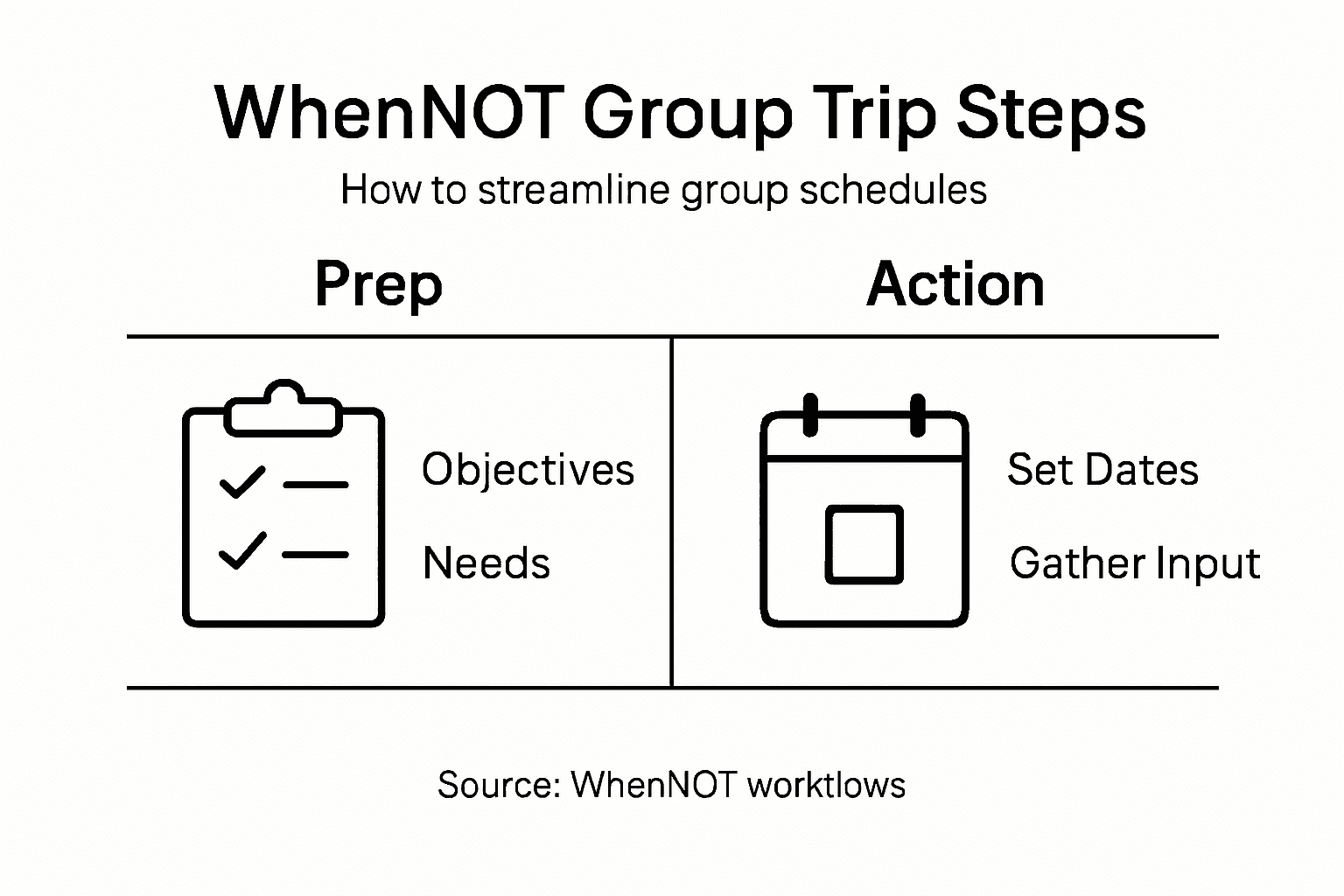
- Step 1: Define Trip Objectives And Participant Needs
- Step 2: Set Potential Dates And Gather Conflicts
- Step 3: Share Whennot Link And Collect Responses
- Step 4: Visualize Schedules And Confirm Best Dates
- Step 5: Verify Details And Finalize Group Plans
Quick Summary
| Key Point | Explanation |
|---|---|
| 1. Start with clear trip objectives | Establish group travel goals and individual expectations to ensure a balanced trip experience for everyone. |
| 2. Utilize flexible scheduling tools | Use WhenNOT to efficiently gather participant availability and identify overlapping free times for planning. |
| 3. Analyze responses visually | Utilize color-coded maps to quickly determine optimal travel dates based on participant availability and conflicts. |
| 4. Confirm logistics and responsibilities | Review all trip details and clarify roles to maintain structure and prevent misunderstandings among participants. |
| 5. Establish clear communication channels | Create a shared digital folder for documents to keep every participant informed and accountable throughout the planning process. |
Step 1: Define trip objectives and participant needs
Planning a successful group trip begins with clearly establishing your shared travel goals and understanding each participant's expectations. This critical first step sets the foundation for a smooth, enjoyable experience that meets everyone's needs.
Start by organizing a collaborative group brainstorming session where all potential travelers can share their interests, preferences, and constraints. Effective group event scheduling requires open communication and active participation from every participant. During this session, explore key aspects such as:
- Destination preferences
- Budget constraints
- Desired activities and experiences
- Time availability
- Physical limitations or special requirements
- Shared vs. individual goals
Document each participant's input systematically, creating a comprehensive overview that highlights both group objectives and individual considerations. This approach ensures that the final trip plan balances collective interests with personal needs.
The most successful group trips start with transparent communication and shared vision.
Pro tip: Use digital collaboration tools to gather input asynchronously if scheduling an in-person brainstorming session proves challenging.
Step 2: Set potential dates and gather conflicts
After establishing your trip objectives, the next crucial step is identifying potential travel dates that work for everyone. This phase requires strategic planning and understanding scheduling conflict resolution to maximize group participation.
Begin by creating a preliminary date range that considers key factors such as:
- Work and personal commitments
- School or academic calendars
- Peak travel seasons
- Individual vacation time availability
- Potential seasonal constraints
- Holiday and event schedules
Utilize WhenNOT's innovative platform to streamline this process. Instead of traditional scheduling methods, participants can quickly mark their unavailable dates, allowing the group to easily visualize overlapping free time. This approach simplifies finding mutually convenient dates without endless back-and-forth communication.
Effective date selection is about finding common ground, not perfect alignment.
Pro tip: Create a flexible date range of 2-3 weeks to increase the likelihood of finding a suitable time for all participants.

Step 3: Share WhenNOT link and collect responses
With your potential dates identified, it's time to efficiently gather participant availability using WhenNOT's unique inverse scheduling approach. Seamless data collection methods can dramatically improve group coordination and response rates.
Begin by generating a unique WhenNOT sharing link that allows participants to mark their unavailable dates without creating an account. The process is straightforward:
- Copy the generated unique link
- Send via email or messaging platforms
- Request participants mark their specific unavailable dates
- Set a reasonable deadline for responses
- Follow up with gentle reminders
WhenNOT's platform enables rapid response tracking, displaying participant conflicts visually. This approach eliminates the traditional back-and-forth communication, allowing your group to quickly identify optimal travel dates that accommodate everyone's schedules.
Here's a comparison of traditional vs. inverse group trip scheduling approaches:
| Criteria | Traditional Scheduling | Inverse Scheduling (WhenNOT) |
|---|---|---|
| Coordination Effort | High, with constant follow-up | Low, with self-service input |
| Response Speed | Often slow, lengthy exchanges | Rapid, visual conflict tracking |
| Communication Overhead | Frequent email or messaging | One link shared with reminders |
| Best For | Small, simple groups | Large or complex group planning |
Efficient scheduling is about understanding constraints, not finding perfect times.
Pro tip: Send your WhenNOT link during times participants are likely to be checking messages, such as weekday evenings or weekend mornings.
Step 4: Visualize schedules and confirm best dates
With participant responses collected, it's time to analyze the data and determine optimal scheduling strategies for your group trip. WhenNOT's intuitive visualization makes this process remarkably straightforward.
Examine the platform's color-coded availability map to identify optimal travel dates. Look for these key indicators:
- Maximum participant availability
- Minimal scheduling conflicts
- Clustered open time windows
- Consistent free periods across most participants
- Reasonable travel and preparation time
Consider holding a brief group consensus meeting to review the proposed dates. During this discussion, confirm that the selected timeframe works for everyone and address any remaining scheduling nuances. Remember that flexibility is crucial when coordinating group travel.
Successful trip planning balances individual preferences with collective feasibility.
Pro tip: Always have a backup date range in case your primary selection encounters unexpected scheduling challenges.
Step 5: Verify details and finalize group plans
The final stage of your group trip planning involves meticulously reviewing logistical planning standards to ensure a smooth and successful travel experience. This critical review phase transforms your preliminary plans into a concrete, actionable itinerary.
Conduct a comprehensive group plan verification that includes:
- Confirming travel dates and times
- Reviewing individual participant availability
- Documenting key trip logistics
- Verifying budget constraints
- Collecting final participant commitments
- Establishing communication channels
- Creating a shared trip information document
Each participant should understand their responsibilities and the trip's overall structure. Transparent communication helps prevent misunderstandings and ensures everyone is aligned with the group's travel objectives.
This table summarizes roles in successful group trip planning:
| Role in Trip Planning | Description | Impact on Group Success |
|---|---|---|
| Organizer | Coordinates key decisions | Maintains structure and momentum |
| Participant | Provides availability input | Ensures inclusivity of needs |
| Tech Facilitator | Manages digital tools/folders | Improves efficiency and access |
| Consensus Builder | Mediates scheduling choices | Promotes agreement and harmony |
Successful group trips are built on clear expectations and mutual understanding.
Pro tip: Create a shared digital folder with all trip documents to keep everyone informed and accountable.
Simplify Group Trip Scheduling with WhenNOT's Inverse Approach
Planning group trips often feels overwhelming because coordinating everyone's availability can become a time-consuming, frustrating ordeal. This article highlights common pain points like identifying conflicting schedules, managing date ranges, and gathering participant input without endless back-and-forth. These challenges can stall your exciting travel plans and drain your energy.
WhenNOT offers a smart solution by focusing on when participants are not busy instead of forcing them to pick available times. This inverse scheduling method reduces communication overload and reveals optimal dates visually so you can quickly finalize plans that fit everyone’s needs. Its user-friendly platform allows travelers to mark unavailable dates without signing up, protecting privacy and speeding responses.
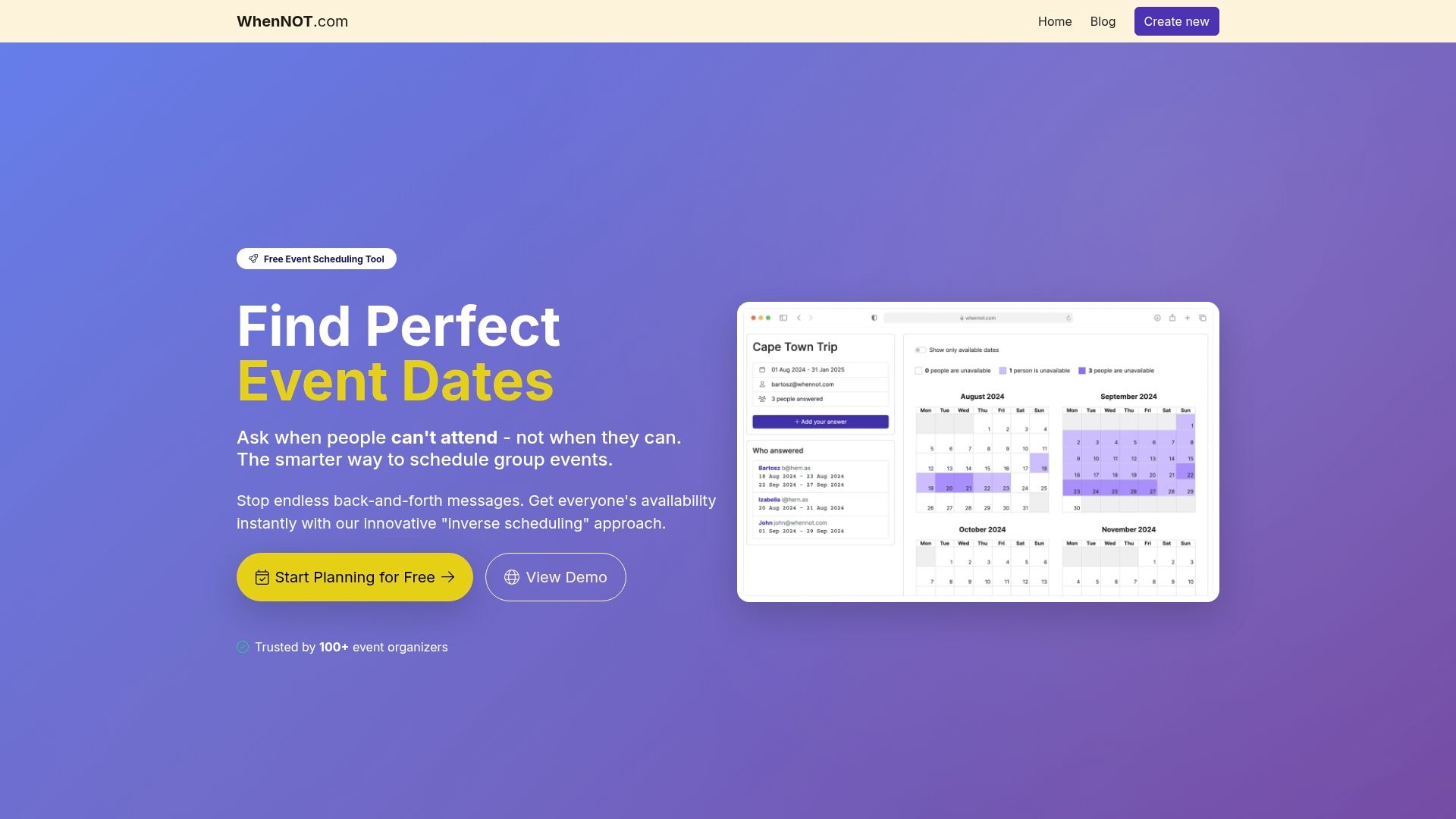
Experience the transformation in group trip planning by trying WhenNOT today. Avoid traditional scheduling headaches by creating your event with easy date range selection and share your unique link instantly to collect unavailable dates from your group. Visit WhenNOT landing page now and start coordinating your next group trip efficiently with less stress and more certainty.
Frequently Asked Questions
What are the first steps to plan a group trip using WhenNOT?
To plan a group trip efficiently, start by defining shared travel goals and participant needs. Organize a brainstorming session with the group to discuss preferences, budgets, and any special requirements, ensuring that everyone’s input is documented for an inclusive plan.
How do I set potential travel dates for the group trip?
Begin by identifying a range of possible travel dates that accommodates everyone's commitments. Create a preliminary date range and use WhenNOT to allow participants to mark their unavailable dates, which will help visualize available times for the entire group.
How can I effectively gather participant availability for the trip?
Use WhenNOT to collect availability efficiently by generating a unique sharing link where participants can easily indicate their unavailable dates. Set a reasonable deadline for responses and follow up with reminders to ensure you gather input from everyone involved.
What should I look for when visualizing schedules to confirm travel dates?
Examine the color-coded availability map on WhenNOT to find optimal travel dates that maximize participant availability. Focus on minimizing conflicts and identify dates with the most clustered open time windows among all group members.
How can I ensure all trip details are verified before finalizing plans?
Conduct a thorough verification process by confirming travel dates, reviewing participant availability, and documenting key trip logistics. Share a comprehensive trip information document with all participants to keep everyone informed and accountable for the final plans.
What roles should each participant have in the group trip planning process?
Define clear roles for participants to enhance the planning process, such as an organizer to coordinate decisions, a tech facilitator to manage digital tools, and a consensus builder to mediate scheduling choices. This division of responsibilities ensures inclusivity and improves overall group success.