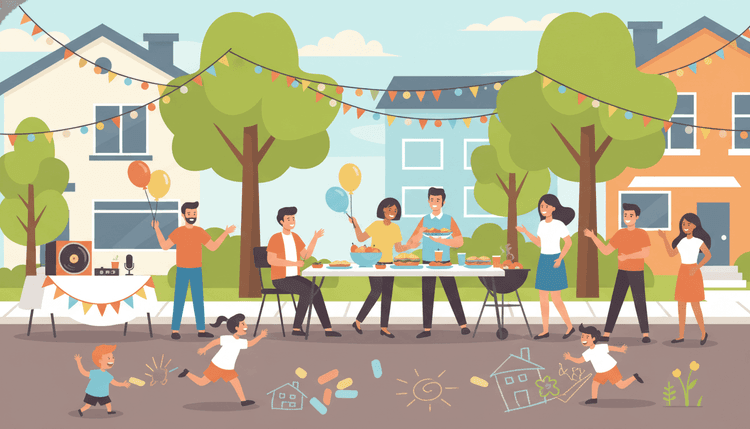
Planning a block party sounds fun until you realize how many moving parts are involved. Between permits, food, activities, and getting dozens of neighbors to agree on a date, the whole thing can feel overwhelming fast. The good news? With the right plan and a few smart tools, you can pull off an amazing neighborhood celebration without the stress.
This guide walks you through every step of planning a block party in 2026, from getting buy-in to post-party follow-up.
What Is a Block Party and Why Host One?
Quick answer: A block party is a neighborhood gathering held on a closed-off street or shared space. It strengthens community bonds, helps neighbors meet face-to-face, and gives everyone (especially kids) a reason to step outside and connect.
Block parties have a long history in American neighborhoods, and they are making a strong comeback. According to a 2024 survey by the National Recreation and Park Association, communities that host regular social events report 40% higher neighbor satisfaction scores.
Here is why hosting one is worth the effort:
- Stronger neighborhood connections. People who know their neighbors feel safer and more supported.
- A reason to celebrate. Summer, a holiday weekend, or just a beautiful Saturday — any excuse works.
- Inclusive fun for all ages. Block parties bring together kids, teens, adults, and seniors in a way few other events can.
- Community resilience. Neighborhoods that socialize together handle challenges (weather events, safety concerns, local issues) more effectively.
Whether you are new to the street or have lived there for decades, organizing a block party positions you as a community builder.
How to Get Neighborhood Buy-In
Quick answer: Start by talking to a few enthusiastic neighbors first. Build a small planning committee of 3-5 people before pitching the idea to the whole block. Shared ownership makes the event stronger.
Nobody wants to plan a block party alone. Here is how to rally support:
- Start with your immediate neighbors. Knock on a few doors or send a group text. Find 3-5 people who are excited about the idea.
- Form a planning committee. Divide responsibilities: permits, food coordination, entertainment, setup/cleanup, and communication.
- Host a quick planning meeting. Keep it to 30 minutes. A front porch gathering or a short video call works perfectly.
- Survey the block. Ask neighbors about food preferences, allergies, activity ideas, and most importantly, date availability.
- Communicate early and often. Use a shared group chat, flyers, or a door-to-door signup sheet to keep everyone informed.
The key is making neighbors feel like participants, not just attendees. When people contribute a dish, volunteer for setup, or suggest a game, they become invested in the event's success.
Permits, Insurance, and Legal Basics
Quick answer: Most cities require a street closure permit for block parties. Apply 4-8 weeks in advance. Check if your homeowners association or city requires event insurance.
Skipping permits is a mistake that can shut down your party before it starts. Here is what you need:
- Street closure permit. Contact your city or county clerk's office. Many municipalities have a simple online application. Fees typically range from $0 to $100.
- Noise permits. If you plan to have amplified music or a DJ, some areas require a separate noise permit.
- Liability insurance. Some cities require a one-day event insurance policy. These typically cost $75-$150 and protect you if someone gets injured.
- HOA approval. If your neighborhood has a homeowners association, get written approval before you commit to a date.
- Alcohol regulations. Check local laws. Many areas allow alcohol at permitted block parties, but some require it to stay on private property (driveways and porches, not the street).
Pro tip: Call your city's special events office early. They handle block party permits regularly and can walk you through the exact requirements for your area.
Picking the Perfect Date for Your Street
Quick answer: The hardest part of block party planning is finding a date that works for most neighbors. Use a scheduling poll to collect availability from the whole block instead of guessing.
You have the committee. You have the permits figured out. Now comes the part that trips up most organizers: picking the actual date.
Sending a group text that says "Does Saturday the 14th work?" guarantees a flood of conflicting replies. Some neighbors prefer June. Others are traveling in July. A few can only do weekends. One family has a standing soccer commitment every Saturday morning.
Instead of playing calendar detective, send your neighbors a simple scheduling poll. WhenNOT lets everyone mark the dates they are NOT available, so you can instantly see which weekends have the fewest conflicts. No accounts, no signups, and it takes each person about 30 seconds.
Here are a few more date-picking tips:
- Aim for a Saturday between 10 AM and 8 PM. This window works for families, early risers, and night owls alike.
- Avoid holiday weekends. Memorial Day, Fourth of July, and Labor Day sound ideal, but many people travel during these periods.
- Check the local event calendar. Avoid scheduling on the same day as a town festival, major sports event, or school function.
- Give at least 6 weeks of lead time. This ensures you have enough time for permits, food planning, and promotion.
- Have a rain date. Pick a backup date one week later, and communicate it from the start.
Food, Music, and Activities on a Budget
Quick answer: You do not need a massive budget for great food and entertainment. A potluck model, a Bluetooth speaker, and a few simple activities can create an amazing experience for under $200 total.
Potluck vs. Catered: Pros and Cons Table
| Factor | Potluck | Catered |
|---|---|---|
| Cost | Low ($50-$100 for supplies) | High ($500-$2,000+) |
| Variety | High — neighbors bring diverse dishes | Moderate — depends on caterer menu |
| Community feel | Strong — everyone contributes | Lower — feels more "hosted" |
| Effort for organizer | Moderate — coordinate who brings what | Low — caterer handles everything |
| Dietary needs | Easy to accommodate — people bring what they eat | Requires advance communication |
| Best for | Tight budgets, community-building focus | Larger blocks, sponsored events |
Budget-friendly food tips:
- Use a shared spreadsheet or signup sheet so you do not end up with 15 potato salads.
- Ask the committee to cover basics: plates, cups, napkins, ice, and drinks.
- Set up a "grill station" where a few volunteers handle burgers and hot dogs.
- Label all dishes with ingredients for allergy awareness.
Music on a budget:
- A Bluetooth speaker and a collaborative playlist cost nothing.
- Ask if any neighbors play guitar, drums, or another instrument.
- Check if a local high school band wants performance experience.
Kid-Friendly Activity Ideas
Kids are the heart of any block party. Here are activities that cost little to nothing:
- Sidewalk chalk art contest. Hand out chalk and let kids decorate the street.
- Water balloon station. A bag of 100 water balloons costs under $5.
- Sack races and relay races. Use pillowcases for sack races.
- Face painting. Ask a creative neighbor or teen volunteer.
- Bike decorating parade. Kids decorate their bikes and ride a loop around the block.
- Scavenger hunt. Create a list of things to find around the neighborhood.
- Bubble station. A large tub of bubble solution and wands keeps little ones busy for hours.
For more group activity inspiration, check out our guide to social event ideas for groups of all sizes.
Promoting Your Block Party to Neighbors
Quick answer: Start promoting 4-6 weeks before the event. Use a mix of physical flyers, group messages, and door-to-door invitations. The more personal the outreach, the higher the turnout.
Not everyone checks group chats or community apps. Use multiple channels:
- Door hangers or flyers. A simple one-page flyer with the date and time, location, what to bring, and a contact number works great. Distribute these 4 weeks before the event.
- Group text or messaging app. Create a dedicated group for block party updates.
- Social media. Post in your neighborhood's Facebook group or community page.
- Word of mouth. Nothing beats a friendly knock on the door with a personal invitation.
- Reminder wave. Send a second round of flyers or messages one week before the event.
What to include on your flyer:
- Event name and date (plus rain date)
- Time and location
- What to bring (a dish, chairs, sunscreen)
- Activities planned
- Contact info for questions
- A note that all ages are welcome
Looking for more ideas on promoting neighborhood events? Our guide to event planning ideas for every occasion covers creative promotion strategies.
Day-of Logistics: Road Closures, Setup, and Safety
Quick answer: Arrive 2 hours early for setup. Place barricades at street entrances, set up a central food area, and designate a first-aid spot. Assign volunteers to specific roles for smooth operations.
The big day is here. A clear logistics plan keeps everything running smoothly.
Road closure checklist:
- Place city-approved barricades or cones at both ends of the block by the permitted time.
- Post "Road Closed — Block Party" signs visible to approaching traffic.
- Leave a gap wide enough for emergency vehicles to pass through.
- Assign one volunteer per entrance to redirect traffic for the first hour.
Setup timeline:
| Time | Task |
|---|---|
| 2 hours before | Place barricades, set up tables and chairs |
| 90 minutes before | Set up food stations, coolers with ice, trash/recycling bins |
| 1 hour before | Test speakers/music, set up activity stations |
| 30 minutes before | Final walkthrough, confirm volunteer assignments |
| Start time | Welcome neighbors, kick off first activity |
Safety essentials:
- Keep a basic first-aid kit at a central, visible location.
- Have a plan for extreme heat: shade tents, water stations, and sunscreen.
- Know where the nearest fire hydrant is located.
- Keep pets on leashes unless the block agrees otherwise.
- Ensure young children have a parent or guardian present.
Post-Party Follow-Up and Building Community Year-Round
Quick answer: Send a thank-you message within 48 hours. Share photos, collect feedback, and start planning the next gathering to maintain momentum throughout the year.
The party is over, but the community building does not have to stop. Here is how to keep the energy going:
- Send a thank-you message. A quick group text or flyer thanking everyone for coming goes a long way.
- Share photos. Create a shared album (Google Photos, iCloud, or a simple email thread) where neighbors can upload pictures.
- Collect feedback. Ask what people loved and what they would change. A three-question survey keeps it simple.
- Clean up together. Make cleanup a group effort on the same day. Many hands make quick work.
- Plan the next one. Momentum fades fast. Before neighbors scatter, float the idea of a fall potluck, holiday gathering, or monthly meetup.
Building community is not a one-time event. Consider organizing smaller gatherings throughout the year: a movie night in someone's driveway, a holiday cookie exchange, or a spring yard sale. For more ideas on keeping groups connected, explore our list of group event ideas for creative planning.
Ready to schedule your next group event without the headache? Find the perfect dates in minutes with WhenNOT.
FAQ
How much does it cost to throw a block party?
A basic block party costs between $100 and $500, depending on your approach. Potluck-style events with shared supplies run on the low end. If you hire a caterer, rent equipment, or book entertainment, costs can reach $1,000 or more. Many neighborhoods split costs evenly or ask for small voluntary contributions.
Do I need a permit for a block party?
In most cities, yes. Street closure permits are required if you plan to block vehicle traffic. Apply 4-8 weeks in advance through your city clerk or special events office. Fees vary from free to around $100. Some cities also require noise permits for amplified music.
How do I handle neighbors who do not want a block party?
Respect their wishes. Let them know the event is optional and that you will minimize disruption to their property and parking. Offer to include them in planning if they change their mind. Most reluctant neighbors warm up once they see the event is well-organized and respectful.
What is the best time of year for a block party?
Late spring through early fall (May to September) works best in most regions. Aim for a Saturday with mild weather. Avoid major holiday weekends when neighbors travel. Check your local event calendar to avoid conflicts with town festivals or school events.
How do I find a date that works for most neighbors?
Use a scheduling tool like WhenNOT to poll the whole block. Each neighbor marks the dates they cannot attend, and you instantly see which options have the fewest conflicts. It takes 30 seconds per person and eliminates the endless back-and-forth of group texts.
How far in advance should I start planning?
Start planning at least 8 weeks before your target date. This gives you time to form a committee, apply for permits, coordinate food, and promote the event. The earlier you start, the more likely you are to secure your preferred date and avoid last-minute stress.
What if it rains on block party day?
Always have a rain date scheduled one week after the original date. Communicate the backup plan from the beginning so neighbors keep both dates open. If rain is light, consider moving food stations to covered porches or garages and letting the party continue in a modified form.