
Coordinating travel plans for groups is usually a headache. Messages get lost, schedules overlap, and the details never stop changing. But the story looks a lot different now. Digital travel tools are on track to reduce trip planning time by up to 60 percent, something no spreadsheet or group text ever managed. The surprising part is these tools are not just for tech experts or business travelers. Even your next family getaway can run smoother with a few clicks.
Table of Contents
- What Are Trip Scheduling Tools?
- Benefits Of Using Trip Scheduling Tools
- Google Calendar: A Simple Scheduling Tool
- Doodle: Polling For Availability Made Easy
- Tripit: Organizing Travel Plans In One Place
- When2meet: Finding Common Times Effortlessly
- Teamup Calendar: Perfect For Group Coordination
Quick Summary
| Takeaway | Explanation |
|---|---|
| Trip scheduling tools simplify planning. | These tools consolidate logistics, communication, and organization into one platform, making travel coordination easier and more efficient. |
| Time efficiency significantly improves with technology. | Digital tools can reduce planning time by up to 60%, streamlining the travel logistics process for better productivity. |
| Doodle and When2meet facilitate group scheduling. | Both tools allow participants to indicate availability through simple polling, reducing communication barriers and streamlining consensus building. |
| Centralized communication enhances coordination. | Shared platforms enable all travelers to access and contribute to plans, minimizing misunderstandings and ensuring everyone stays informed. |
| Google Calendar integrates travel details effortlessly. | This flexible tool syncs across devices, imports confirmations directly, and aids in collaborative planning for both individuals and groups. |
1: What Are Trip Scheduling Tools?
Trip scheduling tools are digital solutions designed to simplify and optimize travel planning processes. These innovative platforms help individuals and groups coordinate complex travel arrangements by providing comprehensive features that streamline logistics, communication, and organization. Learn more about automated scheduling to understand how technology transforms trip planning.
Unlike traditional methods of coordinating travel that involve countless emails, phone calls, and spreadsheets, trip scheduling tools consolidate multiple planning aspects into one centralized platform. These digital assistants help travelers manage critical elements such as:
- Coordinating multiple participants' schedules
- Tracking transportation and accommodation details
- Managing shared budgets and expenses
- Synchronizing different time zones and availability
Modern trip scheduling tools leverage advanced technologies like cloud computing, real time collaboration, and intelligent algorithms to provide seamless planning experiences. According to Statista, the digital travel market continues to grow, indicating increasing reliance on technological solutions for trip management.
The primary goal of these tools is to reduce planning complexity and minimize communication barriers. Whether you're organizing a family vacation, a corporate retreat, or a group adventure, trip scheduling tools offer customizable features that adapt to various travel scenarios. By centralizing information and providing intuitive interfaces, these platforms transform what was once a stressful planning process into an efficient, enjoyable experience.
Use our scheduling tools for group travel comparison to evaluate date flexibility, trip duration and participant response requirements before selecting a tool.
Key benefits include saving time, reducing potential miscommunication, and providing a transparent platform where all participants can view and contribute to travel plans simultaneously. As digital transformation continues to reshape how we plan and experience travel, trip scheduling tools represent a significant advancement in making group travel coordination more accessible and user friendly.
2: Benefits of Using Trip Scheduling Tools
Trip scheduling tools offer remarkable advantages that transform group travel planning from a complex challenge into a streamlined, enjoyable process. Explore our guide on simple scheduling tools to understand how technology can simplify your travel coordination.
The primary benefits of these digital platforms extend far beyond basic organization. Time efficiency stands out as a critical advantage, with tools dramatically reducing the hours traditionally spent coordinating travel logistics. According to McKinsey & Company, digital tools can cut planning time by up to 60% compared to traditional methods.
Trip scheduling tools provide comprehensive benefits that address multiple planning challenges:
- Centralized communication and information sharing
- Real time collaborative planning
- Transparent budget and expense tracking
- Synchronized scheduling across different time zones
Another significant benefit is enhanced group coordination. These tools eliminate communication barriers by creating a single, accessible platform where all participants can view, modify, and contribute to travel plans. This approach reduces misunderstandings, prevents duplicate bookings, and ensures everyone remains informed throughout the planning process.
Financial management becomes substantially more straightforward with these tools. Users can track shared expenses, split costs, and maintain clear financial records. Many platforms integrate direct payment features, further simplifying the monetary aspects of group travel.
For business and professional travelers, trip scheduling tools offer additional strategic advantages. They generate comprehensive travel reports, facilitate compliance with corporate travel policies, and provide detailed analytics about travel patterns and expenses. This data can help organizations optimize travel budgets and make more informed planning decisions.
Ultimately, these tools transform travel planning from a stressful experience into an efficient, collaborative journey. By leveraging technology, travelers can focus more on anticipating their trips and less on the logistical complexities of getting there.
3: Google Calendar: A Simple Scheduling Tool
Google Calendar emerges as a powerful yet accessible trip scheduling tool that offers remarkable flexibility for individual and group travel planning. Learn how to simplify event scheduling and maximize your planning efficiency with this versatile platform. According to Statista, Google Calendar boasts over 1.8 billion active users worldwide, making it one of the most widely adopted scheduling platforms.
This free web based tool provides seamless integration across multiple devices and platforms, enabling travelers to create, share, and manage complex travel itineraries with remarkable ease. Key features that make Google Calendar exceptional for trip scheduling include its ability to synchronize across smartphones, tablets, and computers, ensuring travelers always have access to their most current plans.
Trip planners can leverage several unique capabilities within Google Calendar:
- Create multiple calendars for different trip aspects (transportation, accommodation, activities)
- Share specific calendars with travel companions
- Set reminders and notifications for critical travel milestones
- Integrate with other Google services like Maps and Gmail
The platform supports collaborative planning by allowing multiple users to view and edit shared calendars. Travelers can invite group members, assign specific permissions, and maintain transparent communication about travel arrangements. This collaborative approach eliminates the need for endless email chains and reduces potential misunderstandings.
One significant advantage of Google Calendar is its robust integration ecosystem. Users can directly import flight confirmations from Gmail, add hotel bookings with a single click, and even sync travel details from third party booking platforms. The tool automatically converts email confirmations into calendar events, saving travelers considerable time and effort.
For international travelers, Google Calendar offers additional benefits like automatic time zone conversions and the ability to display multiple time zones simultaneously. This feature proves invaluable when coordinating trips across different global locations, ensuring precise scheduling and preventing potential confusion.
While Google Calendar might not be a dedicated travel planning tool, its versatility and user friendly interface make it an excellent option for individuals and small groups seeking a straightforward scheduling solution.
4: Doodle: Polling for Availability Made Easy
Learn about best group scheduling practices to understand how tools like Doodle transform collaborative planning. Doodle represents an innovative digital solution designed specifically to solve the complex challenge of coordinating group schedules. According to Crunchbase, the platform has been helping teams and individuals streamline scheduling since 2007.
Doodle's core strength lies in its simplicity and intuitive polling mechanism. Unlike traditional scheduling methods that require endless back and forth communication, Doodle allows users to create a quick poll where participants can indicate their availability across multiple potential dates and times.
Key features that distinguish Doodle as a powerful trip scheduling tool include:
- Create unlimited scheduling polls without registration
- Set multiple time and date options simultaneously
- Send invitations through email or shareable links
- Automatically find the most convenient meeting times
The platform supports two primary scheduling modes: standard polls where participants select their preferred times, and the MeetMe feature which allows direct one on one scheduling. This flexibility makes Doodle particularly useful for complex trip planning scenarios involving multiple participants with varied schedules.
Businesses and travel groups appreciate Doodle's ability to reduce scheduling friction. The tool eliminates the need for prolonged email threads and telephone tag, condensing the coordination process into a streamlined, transparent workflow. Participants can see each other's availability in real time, making consensus building significantly easier.
Privacy remains a critical consideration, and Doodle addresses this by providing granular control over poll visibility. Users can choose between public and private polls, ensuring sensitive travel planning details remain confidential. The platform also offers integration with popular calendar systems like Google Calendar and Outlook, further enhancing its utility for travelers.
While free versions offer substantial functionality, Doodle's premium plans provide additional features like advanced polling options, custom branding, and enhanced participant management. This tiered approach ensures the tool remains accessible to individuals and scalable for larger group travel coordination needs.
5: TripIt: Organizing Travel Plans in One Place
Explore essential group event scheduling tips to complement your travel planning strategy. TripIt emerges as a comprehensive solution for travelers seeking to consolidate complex travel itineraries into a single, manageable platform. According to Business Wire, the platform has transformed how over 20 million travelers manage their travel plans.
TripIt revolutionizes travel organization by automatically converting confirmation emails from flights, hotels, car rentals, and activities into a detailed, chronological master itinerary. This innovative approach eliminates the need for manual data entry and reduces the risk of overlooking critical travel details.
Key features that distinguish TripIt as an exceptional trip scheduling tool include:
- Automatic itinerary generation from email confirmations
- Offline access to travel documents and plans
- Real time flight status updates
- Seamless sharing of travel plans with companions
The platform offers two primary service levels: a free version with basic organizational tools and a Pro version that provides advanced travel management capabilities. Pro users benefit from additional features like alternative flight recommendations, track seat upgrades, and comprehensive travel safety information.
TripIt's intelligence extends beyond simple itinerary compilation. The tool can analyze your travel patterns, provide recommendations for future trips, and even help optimize travel routes. Its integration with multiple calendar systems ensures that your travel plans remain synchronized across different devices and platforms.
Privacy and security remain paramount for travelers, and TripIt addresses these concerns through robust data protection mechanisms. Users have granular control over their information, with options to share specific trip details or maintain complete privacy.
For business travelers and frequent tourists, TripIt offers unique value by transforming fragmented travel information into a coherent, easily navigable format. The platform's ability to aggregate confirmations from multiple sources means travelers can focus on experiencing their journey rather than managing logistical complexities.
Whether planning a complex international expedition or a simple weekend getaway, TripIt provides a comprehensive solution for travelers seeking efficiency and organization in their travel planning process.
6: When2meet: Finding Common Times Effortlessly
Discover essential group scheduling strategies to complement your time coordination efforts. When2meet emerges as a remarkably straightforward tool designed to solve one of the most challenging aspects of group planning: finding mutually convenient times. According to Stack Overflow, collaborative scheduling tools like When2meet have become increasingly crucial in our distributed work and travel environments.
When2meet simplifies the complex process of time synchronization by providing an intuitive visual platform where participants can easily mark their available hours. Unlike traditional scheduling methods that require extensive back and forth communication, this tool offers a transparent, efficient approach to coordinating schedules across different time zones and personal calendars.
Key features that make When2meet a powerful scheduling solution include:
- Instant visual representation of group availability
- No required user registration
- Support for multiple time zones
- Quick and easy sharing of availability links
The platform's unique color coded grid system allows users to quickly identify overlapping free times. Participants can select their available hours across different days, and the tool automatically highlights the most convenient meeting windows. This visual approach eliminates the need for lengthy email chains and reduces potential scheduling conflicts.
When2meet stands out for its simplicity and user friendliness. The web based interface requires no download or account creation, making it accessible to everyone regardless of technical expertise. Participants can simply click on time slots, with the system dynamically updating to show collective availability in real time.
For travelers and group organizers, When2meet offers exceptional flexibility. Whether coordinating a family vacation, planning a business meeting across different time zones, or organizing a social event, the tool provides a transparent method for finding optimal scheduling windows.
The platform's minimalist design focuses on functionality, ensuring that users can quickly and easily coordinate their schedules without unnecessary complexity. Its web based nature means it works seamlessly across different devices and operating systems, making it a versatile solution for modern, dynamic scheduling needs.
7: Teamup Calendar: Perfect for Group Coordination
Explore master team scheduling best practices to enhance your group coordination strategies. Teamup Calendar represents a sophisticated solution designed specifically for complex group scheduling scenarios. According to Crunchbase, the platform has been helping teams and organizations streamline their collaborative planning since its inception.
Teamup Calendar distinguishes itself through advanced sharing and permission management, offering unprecedented flexibility for trip and event coordination. The platform allows users to create multiple sub calendars with granular access controls, enabling precise management of shared scheduling environments.
Key features that make Teamup Calendar exceptional for group travel planning include:
- Customizable access levels for different team members
- Multiple simultaneous calendar views
- Mobile and desktop synchronization
- Advanced filtering and reporting capabilities
The platform's unique modular calendar approach enables users to create separate calendars for different aspects of group travel. For instance, travelers can generate distinct calendars for transportation, accommodation, activities, and personal schedules, all within a single integrated system.
Teamup's robust permission settings allow organizers to control exactly what information different participants can view or modify. This feature proves particularly valuable for complex trip planning scenarios involving multiple stakeholders with varying levels of involvement.
For international travelers and distributed teams, Teamup offers comprehensive timezone support and seamless integration with external calendar systems. The platform's ability to display events in multiple time zones simultaneously eliminates potential scheduling confusion and ensures everyone remains synchronized.
While free versions provide substantial functionality, Teamup's premium plans unlock advanced features like enhanced reporting, additional sub calendars, and increased storage capabilities. This tiered approach ensures the tool remains accessible to individuals while offering enterprise grade solutions for more complex coordination needs.
Ultimately, Teamup Calendar transforms group scheduling from a potential logistical nightmare into a streamlined, transparent process. By providing intuitive tools and comprehensive customization options, the platform empowers travelers and teams to coordinate efficiently and effectively.
Below is a comprehensive table summarizing the key trip scheduling tools featured in the article, their primary benefits, and the specific group travel challenges they help solve.
| Tool/Topic | Main Benefit | Group Travel Challenge Solved | Notable Features/Details |
|---|---|---|---|
| Google Calendar | Flexible collaborative scheduling | Integrates travel details across devices and people | Syncs with Gmail/Maps, automatic event import, multi-time zone |
| Doodle | Easy group polling for availability | Scheduling when multiple participants have conflicts | Intuitive polls, shareable links, calendar integration |
| TripIt | Master itinerary organization | Coordinates all confirmations in one place | Auto-creates itinerary from emails, offline access, notifications |
| When2meet | Simple visual availability comparison | Finding common available times for all group members | Color-coded grid, no registration, multi-time zone support |
| Teamup Calendar | Advanced group coordination and permission | Managing complex trips with multiple sub-calendars | Customizable access, multiple views, reporting, time zone sync |
| Key Benefits Overall | Saves up to 60% planning time, reduces errors | Juggling schedules, budgets, communications | Centralized comms, real-time collaboration, expense tracking |
| Digital Scheduling Impact | Modernizes group travel planning | Replaces emails/spreadsheets with user-friendly tools | Cloud-based, transparent, reduces misunderstandings |
Tired of Complex Trip Scheduling? Try the Simpler Way to Plan Together
Planning group travel can quickly get overwhelming. In this article, you’ve seen how traditional tools rely on back-and-forth messages or confusing spreadsheets to find a time when everyone is free. The common pain points include juggling multiple schedules, endless communication delays, and the hassle of figuring out who can join on which days. When every participant’s input matters, it is easy to get stuck or make mistakes, especially for multi-day adventures or events that demand flexibility.
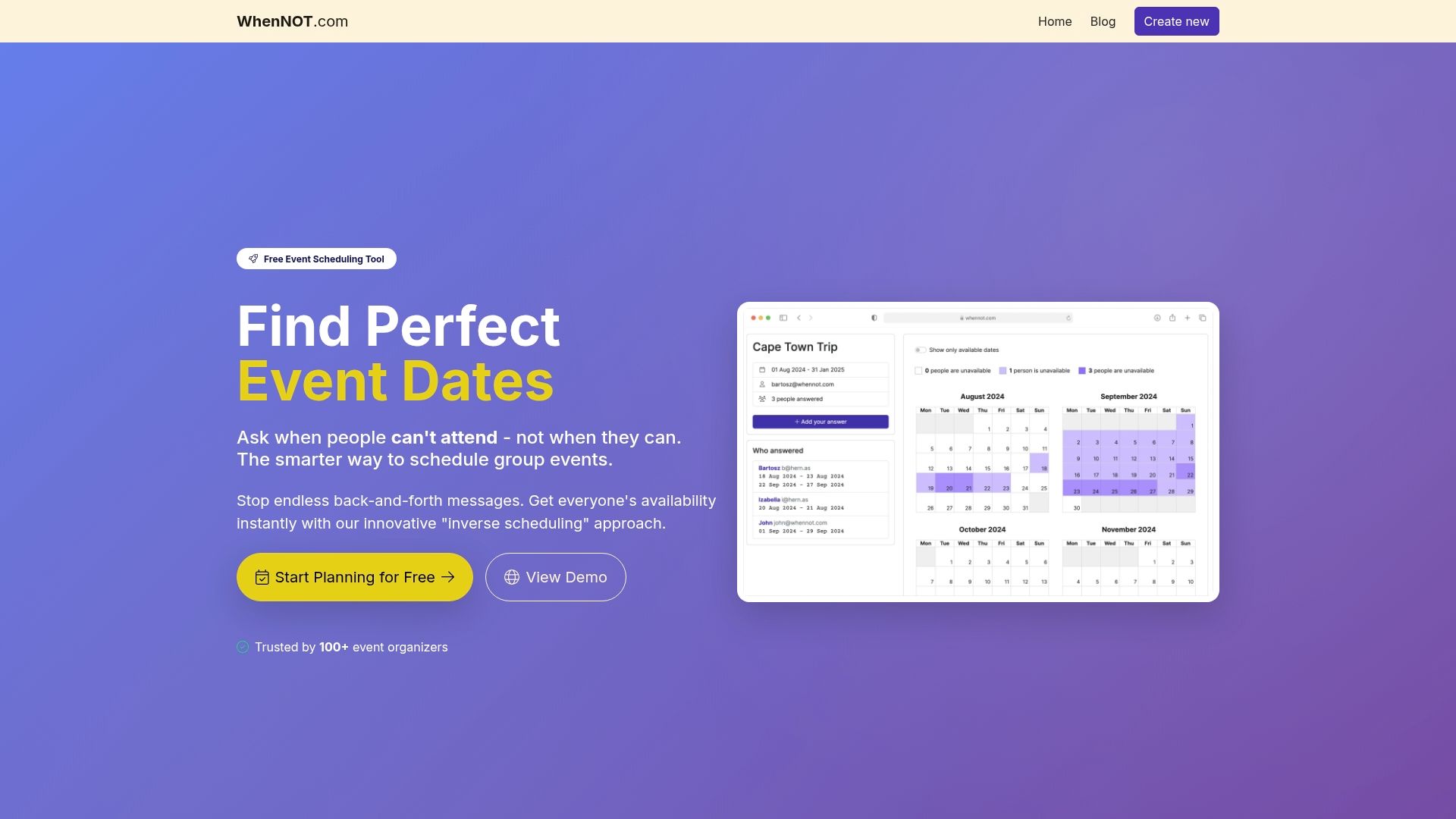
Why keep guessing when people are free? Let WhenNOT change the entire experience. Our unique approach asks each person to mark only their busy dates, showing you in one glance when your group is actually available. This keeps planning fast, clear, and stress-free without logins or long email threads. See how fast you can finalize plans and save time for what truly matters. Visit WhenNOT and start organizing your next trip without the usual obstacles. If you want more group event planning strategies, check out our expert scheduling advice. Make your next trip planning session the easiest one yet.
Frequently Asked Questions
What are trip scheduling tools?
Trip scheduling tools are digital platforms designed to simplify and optimize travel planning by consolidating various logistics into one system. Use these tools to manage participant schedules, track accommodations, and handle budgets more efficiently.
How can I choose the right trip scheduling tool for my needs?
To choose the right trip scheduling tool, identify the features that matter most to you, such as collaboration capabilities, budget tracking, or integration with other systems. Start by listing your essential criteria and select a tool that meets at least 80% of those needs.
Can trip scheduling tools help with coordinating travel across multiple time zones?
Yes, many trip scheduling tools feature automatic time zone conversions, allowing users to easily manage travel plans for participants in different regions. When selecting a tool, prioritize those that highlight this feature to ensure seamless synchronization.
How do I share travel plans with other participants using a trip scheduling tool?
Most trip scheduling tools allow users to create shareable links or directly invite participants via email. After setting up your travel itinerary, look for a sharing option within the tool to easily distribute the plans to your group.
What are the benefits of using a trip scheduling tool instead of traditional methods?
Using a trip scheduling tool can save up to 60% of the time spent on travel logistics compared to traditional methods like emails and phone calls. Implement a tool to centralize communication, which reduces misunderstandings and makes planning more efficient.
Are there any costs associated with trip scheduling tools?
Many trip scheduling tools offer both free and premium versions, with free versions providing basic features suitable for simpler planning needs. Evaluate your travel complexity and consider investing in premium features if necessary for larger or more detailed trips.